Discover the pros and cons of CEREC vs lab crown options. Learn which is best for your dental needs and make a more informed choice today!
CEREC vs Lab Crown: Which Should You Choose?
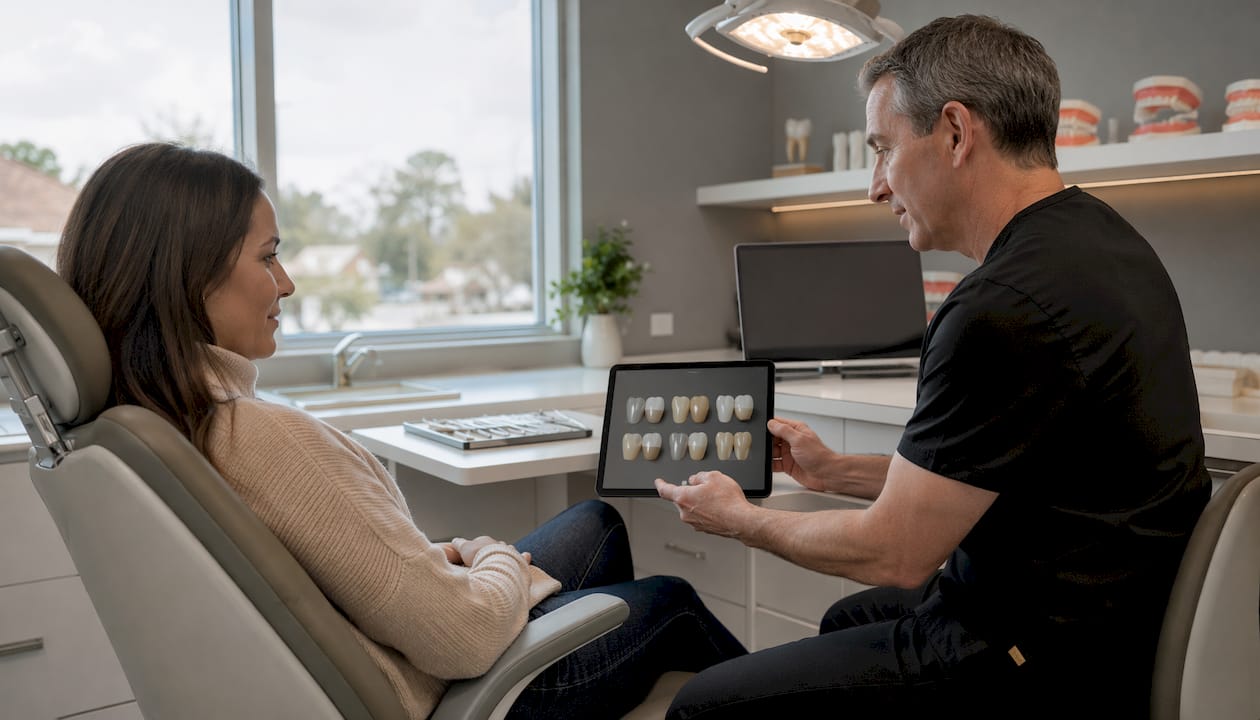
For most single back-tooth restorations, a CEREC same-day crown is the smarter, more convenient choice. If you need a crown on a visible front tooth, have complex cosmetic needs, or require a material like gold or porcelain-fused-to-metal (PFM), a traditional lab-made crown is the better fit. The core tradeoff is simple: CEREC delivers speed and a high-quality ceramic restoration in one visit; lab crowns deliver broader material options and hand-finished aesthetic control.
At a glance: CAD/CAM crowns show high survival rates at ten years in many clinical studies, and both fabrication methods produce marginal gaps well within the clinically accepted threshold of roughly 120 micrometers. The method matters less than matching the right approach to your specific tooth.
Here is what you need to know before your next appointment:
- Choose CEREC for back teeth (molars, premolars), one-visit convenience, or when you want to skip a temporary crown entirely.
- Choose a lab crown for front teeth with high cosmetic demands, heavy grinders who need gold or PFM, or complex multi-tooth cases.
- Ask your dentist to confirm which materials are clinically appropriate for your tooth before deciding on fabrication method.
Claytondentalstudio offers same-day CEREC crowns in Humble, TX, and Dr. Navneet Kamboj evaluates every case individually to match the right restoration to your tooth, schedule, and budget.
Table of Contents
- How does a CEREC same-day crown actually work?
- What is a traditional lab-made crown and how is it made?
- CEREC vs lab crown: how do they compare side by side?
- How do you decide which crown is right for your tooth?
- What does a crown cost, and how does insurance work?
- How long do crowns last, and what affects their lifespan?
- What should you expect at your appointment?
- Pros and cons at a glance
- When does our practice recommend CEREC, and when do we prefer a lab crown?
- Key Takeaways
- Why Claytondentalstudio invested in CEREC, and how we select cases
- Same-day CEREC crowns at Claytondentalstudio in Humble, TX
- Further reading and authoritative sources
- The part most crown articles get wrong
How does a CEREC same-day crown actually work?
CEREC stands for Chairside Economical Restoration of Esthetic Ceramics. It is a technology developed by Dentsply Sirona that lets your dentist design, mill, and place a permanent ceramic crown in a single appointment, often in under two hours. Think of it as having a custom dental workshop right inside the office.
The process follows these steps:
- Tooth preparation — your dentist removes decay or damaged structure and shapes the tooth to receive the crown.
- Digital intraoral scan — a small wand captures a precise 3D image of your tooth. No putty, no gagging. The digital scan replaces the traditional impression entirely.
- Chairside CAD design — specialized software generates a 3D model on-screen. Your dentist reviews and refines the shape before milling begins.
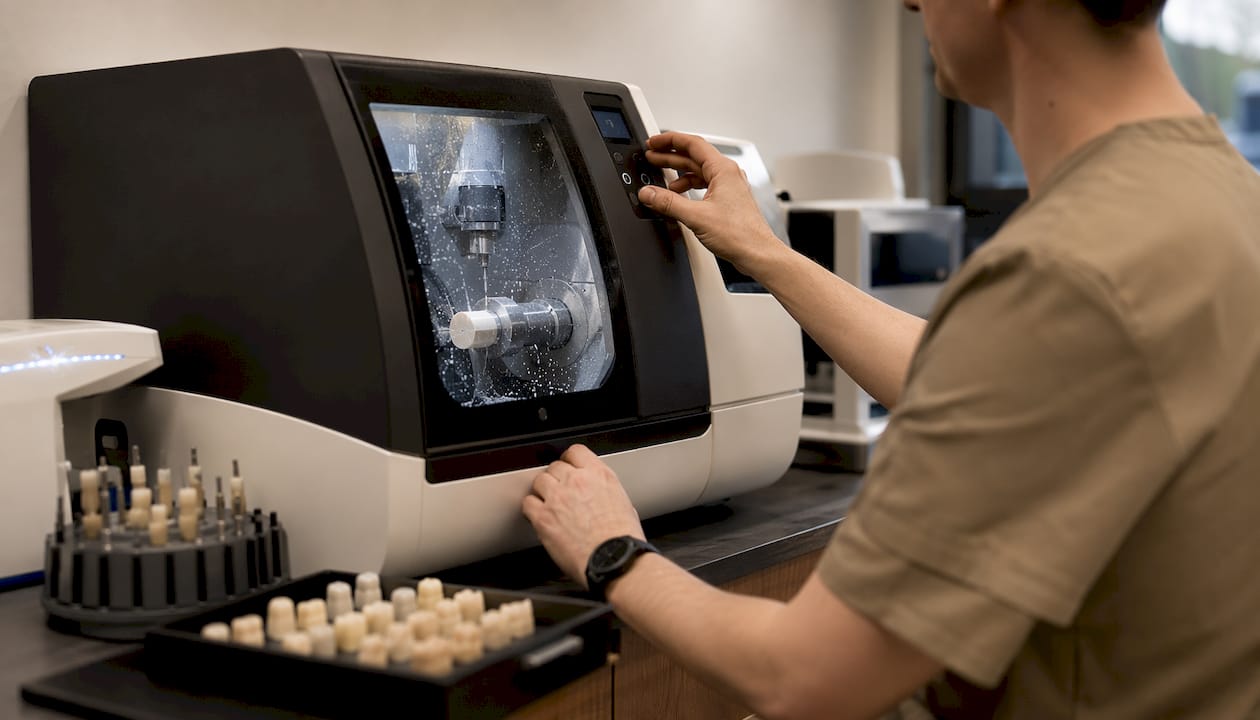
- In-office milling — a milling machine carves your crown from a solid ceramic block right in the office, typically in 10–30 minutes.
- Finishing and glazing — the crown may be stained, glazed, and fired in a small oven to match your natural tooth color.
- Bonding — the finished crown is cemented in place during the same visit.
CEREC crowns use all-ceramic materials only. The two most common options are:
- Lithium disilicate (e.max) — excellent translucency and natural-looking aesthetics, popular for premolars and some anterior restorations.
- Zirconia — extremely strong, ideal for high-stress molars where durability is the priority.
Because the entire workflow happens in-office, you leave with a permanent crown the same day. No temporary, no second appointment, no waiting two weeks to get your tooth back to normal.
What is a traditional lab-made crown and how is it made?
A lab-made crown follows a multi-visit process that has been the standard in dentistry for decades. The key difference is that fabrication happens off-site, at a dental laboratory, where skilled technicians build and finish the crown by hand.
Here is how the process typically unfolds:
- Tooth preparation — same as CEREC: the dentist removes damaged structure and shapes the tooth.
- Impression — either a physical putty impression or a digital scan is sent to the lab.
- Temporary crown — a temporary restoration is placed to protect the tooth while you wait.
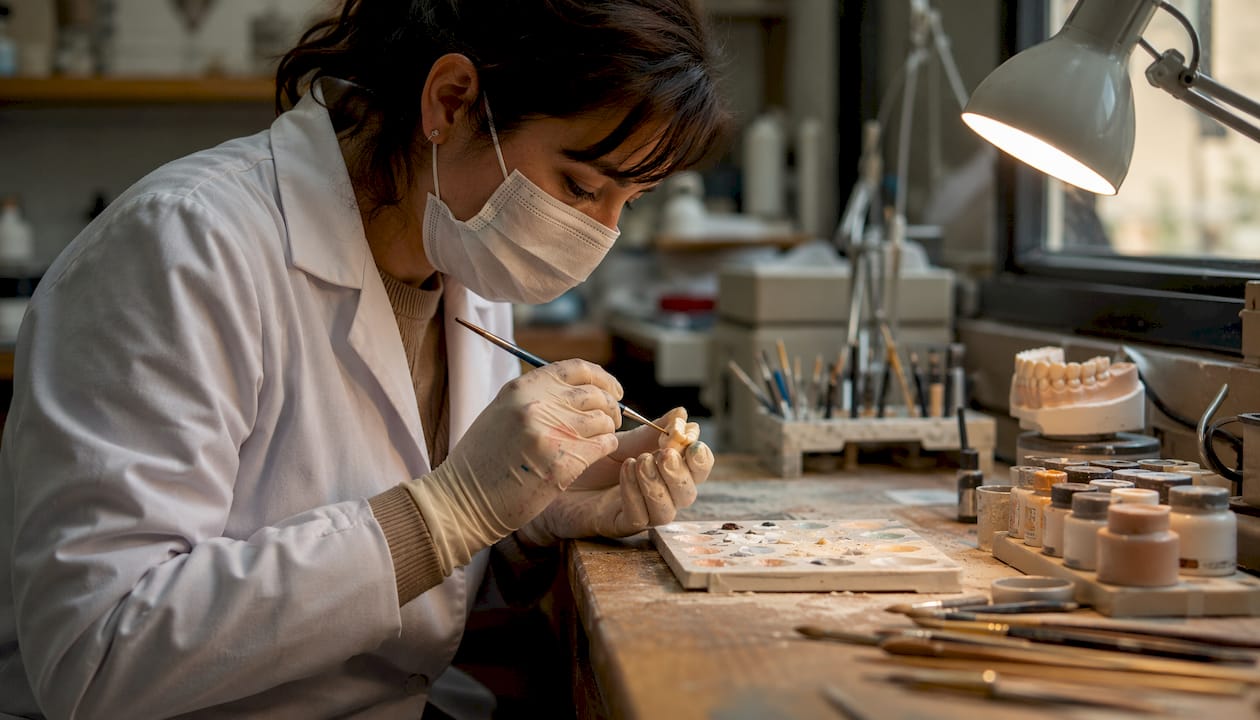
- Lab fabrication — over one to two weeks, a dental technician builds the crown using layering, staining, and custom characterization techniques.
- Return visit — the temporary comes off, the permanent crown is checked for fit and bite, and it is cemented in place.
The lab workflow opens up a wider range of material options that CEREC simply cannot offer:
- Porcelain-fused-to-metal (PFM) — a metal substructure with a porcelain exterior; durable and cost-effective.
- Full gold alloys — the gold standard (literally) for high-stress molars and patients who grind heavily.
- Layered porcelain — hand-built for maximum aesthetic control on visible front teeth.
- Full zirconia — available through labs in monolithic or layered forms.
- Lithium disilicate (e.max) — also available via lab for cases needing extra cosmetic refinement.
For patients who want the finest possible shade matching on a front tooth, a skilled lab technician can add subtle color gradients and surface texture that in-office milling cannot fully replicate; that manual artistry is the lab’s biggest advantage for cosmetic cases.
CEREC vs lab crown: how do they compare side by side?
| Dimension | CEREC (same-day) | Lab-made crown |
|---|---|---|
| Number of visits | 1 (same day) | 2+ (1–2 weeks apart) |
| Materials available | Ceramic only (e.max, zirconia) | Ceramic, PFM, gold, layered porcelain |
| Aesthetic control | Good; digital color matching | Excellent; hand-layered, custom characterization |
| Expected lifespan | 10–15+ years (appropriate cases) | 10–15+ years (appropriate cases) |
| Typical cost range | ~$800–$2,500 | ~$800–$2,500 |
| Temporary crown needed | No | Yes |
| Best for front teeth | Adequate for most; limited for complex cosmetics | Preferred for high-visibility cosmetic cases |
| Best for back teeth | Excellent | Excellent |
| Impression method | Digital scan (comfortable) | Putty or digital scan |
| Fit precision | Clinically acceptable | Clinically acceptable |
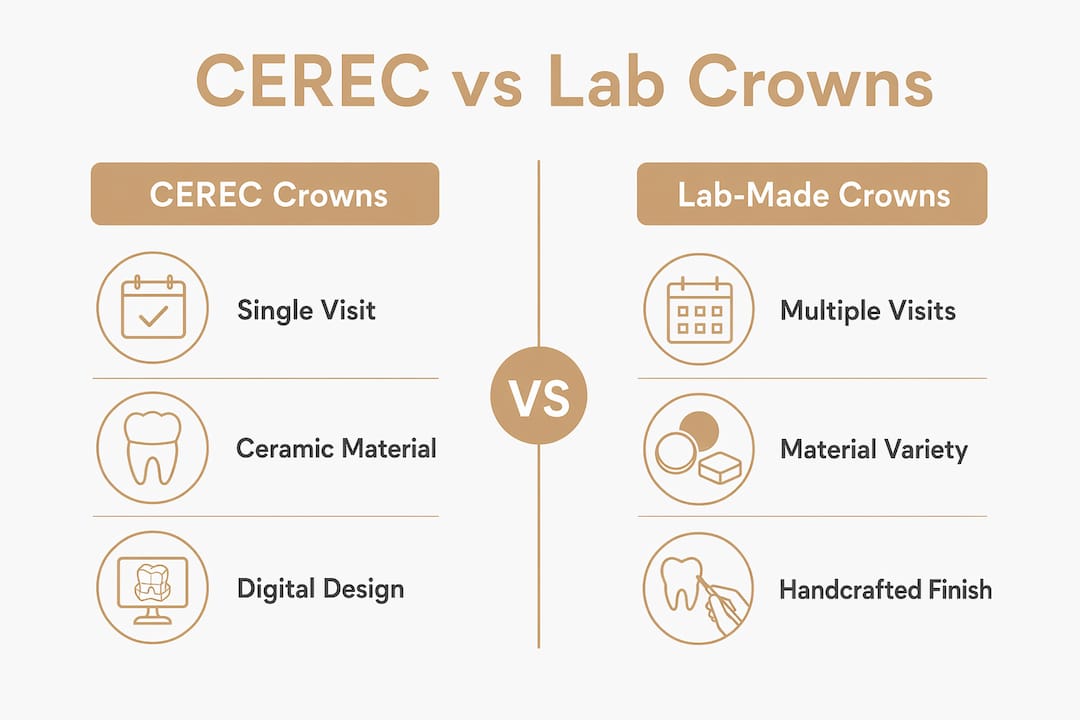
Both methods produce crowns that fit within clinically acceptable marginal gaps. CAD/CAM crowns and conventionally made crowns both have marginal gaps well under the accepted clinical threshold, showing clinically acceptable fit. The practical difference in fit is small.
Where the gap widens is in material flexibility and cosmetic finishing. CEREC is constrained to ceramics. If your dentist recommends gold or PFM for clinical reasons, a lab crown is your only option. And for a front tooth where the shade needs to blend perfectly with six or eight neighboring teeth, a lab technician’s hand-layered work often produces a more natural result than milled ceramic alone.
On the other hand, chairside digital workflows give your dentist direct control over scanning, design, and milling, which reduces the risk of miscommunication that can occur when sending work to an external lab. Fewer handoffs means fewer chances for something to get lost in translation.
How do you decide which crown is right for your tooth?
The decision comes down to four clinical factors and a few personal ones. Here is a practical framework.
Clinical factors to weigh:
- Tooth location — back teeth (molars, premolars) are ideal for CEREC. Front teeth with high cosmetic demands often benefit from lab fabrication.
- Bite forces and bruxism — heavy grinders may need gold or PFM, which only a lab can provide. Zirconia from CEREC is strong, but your dentist needs to confirm it suits your bite pattern.
- Shade complexity — if your crown needs to match multiple adjacent teeth with subtle color variation, a lab technician has more tools to achieve that result.
- Sub-gingival margins or complex preparation — cases where the margin sits deep below the gumline or involves multiple teeth often benefit from lab involvement.
Patient factors:
- Schedule — if two appointments and a two-week wait are genuinely difficult, CEREC removes that burden entirely.
- Tolerance for temporaries — temporary crowns can come loose, cause sensitivity, or feel uncomfortable. Skipping that phase is a real comfort advantage.
- Cosmetic priority — for a smile-line tooth, the extra aesthetic control a lab offers may be worth the extra visit.
- Insurance and cost — most dental insurance covers crowns at a set percentage regardless of fabrication method. Ask your insurer whether the allowance differs by material.
Decision checklist — bring these questions to your dentist:
- Is this tooth visible when I smile or talk?
- Do I grind my teeth, and does that affect which material you recommend?
- Is exceptional shade matching needed to blend with my other teeth?
- Is a one-visit treatment clinically appropriate for this case?
- Has my dentist confirmed that ceramic is suitable for my bite and tooth structure?
Red flags that should push toward a lab crown: a front tooth in the smile line with complex shade needs, confirmed bruxism requiring gold or PFM, a case involving multiple adjacent crowns, or a clinical situation where your dentist specifically recommends lab involvement.
Pro Tip: Ask your dentist to show you the digital design on-screen before milling begins if you choose CEREC. Most systems allow real-time adjustments, and seeing the shape before it is milled gives you a chance to flag any concerns.
What does a crown cost, and how does insurance work?
Patient out-of-pocket costs for crowns commonly range from roughly $800 to $2,500, depending on material, tooth location, and case complexity. CEREC and lab-made crowns tend to land in similar price ranges. The fabrication method alone rarely drives a dramatic cost difference; material choice and clinical complexity are the bigger variables.
| Crown type | Typical cost range (U.S.) | Notes |
|---|---|---|
| CEREC (e.max or zirconia) | $800–$2,500 | Single visit; no lab fee passed to patient |
| Lab crown (PFM) | $800–$2,500 | Lab fee included; two visits |
| Lab crown (full zirconia or e.max) | $800–$2,500 | Premium ceramic; lab fabrication |
| Lab crown (gold alloy) | $800–$2,500 | Material cost drives price higher |
Most dental insurance plans cover crowns at 50% after the deductible, up to an annual maximum. Coverage typically applies regardless of whether the crown is CEREC or lab-made. However, some plans set a fixed allowance based on the least expensive clinically acceptable alternative, which can affect your out-of-pocket share if you choose a premium material.
Insurance tip: Request a pre-treatment estimate from your insurer before the appointment. Ask specifically whether your plan distinguishes between CEREC and lab-fabricated crowns, and confirm whether your material choice affects the covered amount.
A few practical ways to manage cost: ask your dentist for a written estimate for both options, inquire about in-office financing, and check whether your plan resets its annual maximum in January so you can time treatment accordingly.
How long do crowns last, and what affects their lifespan?
Well-made crowns of either type typically last 10–15 years or longer when matched to the right case. Crown longevity depends more on patient oral hygiene, dentist preparation skill, and bite forces than on whether the crown was milled chairside or built in a lab.
Common factors that shorten crown life:
- Untreated bruxism (grinding) that chips or fractures ceramic
- Poor oral hygiene leading to decay at the crown margin
- Inadequate tooth preparation that compromises the bond
- Skipping regular checkups where early problems go undetected
Common failure modes by material:
- Lithium disilicate (e.max) — can fracture under very heavy bite forces; less likely on premolars, more of a concern on molars in grinders.
- Zirconia — highly fracture-resistant, but monolithic zirconia can wear opposing natural teeth if not polished well.
- PFM — the porcelain layer can chip over time, exposing the metal substructure; the metal core itself is very durable.
- Gold — rarely fractures; the most forgiving material for high-stress areas.
Care steps that help any crown last longer:
- Brush twice daily with a non-abrasive toothpaste and floss around the crown margin every day.
- Wear a night guard if you grind; this applies equally to CEREC and lab crowns.
- Schedule checkups every six months so your dentist can catch early margin issues before they become decay.
- Avoid chewing ice or hard objects that can fracture ceramic restorations.
Pro Tip: If a crown feels slightly high after placement, call your dentist within a day or two. A quick bite adjustment takes minutes and prevents the uneven pressure that can crack ceramic or loosen the bond over time.
What should you expect at your appointment?
The CEREC same-day experience
- Exam and preparation — your dentist reviews X-rays, numbs the area, and shapes the tooth. This typically takes 30–45 minutes.
- Digital scan — the intraoral scanner captures a 3D image in a few minutes. No putty, no gagging, no waiting for impressions to set.
- CAD design review — the software generates a crown design on-screen. Your dentist refines the shape and contacts before sending it to the mill.
- In-office milling — the milling machine carves the crown from a ceramic block, usually in 10–30 minutes. You can relax in the chair or step out briefly.
- Finishing and glazing — the crown is polished, stained if needed, and fired in a small oven to harden the glaze.
- Bonding — the crown is tried in, checked for fit and bite, and cemented. Total appointment time is roughly 1–2 hours.
The lab crown experience
- Exam and preparation — same initial steps as CEREC.
- Impression and temporary — your dentist takes a physical or digital impression and places a temporary crown to protect the tooth.
- Lab fabrication — the impression goes to an off-site lab. A technician builds the crown over one to two weeks.
- Return visit — the temporary comes off, the permanent crown is checked for fit, shade, and bite, then cemented.
About temporary crowns: they are functional but not permanent. Common issues include:
- Coming loose, especially if you eat sticky foods
- Sensitivity to hot and cold while the temporary is in place
- Mild gum irritation around the margin
If your temporary loosens or causes significant discomfort, call your dentist promptly. Most offices can re-cement a temporary quickly. Patients who find temporaries stressful often appreciate that CEREC removes this phase entirely.
Pros and cons at a glance
CEREC same-day crowns:
- Pros: single visit, no temporary crown, comfortable digital scan, immediate function, dentist controls design and fit directly
- Cons: ceramic materials only (no gold or PFM), less hand-finishing for complex cosmetic cases, requires the practice to have CEREC equipment
Lab-made crowns:
- Pros: full material range (PFM, gold, layered porcelain, zirconia, e.max), superior hand-layered aesthetics for front teeth, proven decades-long track record across all material types
- Cons: two or more visits, temporary crown required, longer wait, more time away from work or daily schedule
Quick patient profile guide:
- Busy professional with a back molar that needs a crown: CEREC is the practical choice.
- Patient with a front tooth needing a crown to match a complex smile: a lab crown with hand-layered porcelain gives the cosmetic control you need.
- Heavy grinder whose dentist recommends a more resilient material: a lab crown in gold or PFM is the clinically appropriate path.
When does our practice recommend CEREC, and when do we prefer a lab crown?
At Claytondentalstudio, Dr. Kamboj evaluates every crown case on its own merits. Two general rules of thumb guide the conversation:
- CEREC for routine posterior restorations — a single molar or premolar in a healthy mouth with no significant bruxism is an excellent candidate. The digital workflow is accurate, comfortable, and lets patients leave with a permanent crown the same day.
- Lab crowns for complex anterior cases or heavy grinders — when a front tooth needs to blend seamlessly with adjacent restorations, or when a patient’s bite forces require gold or PFM, the lab’s material range and hand-finishing capability are worth the extra visit.
A common scenario at the practice: a patient comes in with a cracked molar and a tight schedule. After reviewing digital X-rays and confirming the tooth structure supports a ceramic crown, Dr. Kamboj completes the CEREC crown in a single two-hour appointment. The patient leaves with a permanent restoration and no temporary to worry about. For a patient with a fractured front tooth who needs the crown to match five adjacent natural teeth, the case goes to the lab, where a technician can build in the subtle color gradients that make the result look completely natural.
Understanding when a crown is indicated in the first place is also worth reviewing before your appointment, especially if you are weighing a crown against other restorative options.
Key Takeaways
Both CEREC and lab-made crowns can last 10–15 years or longer; the right choice depends on tooth location, material needs, and your schedule, not fabrication method alone.
| Point | Details |
|---|---|
| CEREC suits most back teeth | Single-visit ceramic crowns work well for molars and premolars in healthy mouths. |
| Labs offer broader materials | Gold, PFM, and hand-layered porcelain are only available through a dental laboratory. |
| Fit is clinically comparable | Both methods produce marginal gaps well under the accepted 120-micrometer clinical threshold. |
| Longevity depends on care | Oral hygiene, bruxism management, and regular checkups matter more than fabrication method. |
| Claytondentalstudio offers both paths | Dr. Kamboj evaluates each case individually and offers same-day CEREC crowns in Humble, TX. |
Why Claytondentalstudio invested in CEREC, and how we select cases
I’m Dr. Kamboj, and I want to be straightforward about why we brought CEREC into the practice. The biggest reason was patient convenience. Asking someone to take two days off work, manage a temporary crown for two weeks, and come back for a second appointment is a real burden, and for most back-tooth restorations, it is simply not necessary anymore. Digital accuracy has reached a point where the in-office result is clinically excellent, and patients leave the same day with a permanent crown they can trust.
That said, I did not invest in CEREC to use it on every case. When a patient has a front tooth with complex shade needs, or when clinical factors point toward gold or PFM, we work with a trusted dental laboratory. The technology serves the patient, not the other way around.
If you are considering a crown and want to know which approach fits your situation, the first step is a consultation. Bring your insurance card and any recent dental X-rays if you have them. We will review your tooth, discuss your options, and give you a clear estimate for both paths before any treatment begins.
Same-day CEREC crowns at Claytondentalstudio in Humble, TX
If you are in the greater Houston area and want to skip the two-week wait, Claytondentalstudio offers same-day CEREC crowns at our Humble, TX office. Dr. Kamboj handles the full workflow in-house, from the digital scan to the final bond, so you leave with a permanent ceramic crown in a single appointment.
We also help with insurance questions upfront. Our team will verify your benefits and provide a pre-treatment estimate before the appointment, so there are no surprises when it comes to cost. Financing options are available for patients who need them.
To get started, visit our dental services page or call the office directly to request a consultation. Bring your insurance card and let us know if you have any recent X-rays from another provider. We will take care of the rest.
Further reading and authoritative sources
The following sources informed this article and are worth reviewing if you want deeper evidence or additional perspectives.
| Source | Type | What it covers |
|---|---|---|
| Knox Valley Dental: CEREC vs Lab Crowns | Patient education | Survival rates, marginal gap data, and case selection guidance |
| Valley Dental Health: CEREC vs Traditional Crowns | Patient education | Digital scan comfort, patient experience comparison |
| DentalSwiss Clinics: CEREC vs Dental Laboratory | Clinical overview | Chairside control, temporary crown risks, workflow differences |
| Veenstra Dental: Same-Day vs Traditional Restorations | Patient education | Material options, cost ranges, insurance considerations |
| WorldHealth.net: CEREC vs Traditional Crowns Longevity | Review article | Long-term survival data for CAD/CAM crowns |
| Mersal Dental: Why Would You Need a Crown? | Patient education | Crown indications and decision factors |
| Claytondentalstudio: Same-Day Crowns | Clinic page | CEREC crown service details for Humble, TX patients |
| Lexington Dental of Owasso: CEREC vs Traditional Crowns | Patient education | Pros, cons, and clinical decision framework |
This article is general information for educational purposes and does not replace professional dental advice. Confirm which crown type and material are appropriate for your specific situation with a licensed dentist.
The part most crown articles get wrong
Most comparisons of CEREC versus lab crowns frame the decision as “fast and convenient” versus “slow but better.” That framing is misleading, and it does patients a disservice.
The honest picture is more nuanced. CEREC is not a shortcut. The digital workflow requires real skill, and a poorly designed CEREC crown is just as problematic as a poorly made lab crown. The fabrication method does not guarantee quality. The dentist’s preparation, design judgment, and material selection do.
What actually gets underestimated in most articles is how much the temporary crown phase affects patient experience. Two weeks with a temporary is not a neutral waiting period. Temporaries come loose, cause sensitivity, and create anxiety. For a patient who is already nervous about dental work, eliminating that phase is a meaningful clinical and emotional benefit, not just a scheduling convenience.
The other overlooked point: lab crowns are not automatically superior for front teeth. A skilled CEREC operator using lithium disilicate can produce a beautiful anterior restoration. The question is whether the specific case, shade complexity, and adjacent tooth situation require the extra refinement a lab technician provides. Sometimes it does. Often it does not.
The right question is not “which method is better?” It is “which method is better for this tooth, this patient, and this clinical situation?” That is the conversation worth having with your dentist.
Recommended
Ready to Schedule Your Appointment?
Dr. Kamboj and the Clayton Dental Studio team are here to help. Call us or book online today.