Parent-friendly checklist to choose a family dentist: three vetting checks, exact phone questions to ask, insurance tips, and a Humble clinic example.
Parents: 3 Core Checks to Choose a Family Dentist

The best family dentist for your household is one that combines three things: verified credentials with a comprehensive range of services, a communication style that puts both kids and adults at ease, and clear, upfront answers on scheduling and insurance. Skip a practice that’s vague on any of those three. The rest of this guide walks you through exactly how to check each one before you commit.
TL;DR:
- Most family practices that handle key services in-house and offer clear communication and upfront costs provide better overall care and convenience.
- Checking credentials through ADA or state directories ensures the dentist’s verified training and minimizes future specialist visits.
- Confirming practice hours, emergency availability, and staff continuity helps gauge long-term trustworthiness and operational consistency.
- Understanding insurance coverage, payment plans, and obtaining written cost estimates before procedures prevent unexpected bills.
- Age-specific care requires practices to tailor approaches, referring complex pediatric or orthodontic cases when necessary, indicating honesty and expertise.
Table of Contents
- How Do You Choose a Family Dentist? A Parent-Friendly Checklist
- Where Should You Search for a Family Dentist?
- What Should You Ask Before and During the First Visit?
- What Do Costs, Insurance, and Payment Options Look Like?
- How Does a Family Dentist Adjust Care by Age?
- What Sets an Experienced Family Practice Apart?
- How Do You Know When to Commit to a Dental Home?
- How Clayton Dental Studio Supports Families in Humble
- Where to Verify Credentials and Find a Practice
- Sources
- FAQ
How Do You Choose a Family Dentist? A Parent-Friendly Checklist
Comparing practices gets a lot easier once you have a short list of things to check, in order. Here’s what actually separates a solid family dental practice from one that just looks good on a website.
- Credentials first. Confirm the dentist’s education, continuing education hours, and ADA membership — a dental home built on verified training reduces your need to shop around for specialists later.
- In-house services vs. referrals. Ask directly whether pediatric exams, orthodontics, and restorative work (fillings, crowns) happen on-site or get referred out. A family dental practice that handles most of these under one roof saves you from juggling multiple offices and multiple sets of paperwork.
- Office logistics. Look at hours (evenings, weekends), same-day emergency slots, and whether they’ll block-schedule your whole family back-to-back instead of making you take four separate trips.
- Communication style. Watch how staff talk to kids on a practice tour or in reviews. Gentle, patient explanations matter more than a fancy waiting room.
- Insurance and payment clarity. A practice that states its accepted plans and payment options plainly, without hedging, is one worth trusting with the bigger stuff later.
Pro Tip: Call before you book anything. A front-desk staffer who answers your insurance and scheduling questions clearly, without transferring you three times, tells you a lot about how the whole office runs.
Where Should You Search for a Family Dentist?
Start with sources built for exactly this. The ADA Find-a-Dentist tool and your state dental society directory both let you confirm licensing and credentials before you ever pick up the phone. Mouthhealthy on choosing a dentist recommends a simple four-step process, and it holds up well for busy parents:
- Start with the basics. List what your family actually needs: pediatric care, orthodontics, emergency access, evening hours.
- Build your shortlist. Pull three to five names from ADA Find-a-Dentist, your insurer’s provider list, and referrals from your pediatrician or a trusted friend.
- Read reviews for patterns, not scores. A single one-star review might reflect a bad day. Repeated mentions of rushed appointments or unclear billing are a real signal.
- Check the website for substance. A thorough site lists actual services, team credentials, and hours, not just stock photos of smiling families.
Insurer directories deserve a second look too. They often flag which practices are currently accepting new patients, which saves you a round of dead-end calls.
What Should You Ask Before and During the First Visit?
A short phone call before booking tells you almost everything you need to know. Ask plainly: Do you bill my insurance directly? What’s your availability for same-day emergencies? How long is a new-patient exam? Do you see young children in-house, or refer out for pediatric cases?
At the first visit, pay attention to whether the team introduces themselves, explains the scope of the exam, and walks through treatment options and pricing before doing any work. That transparency is the difference between a practice you can trust with your kids’ molars and one you’ll be second-guessing later.
- Red flag: Vague or shifting answers about cost.
- Red flag: Staff who seem new or unfamiliar with your file every visit.
- Red flag: Visible clutter or inconsistent sanitation in treatment rooms.
- Red flag: Rushed explanations, or being handed a treatment plan with no walkthrough.
Pro Tip: If you ask “What would this cost with my insurance?” and get a dodge instead of a number or a written estimate, that’s worth weighing heavily against the practice, even if everything else looked fine.
Practices with strong team continuity (staff who’ve been there years, not months) and dedicated blocks for new patients and emergencies tend to deliver more consistent family care over time. That operational detail rarely shows up on a website, so it’s worth asking about directly.
What Do Costs, Insurance, and Payment Options Look Like?
In-network care usually means lower out-of-pocket costs and simpler billing, since the practice already has a negotiated rate with your insurer. Out-of-network care can still make sense for a specific specialist or a practice you trust more, though you’ll want to understand what that costs and how reimbursement works before committing.
Restorative work, orthodontics, and implants are usually where costs climb fastest, so ask for a written estimate before treatment starts, not after. A few things to sort out early:
- Which specific services does your insurance actually cover, and at what percentage?
- Does the practice offer in-house payment plans or third-party financing for larger procedures?
- Will they provide a written cost estimate before treatment begins, not a verbal ballpark?
Fewer, higher-quality visits often beat chasing the lowest sticker price. A practice that catches a problem early during a thorough cleaning can save you a much larger bill down the road, even if their up-front costs run slightly higher.
How Does a Family Dentist Adjust Care by Age?
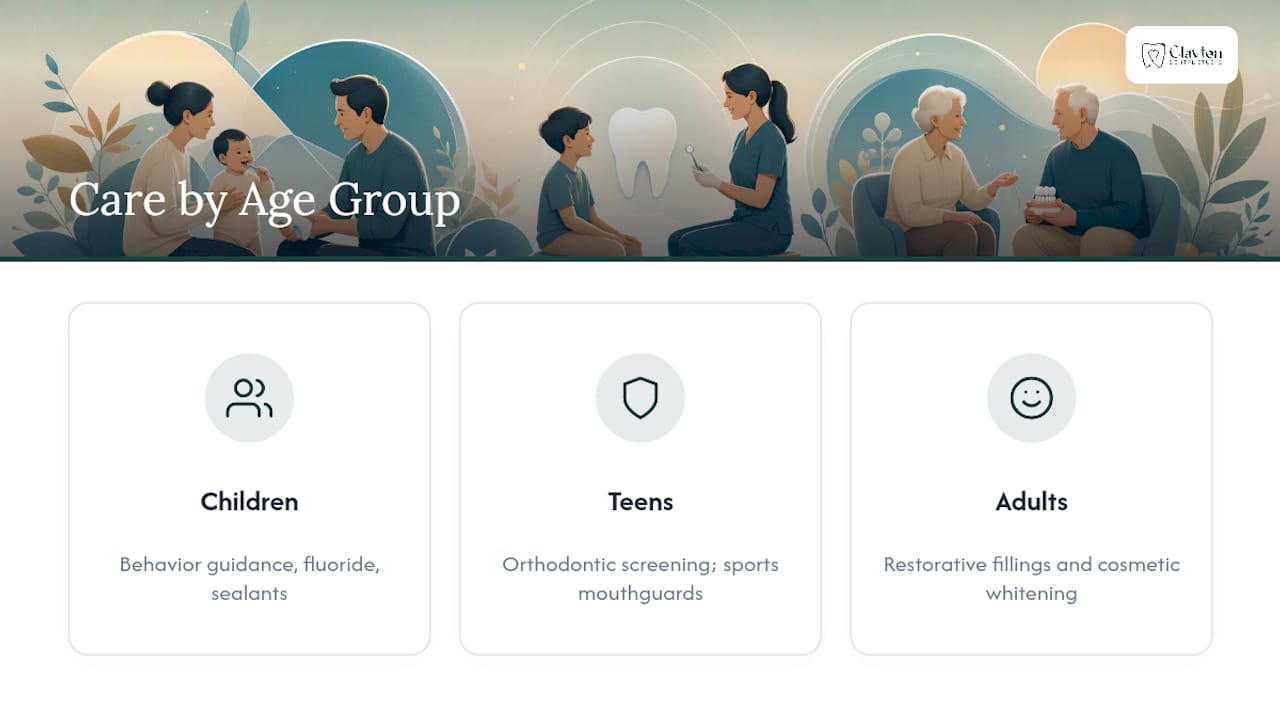
A good family practice doesn’t treat a six-year-old and a sixty-year-old the same way, and it shouldn’t. Pediatric visits focus on behavior guidance, fluoride treatments, and sealants to prevent early decay. Teens usually need orthodontic screening and, if they play sports, a properly fitted mouthguard. Adults get restorative and cosmetic options, from fillings to whitening.
If a practice refers your toddler to a pediatric specialist for a complex case, that’s not a red flag. It’s a sign they know where their own expertise ends, which is exactly the honesty you want from a long-term dental home.
What Sets an Experienced Family Practice Apart?
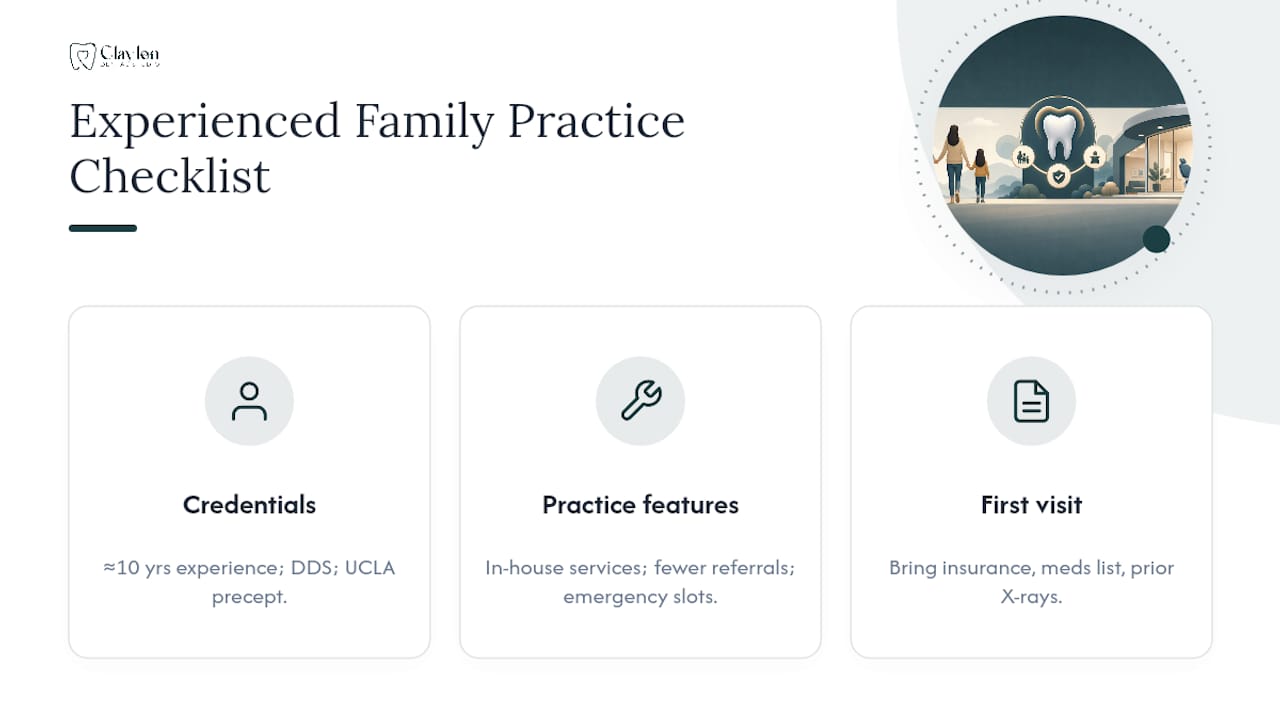
At Clayton Dental Studio, Dr. Navneet Kamboj brings nearly a decade of experience to Humble, Texas, backed by a DDS from the University at Buffalo and a specialized restorative preceptorship at UCLA. That combination shows up in how the practice runs day to day: comprehensive in-house services mean fewer outside referrals, and scheduling is built to accommodate emergencies without forcing a family to wait weeks.
New patients should bring insurance information, a list of current medications, and any prior X-rays if switching practices. A typical first visit includes a full exam, a conversation about treatment priorities, and a clear breakdown of costs before anything is scheduled. That’s the standard a family dentist should meet, regardless of which practice you choose.
How Do You Know When to Commit to a Dental Home?
Prioritize fit and communication over minor conveniences. A team that explains things clearly and treats your kids with patience beats a slightly shorter drive. Give it one or two visits, then re-run the checklist. If hours, cost, or specialist access don’t quite line up, weigh those tradeoffs honestly rather than settling out of inertia.
— Clayton Dental Studio
How Clayton Dental Studio Supports Families in Humble
This practice offers comprehensive care including preventive cleanings, restorative work, emergency visits, and clear-aligner orthodontics, handled by a team experienced with patients of every age, including kids.

Scheduling is straightforward, and the team can walk you through insurance coverage and payment options before your first visit, not after. Same-day appointments may be available for urgent care. Bring your insurance card and any recent dental records to your first visit, and the team will handle the rest, from the exam through a clear breakdown of any recommended treatment. Ready to see what a coordinated family dental home looks like in practice? Explore Clayton Dental Studio’s services or get started here to schedule your first appointment.
Where to Verify Credentials and Find a Practice
For credential verification and general guidance, ADA Find-a-Dentist and MouthHealthy.org are the most reliable starting points. For insurance-specific cost questions, Humana’s guide to choosing a dentist breaks down practical evaluation criteria, and Colgate’s family dental practice guidance covers what to expect from age-specific care.
This article is general information, not a substitute for advice from a qualified doctor. Consult a qualified healthcare professional about your own circumstances before acting on anything here.
Sources
- ADA — resources and guidance (MouthHealthy/ADA resources)
- Humana — 6 tips for choosing the right dentist
- Colgate — family dental practice guidance
- Mouthhealthy
FAQ
What Is the 3-3-3 Rule for Dental Care?
The 3-3-3 rule is a brushing guideline: brush multiple times a day for a few minutes near meals to reduce plaque buildup. It’s a simple habit reminder rather than a clinical standard, and your dentist can tailor it further based on your family’s needs.
How Much Does a Family Dentist Typically Cost?
Costs vary widely depending on the service, your insurance coverage, and whether you’re in-network. Routine cleanings and exams are usually the most predictable cost, while restorative work, orthodontics, and implants carry the widest range, which is why written estimates before treatment matter so much.
What Is the Two-Year Rule for Dentists?
There isn’t a universal “two-year rule” in dentistry; the phrase sometimes gets used informally around insurance waiting periods for major procedures like crowns or implants. Check your specific plan’s documentation, since waiting periods vary by insurer and coverage tier.
How Do You Choose a Good Family Dental Group?
Look for verified credentials, a range of in-house services that covers pediatric through adult care, and transparent answers on scheduling, insurance, and pricing. A family dental practice that structures care around comprehensive services and offers same-day emergency access reflects the criteria this guide recommends checking at any practice.
Should a Family Dentist Handle Every Age Group In-House?
Not necessarily. A strong family practice handles most preventive and restorative care in-house but should refer complex pediatric or orthodontic cases to specialists when appropriate, which is a sign of good judgment rather than a limitation.
Recommended
Ready to Schedule Your Appointment?
Dr. Kamboj and the Clayton Dental Studio team are here to help. Call us or book online today.