
Dental anxiety is a common and valid concern. For many, the fear of pain or discomfort can be a significant barrier to receiving essential oral healthcare. Fortunately, modern dentistry offers a range of anesthesia and sedation options to ensure a comfortable, stress-free experience. This guide provides actionable information to help you find a qualified dentist who uses anesthesia and choose the right option for your needs.
Dental anxiety is a common and valid concern. For many, the fear of pain or discomfort can be a significant barrier to receiving essential oral healthcare. Fortunately, modern dentistry offers a range of anesthesia and sedation options to ensure a comfortable, stress-free experience. This guide provides actionable information to help you find a qualified dentist who uses anesthesia and choose the right option for your needs.
Understanding Your Anesthesia Options for Dental Procedures
The concept of a dental appointment can trigger anxiety, but advancements in anesthesia have transformed patient care. Today's sedation options are designed to manage both physical discomfort and the emotional stress associated with dental work, making vital treatments accessible to everyone.
The growing patient demand for comfort-focused care is reflected in market trends. The global dental anesthesia market was valued at approximately $2.42 billion in 2025 and is projected to reach $3.94 billion by 2035. This growth underscores the importance of these options in contemporary dentistry. You can explore more data on this market trend to understand its expansion.
This guide will break down the types of anesthesia available in a dental practice, from local anesthetics for minor procedures to general anesthesia for major surgeries. Understanding these options is the first step toward having an informed discussion with your dentist.
What Are Dental Anesthesia and Sedation?
Anesthesia and sedation exist on a spectrum, with each level tailored to different procedures and patient anxiety levels. The goal is not a one-size-fits-all solution but a customized approach to ensure your safety and relaxation.
Here are the primary categories you will encounter:
- Local Anesthesia: This is the most common form of dental anesthesia, used for procedures like fillings or crowns. It involves an injection that numbs a specific area of your mouth, blocking pain signals while you remain fully conscious and aware.
- Sedation Dentistry: This approach focuses on managing anxiety and inducing a state of deep calm. You remain conscious but are so relaxed that the sounds and sensations of the procedure fade into the background. Options include nitrous oxide (laughing gas), oral sedatives (a pill taken before the appointment), and IV sedation for deeper relaxation.
- General Anesthesia: Reserved for the most complex oral surgeries or for patients with severe dental phobia, this is the deepest level of sedation. Under general anesthesia, you are completely unconscious, feel no pain, and have no memory of the procedure. It is administered and monitored by a trained professional in a controlled setting.
Actionable Insight: Anesthesia is a tool for managing both pain and anxiety. Whether you need to numb a single tooth or manage significant dental phobia, a specific solution exists. Your search for a "dentist that use anesthesia near me" is the first step toward reclaiming your oral health without fear.
Which Type of Dental Anesthesia Is Right for You?
Determining the most appropriate type of dental anesthesia is a collaborative process between you and your dentist. The decision is based on your comfort level, medical history, and the specific dental procedure you need. The primary objective is to select an option that ensures you feel safe and completely at ease.
This process begins with a thorough pre-appointment evaluation. During this consultation, your dentist will discuss your medical history, any medications you are taking, and your previous experiences with anesthesia. This conversation allows the dental team to identify the safest and most effective option for your unique circumstances, whether you are a child needing mild sedation for a filling or an adult undergoing extensive cosmetic work.
The following flowchart illustrates the typical decision-making process. It maps patient anxiety levels to corresponding anesthesia solutions, ensuring a comfortable experience for every individual.
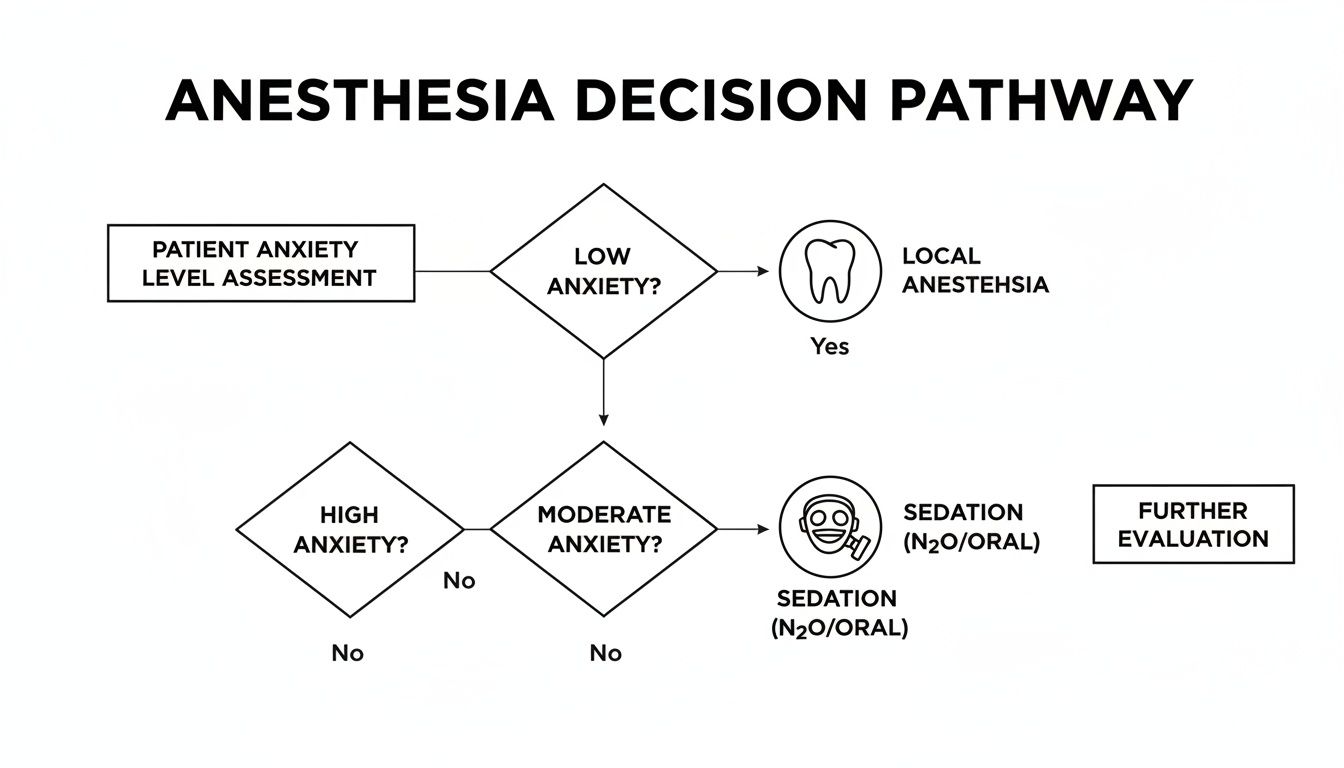
This chart demonstrates that for every level of anxiety, a corresponding solution is available to ensure that fear does not prevent you from receiving necessary dental care.
To prepare for your consultation, it is helpful to understand the primary anesthesia options. When searching for a "dentist that use anesthesia near me," you are looking for a practice with the expertise to provide the right choice for your specific needs.
The selection of anesthesia is analogous to choosing the right tool for a job; the level of sedation must match the procedure and your personal requirements.
An open dialogue with your dental team is the foundation of a positive experience. Understanding your options beforehand empowers you to advocate for your own comfort, ensuring you feel confident and in control of your treatment plan.
The table below provides a clear breakdown of common dental anesthesia and sedation options. Use it as a reference to understand what to expect and what questions to ask your dentist.
Type of AnesthesiaLevel of ConsciousnessHow It's AdministeredBest ForRecovery TimeLocal AnesthesiaFully awake and awareInjection at the treatment siteRoutine procedures like fillings, crowns, and root canalsWears off in a few hoursNitrous OxideAwake but very relaxed and calmInhaled through a nose maskMild to moderate anxiety, simple procedures, childrenImmediate; effects wear off in minutesOral SedationDrowsy but responsiveA prescribed pill taken before the appointmentModerate anxiety, longer or more complex proceduresSeveral hours; requires a driver homeIV SedationDeeply relaxed; may fall asleep and have little memory of the procedureAdministered directly into a veinHigh anxiety, dental phobia, major surgeries (implants, extractions)Full day; requires a driver and supervision
Each option serves a distinct purpose, from numbing a small area to ensuring you can rest peacefully through a major procedure. Discussing these with your dentist will help determine the optimal choice for a positive and comfortable experience.
Modern patient comfort extends beyond the type of anesthetic used; it also involves the technology that makes its delivery safer, more precise, and less intimidating. When you search for a "dentist that use anesthesia near me," you are effectively looking for a practice that invests in these advancements to enhance the patient experience.
These are not merely cosmetic upgrades but functional tools designed to reduce chair time, improve diagnostic accuracy, and minimize discomfort.

Significant progress in this field is driven by patient demand for more comfortable and less anxious dental visits. The global market for dental anesthesia is projected to grow from $2.33 billion in 2026 to $3.02 billion by 2030, a trend directly influenced by the availability of new delivery systems and improved anesthetics. You can read more about the growth of dental anesthesia technology to see how it is reshaping patient care.
Modern dental technology functions as an integrated system to ensure a smooth, pain-free visit. For example, AI-assisted digital X-rays provide high-resolution images instantly, enabling faster diagnosis and more accurate procedure planning, which translates to more efficient care for you.
Here are a few impactful advancements to look for:
- Computer-Assisted Anesthesia Systems: These devices control the flow rate of local anesthetic, delivering it so slowly and steadily that the injection is often imperceptible. This technology removes the variable of manual pressure, resulting in a predictable and comfortable numbing process.
- Long-Acting Anesthetics: Newer anesthetic formulations provide extended pain relief well after a procedure is complete. This is particularly beneficial for more invasive treatments like extractions or implants, ensuring comfort during the initial hours of healing.
- Needle-Free Anesthesia: For patients with a needle phobia, these systems offer a valuable alternative. They use a fine, high-pressure jet of air to deliver anesthetic through the gums without a traditional needle. While not suitable for all applications, it is a game-changer for many anxious patients.
When a dental practice invests in these tools, it signals a strong commitment to patient well-being. This technology is about improving every aspect of your visit, from diagnosis to recovery, to be as comfortable as possible.
These innovations are actively used in forward-thinking practices to improve patient outcomes daily. You can learn more about our approach to dental anxiety and comfort to see how we leverage these technologies for our patients. Choosing a dentist who embraces these advancements is a key step toward ensuring a positive and comfortable dental experience.
Identifying your need for sedation is the first step. The next is finding a qualified professional you trust to provide it. If you are located in the greater Houston area—including Humble, Atascocita, and Kingwood—strategic search tactics can lead you to the right practice.
A general search for "dentist that use anesthesia near me" is a good starting point, but specificity yields better results. Consider the level of sedation you may need. For instance, if you anticipate needing more than nitrous oxide, use targeted search terms like “IV sedation dentist Houston” or “sedation dentistry Humble” to find practices specializing in these advanced comfort options.
Once you have a list of potential dentists, their website is your primary research tool. A professional and well-organized site often reflects a practice that prioritizes the patient experience. Look for a dedicated page that clearly explains the types of sedation they offer, such as nitrous oxide, oral sedation, or IV sedation.
Analyze the language and tone. Does the content speak directly to patients with dental anxiety? A team genuinely committed to patient comfort will often provide information about their specialized training and philosophy on stress-free dentistry.
Most importantly, verify their credentials. Any dentist providing IV sedation must have completed extensive, specialized training and hold proper certification. A reputable practice will display these credentials on their website, providing assurance that you are in expert hands.
Patient reviews provide invaluable insights, but you must know what to look for. Go beyond star ratings and read comments for specifics about how the team manages patient comfort and communication.
A great sedation dentist is not only an expert in the procedure but also an expert in managing fear. Look for reviews with comments such as, "I was terrified, but the team made me feel completely relaxed," or "They took the time to explain everything and answered all my questions."
Use this checklist when evaluating a dentist's website and reviews:
- Clearly Listed Sedation Options: The types of anesthesia offered are easy to find and described in understandable terms.
- Credentials and Certifications: The practice is transparent about its qualifications for providing sedation dentistry.
- Focus on Patient Comfort: The website, office photos, and patient testimonials all indicate a gentle, patient-centered approach.
- Positive Feedback on Communication: Reviews mention that the dentist and staff are good listeners who explain procedures clearly.
Ready to Schedule Your Appointment?
Dr. Kamboj and the Clayton Dental Studio team are here to help. Call us or book online today.