Discover how digital smile design allows you to preview your new smile before treatment, enhancing decision-making and reducing regret.
Digital Smile Design: See Your New Smile Before Treatment
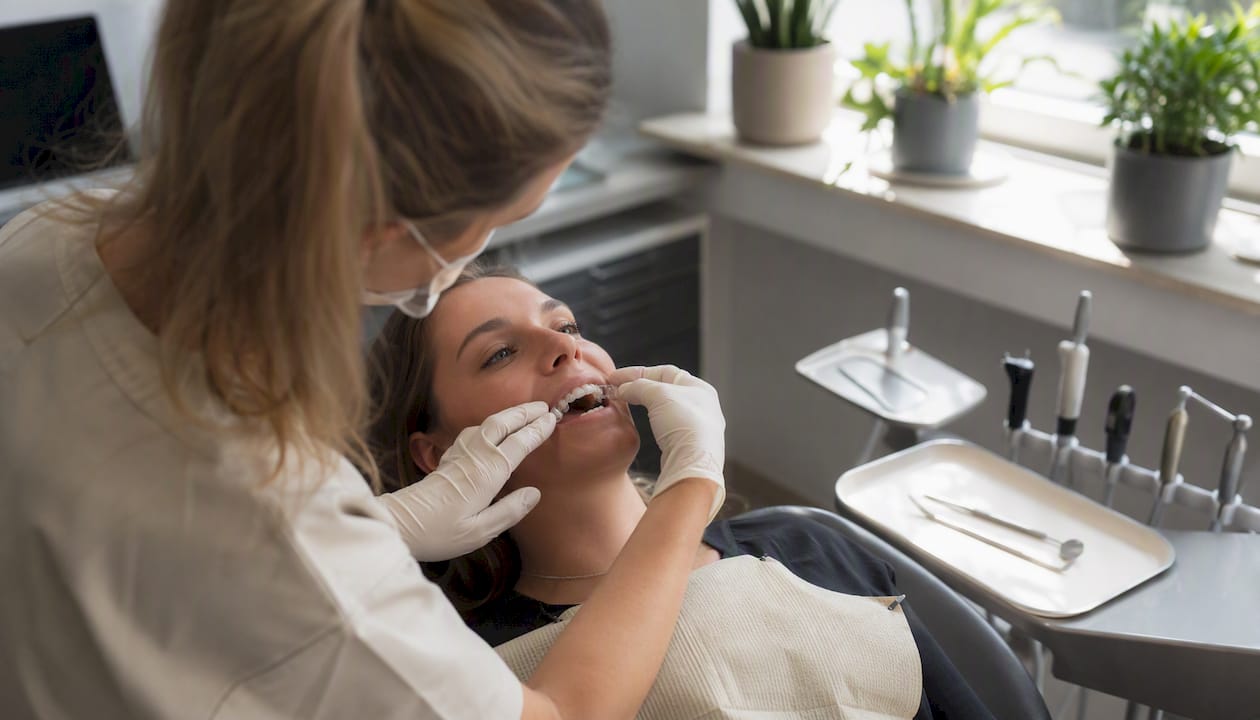
Digital smile design (DSD) is a planning process that lets you preview a realistic simulation of your post-treatment smile before a single tooth is touched. That one capability changes everything about how patients and dentists make decisions together.
Here is what that means for you in practical terms:
- Predictability: You see a digital mock-up of your likely result, so the final restoration is rarely a surprise.
- Shared decision-making: You give feedback on shape, size, and proportion before any irreversible work begins.
- Less regret: Because you approve the design first, the chance of finishing treatment and wishing something were different drops significantly.
The clearest next step is to book a consultation with a DSD-enabled dentist and bring photos of smiles you admire. That single preparation habit makes the design conversation far more productive.
Key Takeaways
Digital smile design gives patients a realistic preview of their post-treatment smile before any irreversible work begins, making it one of the most patient-centered tools in modern cosmetic dentistry.
| Point | Details |
|---|---|
| What DSD does | Lets you see and approve a digital and physical mock-up of your smile before permanent treatment starts. |
| Full workflow matters | A complete DSD process includes photography, intraoral scanning, design software, and a clinical mock-up, not just a 2D simulation. |
| Cost is bundled | DSD fees are typically included in the restorative plan; always request an itemized written estimate. |
| Key questions to ask | Confirm your dentist uses intraoral scanning, a physical mock-up step, and a documented lab relationship. |
| CBCT is case-specific | 3D cone beam imaging is appropriate for implant and complex cases, not routine cosmetic work; ask for the clinical justification. |
| Clayton Dental Studio | Offers a full DSD workflow in Humble, TX, including intraoral scanning, clinical mock-ups, and itemized treatment plans. |
Table of Contents
- What is digital smile design?
- How the digital smile design process works, step by step
- The technology behind a DSD workflow
- Why DSD benefits patients and clinicians
- Limitations and realistic expectations for DSD
- How long DSD takes and what drives the cost
- Which treatments commonly use DSD
- How to choose a dentist who offers DSD
- How Clayton Dental Studio integrates DSD into patient care
- A clinician’s perspective on when DSD makes the biggest difference
- Clayton Dental Studio’s smile design services in Humble, TX
- Sources
What is digital smile design?
Digital smile design is a structured, technology-assisted workflow that uses photographs, video, and digital measurements to plan cosmetic and restorative dental treatment around the patient’s face, lips, and gum line rather than the teeth alone. The concept was formalized by Brazilian dentist Christian Coachman in the late 2000s, and it has since become a widely referenced framework in cosmetic and restorative dentistry worldwide.
The practical relevance is broad. DSD integrates naturally into veneer and crown cases, implant planning, clear aligner therapy, and full-mouth rehabilitation. In each of those contexts, the workflow provides a visual blueprint that both the dentist and the dental lab can reference throughout treatment.
One common misconception worth clearing up early: DSD is not simply “photoshopping” a smile. When a comprehensive digital workflow is used, the design includes measurable reference lines and proportional dimensions that feed directly into 3D models and lab fabrication instructions. The simulation you see is grounded in clinical data, not just aesthetics.
How the digital smile design process works, step by step
Understanding the sequence helps you know when your input matters most and what to expect at each visit.
-
Initial consultation (Visit 1): Your dentist reviews your dental and medical history, discusses your goals, and explains whether DSD is appropriate for your case. This is the right moment to share photos of smiles you find appealing.
-
Photographic and video documentation (Visit 1 or 2): Standardized clinical photos and short video clips are taken with your lips at rest and in motion. These capture how your smile interacts with your face, which 2D X-rays cannot show.
-
Intraoral scanning: A handheld scanner creates a precise 3D digital model of your teeth and bite. This replaces traditional impression trays for most patients and typically takes a few minutes.
-
Digital design and simulation: The dentist or a trained technician uses smile-design software to overlay proposed tooth shapes and proportions onto your facial photos. You receive a digital preview, often on a screen during the same visit or at a follow-up.
-
Clinical mock-up and try-in: A physical mock-up, made from composite resin or a 3D-printed shell, is placed temporarily in your mouth. You can speak, smile, and evaluate the look and feel in real life. This is the most important approval step before any permanent work begins.
-
Definitive restoration and follow-up: Once you and your dentist approve the design, the lab fabricates the final restorations (veneers, crowns, implants, or aligners) guided by the approved plan. Follow-up visits confirm fit, function, and long-term comfort.
A straightforward cosmetic case, such as four to six veneers, typically moves through these steps across three to five visits over four to eight weeks. A full-mouth rehabilitation involving implants and orthodontics can extend to several months or longer, depending on healing and treatment sequencing.
Pro Tip: Bring three to five reference photos to your first visit. They do not need to be celebrity smiles — photos of people whose tooth shape or smile width you find natural and appealing give your dentist far more useful direction than a verbal description alone.
The technology behind a DSD workflow
The tools involved range from equipment you have probably already encountered to specialized systems you may not have heard of. Knowing what each one does helps you ask better questions.
Clinical photography
A calibrated camera, whether a professional DSLR or a high-resolution smartphone setup with consistent lighting, captures the facial reference images that anchor the entire design. Without accurate photos, proportional analysis is guesswork.
Intraoral scanners
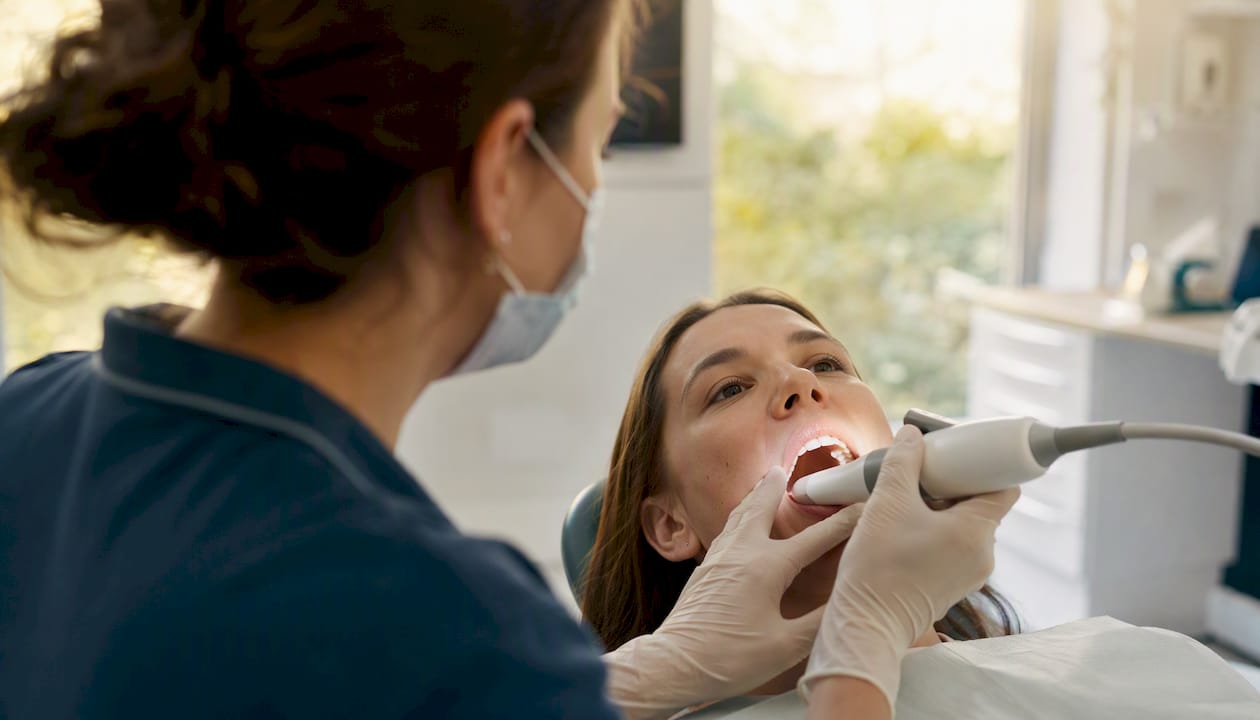
These handheld wands capture a precise 3D surface map of your teeth in minutes. The resulting digital model is what the design software and the dental lab both work from. Clinics that use intraoral scanning technology eliminate the need for traditional putty impressions in most cosmetic cases.
Smile-design software (2D and 3D)
Tools like the DSD App are excellent for fast, engaging 2D simulations at the consultation stage. However, 2D design tools are explicitly two-dimensional, and turning a 2D concept into a fabricatable 3D restoration requires a full 3D workflow with additional scanning or lab processing. Think of the 2D simulation as the sketch and the 3D workflow as the architectural blueprint.
CAD/CAM and 3D printing
Computer-aided design and manufacturing (CAD/CAM) software translates the approved digital design into milling or printing instructions for the lab or an in-office milling unit. 3D printing can produce physical mock-ups that patients try in before final restorations are fabricated, which is one of the most valuable patient-facing steps in the entire process.
Cone beam CT (CBCT)
CBCT is a specialized 3D X-ray used when implant placement, bone volume assessment, or surgical guide fabrication is needed. It is not required for every DSD case. The FDA advises that CBCT should be performed only when clinically necessary and with exposure settings optimized to keep radiation as low as reasonably achievable (ALARA). Dental CBCT delivers a substantially lower absorbed dose than a medical CT scan, though it is higher than a standard dental X-ray.
Imaging options at a glance
| Imaging type | Primary use in DSD | Relative radiation level |
|---|---|---|
| Digital intraoral X-ray | Checking individual tooth and bone health | Very low (up to 80–90% less than film) |
| Panoramic X-ray | Full-arch overview, jaw assessment | Low |
| Dental CBCT | Implant planning, bone volume, surgical guides | Moderate (significantly lower than medical CT) |
| Medical CT | Complex maxillofacial or systemic assessment | Higher; rarely used in routine DSD |
Required for most DSD cases: clinical photography, intraoral scanner, smile-design software. Optional or case-specific: CAD/CAM milling unit, 3D printer, CBCT imaging.
A brief safety note: if your dentist recommends CBCT, it is reasonable to ask why it is clinically indicated for your specific case. A well-trained clinician will explain the justification clearly. Clinics with dedicated CBCT imaging protocols document that justification as part of the standard workflow.
Why DSD benefits patients and clinicians
The core value of digital smile design is not the technology itself. It is what the technology makes possible: a genuine conversation between patient and dentist about what the outcome will look like before treatment is irreversible.
Patient benefits include:
- Visualization before commitment: Seeing a realistic preview of your post-treatment smile reduces anxiety about permanent changes to your teeth.
- Higher case acceptance: Patients who understand and approve the design are more confident moving forward.
- Shared decision-making: You can request adjustments to tooth length, width, or color before any preparation begins.
- Improved lab communication: The design file gives the dental technician precise specifications, reducing the chance of a restoration that looks different from what was planned.
- Predictability: The approved design serves as a reference throughout fabrication, so the final result closely matches the mock-up.
A narrative review published in PMC found that DSD improves predictability and patient motivation by allowing patients to visualize potential outcomes and participate in the design process before irreversible treatment begins. The same review notes that clinicians view DSD as both a diagnostic aid and an emotional tool: seeing a realistic result increases patient confidence in ways that verbal descriptions alone rarely achieve.
For patients facing veneers or crowns, that visualization matters most. Agreeing to have healthy tooth enamel reduced is a significant decision. A mock-up that lets you live with the proposed shape for a day or two before you commit is one of the most patient-centered steps modern cosmetic dentistry offers.
Limitations and realistic expectations for DSD
DSD is a planning and communication tool. It is not a guarantee of a specific final result, and understanding that distinction protects you from disappointment.
The most important limitation is clinician skill dependency. The software executes the dentist’s plan, so the quality of the outcome depends on the dentist’s aesthetic judgment, training, and ability to translate a digital design into a physical restoration. A beautiful simulation produced by undertrained hands does not automatically become a beautiful smile.
Watch for these red flags:
- A dentist who shows you a 2D simulation and presents it as a final, guaranteed result without discussing clinical feasibility.
- A practice that skips the clinical mock-up step and moves directly from digital design to permanent restorations.
- Before-and-after photos that lack patient consent documentation or cannot be explained in technical detail when you ask.
- Promises made without a clinical exam, intraoral scan, or X-rays.
Patient eligibility also matters. DSD works best when the underlying dental health is sound. Active gum disease, significant bone loss, untreated decay, or a bite problem that needs orthodontic correction first can all affect what is achievable with cosmetic restorations alone. A thorough clinical exam before any design work begins is non-negotiable.
Pro Tip: When reviewing a dentist’s before-and-after gallery, ask specifically: “Was a clinical mock-up used in this case, and did the patient approve it before treatment?” The answer tells you whether the practice follows a full DSD workflow or uses the term loosely.
CBCT radiation is a separate consideration. While dental CBCT dose is substantially lower than medical CT, it is still higher than a standard X-ray. If CBCT is recommended for your case, ask your dentist to explain the clinical reason. Routine cosmetic cases involving veneers on healthy teeth rarely require CBCT.
How long DSD takes and what drives the cost
Timing and cost both depend heavily on the scope of treatment, not on the DSD process itself.
Typical milestone sequence:
- Consultation and records: 1 visit (photos, scans, X-rays, clinical exam).
- Digital design review: 1 visit or a digital preview sent between visits.
- Clinical mock-up and approval: 1 visit; may require minor adjustments and a second try-in.
- Tooth preparation and temporaries: 1–2 visits for veneer or crown cases.
- Final restoration delivery: 1 visit, with a follow-up at 2–4 weeks.
Simple cosmetic cases often resolve over several visits across a few months. Full-mouth rehabilitation cases that involve implants, orthodontics, and staged restorations can extend to a year or more, depending on healing and treatment sequencing.
Cost drivers to discuss with your dentist:
- Scope of restorative work: The number of teeth involved and whether treatment includes veneers, crowns, implants, or aligners is the largest cost variable.
- Lab fees: Custom ceramic restorations fabricated by a specialist lab cost more than milled in-office restorations.
- CBCT and 3D printing: These add cost when clinically indicated.
- Clinician specialization: A prosthodontist or cosmetic dentist with advanced DSD training typically charges more than a general dentist.
- Local market factors: Fees vary by region and practice overhead.
DSD planning costs are typically bundled into the overall restorative plan rather than billed as a separate global fee. That bundling makes it important to request a written, itemized estimate that shows exactly what is included in the design phase, what the lab fees cover, and which steps are optional.
Which treatments commonly use DSD
Digital smile design integrates into a wider range of procedures than most patients realize.
- Veneers: DSD maps tooth proportions against facial landmarks before any enamel is reduced, so the final shape is planned, not improvised.
- Crowns: The digital design guides the lab technician on color, contour, and occlusal contacts, reducing the number of adjustment visits after delivery.
- Dental implants: DSD links the planned restoration position back to implant placement, so the implant is positioned to support the crown the patient already approved, not the other way around.
- Clear aligner orthodontics: Tooth movement can be planned with the final restorative outcome in mind, particularly when orthodontics and veneers are combined.
- Full-mouth rehabilitation: DSD is most valuable here because it coordinates multiple specialists, multiple materials, and a long treatment timeline around a single approved visual plan.
For any of these cases, ask to see before-and-after photos from patients with a similar concern to yours, and confirm that a clinical mock-up was part of the process. When orthodontics and restorative work are combined, interdisciplinary care involving both an orthodontist and a restorative dentist is common, and DSD provides the shared reference point both specialists work from.
How to choose a dentist who offers DSD
Not every practice that mentions “digital smile design” uses a complete, validated workflow. These questions help you tell the difference.
Questions to ask at your consultation:
- What DSD training or certification do you hold, and when did you complete it?
- Which software do you use for smile design, and is it 2D, 3D, or both?
- Do you use intraoral scanning, or do you still take physical impressions for cosmetic cases?
- Is a clinical mock-up included in the process, and can I wear it for a day before approving the final design?
- Who fabricates the restorations, and can I see examples of that lab’s work?
- How many cases similar to mine have you completed with DSD?
- Can I see before-and-after photos with patient permission, and can you walk me through the mock-up step for each?
- Will I receive a written treatment plan and itemized cost estimate before any work begins?
- If CBCT is recommended, how will you explain the clinical justification?
- What happens if I want to make changes after seeing the mock-up?
Trust signals to look for:
- Documented training in DSD or a recognized cosmetic dentistry program.
- A full digital workflow: photography, intraoral scanning, design software, and physical mock-up.
- A clear lab relationship with examples of completed cases.
- Patient-approved before-and-after photos, not stock images.
- A written, signed treatment plan before any irreversible steps.
If a dentist cannot answer questions about their workflow clearly, or if the consultation skips the clinical exam and goes straight to showing you simulations, those are reasons to seek a second opinion. Practices that integrate advanced digital workflows into their standard care tend to be more transparent about each step because the process itself is documented.
How Clayton Dental Studio integrates DSD into patient care
At Clayton Dental Studio in Humble, TX, the approach to smile planning reflects Dr. Navneet Kamboj’s philosophy: clinical precision paired with genuine patient involvement at every decision point.
The workflow at Clayton Dental Studio follows the full DSD sequence:
- Data capture: Standardized clinical photography and intraoral scanning are completed at the first or second visit, giving Dr. Kamboj accurate facial and dental reference data before any design work begins.
- Digital design review: Patients see a digital simulation of the proposed outcome and have the opportunity to give feedback on shape, proportion, and color before the plan is finalized.
- Clinical mock-up: For veneer and crown cases, a physical mock-up is placed so patients can evaluate the look and feel in real life, including how it affects speech and comfort.
- Lab collaboration: Restorations are fabricated with precise digital specifications communicated to the lab, reducing the gap between the approved design and the delivered result.
- Written treatment plan: Every patient receives an itemized estimate that separates design, lab, and restorative fees so there are no surprises at delivery.
- Safety practices: CBCT imaging is recommended only when clinically justified, with radiation justification documented in the patient record.
Dr. Kamboj’s background includes a DDS from the University at Buffalo and advanced restorative training through a preceptorship at UCLA, which informs how she evaluates aesthetic proportion and functional outcomes in each case. Patients in the greater Houston area can explore the full range of cosmetic and restorative services available at the practice.
A clinician’s perspective on when DSD makes the biggest difference
The cases where digital smile design changes a patient’s experience most are not always the most complex ones. Sometimes it is a patient who has spent years avoiding photos because of one chipped tooth, or someone who has always wanted a slightly different smile but could never articulate exactly what they wanted. Showing them a simulation, even a preliminary one, gives the conversation a concrete starting point that words never quite reach.
What I find most valuable about the DSD process is the mock-up step. Patients often arrive with anxiety about permanent changes, and understandably so. Wearing a physical mock-up for a day, speaking with it, smiling at themselves in the mirror, and coming back with real feedback transforms the dynamic. They stop being passive recipients of a treatment plan and become active participants in the outcome.

If you are considering a smile makeover and want to understand what is realistically possible for your specific situation, a consultation is the right first step. There is no commitment involved in seeing what the design process looks like for your case. You can schedule a visit with Clayton Dental Studio to start that conversation.
Clayton Dental Studio’s smile design services in Humble, TX
Clayton Dental Studio offers a patient-centered path to cosmetic treatment that starts with visualization, not assumptions. Dr. Kamboj uses intraoral scanning, clinical photography, and smile-design software to build a plan around your face and goals before any restorative work begins. For patients exploring veneers, crowns, or a full smile makeover, the mock-up step is built into the process so you approve the design before it becomes permanent.
The practice also offers same-day CEREC crowns, dental implants, and clear aligner orthodontics, all of which can be coordinated within a single DSD-guided treatment plan. Financing options are available for elective and cosmetic procedures, and every patient receives an itemized written estimate before treatment begins. To see what digital smile planning looks like for your specific case, book a consultation at Clayton Dental Studio in Humble, TX.
Sources
The following sources were used as references throughout this article. Each one is publicly available and worth reviewing if you want to verify specific claims or read the original research.
- Integrating digital smile design into restorative Dentistry: A narrative review of the applications and benefits
- Dental cone beam computed tomography (FDA)
- Cone-beam computed tomography in dentistry (NCBI Bookshelf review)
This article provides general educational information about digital smile design and is not a substitute for professional dental advice. Treatment suitability, timelines, and costs vary by individual case. Consult a licensed dentist to determine what is appropriate for your specific situation.
Frequently Asked Questions
Is digital smile design painful? No. The data-capture steps, photography, intraoral scanning, and clinical mock-up placement, are non-invasive. Any discomfort comes from the restorative procedures that follow, not from the DSD planning process itself.
Can DSD be used for just one or two teeth? Yes. While DSD is especially valuable for multi-tooth cases, the proportional analysis and mock-up process can be applied to single-tooth restorations when the goal is to match an existing smile precisely.
How accurate is the digital simulation compared to the final result? A simulation based on a full 3D workflow, including intraoral scanning and a physical mock-up, is a reliable predictor of the final outcome. A 2D-only simulation is useful for initial visualization but is less precise for fabrication purposes.
Does insurance cover DSD? Cosmetic dental procedures, including DSD planning, are generally not covered by dental insurance. Restorative components of a treatment plan, such as a crown needed for structural reasons, may be partially covered. Ask your dentist for an itemized estimate that separates cosmetic and restorative fees.
What if I do not like the mock-up? That is exactly what the mock-up step is for. You can request adjustments to tooth shape, length, or color before any permanent work begins. A dentist following a proper DSD workflow will not proceed to final restorations without your explicit approval.
Recommended
Ready to Schedule Your Appointment?
Dr. Kamboj and the Clayton Dental Studio team are here to help. Call us or book online today.