Discover the benefits of mini dental implants in 2026. Learn how their unique design offers a simpler, less invasive solution for missing teeth.
Mini Dental Implants: What You Need to Know in 2026
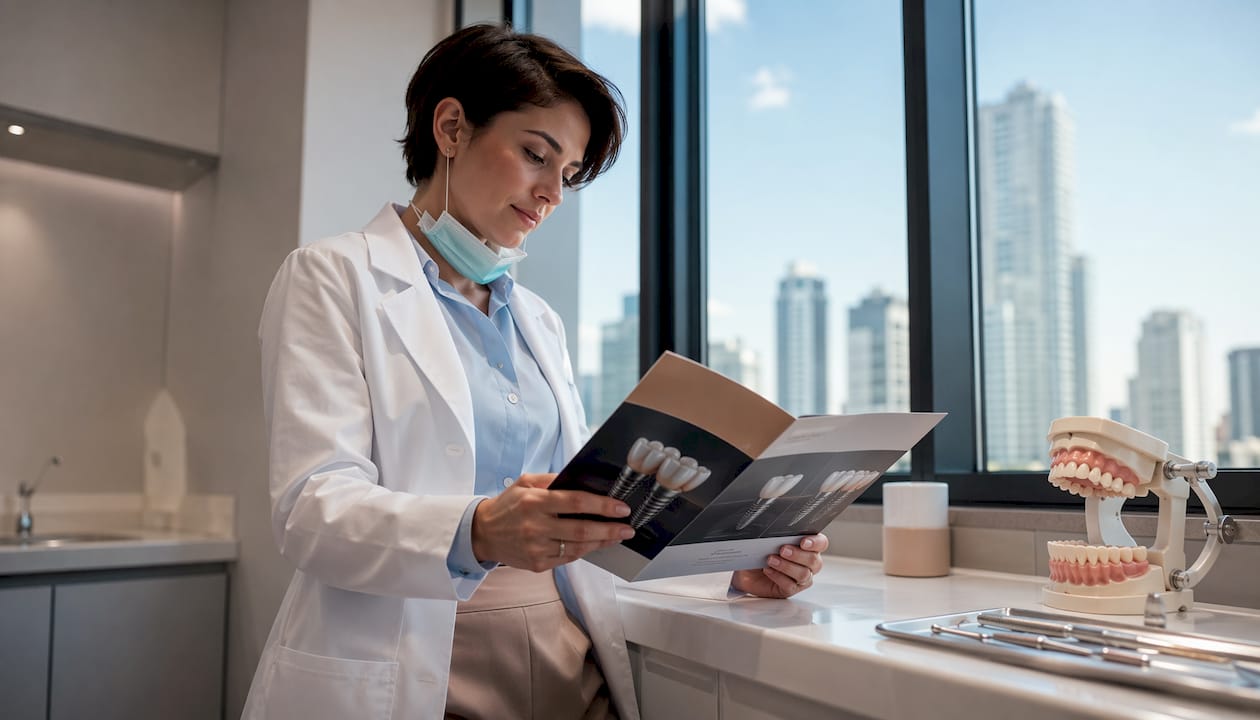
What are mini dental implants, and how do they differ from traditional implants?
Mini dental implants are one-piece titanium posts with a diameter under 3.3 mm, typically ranging within a narrow size suitable for minimal bone volume. That narrow profile is what sets them apart from standard implants, which are two-piece systems (a separate implant body plus an abutment) measuring 3.5 mm or wider. Think of a mini implant as a single, slender screw with a ball-shaped or square prosthetic head already built in, rather than a post that requires a second component attached later.
Here is a quick side-by-side of the key structural differences:
- Diameter: Mini implants are under 3.3 mm; standard implants are generally 3.5 mm and above
- Design: One-piece titanium unit vs. two-piece implant-plus-abutment system
- Placement: Often placed flapless (no incision needed) vs. traditional open-flap surgery
- Bone requirement: Suited for narrow ridges where standard implants physically will not fit
- Primary use: Denture stabilization and single-tooth replacement in tight spaces
- Immediate loading: Can often support a prosthetic the same day as placement
Both types use the same biocompatible titanium material and rely on osseointegration, the process by which bone fuses to the implant surface, for long-term stability.
Table of Contents
- Why mini dental implants offer real advantages for many patients
- Who is a good candidate for mini dental implants?
- What dental professionals want you to know before choosing this option
- What the mini dental implant procedure actually looks like
- How much do mini dental implants cost in the United States?
- Potential risks and complications you should understand
- How long do mini dental implants last, and what do the success rates show?
- Types and materials used for mini dental implants
- Post-procedure lifestyle and dietary adjustments that help healing
- Maintenance habits that keep your implants healthy for years
- Ready to find out if mini dental implants are right for you?
- Key Takeaways
Why mini dental implants offer real advantages for many patients
The benefits here go beyond just size. Because the procedure is less invasive, the whole experience tends to be more comfortable and far less disruptive to your daily life.
- Less surgical trauma: Flapless placement means no cutting and lifting of gum tissue in most cases, which directly reduces swelling and soreness
- Faster recovery: Many patients resume normal activities within one to two days, compared to the week or more typical after standard implant surgery
- No bone grafting needed: Because mini implants work in narrower bone, they often eliminate the need for a separate grafting procedure entirely
- Lower cost: With fewer surgical steps and no grafting, the overall treatment expense is meaningfully lower
- Immediate denture stabilization: The ball-socket O-ring attachment system lets your dentist secure a denture the same day, so you leave the office with a stable, functional prosthetic
- Improved quality of life: Patients report significant gains in comfort, chewing ability, and confidence once loose dentures are stabilized
For patients who have been told they lack enough bone for traditional implants, this option can feel like a door opening that seemed permanently closed.
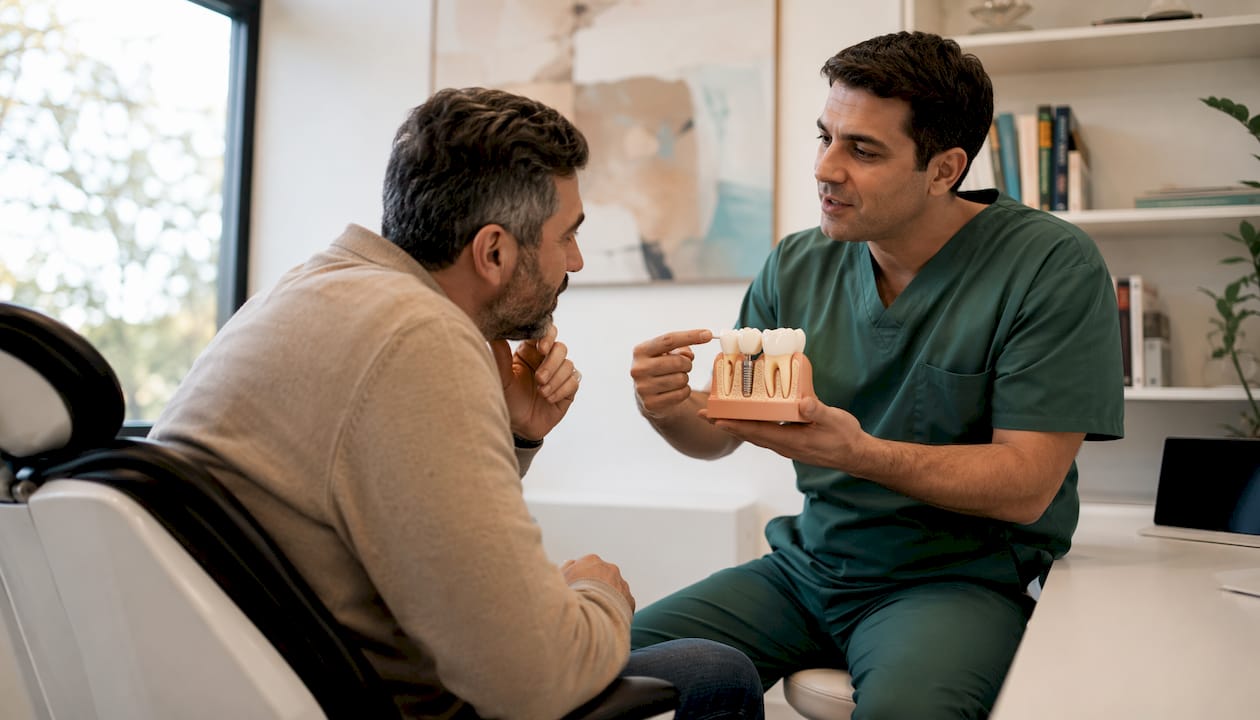
Who is a good candidate for mini dental implants?
Not everyone qualifies, and that is actually a good thing. Proper candidate selection is what makes these implants work well long-term.
You are likely a strong candidate if you:
- Have a narrow jaw ridge or limited space between teeth
- Need denture stabilization for a lower or upper removable prosthetic
- Want to avoid bone grafting due to health, cost, or recovery concerns
- Are an adult with fully developed jaw bones
Mini implants are generally not recommended if you:
- Are a child or teenager with incomplete jaw development
- Have low bone density classified as Type III or IV, which raises the risk of implant failure
- Need a molar replacement or a fixed full-arch bridge, where biting forces exceed what a narrow implant can safely handle
- Have uncontrolled diabetes, active gum disease, or smoke heavily, all of which impair healing and osseointegration
The anterior mandible (lower front jaw) is the most common and reliable location for these implants. The posterior molar region is where they tend to struggle, simply because the forces generated there are too great for a narrow post to sustain over time.
What dental professionals want you to know before choosing this option
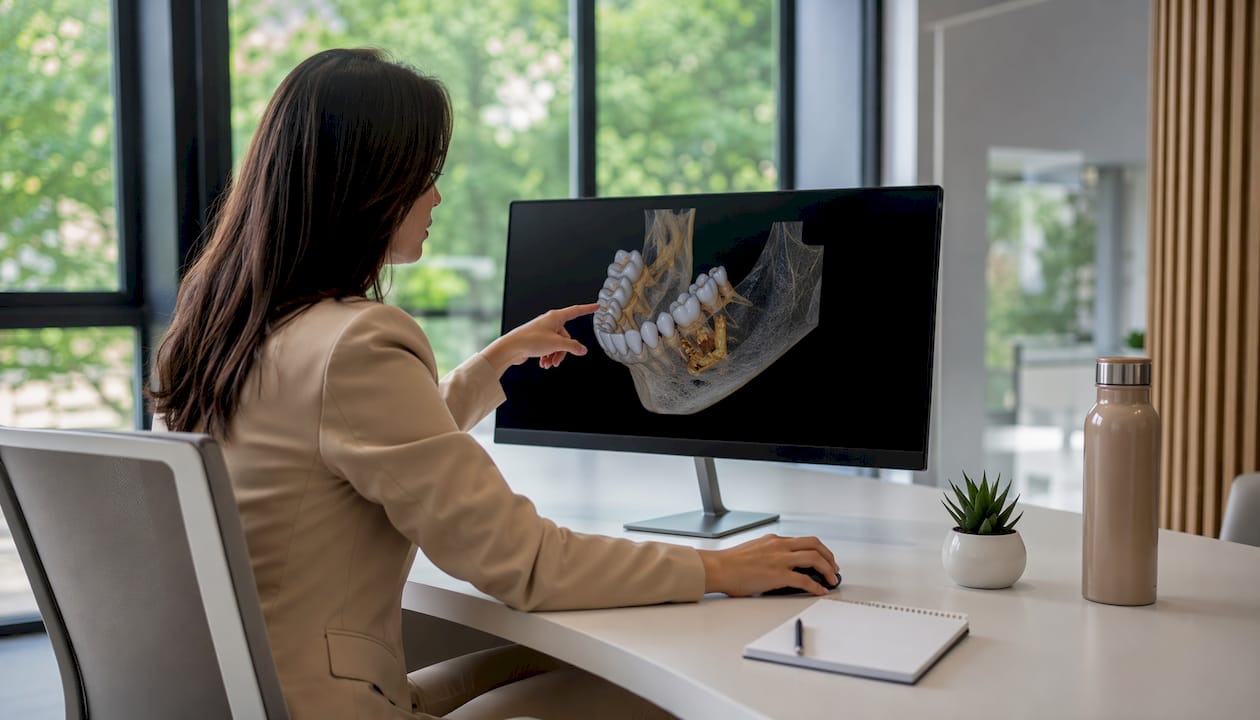
I’m Dr. Kamboj, and one thing I want to be clear about: choosing mini implants is an anatomy-driven decision, not a budget shortcut. Clinical literature consistently stresses that affordability does not mean less rigorous care. Proper diagnostics, including a Cone Beam CT (CBCT) scan, are still required to assess bone quality, measure ridge width, and map nerve locations before any implant is placed.
Experts in the field emphasize anatomical appropriateness as the primary selection criterion, not cost. A patient who is a poor anatomical fit for standard implants may be a perfect candidate for mini implants, and vice versa. The prosthetic limitations are real: the single-piece design limits the angle adjustments a dentist can make after osseointegration, and the implants are not suited for high-force applications like full-arch fixed bridges.
Pro Tip: Ask your dentist specifically whether a CBCT scan is part of your implant workup. A 3D CBCT scan gives your provider a precise map of your bone density, ridge width, and nerve position, which is the foundation of a safe, successful outcome.
Long-term success depends heavily on selecting the right patient for the right application. When that match is made carefully, the results are genuinely impressive.
What the mini dental implant procedure actually looks like
The process is straightforward, and most patients are surprised by how manageable it feels.
- Preoperative imaging: A panoramic X-ray is the minimum; a CBCT scan is strongly recommended for narrow ridges or complex anatomy
- Anesthesia: Local anesthesia is administered to keep you comfortable throughout
- Flapless or minimal-flap technique: If the ridge is wide enough, the dentist uses a small pilot drill through the gum without cutting; a narrow ridge may require a small crestal incision
- Implant insertion: The self-tapping titanium screw is driven into the pilot hole using a ratchet, typically at 35 N/cm of torque, until it reaches primary stability
- Immediate loading: Once stable, the O-ring housing in your denture snaps onto the ball head, securing the prosthetic the same day
- No sutures in most cases: Flapless placement means the gum tissue closes naturally around the implant neck
Recovery is typically mild. Expect minimal swelling and tenderness for a day or two, manageable with over-the-counter pain relief. Most patients do not need prescription medication.
How much do mini dental implants cost in the United States?
Cost is one of the most common questions, and the answer is genuinely encouraging for most patients.
| Cost Factor | Mini Dental Implants | Traditional Implants |
|---|---|---|
| Per implant (placement) | $500–$1,500 | $1,500 |
| Bone grafting | Usually not required | Often required |
| O-ring replacement | Periodic (every 12–18 months) | N/A |
| Denture or prosthetic | Varies by case | Varies by case |
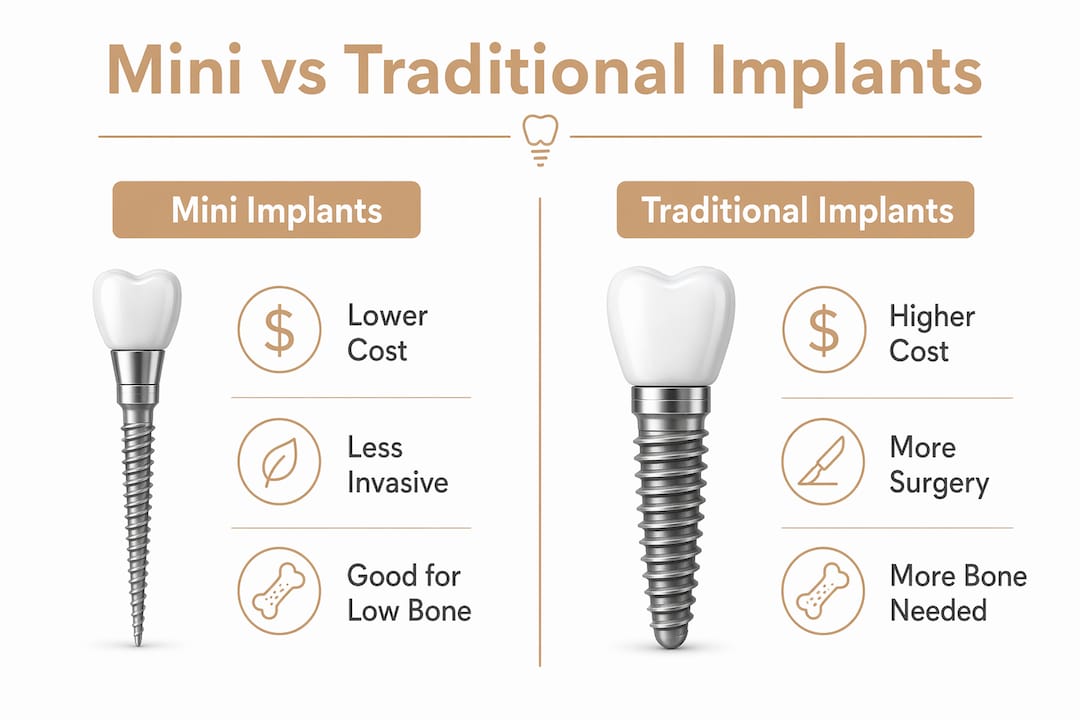
The lower per-implant fee reflects fewer surgical steps, not lower-quality care. Because bone grafting is usually avoided, the total treatment cost can be significantly less than a comparable traditional implant case. Insurance coverage for mini implants varies widely; many plans treat them similarly to standard implants for denture stabilization, but you will want to verify your specific benefits before treatment.
Financing options like CareCredit are widely accepted at dental offices and can spread the cost over monthly payments, making treatment accessible even when insurance falls short.
Potential risks and complications you should understand
Mini dental implants are safe and well-tolerated, but no surgical procedure is without risk. Being informed helps you make a confident decision.
Common complications include implant fracture under excessive biting force, which is why molar placement is generally avoided. Peri-implant bone loss can occur if occlusal forces are not properly managed or if the prosthetic is not relined periodically. Infection, though uncommon with flapless technique, remains a possibility if post-operative hygiene is neglected.
The single-piece design also means that if an implant fails, removal is relatively straightforward with minimal surgical trauma, which is actually an advantage over standard implants in that scenario. Failure risk increases with poor bone density, smoking, and uncontrolled systemic conditions like diabetes. Choosing an experienced provider who performs thorough diagnostics upfront is the single most effective way to reduce complication risk.
How long do mini dental implants last, and what do the success rates show?
The evidence is reassuring. A randomized controlled trial reported excellent survival and success rates for both mini and standard implants for mandibular overdenture retention over medium-term follow-up. Medium-term data consistently shows that mini implants perform comparably to standard implants when used in appropriate applications.
Long-term durability depends on three factors: bone quality at the time of placement, prosthetic design that respects load limits, and consistent maintenance. Dense cortical bone (Types I and II) provides the best foundation. Patients who keep up with regular dental visits, maintain good oral hygiene, and have their dentures relined as needed tend to see the best outcomes over time.
Types and materials used for mini dental implants
All mini dental implants are made from Grade 4 or Grade 5 titanium alloy, the same biocompatible material used in standard implants and orthopedic hardware. The surface is typically treated to promote faster osseointegration, through sandblasting, acid etching, or a combination of both.
Design variations include the ball-head type (most common, used for overdenture retention via O-ring attachments), the square or flat head type (used for fixed single-tooth or small bridge applications), and the bracket-style head (used in orthodontic anchorage rather than tooth replacement). Diameter options generally run from 1.8 mm to 3.0 mm, with length varying based on available bone height.
Post-procedure lifestyle and dietary adjustments that help healing
The first 48–72 hours are the most important window for protecting the implant site. Stick to soft foods like yogurt, mashed potatoes, scrambled eggs, and smoothies during this period. Avoid anything hard, crunchy, or chewy until your dentist confirms the implant has achieved stable osseointegration.
Smoking slows healing significantly and raises the risk of implant failure, so stopping before and after the procedure gives your implant the best chance. Alcohol should also be avoided for at least 48 hours post-surgery. Once fully healed, most patients return to a normal diet without restrictions, which is one of the real quality-of-life wins this treatment delivers.
Maintenance habits that keep your implants healthy for years
Think of your mini implants like natural teeth: they need daily attention to stay healthy.
- Brush twice daily with a soft-bristle toothbrush, paying close attention to the gum line around each implant
- Floss or use an interdental brush daily to clear plaque from around the implant neck
- Remove and clean your denture nightly if you have an implant-retained overdenture; soak it in a denture cleanser and rinse the O-ring attachments
- Schedule professional cleanings every six months so your dentist can check for bone changes, O-ring wear, and prosthetic fit
- Replace O-rings every 12–18 months as retention force diminishes with wear
- Have your denture relined periodically, since bone remodeling over time can change the fit and alter force distribution on the implants
Consistent care is what separates a 5-year implant from a 15-year one.
Ready to find out if mini dental implants are right for you?
If you have been living with loose dentures or missing teeth and wondering whether a less invasive option exists, Claytondentalstudio in Humble, TX is the place to start. Dr. Kamboj brings nearly a decade of restorative experience to every implant consultation, combining advanced CBCT imaging with honest, personalized treatment planning. You get a clear picture of your bone anatomy, a candid assessment of your options, and a care plan built around your actual needs, not a one-size-fits-all recommendation.
Claytondentalstudio offers dental implant services for patients across the greater Houston area, including Humble and Atascocita. Whether you are exploring mini implants for the first time or ready to move forward, the next step is a conversation. Visit Clayton Dental Studio’s services page to learn more or request your consultation today.
Key Takeaways
Mini dental implants are a clinically sound, anatomy-driven option for tooth replacement and denture stabilization, with costs ranging from $500 to $1,500 per implant and recovery typically occurring within one to two days.
| Point | Details |
|---|---|
| What they are | One-piece titanium posts under 3.3 mm wide, designed for narrow ridges and denture stabilization |
| Cost advantage | Per-implant fees of $500–$1,500, often without the added cost of bone grafting |
| Proven survival rates | A randomized controlled trial showed 100% survival over 18 months with success rates above 90% |
| Best candidates | Adults with narrow jaw ridges, limited bone volume, or loose dentures who are not suited for standard implants |
| Claytondentalstudio | Dr. Kamboj offers implant consultations with CBCT imaging in Humble, TX for patients across the greater Houston area |
Recommended
Ready to Schedule Your Appointment?
Dr. Kamboj and the Clayton Dental Studio team are here to help. Call us or book online today.