
Clinic backed retention roadmap for aligner patients. Start a retainer immediately, wear 20–22 hours for the first 6 months, then switch to nights only.
Clinic Backed Retention for Aligner Patients: Wear 20–22 Hours
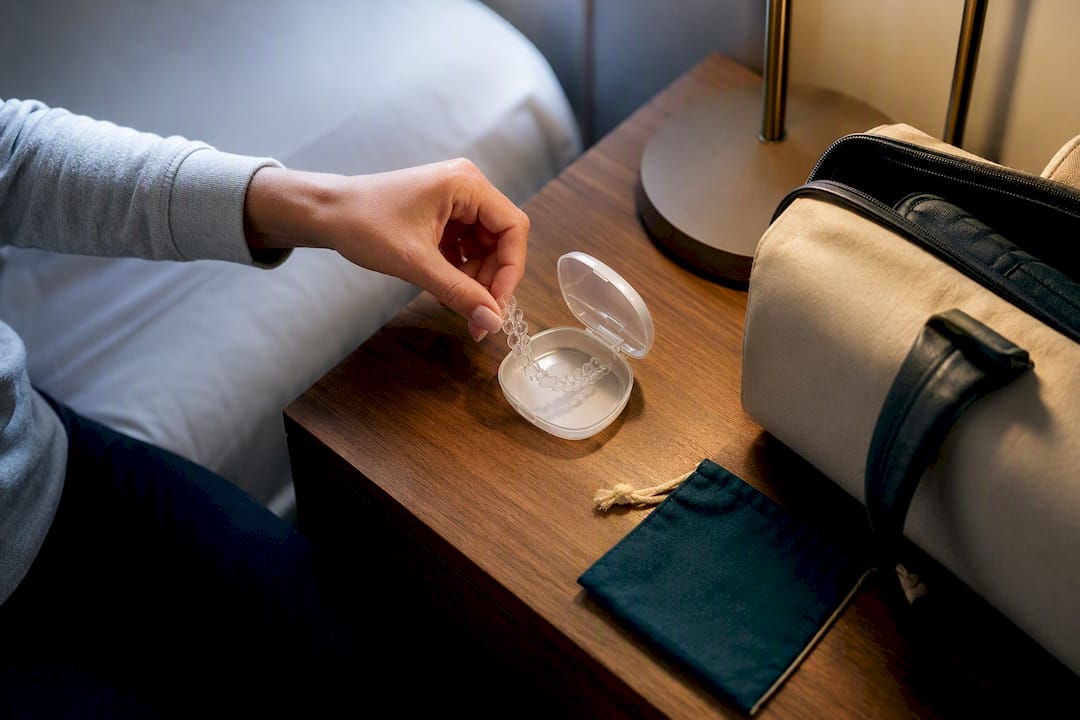
Yes, you need a retainer after finishing aligner treatment, and you need it right away. Most patients wear a fitted retainer full time for several months initially, then shift to nights only. Your last aligner tray was never meant to be a permanent solution. Ask your dentist or orthodontist to fit you with a real retainer before your teeth start drifting.
TL;DR:
- Most patients wear a fitted retainer full-time for several months after aligner treatment, then transition to nighttime wear indefinitely to prevent relapse.
- Clear retainers last 1 to 3 years with daily use, while Hawley retainers can last several years thanks to durable materials, but all require timely replacement if damaged or warped.
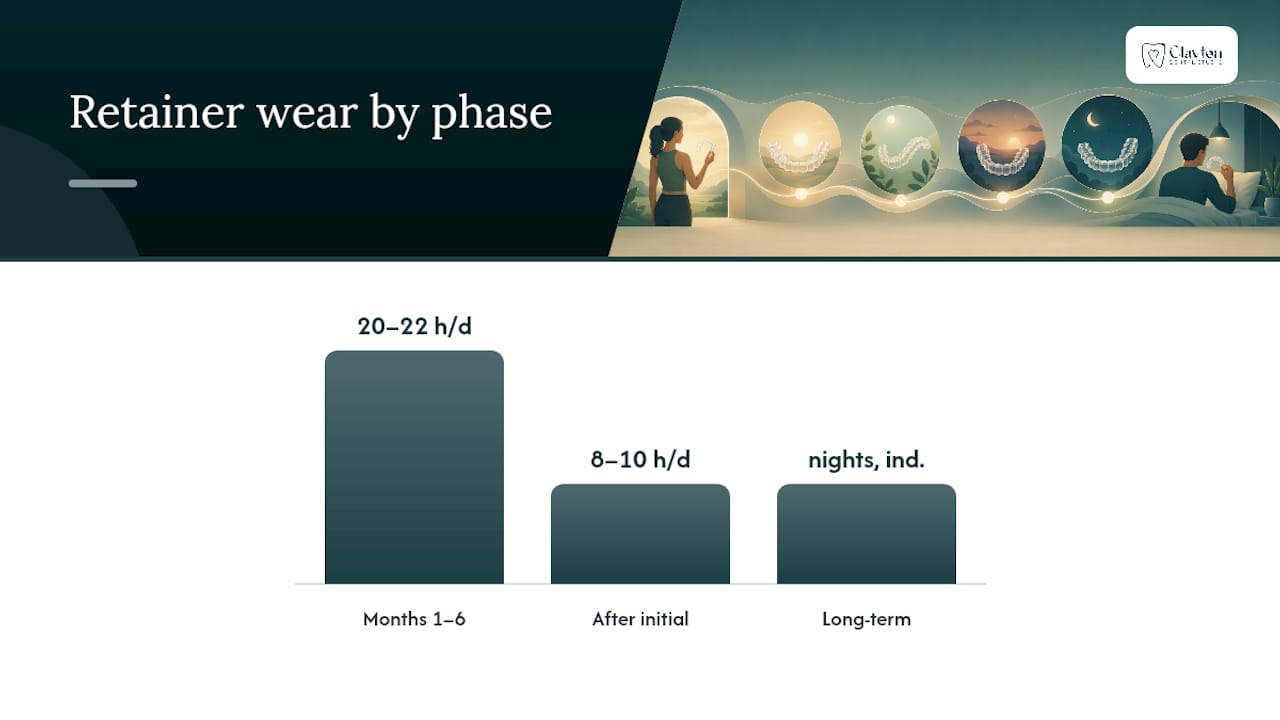
- During the first six months, daily retainer wear should be 20 to 22 hours, with gradual reduction to nights only, based on individual risk factors evaluated by a clinician.
- Regular cleaning with a soft brush and avoiding hot water, abrasive toothpaste, and pets helps maintain retainer hygiene and integrity; keep a spare case for travel.
- Immediate dental attention is necessary if a retainer cracks, breaks, feels tight after missed nights, or no longer fits properly to avoid unintended tooth movement.
Table of Contents
- Types of Retainers After Aligners: Which One Fits Your Smile?
- How Long Do You Need to Wear a Retainer After Aligners?
- How Long Do Retainers Last, and When Should You Replace One?
- Daily Retainer Care: A Routine That Actually Sticks
- What to Do If Your Retainer Breaks, Feels Tight, or Goes Missing
- When to Call Your Dentist or Orthodontist About Your Retainer
- The Clinic’s View on Retention After Aligners
- Book a Retainer Evaluation at Clayton Dental Studio
- Sources
Types of Retainers After Aligners: Which One Fits Your Smile?
Not every retainer works the same way, and the one your clinician recommends usually depends on how much movement your teeth went through and how much relapse risk you carry.
- Clear (Essix-style) retainers. Thin, molded plastic trays that look almost identical to your last aligner. They’re comfortable, nearly invisible, and popular with aligner graduates because the transition feels familiar. Invisalign’s own retainer guidance notes these tend to need replacement more often than sturdier options.
- Hawley retainers. A pink acrylic base with a metal wire across the front teeth. They’re bulkier and more visible, but the acrylic and wire can be adjusted, and they often outlast clear versions by years.
- Fixed (bonded) retainers. A thin wire cemented behind the front teeth, usually the lower arch. It works around the clock without you thinking about it, which makes it a strong choice for teeth that rotated significantly during treatment.
- Combination approach. Many clinicians bond the lower arch and give a removable retainer for the upper, balancing constant protection with easier cleaning.
Some practices also offer thicker, multi-layer clear retainers designed for extended daily wear between replacements. Whichever route you take, the goal is the same: hold what your aligners just built.
How Long Do You Need to Wear a Retainer After Aligners?
Retention follows a phase-down pattern, and skipping the first phase is where most relapse starts.
- Months 1 through 6: near full-time wear. Expect 20 to 22 hours a day, removing the retainer only to eat and clean your teeth. This mirrors the AAO’s guidance on post-treatment retention, which frames this window as the highest-risk period for teeth to drift back.
- After the initial phase: nights only. Once your clinician clears you, you typically move to nighttime wear alone.
- Long-term: often indefinite. Plenty of patients keep wearing a retainer at night for years, sometimes for life, because the alternative is watching a straight smile slowly relapse.
The biology behind this is straightforward. Bone and the ligament fibers around your teeth need months to fully remodel around their new positions, and orthodontic clinics that track wear-time outcomes consistently point to the first six to twelve months as the danger zone. Certain factors push clinicians toward stricter, longer retention: your age, how much rotation or spacing you started with, whether you grind or clench at night, and any prior extractions. Nobody but your treating clinician should decide when it’s safe to cut back on wear time. That’s a clinical call, not a guess based on how straight your teeth look in the mirror.
Pro Tip: Set a phone reminder for the first two weeks after you switch to nights-only. That habit is the hardest one to build, and the easiest one to forget on a busy Tuesday.
How Long Do Retainers Last, and When Should You Replace One?
Lifespan varies a lot by material, and knowing the rough timelines helps you budget for replacements before a fit problem turns into a bigger issue.
- Clear/Essix retainers: commonly last 1 to 3 years with daily wear, according to Invisalign’s retainer resource.
- Hawley retainers: can last several years thanks to the durable acrylic and adjustable wire.
- Fixed retainers: hold up well long term but may need repair if the wire loosens, bends, or debonds from a tooth.
Watch for cracks, warping, a persistent tight feeling, yellowing, or a bonded wire that’s come loose. Any of those is a sign to call your provider, not wait it out. Cost varies by type and by practice, so ask your dentist for a specific quote and check whether your dental insurance covers retainer replacement, since coverage differs plan to plan. Replacing a worn retainer promptly is almost always cheaper and faster than the retreatment needed after real relapse.
Daily Retainer Care: A Routine That Actually Sticks
Retainers pick up bacteria and plaque fast, so a short daily habit matters more than an occasional deep clean.
- Every day: brush and floss your teeth first, rinse the retainer, then gently brush it with a soft brush and water. Take it out before eating or drinking anything besides water.
- Weekly: soak it in a cleaner your clinician recommends, or an occasional diluted vinegar soak if that’s what they suggest for your specific retainer material.
- Avoid: hot water (it warps clear plastic), abrasive toothpaste, bleach, and leaving the retainer anywhere a pet or a hot car dashboard can reach it.
- Storage: always use a hard case, keep a spare in your bag or car for travel, and label the case if a teenager in the house has one too.
Good hygiene habits carry over from aligner wear, and the step-by-step oral care approach used for braces applies just as well to retainer maintenance.
Pro Tip: Keep a travel case in your everyday bag, not just your bathroom drawer. Most lost retainers disappear during a restaurant meal or a hotel stay, not at home.
What to Do If Your Retainer Breaks, Feels Tight, or Goes Missing
Stop trying to force a retainer that no longer seats properly. Pushing it into place can bruise gum tissue or put uneven pressure on your teeth.
- Feels tight after a few missed nights? Resuming wear often resolves it, but if it still doesn’t seat comfortably, call your clinician rather than forcing it.
- Cracked, lost, or won’t fit at all? Contact your provider promptly. The faster you act, the easier it is to recapture any shift before it becomes permanent.
- Bonded wire broken or poking your cheek or tongue? Treat this as urgent. A loose wire can irritate or cut soft tissue until it’s fixed.
Depending on how much movement occurred, your clinician might simply adjust the appliance, take new scans for a remake, or in more significant cases, recommend a short round of aligners to correct the drift.
When to Call Your Dentist or Orthodontist About Your Retainer
Some situations call for an appointment right away; others fit into a routine check.
- See your provider promptly if: a wire breaks, the retainer causes real pain, or it’s lost or badly damaged.
- Book a routine check: most patients benefit from an annual or semiannual retainer and bite check, more often if you have relapse risk factors.
- What happens at the visit: your clinician checks fit, bite alignment, and hygiene, and may take a new scan or impression before advising a repair or a remake.
Bring your retainer and a quick note on how consistently you’ve been wearing it. That small detail speeds up triage significantly.
The Clinic’s View on Retention After Aligners
Retention isn’t a one-time appliance you get handed on your last aligner visit and forget about. Retention plans get built around each patient’s specific movement pattern and relapse risk, fitted in person rather than mailed out generically. Dr. Navneet Kamboj built her approach around the same philosophy that shapes the rest of her practice: prevention beats correction, and a retainer check takes far less time than a second round of treatment. Ongoing follow-up isn’t an upsell. It’s the piece that protects everything your aligners already accomplished.
— Clayton Dental Studio
Book a Retainer Evaluation at Clayton Dental Studio
If your retainer feels off, or you’re not sure which type you should even be wearing at this stage, a quick evaluation solves both problems at once. A local dental practice checks fit and bite, repairs or remakes damaged retainers, takes a digital scan when a new appliance is needed, and builds a wear schedule around your specific teeth rather than a generic timeline.
Bring your current retainer to your visit, along with a rough sense of how often you’ve actually been wearing it. That helps Dr. Kamboj get you back on track faster. You can review the full range of dental services offered at the practice or head to the Clayton Dental Studio homepage to schedule a retainer evaluation. If your teeth have already started shifting and you’re weighing another round of aligners, the clear aligners page walks through what that process looks like the second time around. Protecting the smile you already earned is a lot simpler than rebuilding it.
Sources
For more on retention schedules, retainer types, and care standards, see the AAO’s overview of retainers, Invisalign’s retainer guidance, and Cleveland Clinic’s retainer care resource.
This article is general information, not a substitute for advice from a qualified doctor. Consult a qualified healthcare professional about your own circumstances before acting on anything here.
- Orthodontic Retainers: Types, Care, & Life After Br | AAO
- Retainers after Invisalign® treatment | Invisalign
- Retainer Wear Time: Clabaugh Orthodontics’ Guide & Care
Recommended
Ready to Schedule Your Appointment?
Dr. Kamboj and the Clayton Dental Studio team are here to help. Call us or book online today.