
Evidence backed sun damage treatment that combines in-office procedures, prescription topicals, and daily SPF. Book a Dermal Hygiene™ consult at Clayton...
Clear Brown Spots in 1–3 Sessions: Sun Damaged Skin Care in Humble
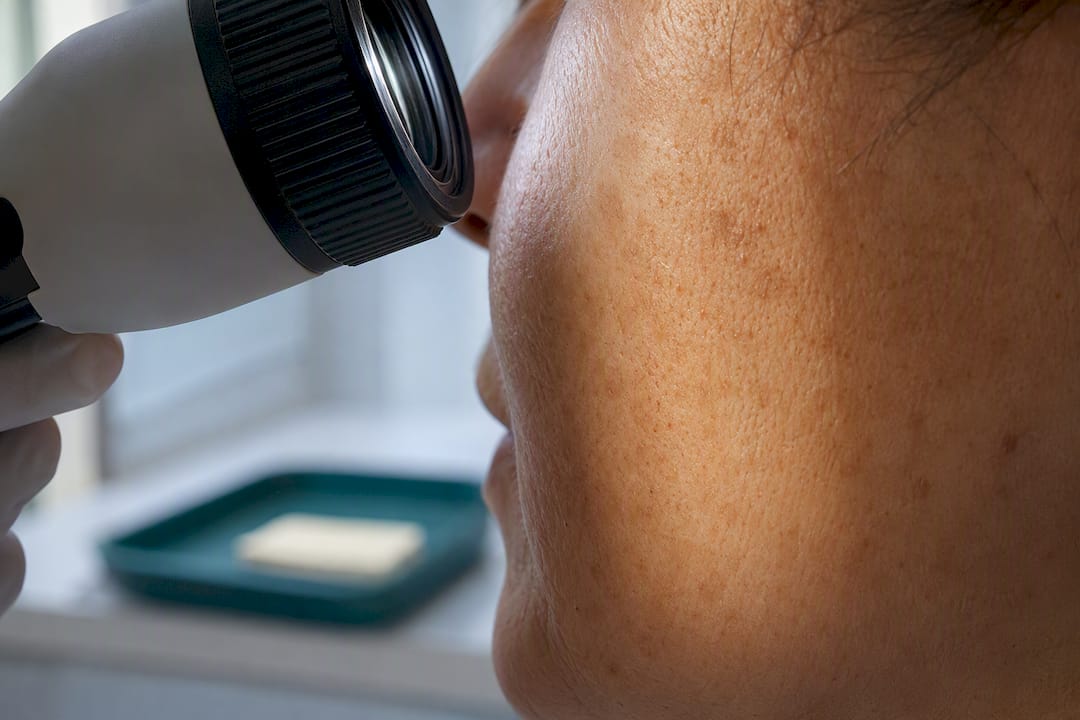
You can significantly improve sun damaged skin, but the results depend on combining in-office procedures, prescription topicals, and daily sun protection rather than relying on any single fix. Deep cellular damage from years of UV exposure isn’t fully reversible, so realistic goals matter as much as the right treatment. If a spot changes shape, feels rough, bleeds, or looks different from your other sun spots, book an exam with a dermatologist before doing anything cosmetic to it.
TL;DR:
- Topical retinoids and cysteamine can reduce sun spots gradually over 8 to 12 weeks, but full cellular repair from years of UV damage remains limited.
- In-office treatments like IPL, pigment lasers, and fractional lasers clear specific damage faster, often within a few sessions, but with higher risks andDowntime, especially in darker skin tones.
- Choosing a qualified, board-certified provider with experience in your skin tone and conducting patch tests significantly lowers complication risks during laser treatments.
- Consistent daily sun protection, including broad-spectrum SPF and physical barriers, is essential to maintain progress and prevent new damage from forming.
- A personalized treatment plan based on skin type and damage severity, combining procedures and topicals, offers the best chance for meaningful improvement.
Table of Contents
- How Sun Damage Treatment Works: Matching the Problem to the Therapy
- Which Topical Treatments Actually Repair Sun Damaged Skin?
- What In-Office Procedures Treat Sun Damage Fastest?
- How Do You Choose a Safe Provider for Sun Damage Treatment?
- How Long Until You See Results, and How Do You Maintain Them?
- What At-Home Options Actually Help Between Clinical Visits?
- Does Diet Really Affect How Sun Damaged Skin Heals?
- How Should Treatment Change Based on Skin Type and Severity?
- Clayton Dental Studio’s Approach to Sun Damage and Skin Health
- Ready to Address Sun Damage? Here’s How a Dermal Hygiene™ Consult Works
- Sources
How Sun Damage Treatment Works: Matching the Problem to the Therapy
Not every sun spot needs the same fix, because “sun damage” actually describes several different problems happening in different layers of your skin. A brown spot on your cheek and a network of broken capillaries on your nose respond to completely different tools, and using the wrong one wastes time and money.
Here’s how the main visible signs map to what’s actually happening underneath:
- Lentigines (flat brown spots): excess melanin sitting in the epidermis, best targeted by pigment-focused topicals or light-based devices.
- Fine lines and rough texture: collagen breakdown in the dermis, which responds to treatments that stimulate remodeling rather than just resurfacing.
- Telangiectasia (visible small vessels): dilated blood vessels near the surface, treated with light-based devices tuned to hemoglobin rather than melanin.
- Deep wrinkling and laxity: structural collagen loss that topicals alone rarely fully correct.
Before any cosmetic treatment, a clinician should rule out actinic keratoses or early skin cancer, since these can mimic ordinary sun spots and need medical management first, not cosmetic polish, according to the American Academy of Dermatology.
Which Topical Treatments Actually Repair Sun Damaged Skin?
Topicals are the slowest tool in the kit, but they’re also the most durable for maintenance, and they’re where most people should start.
Retinoids (tretinoin, adapalene) work by speeding up skin cell turnover and encouraging collagen production. Most dermatologists start patients on a lower concentration a few nights a week and build up as tolerance improves. Expect visible smoothing and pigment fading over 8 to 12 weeks, with some redness or peeling in the first month that usually settles with consistent use and a good moisturizer.
Brighteners target melanin production directly. Prescription hydroquinone and the combination mequinol plus tretinoin remain standard options, while tranexamic acid has become a popular adjunct for stubborn discoloration. The newest evidence-backed player is stabilized cysteamine: a 2024 randomized controlled trial found it reduced pigment values in solar lentigines by roughly 40% after 12 weeks of daily use compared to a vehicle cream, a meaningful result for an over-the-counter-adjacent ingredient.
Antioxidants and barrier support round out the routine. A morning vitamin C serum helps neutralize free-radical damage from daily UV exposure, and niacinamide calms irritation from retinoids while supporting the skin barrier.
- Apply retinoids at night only, never layered under sunscreen.
- Use vitamin C in the morning, under sunscreen, for antioxidant coverage during the day.
- Pause retinoids and strong brighteners 5 to 7 days before any laser, peel, or microneedling session.
Pro Tip: If a new product stings or turns your skin red for more than an hour, stop and simplify your routine to a gentle cleanser, moisturizer, and sunscreen until your skin barrier recovers.
Clinicians generally caution against chasing every trending cosmetic ingredient. Established options like retinoids and cysteamine have real trial data behind them, while many boutique serums do not, per the Cleveland Clinic.
What In-Office Procedures Treat Sun Damage Fastest?
Devices and peels clear existing damage faster than any cream, but they come with more downtime and more variables to manage. Here’s how the major categories break down:
- IPL and picosecond/pigment lasers. These target melanin directly and are generally the fastest route to clearing well-defined brown spots, often in one to three sessions. Post-inflammatory hyperpigmentation (PIH) is the main risk, especially in medium to deep skin tones.
- Fractional and ablative lasers. These create controlled micro-injury to trigger collagen remodeling, useful for texture, fine lines, and overall tone. Ablative versions deliver more dramatic results but require days to over a week of visible healing.
- Microneedling. A gentler collagen-stimulating option with far less downtime than ablative lasers, often used as a series of treatments rather than a single fix.
- Cryotherapy and Q-switched lasers. Best reserved for isolated, well-defined spots. Both carry a higher risk of PIH or scarring in darker skin tones and are less suited to widespread discoloration, according to Mayo Clinic.
- Chemical peels and dermabrasion. Peels work well on the face but need gentler formulations on the chest, which heals more slowly and is prone to blotchy re-pigmentation; hands generally tolerate more aggressive peeling.
- Injectables and fillers. Not a sun-damage treatment directly, but often used alongside the above to address volume loss and deep static lines that resurfacing alone won’t fix.
Clinical summaries consistently list these six categories as the core toolkit for treating photoaging, noting that outcomes vary by skin type, target sign, and operator skill, per the Merck Manual.
How Do You Choose a Safe Provider for Sun Damage Treatment?
The device matters less than who’s operating it. A picosecond laser in skilled hands and a mediocre laser in the same hands will outperform any cutting-edge device run by someone guessing at settings.
Ask directly whether the provider is board-certified in dermatology or a closely related specialty, and ask what specific device model they use and how much experience they have treating your skin tone. For Fitzpatrick IV through VI skin, PIH risk climbs sharply with aggressive settings, so a responsible provider will patch test first and start conservative, sometimes favoring picosecond lasers or a topical-first strategy over a single aggressive device session.
- Confirm the provider performs a skin-cancer check before any cosmetic treatment.
- Ask for a patch test and staged, conservative settings if you have deeper skin tone.
- Walk away from anyone promising zero risk or offering rock-bottom prices on high-risk devices like ablative lasers.
- Confirm they document informed consent, including realistic before/after expectations.
A staged approach for darker phototypes, topical prep first, then a test patch, then conservative device settings, then layered maintenance, consistently produces better outcomes with fewer complications, according to clinical practice guidance from ACOFP.
Pro Tip: Bring photos of your skin in different lighting to your consult. Sun damage often looks more dramatic in harsh overhead light than in a bathroom mirror, and it helps your provider gauge severity accurately.
How Long Until You See Results, and How Do You Maintain Them?
Patience matters here more than most people expect walking in.
- Topicals: expect the first visible changes at 8 to 12 weeks, with continued improvement over several months of consistent use.
- IPL and pigment lasers: most people need one to three sessions, with final results settling over several weeks to a couple of months as pigment flakes off and skin heals.
- Chemical peel series: deeper improvement usually requires a series spaced over months rather than a single treatment.
Once you’ve reached your goal, maintenance is what protects the investment. Daily broad-spectrum SPF 30+, or SPF 45+ if you’re outdoors often, applied every morning and reapplied every two to three hours outside, is the foundation everything else depends on, per the Cleveland Clinic. Pair that with a morning antioxidant serum, a nightly retinoid as tolerated, and touch-up device sessions roughly every 6 to 18 months depending on how aggressively your skin re-pigments. Skip the sunscreen step and new spots will simply return, sometimes within a single season.
What At-Home Options Actually Help Between Clinical Visits?
A solid at-home routine won’t replace a laser session, but it protects the results and slows new damage from forming. The order you apply products in matters as much as which products you choose.
In the morning: cleanse, apply a vitamin C serum, moisturize, then finish with sunscreen as the final step, never skipped, never substituted with a moisturizer that merely mentions SPF in small print on the label. At night: cleanse, apply your retinoid if it’s in rotation for that evening, then a barrier-repairing moisturizer with niacinamide or ceramides.
Over-the-counter brighteners containing stabilized cysteamine, azelaic acid, or niacinamide can meaningfully support pigment control between professional visits, though they work more slowly than prescription strength options. Gentle exfoliation with a low-percentage alpha hydroxy acid a few nights a week helps surface texture, but stacking too many active ingredients at once is the fastest way to trigger irritation that sets your progress back. If your skin turns red, tight, or flaky, simplify rather than push through it.
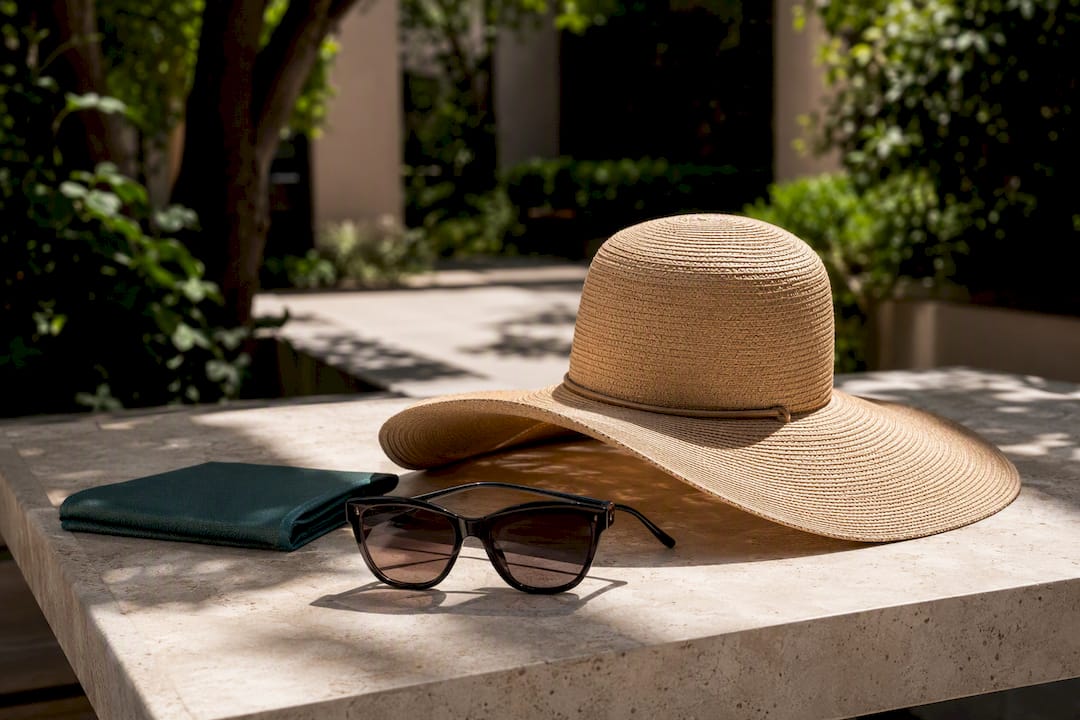
Physical protection matters just as much as products: a wide-brimmed hat, UV-blocking sunglasses, and seeking shade during peak midday hours all reduce the daily UV load your skin has to defend against, regardless of what’s in your medicine cabinet.
Does Diet Really Affect How Sun Damaged Skin Heals?
What you eat won’t reverse a decade of sun exposure, but it does influence how efficiently your skin repairs itself and how well it holds onto treatment results.
Diets rich in antioxidants, think colorful vegetables, berries, and green tea, help offset some of the oxidative stress UV light generates in skin cells. Adequate protein intake supports the collagen synthesis your skin relies on after any resurfacing procedure, since collagen is fundamentally a protein-building process. Staying well hydrated supports the skin barrier, though drinking extra water alone won’t undo pigment or wrinkles.
Lifestyle factors carry weight too. Smoking accelerates collagen breakdown and works against everything a laser or retinoid is trying to rebuild. Chronic poor sleep raises inflammatory markers that can slow healing after peels or laser sessions. Alcohol in excess dehydrates skin and can worsen redness after procedures like IPL. None of these factors will single-handedly repair sun damage, but ignoring them can quietly undercut a treatment plan you’re otherwise paying good money for.
How Should Treatment Change Based on Skin Type and Severity?
Two people with the same brown spot can need completely different treatment plans depending on their skin tone and how deep the damage runs.
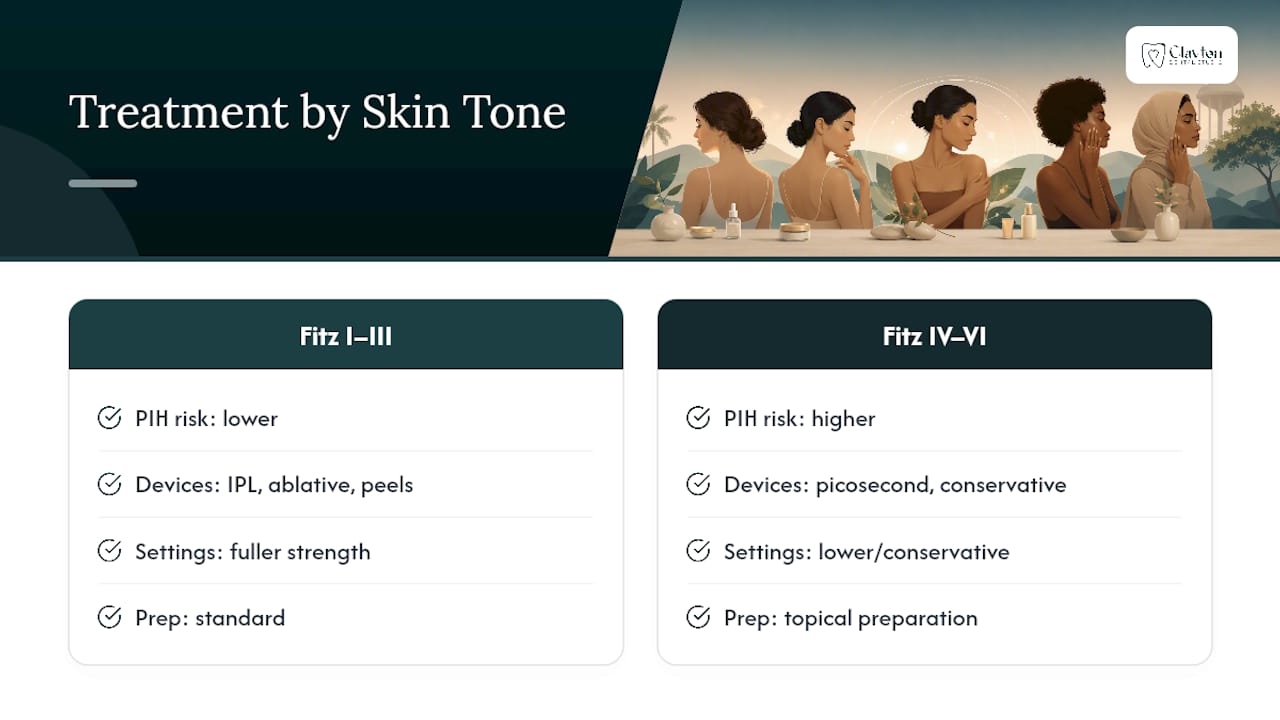
For lighter skin tones (Fitzpatrick I through III), a broader range of devices is generally usable at fuller strength, including IPL, ablative lasers, and deeper peels, since PIH risk is comparatively lower. For medium to deep skin tones (Fitzpatrick IV through VI), the safer path usually starts with topical preparation and conservative device settings, often favoring picosecond lasers over IPL or aggressive ablative treatments, since PIH and scarring risk rise meaningfully at higher settings, as evidence reviews on sun damage treatment consistently note.
Severity matters just as much as tone. Mild, diffuse discoloration with minimal texture change often responds well to topicals alone over a few months. Moderate damage, visible spots plus some texture irregularity, usually benefits from combining a topical routine with one or two device sessions. Severe damage, deep wrinkling, widespread pigment, visible vessels, and rough texture together, typically needs a longer combined plan: staged procedures spaced over months, layered with consistent topical maintenance in between. Rushing severe damage with one aggressive session rarely delivers the result patients expect, and it raises complication risk unnecessarily.
Clayton Dental Studio’s Approach to Sun Damage and Skin Health
Dr. Navneet Kamboj built Clayton Dental Studio’s approach to aesthetics that emphasizes prevention first, precision second. This philosophy extends to skin health through a combined program of in-office non-surgical therapies and medical-grade topical maintenance rather than treating either one as a standalone fix. That combined approach reflects what the evidence actually supports: devices clear existing damage faster, while topicals and sunscreen are what keep it from coming back.
— Clayton Dental Studio
Ready to Address Sun Damage? Here’s How a Dermal Hygiene™ Consult Works
If you’ve read this far, you already know the honest answer: no single cream or single laser session solves sun damage on its own. What actually works is a plan built around your skin tone, your severity level, and your daily habits, and that’s exactly what the Dermal Hygiene™ program at Clayton Dental Studio is built to deliver for patients in the greater Humble, TX area.
A consultation starts with a real medical exam, including a check for any lesions that need attention before cosmetic treatment, not a rushed sales pitch for the priciest package on the menu. From there, Dr. Kamboj builds a personalized plan that might combine topical brighteners, procedural options for fine lines and texture, and guidance on skin laxity if firmness is part of your concern. If jaw tension or TMJ discomfort is also on your radar, that’s addressed under the same roof. The next step is simple: visit the Clayton Dental Studio services page to see current offerings and request a consultation, or reach out directly to get a personalized plan started.
Sources
- Sun-Damaged Skin: Photoaging, Signs, Causes & Treatment — Cleveland Clinic
- Stabilized cysteamine trial for solar lentigines — PMC (2024)
- Chronic effects of sunlight and treatment overview — Merck Manual
- Age spots: Diagnosis and treatment — Mayo Clinic
This article is general information, not a substitute for advice from a qualified doctor. Consult a qualified healthcare professional about your own circumstances before acting on anything here.
Ready to Schedule Your Appointment?
Dr. Kamboj and the Clayton Dental Studio team are here to help. Call us or book online today.