
Discover essential veneers maintenance tips to extend the lifespan of your smile. Protect your veneers and natural teeth effectively.
Veneers Maintenance: Keep Your Smile Lasting Longer

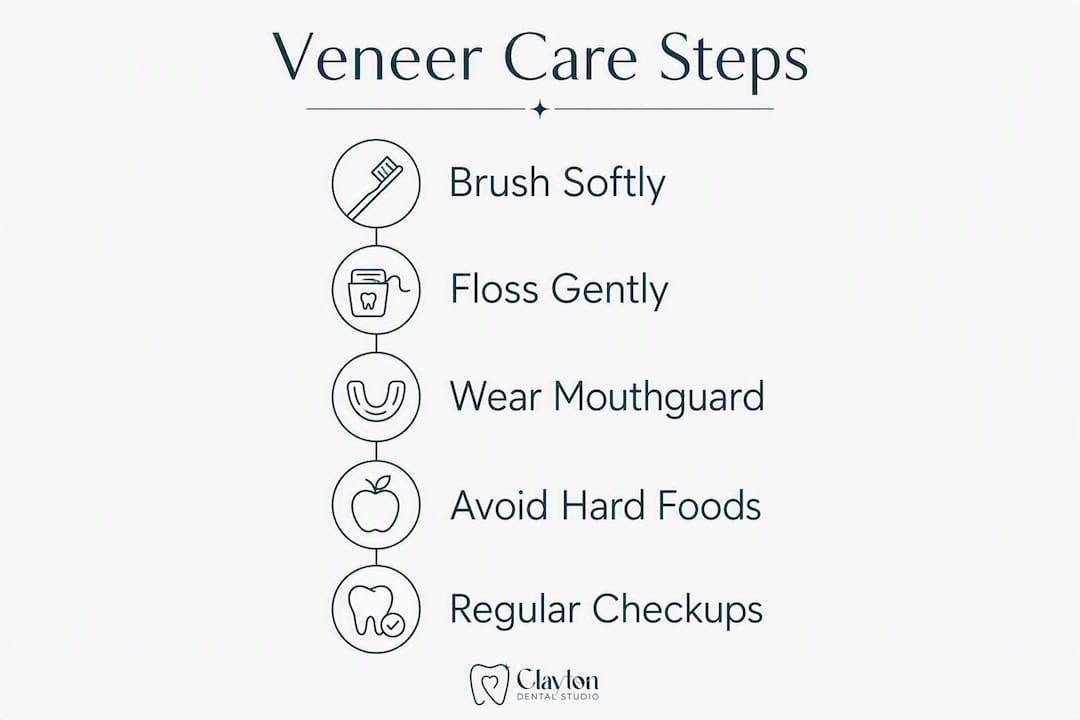
Consistent, gentle home care combined with regular professional oversight is the single most effective way to protect your veneers and the natural tooth structure underneath. Porcelain veneers typically last about a decade to a decade and a half, and patients who follow a disciplined daily routine can extend their lifespan significantly beyond the typical range. Composite veneers run shorter, generally several years, but the same care principles apply. Because enamel is reduced during placement, making veneers essentially irreversible, protecting them is a medical priority, not just a cosmetic preference. Because enamel is reduced during placement, making veneers essentially irreversible, protecting them is a medical priority, not just a cosmetic preference. Dr. Navneet Kamboj and the team at Clayton Dental Studio recommend starting with these four habits right away:
- Brush gently twice daily with a soft-bristled brush and non-abrasive toothpaste
- Floss at the gumline every day to protect veneer margins
- Avoid biting hard objects, ice, or using your teeth as tools
- Wear a custom night guard if you clench or grind while sleeping
Table of Contents
- What does good daily veneers maintenance actually look like?
- How do you protect veneers from chips, grinding, and daily wear?
- Which products are safe for veneers, and which should you skip?
- What should you expect at professional veneer care appointments?
- How long do veneers last, and when do you need to replace them?
- What should you do when a veneer chips, cracks, or falls off?
- Key Takeaways
- The part most veneer guides leave out
- Ready to protect your veneers with the right professional care?
- Useful sources
What does good daily veneers maintenance actually look like?
The daily routine for veneers is not complicated, but the details matter. Porcelain resists stains on its own surface, yet the natural tooth underneath and the margins where veneer meets tooth remain fully vulnerable to decay if plaque builds up. That makes consistent brushing and flossing non-negotiable.
Follow this morning and evening routine:
- Wet a soft-bristled brush and apply a pea-sized amount of non-abrasive fluoride toothpaste.
- Use gentle circular strokes along the gumline, paying close attention to the margin where each veneer meets the gum tissue.
- Brush for two full minutes, covering all surfaces without pressing hard.
- Floss once daily using waxed floss or a floss threader. Slide gently under the contact point and curve the floss down to the gumline on each side of the veneer.
- Rinse with an alcohol-free mouthwash or plain water, especially after coffee, tea, or acidic foods.
- Replace your toothbrush every three months or sooner if bristles splay.
A water flosser is a practical alternative for patients who find traditional floss awkward around veneers. It clears debris from margins effectively and is gentle on the bond. Just keep the pressure setting moderate.
Pro Tip: If you use an electric toothbrush, choose a model with a built-in pressure sensor and a soft replacement head. Electric brushes clean efficiently, but too much pressure on veneer margins over time can irritate the gum and stress the bond. Let the brush do the work; you guide it.
How do you protect veneers from chips, grinding, and daily wear?
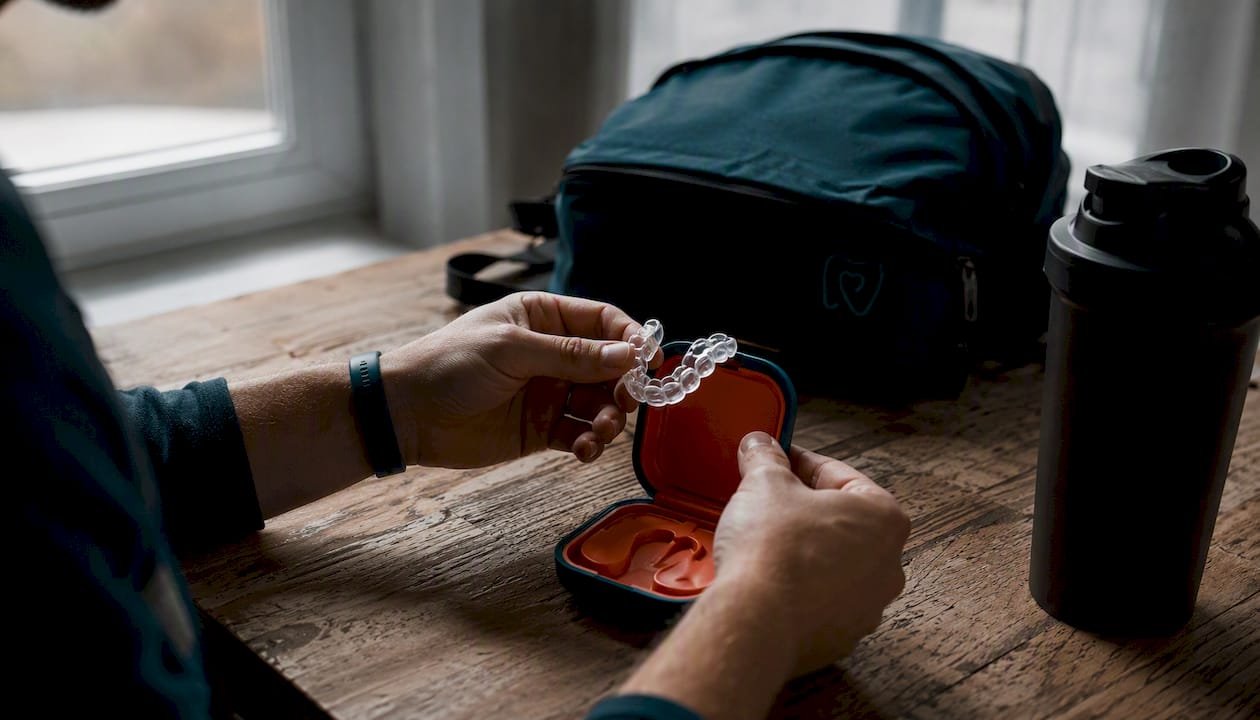
Mechanical stress causes more veneer failures than poor brushing does. Bruxism (nighttime clenching or grinding) concentrates enormous force directly at veneer margins, which are the thinnest and most vulnerable part of the restoration. A custom night guard, fitted by your dentist, distributes that force across the full arch and dramatically reduces the risk of fracture. Over-the-counter guards offer some protection, but a custom appliance fits more precisely and stays in place through the night.
Sports are another overlooked risk. A fitted mouthguard for contact sports protects veneers from direct impact. Custom guards from your dentist offer the best fit; boil-and-bite options from a pharmacy are a reasonable short-term backup.
Everyday habits matter just as much. Biting hard objects, chewing ice, opening packaging with your teeth, and biting nails are among the most common causes of veneer chips and fractures. Bite force concentrates at the thin incisal edge of a veneer, and a single hard crunch can fracture porcelain that has survived years of normal chewing. When eating harder foods like crusty bread or raw carrots, use your back teeth for the initial bite rather than your front veneers.
Pro Tip: Ask your dentist to check your bite at every routine visit. Occlusion problems, where teeth don’t meet evenly, are a frequent driver of veneer failure. Catching a slight shift early means a simple adjustment rather than a replacement.
Which products are safe for veneers, and which should you skip?
Choosing the right products at the store is one of the easiest ways to protect your investment. The wrong toothpaste or rinse can dull porcelain or weaken the bonding cement over months of daily use.
Use these:
- Soft or extra-soft nylon toothbrush (manual or electric with a soft head)
- Non-abrasive fluoride toothpaste labeled for sensitive teeth or enamel care; these have low RDA (Relative Dentin Abrasivity) scores and clean without scratching
- Waxed floss or a floss threader for gentle margin cleaning
- Water flosser on a low-to-medium setting as a floss complement
- Alcohol-free mouthwash to protect bond integrity over the long term
Avoid these:
- Whitening or abrasive toothpastes containing silica or baking soda. These particles cause microscopic scratches that permanently dull porcelain gloss without actually whitening the veneer surface.
- Charcoal toothpastes, which are highly abrasive and offer no clinical benefit for veneers
- Alcohol-based mouthwashes, which can gradually weaken dental cement over time, increasing the risk of debonding
- Whitening strips and at-home bleaching kits, because porcelain does not respond to bleaching agents, and whitening your natural teeth can create a visible color mismatch between veneers and surrounding teeth
- Medium or hard-bristled brushes, which scratch veneer surfaces over time
A simple rule: if the label says “whitening,” “deep clean,” or “charcoal,” put it back and look for “sensitivity” or “enamel care” instead.
What should you expect at professional veneer care appointments?
Home care handles the daily work, but professional visits catch what you cannot see or feel. The American Dental Association recommends routine exams and cleanings at intervals your dentist determines based on your individual risk, typically every six months, with veneer-specific inspections built into those visits.
During a veneer-aware cleaning, a skilled hygienist will:
- Use non-abrasive polishing agents specifically chosen to preserve porcelain gloss rather than standard prophy paste, which can be too abrasive for veneers
- Apply gentle ultrasonic scaling around margins to remove calculus without stressing the bond
- Inspect each margin for gaps, discoloration, or early signs of leakage
- Check for gum recession that could expose the underlying tooth near the veneer edge
- Note any color shifts that suggest staining at the cement layer
When you schedule a cleaning, ask specifically for a hygienist experienced with restorative work. Non-abrasive hygiene at professional cleanings is what preserves porcelain gloss long-term; a standard prophy paste used on natural teeth can dull a veneer’s finish in just a few visits.
Small chips at the incisal edge of a veneer can often be repaired with composite bonding in a single appointment. A recently detached veneer, still intact, may be re-bonded if the fit remains accurate. Heavily damaged or old veneers typically require full replacement, which involves a new impression or digital scan and a fabrication period.
Pro Tip: At your next appointment, ask your dentist to include a bite evaluation. Uneven occlusion is one of the most underdiagnosed reasons veneers fail early, and a quick adjustment can add years to your restoration.
Porcelain veneers maintained with professional, non-abrasive cleanings and consistent home hygiene routinely reach the upper end of their clinical lifespan.
Clayton Dental Studio offers professional dental cleanings performed with restoration-aware techniques, so your veneers receive the gentle care they need at every visit.
How long do veneers last, and when do you need to replace them?
Realistic expectations help you plan and protect your investment wisely.
| Veneer Type | Typical Lifespan | With Excellent Care | Repairability |
|---|---|---|---|
| Porcelain | 10–15 years | 20+ years possible | Limited; chips may be patched with composite |
| Composite | 5–10 years | Closer to 10 with great habits | More repairable; composite additions are straightforward |
Porcelain veneers can reach 20 years or longer with exceptional care, while composite veneers generally need replacement or significant repair sooner. The gap comes down to material hardness and how each type responds to daily wear.
The primary factors that shorten veneer life are bruxism, biting hard foods regularly, poor margin hygiene that allows decay to develop underneath, and occlusion problems that concentrate stress unevenly. Quality of the original placement also matters; a well-bonded veneer with proper margin sealing starts with a significant advantage.
Watch for these early warning signs and book a dental visit if you notice any of them:
- A small gap or dark line at the margin where veneer meets tooth
- New sensitivity to hot, cold, or sweet foods near a veneer
- A rough or chipped edge you can feel with your tongue
- Visible gum recession exposing the tooth root near the veneer
- A color shift or cloudiness at the veneer edge that wasn’t there before
None of these signs mean the veneer is automatically lost, but catching them early gives your dentist the most options.
Patients who combine daily gentle hygiene with professional cleanings every six months give their veneers the best statistical chance of reaching the top of the clinical lifespan range.
What should you do when a veneer chips, cracks, or falls off?
Stay calm. Most veneer emergencies are manageable, especially when you act quickly and avoid making the situation worse.
- Save any fragment. Place it in a small container or zip-lock bag and bring it to your appointment. Intact pieces sometimes allow for a simpler repair.
- Stop chewing on that side. Shift to soft foods and use the opposite side of your mouth until you are seen.
- Call your dentist right away. Explain what happened so the team can assess urgency and schedule you appropriately. For pain, significant detachment, or bleeding, request an urgent or same-day appointment.
- Cover sharp edges if needed. Temporary dental wax, available at most pharmacies, can smooth a rough edge and protect your tongue or cheek until your visit.
- Do not try to re-glue the veneer yourself. Over-the-counter adhesives are not safe for dental use and can contaminate the bonding surface, making professional re-bonding more difficult.
At your appointment, your dentist will assess whether the chip can be smoothed or patched with composite bonding (often done in one visit), whether a detached veneer can be re-bonded, or whether a new veneer is needed. Heavily fractured or old veneers typically require replacement, which takes a few weeks from impression to delivery. Temporary coverage is usually placed in the meantime.
Seek same-day or urgent care if you have significant pain, exposed tooth structure, or bleeding at the site. A standard appointment works for minor chips or a recently detached veneer with no pain.
Key Takeaways
Consistent gentle hygiene at home, combined with professional maintenance every six months, is the most reliable way to help porcelain veneers reach 10 to 15 years typically—in some cases 20 years or more—and composite veneers reach their full potential.
| Point | Details |
|---|---|
| Brush and floss daily | Use a soft-bristled brush, non-abrasive fluoride toothpaste, and waxed floss at the gumline every day. |
| Protect against grinding | Wear a custom night guard if you clench or grind; bruxism is the top mechanical cause of veneer failure. |
| Choose the right products | Avoid whitening toothpastes, charcoal products, and alcohol-based mouthwashes that dull or debond veneers. |
| See a hygienist every 3–6 months | Request non-abrasive polishing and a margin inspection at every professional cleaning visit. |
| Clayton Dental Studio | Offers restoration-aware cleanings, night guard fittings, veneer repairs, and cosmetic consultations in Humble, TX. |
The part most veneer guides leave out
Most care guides focus on what to do and stop there. What they understate is why the stakes are higher with veneers than with most other dental restorations.
Because enamel is permanently reduced during veneer placement, there is no going back to the original tooth. That is not a reason to avoid veneers; they are a genuinely excellent option for the right patient. But it does mean that every day of good hygiene is doing double duty: protecting the veneer surface and protecting the tooth underneath it. Margin decay, the kind that develops quietly where veneer meets tooth, can progress significantly before it causes pain. By the time sensitivity appears, the damage is often substantial.
The other point worth stating plainly: bruxism management is not optional for veneer patients. Grinding forces are far greater than most people realize, and they concentrate precisely at the thinnest part of the restoration. A custom night guard for bruxism is one of the highest-return investments a veneer patient can make. The cost of a guard is a fraction of the cost of a single replacement veneer.
At Clayton Dental Studio, Dr. Kamboj approaches veneer aftercare as a long-term partnership. The goal is not just a beautiful smile on the day of placement; it is a smile that holds up beautifully for the next decade and beyond. Patients who ask questions, keep their appointments, and bring up changes they notice early are the ones who get the most from their veneers. That kind of open, ongoing conversation is exactly what we encourage at every visit.
Ready to protect your veneers with the right professional care?
At Clayton Dental Studio in Humble, TX, Dr. Navneet Kamboj and her team provide cosmetic and restorative dental services designed with veneer patients in mind. From restoration-aware professional cleanings that preserve your porcelain’s gloss to custom night guard fittings, composite edge repairs, and full veneer consultations, every appointment is built around protecting what you have invested in your smile.

If you have noticed a margin gap, new sensitivity, or a rough edge, or if you simply want a hygienist who knows how to clean around restorations without damaging them, this is the right place to start. Patients in the greater Houston area can schedule an exam or veneer inspection online or by phone. Bring up any bite concerns or grinding habits at booking so Dr. Kamboj can plan the right evaluation for your visit.
Useful sources
The clinical claims in this article draw from the following authoritative references:
- Dental Veneers — Cleveland Clinic: lifespan data for porcelain veneers (10–15 years typical; 20+ with excellent care)
- Veneers — MouthHealthy, American Dental Association: clinical overview of veneer risks, reversibility, and repair options
- How to Care for Veneers — Veneers Authority: consolidated patient care guide covering brushing, diet, and professional visits
Recommended
Ready to Schedule Your Appointment?
Dr. Kamboj and the Clayton Dental Studio team are here to help. Call us or book online today.