
Practical triage for a wisdom tooth infection: spot red-flag signs, use safe home care, and know when antibiotics or urgent dental care are needed.
Act Within 24–48 Hours for Wisdom Tooth Infection in Humble
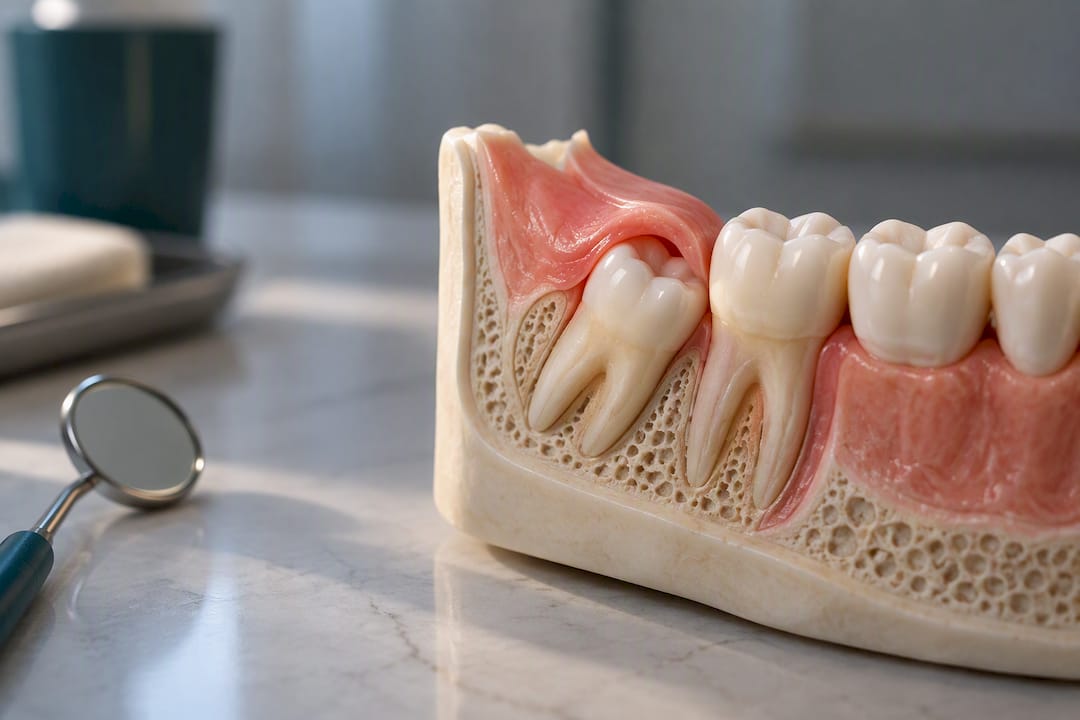
If you have worsening jaw pain, swollen red gums behind a back molar, or a bad taste that won’t go away, you likely have an infected wisdom tooth, known clinically as pericoronitis. Mild, brief soreness can often wait for a routine visit, but pus, facial swelling, fever, or trouble opening your mouth means you need dental care today. Treatment ranges from rinses and antibiotics to drainage or extraction, depending on how far things have progressed.
TL;DR:
- Most cases of infected wisdom teeth involve a flap of gum tissue called an operculum, which traps food and bacteria, making cleaning difficult.
- Signs of infection include persistent throbbing pain, gum swelling with pus, bad tastes, and difficulty opening the mouth, often worsening over a day or two.
- Emergency symptoms such as spreading facial swelling, breathing difficulty, or severe pain require immediate medical care, not just a dental visit.
- Dentists diagnose infection through visual inspection, palpation, mouth opening assessment, and imaging to determine if bone or surrounding tissues are involved.
- Treatment can range from rinses and antibiotics to drainage or extraction, with extraction usually needed in recurrent or severe cases to eliminate the infection source.
Table of Contents
- What Causes a Wisdom Tooth Infection?
- How to Tell If Your Wisdom Tooth Is Infected
- When Is a Wisdom Tooth Infection a Dental Emergency?
- How Dentists Diagnose an Infected Wisdom Tooth
- Treating a Wisdom Tooth Infection: From Rinses to Extraction
- Easing Symptoms and Lowering Your Risk While You Wait
- Behind This Guide: Clayton Dental Studio
- What Happens After Treatment: Long-Term Outlook
- Treating Wisdom Tooth Infections in Teens vs. Adults
- Why Waiting It Out Is the Wrong Instinct
- Get Same-Day Wisdom Tooth Care at Clayton Dental Studio
- Sources
- FAQ
What Causes a Wisdom Tooth Infection?
Pericoronitis is a soft-tissue infection that develops around a wisdom tooth that hasn’t fully broken through the gum. It’s different from a typical cavity-driven abscess because the trigger isn’t decay inside the tooth. It’s what’s happening around it.
Most lower wisdom teeth erupt partway and then stall, leaving a flap of gum tissue called an operculum covering part of the crown. That flap creates a pocket that’s almost impossible to keep clean with a toothbrush alone, and it becomes a magnet for food debris and bacteria. Every time you bite down, the opposing tooth can bump that flap, causing tiny injuries that let bacteria in deeper.
A few other situations cause similar infections:
- Impacted wisdom teeth that never break the surface, trapping bacteria against the bone and adjacent tooth root
- Cavities that form on a wisdom tooth that’s angled or partially covered, making it hard to brush
- Infection following a wisdom tooth extraction, if the socket doesn’t heal cleanly
- Trauma to the gum tissue from chewing, orthodontic hardware, or a sharp edge on a neighboring tooth
This pattern explains why pericoronitis shows up so often in people in their late teens and twenties, right when wisdom teeth are trying, and often failing, to erupt normally.
How to Tell If Your Wisdom Tooth Is Infected
Some soreness during eruption is normal. Infection looks and feels different, and it tends to get worse instead of better over a day or two.
Local signs in your mouth:
- Constant, throbbing pain in the back of your jaw that doesn’t ease with over-the-counter medication
- Red, swollen gum tissue around the tooth, sometimes with a visible flap
- Pus or a foul-tasting discharge near the gumline
- Bad breath or a persistent bad taste that brushing doesn’t fix
- Difficulty fully opening your mouth (a symptom dentists call trismus)
Whole-body signs worth taking seriously:
- Fever or chills
- Swollen lymph nodes under your jaw or in your neck
- A general sick, run-down feeling
Pericoronitis is especially common in people between 20 and 29 years old, which lines up with when lower wisdom teeth typically try to erupt and get stuck.
Pro Tip: Keep a rough timeline. Symptoms that hold steady or improve within a day or two are less worrying than symptoms that climb night after night. Dental first-aid guidance from Mayo Clinic recommends seeking care once pain, swelling, or fever persists for more than a few days.
When Is a Wisdom Tooth Infection a Dental Emergency?
Most pericoronitis cases are painful but manageable with prompt dental care. A smaller number turn dangerous fast, because the infection can track from the gum into deeper spaces in your neck and, in rare cases, threaten your airway.
Treat these as red flags that need immediate evaluation, not a wait-and-see appointment:
- Facial swelling that’s spreading toward your eye, ear, or down your neck
- Any difficulty breathing or swallowing
- Pain that’s escalating hour by hour rather than day by day
- Fever combined with feeling generally unwell
- Jaw stiffness severe enough that you can barely open your mouth
If your breathing or swallowing feels affected in any way, call 911 or go to an emergency department immediately. That’s not an exaggeration. Deep space infections from an untreated wisdom tooth can compress the airway, and that’s a genuine medical emergency.
If none of those apply but you’re clearly dealing with an infection, call an emergency dental clinic or ask your regular dentist’s office for a same-day slot.
Pro Tip: Don’t judge urgency by pain alone. A tooth that’s throbbing but lets you open your mouth and swallow normally is usually less urgent than one with mild pain but visible facial swelling.
How Dentists Diagnose an Infected Wisdom Tooth
Diagnosis usually starts with a straightforward exam, and it rarely requires anything invasive before a treatment plan comes together.
Your dentist will typically:
- Visually inspect the gum tissue around the wisdom tooth for redness, swelling, or an operculum
- Gently palpate the area and check nearby lymph nodes for tenderness or swelling
- Assess how far you can open your mouth, since limited opening points toward a more advanced infection
- Order a panoramic radiograph, or sometimes a periapical X-ray, to see the tooth’s position, how impacted it is, and whether the infection has reached the bone
Imaging matters because pericoronitis and impaction can look similar on the surface but require different levels of intervention. If the radiograph shows bone loss, a cyst, or infection tracking toward deeper tissue spaces, your dentist may refer you to an oral surgeon or, in severe cases, a hospital oral and maxillofacial team for drainage and treatment.
Treating a Wisdom Tooth Infection: From Rinses to Extraction
Treatment escalates based on severity, not preference. Mild, localized pericoronitis often responds to conservative care, while spreading or recurrent infection usually points toward extraction.
Initial office care typically includes irrigating under the gum flap to flush out debris, gently debriding the area, and prescribing an antiseptic mouthwash to use at home. This alone resolves a meaningful share of first-time, mild cases, particularly when the tooth still has room to erupt into a cleansable position.
Antibiotics come into play when infection has spread beyond the immediate gum tissue, when you have fever or swollen lymph nodes, or when trismus signals deeper involvement. They’re a category of prescription medication that targets the bacteria driving the infection. They are not a routine add-on for every sore wisdom tooth, and a responsible dentist will reserve them for cases with real systemic or spreading signs rather than handing out a prescription reflexively.
Drainage may be needed if pus has collected into an abscess. A small incision releases pressure and speeds relief, sometimes as a temporary measure before a scheduled extraction.
Extraction is often the definitive fix, especially for recurrent pericoronitis or a tooth that’s impacted in a position where it will never fully erupt or stay clean. Removing the operculum’s underlying cause eliminates the pocket where bacteria keep collecting.
| Treatment | Best for | What to expect |
|---|---|---|
| Irrigation and antiseptic rinse | Mild, first-episode pericoronitis | Relief within days if the tooth can erupt normally |
| Antibiotics | Spreading infection or systemic symptoms | Prescribed alongside, not instead of, dental treatment |
| Incision and drainage | Visible abscess or pus pocket | Fast pain relief, often followed by extraction |
| Wisdom tooth extraction | Recurrent, impacted, or non-cleanable cases | Definitive; healing typically over one to two weeks |
Easing Symptoms and Lowering Your Risk While You Wait
If you can’t get into a dental chair today, a few home steps can keep symptoms manageable and reduce bacterial load without masking a worsening problem.
- Rinse with warm salt water several times a day. Dissolve about half a teaspoon of salt in a cup of warm water and swish gently around the affected area.
- Use an over-the-counter antiseptic mouthwash as directed. Rinses like these can temporarily cut down bacteria while you wait for an appointment.
- Take NSAIDs like ibuprofen, alone or paired with acetaminophen, for pain control. ADA clinical guidance supports this combination for acute dental pain when you can’t get immediate care.
- Keep the area as clean as possible with gentle brushing, but skip aggressive flossing or picking at the gum flap.
- Avoid applying aspirin or other medication directly against the gum tissue. It does nothing for the infection and can burn the area.
Pro Tip: If salt water and OTC medication aren’t touching the pain after 24 to 48 hours, stop waiting. That plateau usually means the infection needs professional drainage or treatment, not a stronger rinse.
Behind This Guide: Clayton Dental Studio
This guide reflects clinical standards drawn from sources like StatPearls and Mayo Clinic, applied through the lens of Clayton Dental Studio’s day-to-day patient care in Humble, Texas. Dr. Navneet Kamboj, DDS, brings nearly a decade of clinical experience and additional restorative training from a UCLA preceptorship to cases ranging from routine pericoronitis to same-day extractions. The practice offers on-site diagnostic imaging and emergency dentistry for patients who need answers fast, not next week.
What Happens After Treatment: Long-Term Outlook
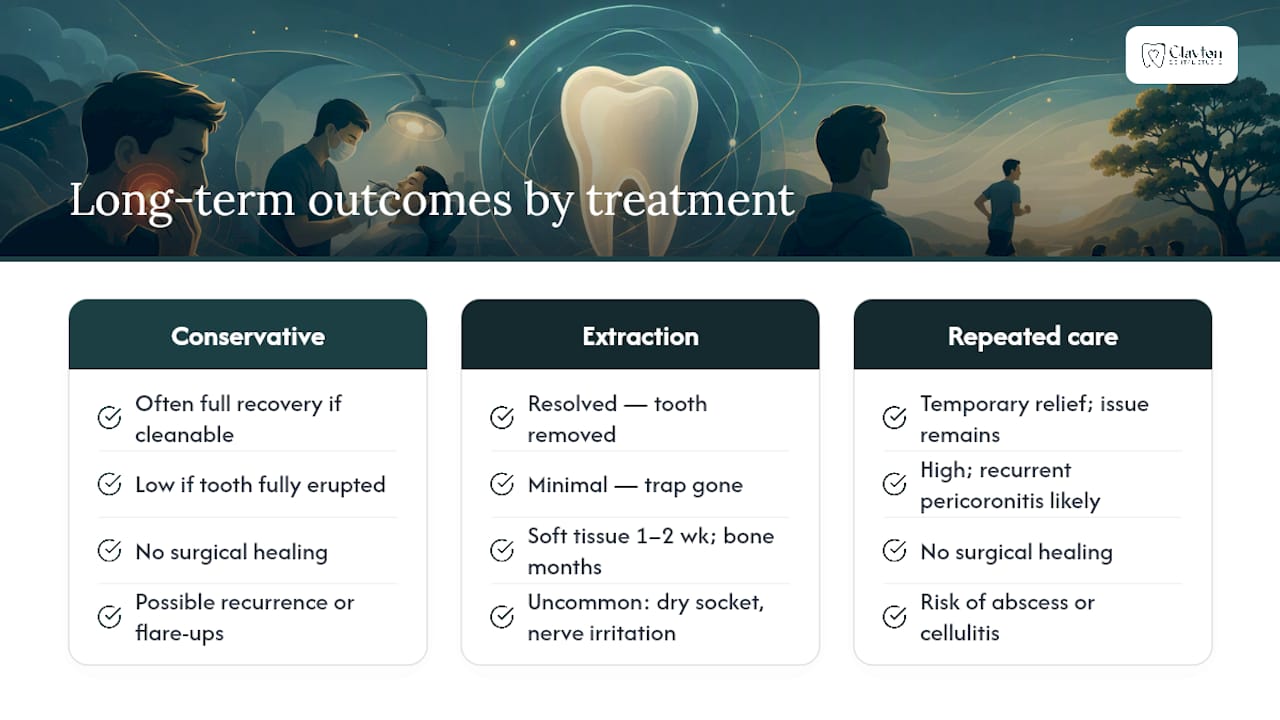
Most people recover fully from a wisdom tooth infection, but the long-term outcome depends heavily on which treatment path you took.
If conservative care resolved a mild, first-time episode and the tooth erupted into a position you can actually clean, many people never have another flare-up. The catch is that partially erupted wisdom teeth rarely become easier to clean over time. Without a real anatomical change, the same pocket that caused trouble once tends to cause trouble again, sometimes months later, sometimes years later.
Extraction changes that math. Once the tooth and the gum flap covering it are gone, the mechanical trap that let bacteria collect disappears with it. Healing after extraction generally takes one to two weeks for soft tissue, with complete bone remodeling continuing quietly in the background for months. Reported complications, dry socket, minor nerve irritation near lower wisdom teeth, or delayed healing, are uncommon and usually temporary.
The riskier long-term path is the one where symptoms are managed repeatedly with rinses and antibiotics but the underlying tooth is never addressed. Recurrent pericoronitis raises the odds of a deeper infection eventually tracking into surrounding tissue, and each flare-up brings a small chance of complications like a spreading abscess or, rarely, cellulitis. If your dentist has already suggested extraction after a second or third episode, that recommendation is about breaking a cycle, not just treating the current flare.
Treating Wisdom Tooth Infections in Teens vs. Adults
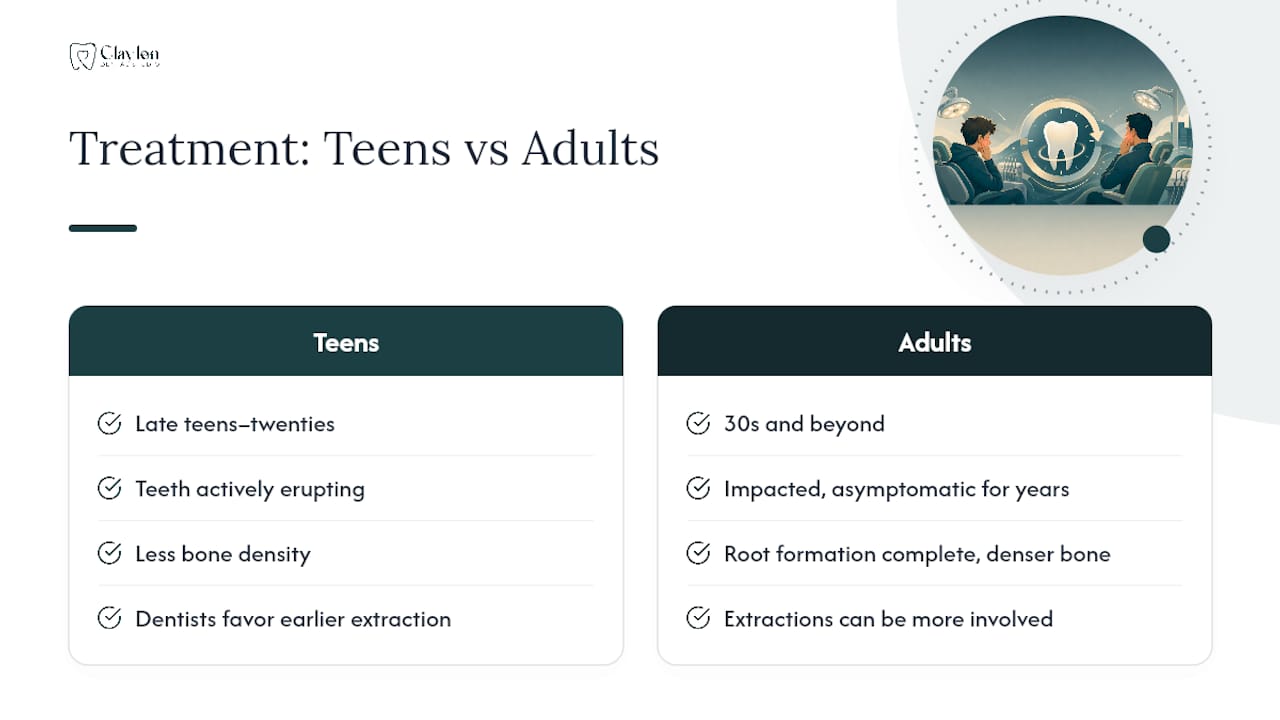
Age changes both the biology and the decision-making around wisdom tooth infections, even though the underlying condition looks the same on an X-ray.
Adolescents and young adults, roughly the late teens into the twenties, are the age group where pericoronitis shows up most often, largely because that’s when lower wisdom teeth are actively trying to erupt. In this group, dentists often lean toward earlier extraction once a tooth shows a pattern of getting infected, partly because younger patients tend to heal faster and have less bone density around the roots, which generally makes the procedure and recovery more straightforward.
Adults, particularly those in their thirties and beyond, may have wisdom teeth that have been impacted and asymptomatic for years before an infection finally develops. Root formation is complete, surrounding bone is denser, and if a nearby tooth has already shifted or the wisdom tooth has fused more firmly with age, extraction can be technically more involved and recovery slightly slower. Adults are also more likely to be managing other health conditions, like diabetes or blood pressure medication, that a dentist needs to factor into treatment timing and antibiotic decisions.
In both groups, the clinical thresholds for urgency don’t change. Spreading swelling, fever, or airway symptoms are treated as emergencies regardless of age. What shifts is the conversation about whether to extract now versus monitor, and that conversation should always happen with your own dentist looking at your own X-ray.
Why Waiting It Out Is the Wrong Instinct
The biggest mistake people make with a wisdom tooth infection isn’t ignoring the pain. It’s underestimating how quickly a mouth infection can outrun home care. Pericoronitis often starts as a manageable, localized problem, but the anatomy working against you, a gum flap that can’t be brushed clean, a tooth that keeps getting bumped by its opposing partner, doesn’t fix itself with time. It tends to repeat.
Conventional advice leans hard on rinse-and-wait, and for a genuinely mild first episode, that’s reasonable. Where that advice falls short is in telling people when to stop waiting. A single day of home care that isn’t working is a signal, not a reason to try harder with salt water. We’d rather see a patient come in for an exam that turns out to be nothing serious than see one show up a week later with facial swelling that’s already tracking toward the neck.
The same logic applies to antibiotics. They’re useful when infection has genuinely spread, and they’re overused when they’re prescribed as a substitute for actually removing the source of the problem. If a wisdom tooth keeps getting infected, the tooth is the issue, not a lack of medication. Prioritize an exam and imaging first. Everything else follows from what that X-ray actually shows.
— Clayton Dental Studio
Get Same-Day Wisdom Tooth Care at Clayton Dental Studio
You can find a faster path to relief than toughing it out at home or waiting weeks for a general checkup slot. Some dental offices are set up for same-day evaluation of wisdom tooth pain, with on-site imaging so you’re not bouncing between offices to get answers.

If you visit a dental office with jaw pain, gum swelling, or a suspected infection, you may receive a clinical exam, a radiograph if needed, and a treatment plan the same visit, which can include an antiseptic rinse and, if necessary, an antibiotic prescription, in-office drainage, or scheduling extraction. If a wisdom tooth has flared up more than once, that visit can be the moment to discuss extraction options before it happens again.
Don’t guess at how serious your symptoms are. Call Clayton Dental Studio or visit the wisdom tooth pain treatment page to check same-day availability, and if you’re searching for options closer to Kingwood, the urgent care access page lists hours and contact details for getting seen fast.
This article is general information, not a substitute for advice from a qualified doctor. Consult a qualified healthcare professional about your own circumstances before acting on anything here.
Sources
- Pericoronitis - StatPearls (NCBI Bookshelf)
- Wisdom tooth infection: Symptoms, causes, and how to treat it — Medical News Today
- ADA living guideline: adult/adolescent pain management — ADA
FAQ
How do I know if my wisdom tooth is infected?
Look for constant pain, red or swollen gum tissue around the tooth, pus or a bad taste, and difficulty opening your mouth fully. If those come with fever or swollen lymph nodes, that points toward pericoronitis rather than normal eruption soreness.
How long can I wait with an infected wisdom tooth before seeing a dentist?
Dental first-aid guidance from Mayo Clinic recommends seeking care once pain or infection signs persist beyond a few days. If you notice spreading facial swelling, fever, or trouble breathing or swallowing, don’t wait even a day.
What is the 3-3-3 rule for tooth infections?
This isn’t an official clinical guideline, and definitions of it vary widely online. Rather than relying on an informal rule, use the red-flag checklist in this guide, spreading swelling, fever, or airway symptoms mean emergency care now, while mild symptoms lasting more than a few days mean a same-day dental visit.
Is a wisdom tooth infection considered a dental emergency?
It depends on severity. Mild, localized pericoronitis usually needs same-day rather than emergency care, but if you have spreading swelling, difficulty breathing or swallowing, or a high fever, treat it as a true emergency and seek immediate care.
Can a wisdom tooth infection go away without antibiotics?
Yes, mild, first-time pericoronitis often improves with irrigation, antiseptic rinses, and good hygiene if the tooth can erupt into a cleanable position. Antibiotics are reserved for infections that have spread or come with systemic symptoms like fever, not used as a default first step.
Recommended
Ready to Schedule Your Appointment?
Dr. Kamboj and the Clayton Dental Studio team are here to help. Call us or book online today.