
Discover how a bruxism night guard can protect your teeth, reduce pain, and improve sleep quality. Custom-fitted for your comfort.
Bruxism Night Guard: Protect Your Teeth and Jaw
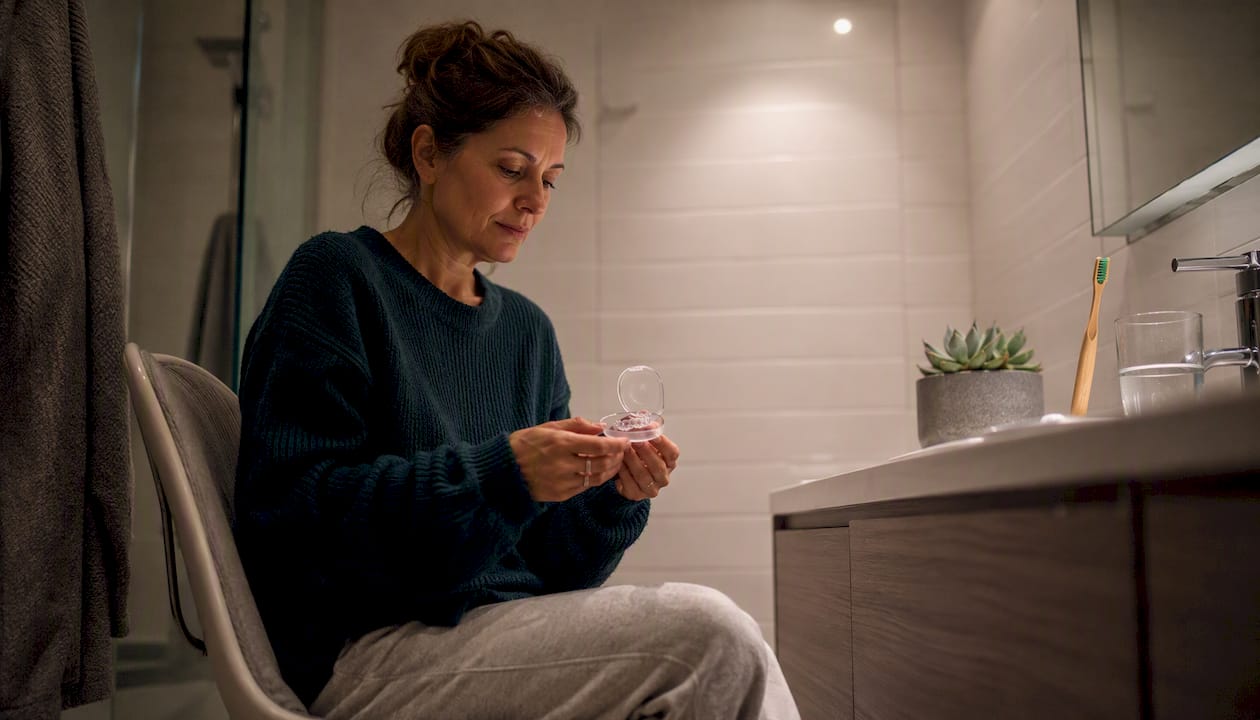
A professionally made, custom-fitted bruxism night guard is the most reliable way to protect your teeth and ease clenching-related pain for most adults with moderate-to-severe grinding. Research on bruxism prevalence estimates that roughly 10%–16% of adults experience sleep bruxism, and many don’t realize it until a dentist spots the wear or symptoms like jaw soreness and morning headaches appear. The American Dental Association’s MouthHealthy resource refers to these devices by several names, including occlusal guards and bite splints, and consistently points to proper fit and regular replacement as the keys to effectiveness.
Here’s the quick decision path:
- Custom dentist-made guard: The right choice for most people with moderate-to-severe grinding, TMJ symptoms, dental restorations (crowns, bridges), or persistent jaw pain. Fabricated to your exact dental anatomy, it offers the best fit, comfort, and long-term protection.
- Boil-and-bite guard: A reasonable short-term option for very mild grinders or as a temporary solution while waiting for a custom guard. Affordable, but fit and durability are limited.
- Stock OTC guard: Suitable only for the mildest cases or brief travel use. Poor fit can sometimes worsen jaw tension rather than relieve it.
If you wake up with headaches, a sore jaw, or a partner has told you that you grind at night, a dentist exam is the right first step. Clayton Dental Studio in Humble, TX offers custom-fitted guards with a full clinical assessment, so you get a guard that actually fits your bite.
Table of Contents
- What types of night guards are available for teeth grinding?
- How do night guards protect your teeth, and what can’t they do?
- Soft vs hard, single-layer vs dual-layer: which material is right for you?
- Which night guard is right for you? A decision guide with costs and timelines
- What night guards cost, how long they last, and what warranties cover
- Getting a custom night guard at Clayton Dental Studio
- How to clean, wear in, and troubleshoot your night guard
- The case for skipping the drugstore and going straight to your dentist
- Custom night guard care at Clayton Dental Studio in Humble, TX
- Key Takeaways
What types of night guards are available for teeth grinding?
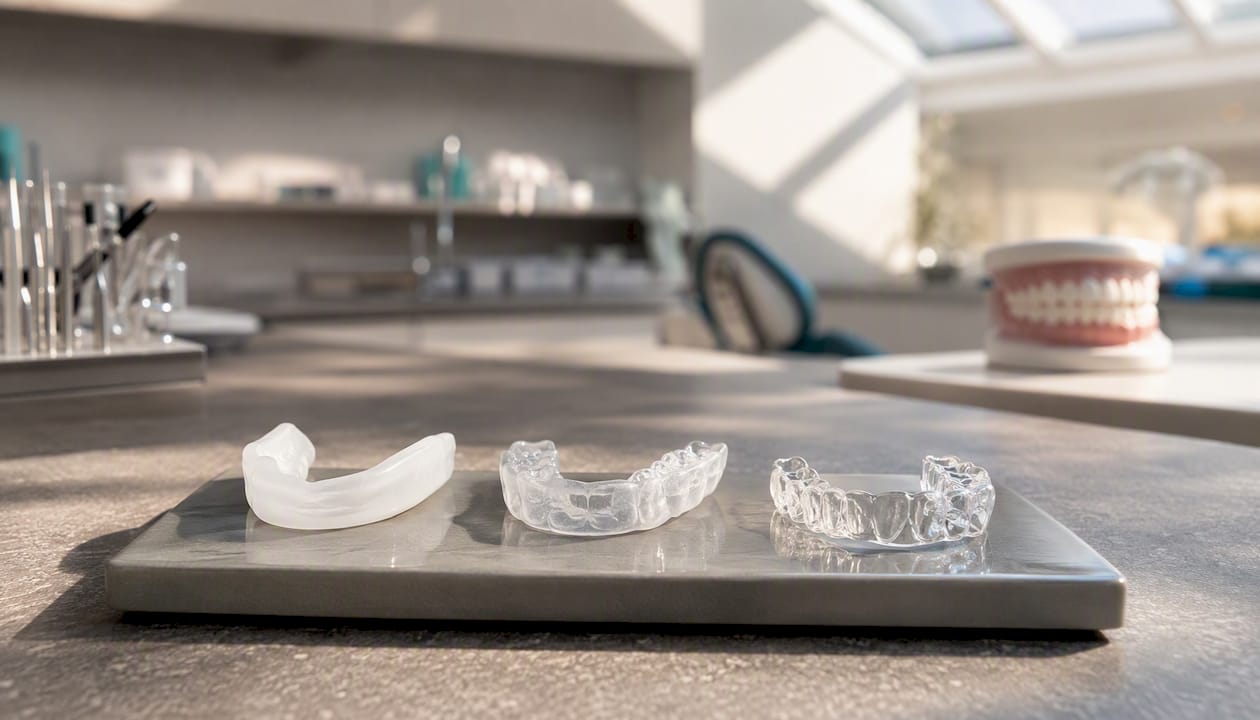
Not all teeth grinding mouthguards are built the same, and the differences go well beyond price. There are three main categories, each suited to a different level of grinding severity and lifestyle need.
Stock (ready-made) OTC guards
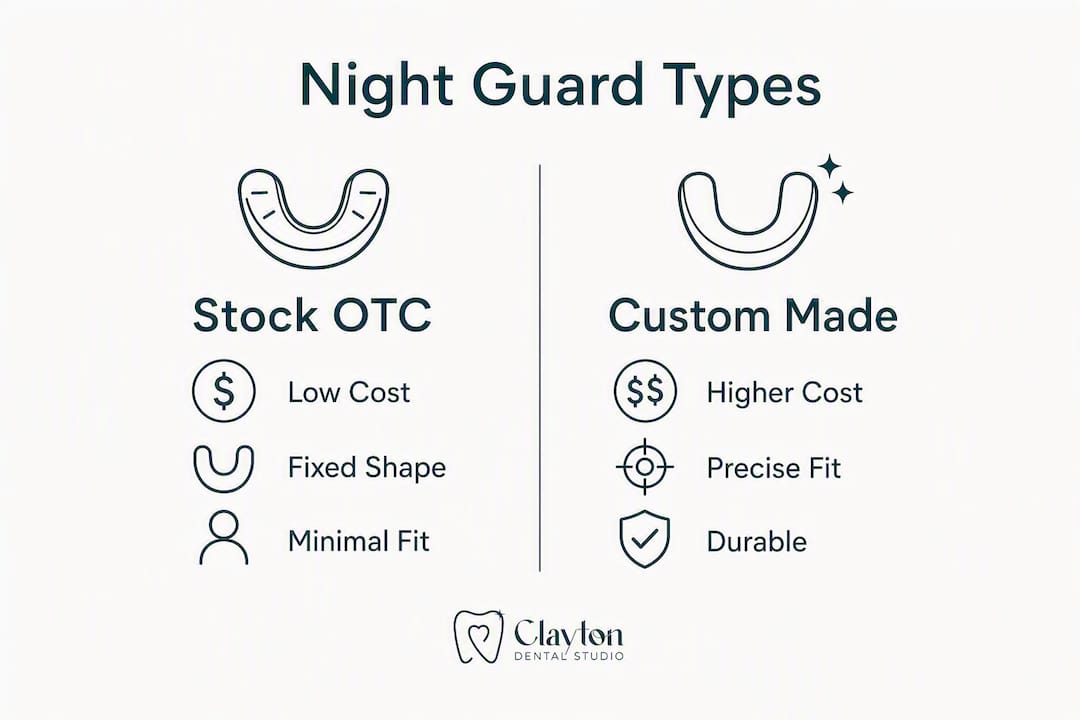
These come pre-formed in a fixed shape and require no molding. You can find them at most drugstores for under $30. The trade-off is a one-size-fits-all design that rarely matches anyone’s bite precisely. A poor fit can concentrate grinding forces on just a few teeth rather than distributing them across the arch, and consumer testing has found that some OTC guards may worsen jaw symptoms in people with anything beyond very mild grinding. Use these only as a stopgap.
Boil-and-bite guards
You soften these in hot water and then bite down to create a rough impression of your teeth. The result is a better fit than a stock guard, but still far from precise. Comparing the two approaches, boil-and-bite guards offer a low-cost, short-term option, while custom devices fit better and last considerably longer. Expect to pay $20–$80 at retail. They work reasonably well for mild grinders who need something quickly, but they tend to bulk up in the mouth and can feel uncomfortable over a full night.
Dentist-made custom guards
A dentist takes accurate impressions or a digital scan of your teeth, sends them to a dental lab, and the result is a guard fabricated precisely to your dental anatomy. According to the Cleveland Clinic, custom-made night guards tend to be more comfortable and more durable than store-bought guards because of this exact fit. They cost more upfront, but they protect restorations, allow for occlusal adjustments, and are the standard recommendation when grinding is moderate to severe or when TMJ symptoms are present.
A note on sports mouthguards: These are designed to absorb impact from external blows, not the repetitive internal forces of nighttime grinding. They’re thicker, bulkier, and not calibrated for occlusal balance. Wearing a sports guard at night is not a substitute for a proper sleep disorder mouthguard.
| Guard type | Best for | Approximate cost | Durability | Dentist needed? |
|---|---|---|---|---|
| Stock OTC | Very mild grinding, travel/temporary use | $10–$30 | 1–3 months | No |
| Boil-and-bite | Mild grinding, short-term use | $20–$80 | 3–6 months | No |
| Custom (dentist-made) | Mild to severe grinding, TMJ symptoms, restorations | $300–$500 | 2–5 years | Yes |
How do night guards protect your teeth, and what can’t they do?
A night guard puts a physical barrier between your upper and lower teeth, cushioning the impact of grinding and distributing the forces across a broader surface. Dental professionals commonly recommend them as a first-line protective treatment because they prevent enamel wear, reduce the risk of cracked teeth, and can relieve the muscle tension that causes morning headaches and jaw soreness.
What they do well:
- Prevent direct tooth-on-tooth contact during grinding episodes
- Distribute occlusal forces more evenly across the arch
- Reduce strain on jaw muscles and the temporomandibular joint (TMJ)
- Protect crowns, veneers, and other restorations from grinding damage
What they don’t do:
- Cure the underlying cause of bruxism (stress, sleep disorders, or neurological factors)
- Reliably stop the muscle activity itself in all patients
- Replace other treatments when TMJ symptoms accompany bruxism, where a coordinated approach including stress management, sleep evaluation, and TMJ therapy is often needed
A night guard is best understood as protective armor, not a cure. It shields your teeth from the damage bruxism causes while you and your dentist address the bigger picture. For many patients, that protection alone prevents thousands of dollars in restorative work.
Side effects to watch for: mild initial soreness, excess saliva in the first few weeks, and a temporary sensation that your bite feels slightly different. These typically resolve as you adapt. Persistent jaw pain or a bite that feels noticeably off after a week or two warrants a call to your dentist.
Soft vs hard, single-layer vs dual-layer: which material is right for you?
The material and design of a night guard matter more than most people expect, and the right choice depends on how hard you grind and whether you have any existing dental work.
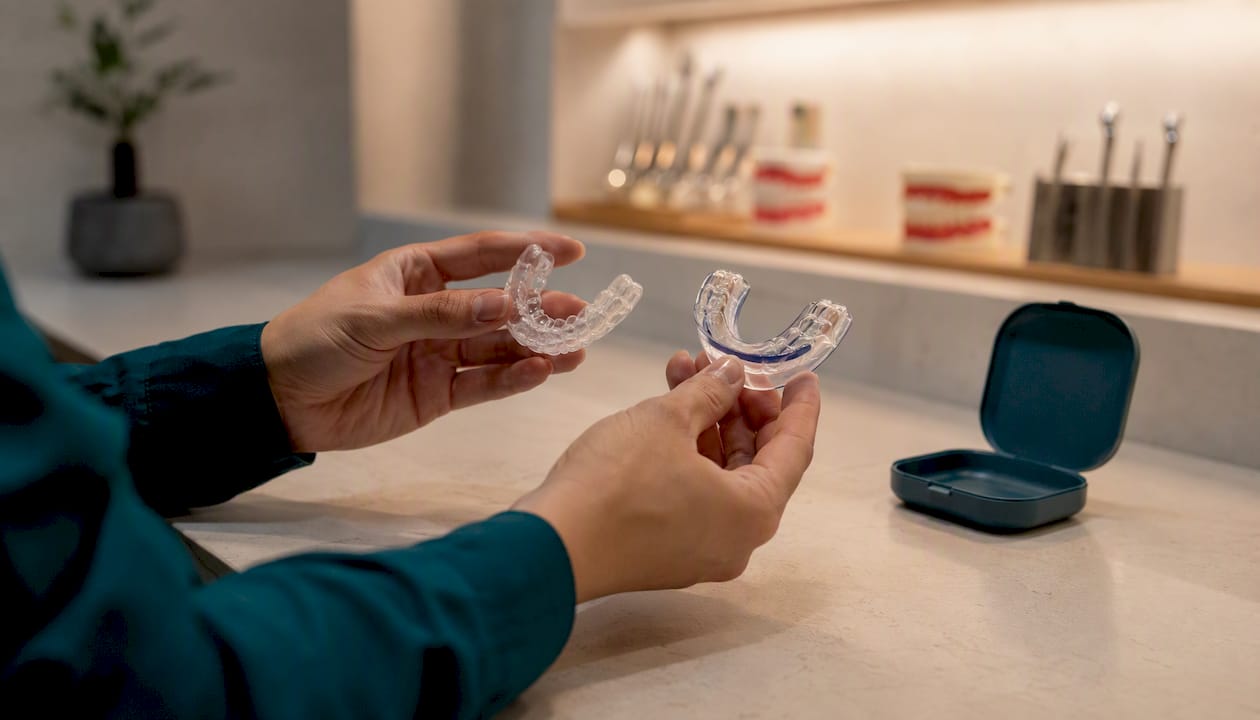
Soft thermoplastic guards are flexible, comfortable right away, and easy to adapt to. They work well for mild grinders and for people who are new to wearing a guard. The downside: heavy grinders tend to chew through soft material relatively quickly, and the flexibility can actually encourage more clenching in some patients.
Hard acrylic guards are the clinical standard for moderate-to-severe bruxism. A hard acrylic occlusal splint fabricated in a lab distributes grinding forces across the full arch and resists wear far better than soft guards. They take a few nights to get used to, but for anyone grinding hard enough to crack teeth or damage restorations, hard acrylic is the more protective choice.
Dual-layer (hard-soft hybrid) guards combine a rigid outer shell with a softer inner lining. The soft layer sits against your teeth for comfort, while the hard outer surface resists grinding. These are a popular middle ground for moderate grinders who find full hard acrylic uncomfortable at first.
A few practical things to look for when evaluating any guard, whether you’re buying direct or asking your dentist:
- Medical-grade materials (not general-purpose plastics)
- BPA-free construction, clearly stated
- Full-arch coverage rather than just front or back teeth
- Clear guidance on expected lifespan and replacement signs
When dental restorations are involved, material choice becomes clinically significant. A guard that doesn’t cover a crown or bridge properly can leave that restoration exposed to grinding forces. Your dentist should account for any existing restorations when designing your guard. You can explore night guard types and fitting notes to get a sense of what product specs to ask about before your appointment.
Which night guard is right for you? A decision guide with costs and timelines
Start with your symptoms. They’re the clearest signal of which type of guard you actually need.
Quick symptom triage:
- Occasional mild jaw tightness in the morning, no tooth wear visible: boil-and-bite may be enough short-term; see a dentist if it persists.
- Visible tooth wear, chipped enamel, or a partner reports loud grinding: custom guard is the appropriate choice.
- Jaw pain, clicking, or headaches alongside grinding: custom guard plus a clinical TMJ evaluation. A guard alone may not be sufficient.
- Crowns, veneers, implants, or bridges present: custom guard, no exceptions. A poorly fitting guard can damage restorations.
Pricing and timeline overview:
| Option | Typical US cost | What’s included | Timeline |
|---|---|---|---|
| Stock OTC guard | $10–$30 | Guard only | Same day |
| Boil-and-bite guard | $20–$80 | Guard only | Same day |
| Custom (dentist-made) | $300–$500 | Exam, impressions, lab fabrication, adjustment visit | 2–4 weeks |
Insurance coverage for custom guards varies. Many dental plans categorize them under “appliances” or “TMJ treatment” and may cover 50%–80% of the lab fee after your deductible. FSA and HSA funds can typically be applied to custom guards. Always verify with your insurer before your appointment.
Questions to ask before committing to any guard:
- Is this guard made from medical-grade, BPA-free material?
- Does it provide full-arch coverage for both upper and lower teeth?
- What is the expected lifespan, and what does wear-through look like?
- Is an adjustment visit included if the fit feels off?
- Does the price include the clinical exam and impressions, or are those billed separately?
- Will this guard work with my existing dental restorations?
- What is the warranty or replacement policy?
Red flags that mean you should see a dentist promptly:
- Soreness that doesn’t improve after the first week of wearing a new guard
- Your bite feels noticeably different after wearing the guard
- TMJ pain increases rather than decreases
- You can see grind-through holes or significant thinning in the guard material
What night guards cost, how long they last, and what warranties cover
Lifespan varies significantly by guard type and grinding intensity. A stock OTC guard used nightly by a moderate grinder may last only a few weeks before it warps or thins. Boil-and-bite guards typically hold up for three to six months with regular use. A well-made custom acrylic guard can last two to five years, sometimes longer, depending on how hard you grind and how well you care for it.
Signs it’s time to replace your guard:
- Visible holes or thinning in the material (grind-through)
- The guard no longer fits snugly or feels loose
- Warping that prevents it from seating evenly
- Persistent odor that doesn’t resolve with cleaning
- Cracks in the acrylic
Custom guards from a dental office typically include at least one adjustment visit in the initial price. Some practices offer a warranty period (often six to twelve months) during which they’ll rework or replace the guard if fit issues arise. Ask about this before you commit.
On the insurance and payment side: dental plans that cover TMJ appliances or occlusal guards may reimburse a portion of the lab fee. FSA and HSA accounts are generally accepted for custom guards as a qualified medical expense. For patients without coverage, many dental offices offer payment plans or financing through third-party providers.
Statistic: Studies on bruxism prevalence estimate that roughly 10%–16% of adults experience sleep bruxism. Many go undiagnosed for years, meaning tooth wear accumulates silently before a guard is ever prescribed. Early intervention with a well-fitted guard is almost always less expensive than the restorative work that follows untreated grinding.
Clinical experience suggests that most patients adapt to a custom guard within about four to six weeks. Mild initial soreness and increased saliva production are common in the first few nights and usually resolve on their own.
Getting a custom night guard at Clayton Dental Studio
Clayton Dental Studio provides exam-led, custom-fitted guards as the recommended solution for patients in the greater Humble, TX area, backed by clinical assessment and follow-up care from Dr. Navneet Kamboj.
The process is straightforward and designed to feel comfortable from the first visit:
- Initial exam: Dr. Kamboj evaluates your teeth for signs of wear, cracking, or damage from grinding. She also assesses your bite and checks for any TMJ involvement that might affect guard design or require additional treatment.
- Impressions or digital scan: Accurate records of your dental anatomy are taken in-office. This is the foundation of a guard that fits precisely rather than approximately.
- Lab fabrication: Your impressions are sent to a dental lab, where your guard is fabricated to specification. Turnaround is typically two to three weeks.
- Delivery and adjustment: When your guard arrives, you come in for a fitting. Dr. Kamboj checks the occlusion, makes any necessary adjustments, and confirms the guard seats correctly on both arches.
- Follow-up: If anything feels off after you’ve worn the guard for a few nights, the team is available to make further adjustments.
At Clayton Dental Studio, a custom night guard isn’t just a product we hand you in a box. It’s a clinical solution that starts with understanding your bite, your symptoms, and your goals, so the guard we deliver actually works for your situation.
About Dr. Navneet Kamboj: Dr. Kamboj earned her Doctor of Dental Surgery (DDS) from the University at Buffalo, New York, and completed a specialized restorative preceptorship at UCLA. She has served the greater Houston area for nearly a decade and is known in the Humble community for her warmth, precision, and honest approach to patient care. Clayton Dental Studio also offers Emface TMJ therapy for patients whose bruxism overlaps with jaw pain and facial tension.
If you’re experiencing jaw pain alongside grinding, that’s worth mentioning at your appointment. TMJ involvement changes the clinical picture and may call for a coordinated approach beyond the guard itself.
How to clean, wear in, and troubleshoot your night guard
A night guard is only as good as the care it receives. Here’s how to keep yours in good shape and what to do when something feels off.
Daily cleaning routine:
- Rinse the guard with cool water immediately after removing it each morning.
- Brush it gently with a soft toothbrush and mild dish soap or non-abrasive toothpaste. Avoid whitening toothpastes, which can scratch acrylic.
- Let it air-dry completely before storing it in its case. A damp guard in a closed case invites bacteria.
- Once a week, soak it for 15–20 minutes in a denture-cleaning tablet solution or a diluted white vinegar rinse to reduce buildup.
What to avoid: hot water (it warps thermoplastic and can distort acrylic), harsh chemical cleaners, and leaving the guard in direct sunlight.
Wearing in your guard:
Expect the first few nights to feel a little strange. Mild soreness in the jaw muscles and extra saliva are both normal and typically settle within two to four weeks. Wearing the guard consistently every night speeds up adaptation. Skipping nights makes the process take longer.
Common problems and what to do:
- Guard feels loose or falls out during the night: Contact your dentist for a fit adjustment. This usually means the impressions need to be retaken or the guard needs to be relined.
- Jaw pain increases after wearing the guard: Stop wearing it and call your dentist. This can signal a bite issue with the guard’s occlusal surface.
- Bite feels different in the morning: Mild temporary changes are normal. If the feeling persists beyond 30 minutes after removing the guard, have your dentist check the occlusion.
- You can see holes or thinning in the material: The guard has reached the end of its useful life. Replace it promptly to avoid leaving teeth unprotected.
Pro Tip: Before putting in your guard each night, spend 60 seconds doing gentle jaw stretches: open your mouth slowly to its comfortable limit, hold for five seconds, then close. Follow with a warm compress on each side of your jaw for two to three minutes. This relaxes the muscles before they’re protected by the guard and can noticeably reduce morning soreness during the adaptation period.
The case for skipping the drugstore and going straight to your dentist
Here’s what most articles on this topic get wrong: they treat OTC and custom guards as roughly equivalent options separated mainly by price. They’re not. The fit gap between a boil-and-bite guard and a lab-fabricated custom splint is the difference between a shoe that sort of fits and one made for your foot. For mild, occasional grinding, the cheaper option is fine. But most people who are actively searching for a bruxism night guard are past that stage. They have symptoms. They have wear. They may have restorations at risk.
The conventional advice to “start with an OTC guard and upgrade later” sounds reasonable, but it delays the clinical exam that would catch early TMJ involvement, identify restorations at risk, or flag a bite issue that the guard itself needs to account for. A dentist doesn’t just take impressions. They assess the whole picture, and that assessment is often where the real value lies.
OTC guards also carry a real risk that gets underreported: a poorly fitting guard can concentrate grinding forces on a small number of teeth rather than distributing them, potentially accelerating wear in exactly the spots you’re trying to protect. That’s not a theoretical concern. It’s a documented clinical finding.
The honest recommendation is this: if your grinding is anything beyond genuinely mild and infrequent, book the exam. The cost of a custom guard is almost always less than a single crown, and a crown is often what untreated grinding eventually requires.
Custom night guard care at Clayton Dental Studio in Humble, TX
Patients in the greater Humble area who are ready to protect their teeth from grinding don’t need to sort through drugstore options or wait to see if symptoms get worse. Clayton Dental Studio offers a clear path: a clinical exam with Dr. Kamboj, accurate impressions, a lab-fabricated custom guard, and a follow-up fitting to make sure everything is right.

The difference between what we offer and a store-bought guard isn’t just materials. It’s the exam that identifies whether TMJ therapy is also needed, the impressions that make the guard fit your bite rather than a generic mold, and the adjustment visit that confirms the guard is protecting every tooth it should. For patients whose bruxism overlaps with jaw tension or facial pain, Clayton Dental Studio also offers Emface TMJ therapy as part of a coordinated care plan.
To get started, visit our dental services page and book your exam. Bring any existing guard you’ve been using, a list of your current dental restorations, and any notes on your symptoms. The appointment typically runs 45–60 minutes, and most patients leave with a clear plan and a timeline for their custom guard.
Key Takeaways
A custom, dentist-made night guard is the most effective protection against bruxism-related tooth wear, jaw pain, and restoration damage for most adults with moderate-to-severe grinding.
| Point | Details |
|---|---|
| Custom guards outperform OTC options | Dentist-made guards fit your exact anatomy, last 2–5 years, and protect restorations that stock guards can’t account for. |
| OTC guards carry real risks | A poorly fitting guard can concentrate grinding forces on fewer teeth, potentially worsening wear rather than preventing it. |
| Bruxism affects a notable portion of adults | Many go undiagnosed for years; early intervention with a fitted guard prevents costly restorative work later. |
| Adaptation takes 4–6 weeks | Mild soreness and excess saliva are normal in the first few nights; consistent nightly wear speeds up the process. |
| Clayton Dental Studio | Dr. Navneet Kamboj provides exam-led, custom-fitted guards in Humble, TX, with impressions, lab fabrication, and a follow-up adjustment included. |
Recommended
Ready to Schedule Your Appointment?
Dr. Kamboj and the Clayton Dental Studio team are here to help. Call us or book online today.