See Emface results for TMJ: less pain and spasm, better jaw opening after one session. Book a consult at Clayton Dental Studio in Humble, TX.
Emface Results: Relief After First Session for TMJ in Humble, TX

Emface Functional TMJ is FDA-cleared to treat TMJ dysfunction and commonly reduces muscle spasm, jaw pain, and stiffness in appropriate candidates. Most patients notice some easing after their first session, with clearer, more stable results after a short series. Good candidates have muscle-driven jaw tension rather than structural joint disease, and treatment isn’t recommended for patients with implanted electronics, active infection, or pregnancy.
TL;DR:
- Emface therapy is most effective for muscle-driven TMJ issues caused by clenching and muscle spasm, not structural joint damage or degeneration.
- A typical treatment series involves several 20-minute sessions, with results usually assessed through improved mouth opening and reduced pain.
- Results can last beyond three months if patients wear nightguards, manage stress, and follow recommended physical therapy routines.
- Mild side effects, such as temporary muscle tenderness and warmth, are common, with serious complications being very rare after proper screening.
- Patients should perform a symptom log before treatment to establish a baseline, and treatment is usually complemented with other TMJ care like splints or physical therapy.
Table of Contents
- What Patients Actually Notice After Emface for TMJ
- Who Is a Good Candidate for Emface TMJ Therapy?
- How Long Does an Emface TMJ Session Take?
- How Long Do Emface Results Last?
- Is Emface TMJ Therapy Safe? Side Effects to Know
- How Clayton Dental Studio Approaches Emface TMJ Care
- Ready to Book Emface TMJ Therapy in Humble, TX?
- Where This Information Comes From
- Sources
What Patients Actually Notice After Emface for TMJ
Patients who come to us with clenching, jaw fatigue, or tension headaches typically describe the same pattern of change. The masseter and temporalis muscles feel looser. Morning jaw soreness fades. Chewing gets more comfortable, and some patients notice they can open wider without the catch or ache that used to stop them.
Clinically, we’re watching for a specific set of functional markers, not a cosmetic before-and-after:
- Reduced muscle spasm and clenching frequency, especially at night
- Less frequent tension headaches and jaw-related facial pain
- More comfortable bite and chewing function
- Measurable improvement in mandibular range of motion
- Better sleep quality when nighttime clenching was a factor
We track progress with a simple pain scale before and after the series, plus a hands-on check of how far a patient can open their mouth without discomfort. Clinician reports describe measurable gains in coordination and range of motion as the muscles relearn a more relaxed resting pattern, rather than staying locked in a defensive clench.
Pro Tip: Keep a quick symptom log for a week before your first session, noting when jaw pain or headaches happen. It gives us a real baseline to measure your progress against, instead of relying on memory alone.
Results vary. Someone with mild, recent muscle tension often responds faster than someone managing years of chronic clenching, and that’s worth setting your expectations around before you start.

Who Is a Good Candidate for Emface TMJ Therapy?
Emface works best for muscle-driven TMJ dysfunction: the kind caused by clenching, grinding, or chronic muscle spasm rather than by joint degeneration or structural damage. If your jaw pain gets worse with stress, tightens up after a long day, or comes with a limited range of motion that loosens with massage or heat, you’re likely describing exactly the pattern Emface targets.
A few things rule treatment out or require a closer look first:
- Pacemakers or other implanted electronic devices
- Metal implants or hardware in the treatment area
- Pregnancy
- Active infection or open lesions near the jaw
Emface isn’t meant to replace a splint, physical therapy, or a specialist referral when structural issues are involved. Industry commentary consistently frames it as a complement to existing TMJ care rather than a standalone fix. If you already wear a nightguard for clenching or see a physical therapist for jaw exercises, Emface typically fits alongside that plan.
How Long Does an Emface TMJ Session Take?
A typical course runs faster and simpler than most patients expect walking in. Here’s how it usually goes:
- Initial screening and baseline measurements. We check jaw range of motion, ask about pain triggers, and confirm you don’t have any contraindications.
- The session itself. Sessions typically run around a short 20-minute duration and are hands-free, meaning you can relax in the chair while the applicators do the work.
- What you feel. Expect a gentle warmth from the synchronized radiofrequency energy, paired with a pulsing muscle contraction from HIFES stimulation. It’s an unusual sensation the first time, but not painful, and we monitor your comfort throughout.
- The series. Clinicians commonly use a baseline course of several sessions, spaced to give muscles time to adapt between visits.
- Follow-up. We reassess pain and range of motion at the end of the series, then check in again over the following months to gauge how well the improvement is holding.
Most patients describe the whole experience as closer to a relaxing muscle treatment than a medical procedure, which is part of why compliance tends to be high.
How Long Do Emface Results Last?
Durability depends heavily on what’s driving your TMJ symptoms in the first place. If clenching was triggered by a temporary stretch of stress, results tend to hold well past the three-month mark. If bruxism is a long-standing habit, you’ll likely need more deliberate maintenance to keep the gains.
Factors that tend to extend how long relief lasts include:
- Wearing a nightguard consistently if you grind your teeth
- Managing stress levels, since clenching often tracks with tension
- Following through on any physical therapy or stretching routine recommended alongside treatment
- Addressing underlying joint issues rather than relying on muscle therapy alone
We typically check in at one, three, and six months to see how symptoms are trending. If tension starts creeping back, a short retreatment series or a combination approach with a splint often re-establishes the improvement without starting from scratch.
Is Emface TMJ Therapy Safe? Side Effects to Know
Emface Functional TMJ carries an FDA clearance specifically for TMJ dysfunction, covering symptoms like muscle spasm, pain, and limited range of motion. That clearance matters. It means the device has been reviewed for this exact use, not adapted from an unrelated application.
Side effects are generally mild and short-lived:
- Temporary tenderness in the jaw muscles, similar to post-workout soreness
- Mild warmth during and briefly after the session
- Transient muscle fatigue that resolves within a day or two
Rare complications are uncommon when screening is done properly. Before your first session, we confirm you don’t have implanted electronic devices, metal in the treatment area, active infection, or pregnancy, any of which would mean postponing treatment. Manufacturer safety data supports a favorable profile with minimal downtime, but screening still comes first every time, not as a formality.
How Clayton Dental Studio Approaches Emface TMJ Care
Dr. Navneet Kamboj earned her DDS from the University at Buffalo and completed a restorative preceptorship at UCLA before building her practice in Humble. That background shapes how we handle TMJ cases: a full assessment first, a treatment plan built around your specific pattern of symptoms, and Emface integrated with splints or physical therapy referrals when the case calls for it rather than offered as a one-size-fits-all fix.
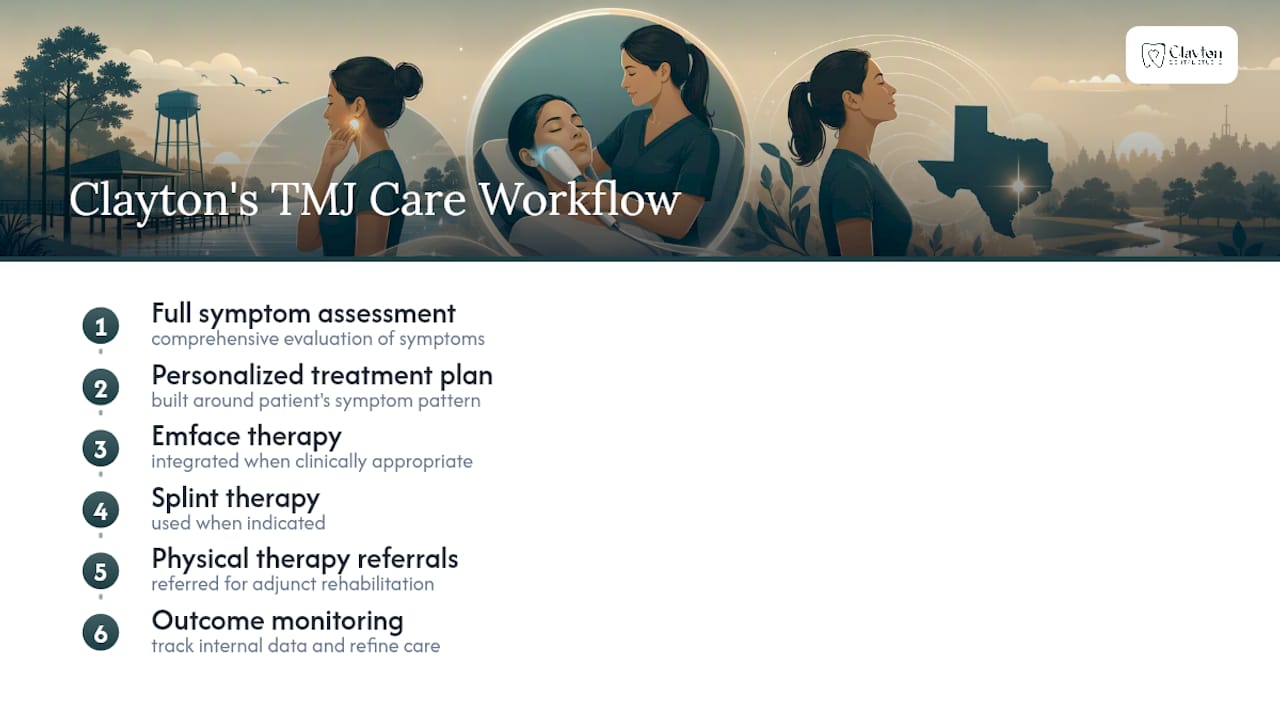
We track to keep refining how we sequence Emface within a broader TMJ care plan.
— Clayton Dental Studio
Ready to Book Emface TMJ Therapy in Humble, TX?
Emface TMJ therapy is billed as an elective, cash-pay treatment, since it falls outside standard restorative dental work. That said, your dental insurance may still cover the diagnostic exam or TMJ assessment that leads into treatment planning, so it’s worth checking your benefits before your visit.

Booking is simple: call our Humble office or request an appointment online, and come in with a short history of when your jaw pain flares and any nightguards or splints you currently use. We’ll start with a hands-on evaluation of your jaw’s range of motion and muscle tenderness, then walk you through whether Emface fits your case or whether a combination approach makes more sense. If you’ve been living with clenching, tension headaches, or a jaw that won’t open comfortably, the Emface TMJ page walks through what a session looks like at our office, and our TMJ/TMD specialist page covers how we evaluate more complex cases. Schedule a consult and let’s find out if this is the right next step for your jaw.
Where This Information Comes From
The regulatory claims in this article come from BTL’s announcement of expanded FDA clearance for TMJ dysfunction, which confirms the specific indications Emface is cleared to treat. Mechanism details draw from BTL’s own product documentation describing how synchronized radiofrequency and HIFES stimulation work together. Treatment course and patient-experience details come from a practitioner Q&A on clinical workflow, and broader context on how Emface fits into dental practice comes from industry coverage of the FDA clearance. For a wider view of TMJ treatment options beyond device therapy, this patient guide on TMJ disorder treatment covers adjunctive approaches worth knowing about.
This article is general information, not a substitute for advice from a qualified doctor. Consult a qualified healthcare professional about your own circumstances before acting on anything here.
Sources
Recommended
Ready to Schedule Your Appointment?
Dr. Kamboj and the Clayton Dental Studio team are here to help. Call us or book online today.