
Discover quick relief for TMJ discomfort with a simple facial massage technique. Follow our guide for effective at-home relief.
Facial Massage for TMJ: Quick At-Home Relief
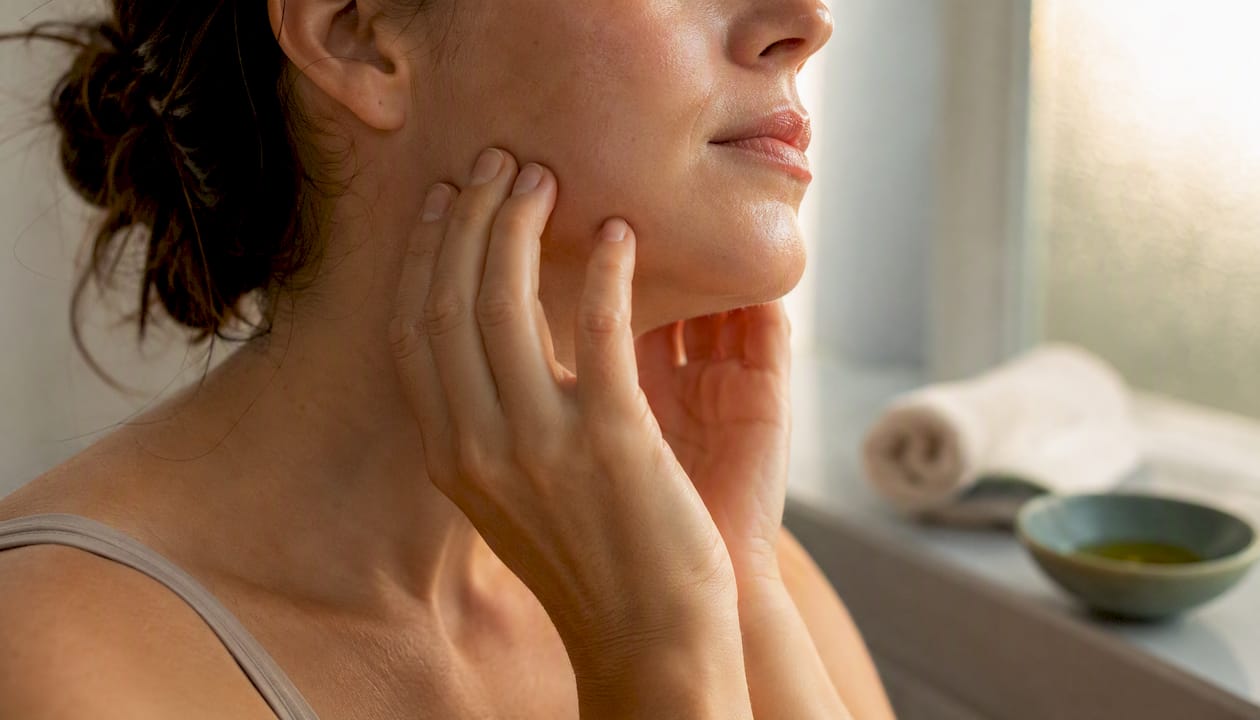
A short self-massage routine on your masseter and temporalis muscles, combined with moist heat, often eases jaw tension within minutes. Start here: find your jaw’s rest position (lips together, teeth apart, tongue resting on the roof of your mouth), apply a warm, damp washcloth for about 15 to 20 minutes if your tension feels chronic, then knead the masseter muscle for 60 to 90 seconds per side.
- Locate rest position and let your jaw hang loose
- Apply moist heat before massaging if the ache is dull and long-standing
- Knead the masseter (the muscle that bulges when you clench) for about a minute per side
- Stop immediately if pressure sharpens pain instead of easing it
TMJ disorders affect roughly 20% to 40% of adults at some point, and jaw clenching from stress is one of the most common triggers; learn more about the connection between TMJ pain and airway problems. This guide walks through the full routine, the safety rules that keep it effective, and when a few minutes of self-care isn’t enough.
Key Takeaways
A short daily routine combining masseter and temporalis massage, moist heat, and diaphragmatic breathing relieves TMJ tension for most people within two to six weeks.
| Point | Details |
|---|---|
| Start with rest position | Relax your jaw with teeth apart and tongue resting gently on the roof of your mouth before massaging. |
| Use gentle to moderate pressure | Tenderness is normal; sharp pain or new symptoms means you should stop immediately. |
| Time heat and ice correctly | Apply moist heat for 15 to 20 minutes for chronic tension, or ice for 10 to 15 minutes for acute swelling. |
| Do short sessions often | Two to three daily sessions of 60 to 90 seconds per area work better than one long session. |
| Know when to escalate | Persistent pain past six weeks or red-flag symptoms warrant an evaluation, including options like Emface TMJ at Clayton Dental Studio. |
Table of Contents
- How to Prepare Safely Before You Start a TMJ Massage
- Step-by-Step Jaw Massage Techniques for Clenching and Tension
- Pairing Heat, Ice, and Breathing With Your Massage
- Exercises to Do After Your Jaw Massage
- When Self-Massage Isn’t Enough
- Why Massage Actually Helps a Tense Jaw
- A Clinical Perspective on At-Home TMJ Care
- Get a Hands-On TMJ Evaluation at Clayton Dental Studio
- Sources
How to Prepare Safely Before You Start a TMJ Massage
Sit upright with your shoulders relaxed and your head balanced over your spine, not jutting forward. Gently nod your chin as if saying “yes” in tiny movements until you feel your jaw settle into its natural rest position, teeth slightly apart. That’s your starting point every time.
Pressure should stay gentle to moderate. You’re aiming for a “hurts so good” tenderness, not a sharp jolt. If pain spikes or you notice new symptoms like ringing ears or dizziness, ease off.
- Get into rest position and take three slow diaphragmatic breaths.
- Warm the area with a damp washcloth if the tension feels chronic.
- Work each muscle briefly, totaling a few minutes per side.
- Repeat two to three times daily rather than doing one long session.
- Stop and reassess if soreness lingers past 24 hours.
Certain symptoms mean self-massage isn’t appropriate yet. Recent facial trauma, fever, a jaw that suddenly locks open or shut, or worsening pain despite rest all warrant a call to your dentist before you touch the area.
Breathing low into your belly for three to five breaths before you start tells your nervous system it’s safe to unclench, which makes the muscle work that follows far more productive.
Pro Tip: Pair your first few breaths with a hand on your stomach. If your hand rises more than your chest, you’re doing diaphragmatic breathing correctly, and that alone can soften a clenched jaw before you apply even a single finger.
Step-by-Step Jaw Massage Techniques for Clenching and Tension
The masseter, temporalis, and the muscles under your jaw all contribute to TMJ pain, and each responds to a slightly different touch.
Masseter self massage starts by finding the muscle: clench your teeth and feel for the bulge just below your cheekbone and in front of your ear, then relax. Place two or three fingers on that spot and knead in small circles, working across the muscle fibers rather than just pressing straight down. Hold each tender spot briefly, similar to the 6 to 10 second holds Kaiser Permanente recommends for masseter trigger points, then move to a new spot. Cover a few tender areas per side for brief periods each.
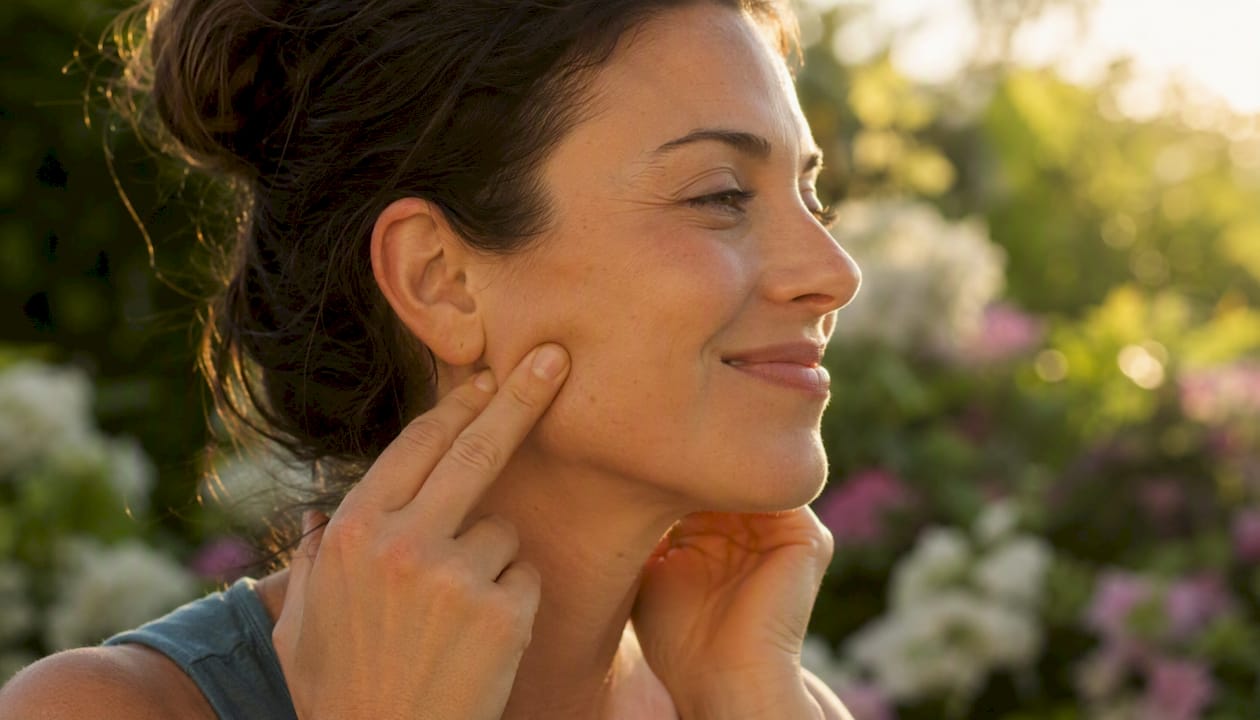
Temporalis massage targets the fan-shaped muscle at your temple. Use your fingertips to make small circular motions across the temple area, working from just above your ear toward your hairline. Avoid pressing directly on bone; you want to feel the muscle give slightly under your fingers. Short durations per side are usually enough to notice a difference.
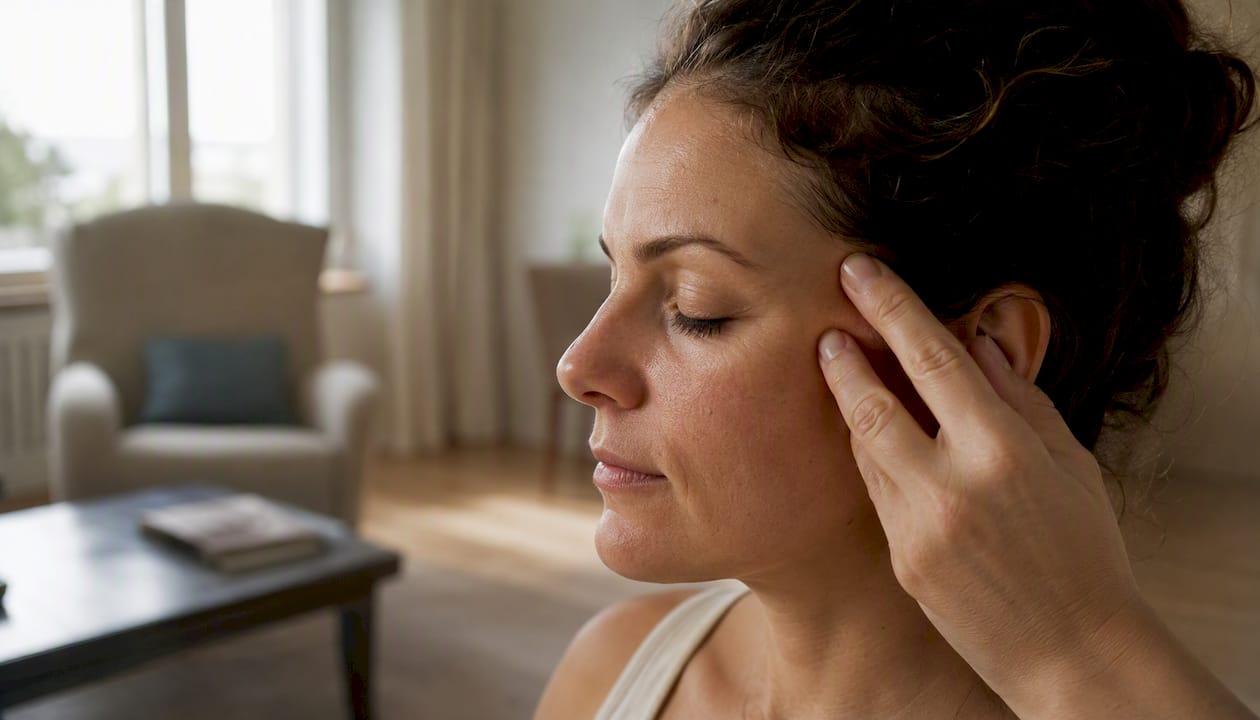
Inframandibular and medial pterygoid work happens along the underside of your jawbone. Slide your thumb along the inside edge of the jaw, from chin toward ear, using light to moderate pressure. This area sits close to lymph nodes and salivary glands, so avoid deep, digging pressure here. Deeper medial pterygoid release, the muscle just inside your jaw, is genuinely intraoral work and should be taught by a clinician before you try it yourself.
If you do attempt any intraoral massage after proper instruction, keep hands clean, use only gentle pressure, and stop immediately if you feel dizzy or experience sharp pain.
Suggested sequence:
- Warm the jaw with moist heat
- Take a few diaphragmatic breaths
- Massage the masseter, then the temporalis
- Follow with suboccipital release at the base of your skull, since tension there frequently refers pain into the jaw
- Finish with slow, controlled jaw opening and closing
Combining steady pressure with active jaw movement, opening and closing gently while you press, tends to work better than holding still, because the muscle lengthens and shortens under your fingers instead of staying locked in one position.
Pro Tip: Many people find one side of the jaw carries more tension than the other. Spend an extra 15 to 20 seconds on your dominant chewing side; you’ll likely find it’s tighter and more tender.
Pairing Heat, Ice, and Breathing With Your Massage
Moist heat and massage work best together for chronic, dull tension. The TMJ Association recommends 15 to 20 minutes of moist heat, like a warm, damp washcloth, applied before you start massaging. For acute, sharp pain or visible swelling, switch to cold instead: 10 to 15 minutes, never exceeding 20, to avoid frostbite.
- Chronic tightness: moist heat for 15 to 20 minutes, then massage
- Acute pain or swelling: ice for 10 to 15 minutes, especially after a more aggressive massage session
- Never apply either heat or cold directly to skin without a cloth barrier
Diaphragmatic breathing isn’t just a warmup. Practicing it during the massage itself, not only before, helps interrupt the clenching reflex that keeps bringing tension back.
Pro Tip: Keep a washcloth and a bowl of warm water near wherever you usually relax in the evening. Making the setup effortless is often the difference between doing this daily and forgetting about it after a week.
Exercises to Do After Your Jaw Massage
Massage loosens the muscle; a few short exercises help your jaw keep that range of motion and resist sliding back into old clenching patterns.
Mobility work:
- Open your mouth slowly to a comfortable width, hold briefly, then close, 5 to 10 reps
- Glide your jaw forward and back gently, 5 to 10 reps
Strengthening:
- Place your hand under your chin and gently resist as you try to open your mouth
- Hold each resisted position for 5 to 10 seconds
- Repeat 5 times
Finish with a few chin tucks and gentle neck stretches. Since neck and shoulder muscles often contribute to jaw tension, addressing the suboccipital area rounds out the routine. Do this full sequence once to three times daily, and stop any exercise the moment it causes sharp pain rather than mild effort.
Pro Tip: If chin tucks feel awkward at first, do them while looking in a mirror. Most people accidentally tilt their head down instead of gliding it straight back, which misses the muscles you’re trying to target.
When Self-Massage Isn’t Enough
Give a consistent routine two to six weeks before judging whether it’s working. Expect some short-term tenderness, especially in the first week, but overall discomfort should trend downward, not up.
- Progressive jaw locking that doesn’t resolve
- Pain that worsens despite consistent, gentle self-care
- Fever, facial swelling, or signs of infection
- Numbness, tingling, or other neurological symptoms
- New dental pain that could signal a separate issue, not muscular tension
If two to six weeks of daily, gentle self-massage hasn’t moved the needle, that’s not a sign you’re doing it wrong. It’s a sign the muscle tension has a driver that needs professional hands, not just yours.
Start with your dentist or primary care provider for an evaluation. From there, a physical therapist or TMJ specialist can offer hands-on techniques, including intraoral work, that go beyond what’s safe to self-teach.
Why Massage Actually Helps a Tense Jaw
The evidence behind this isn’t anecdotal. Manual physical therapy, including massage, significantly improves pain and mouth opening in people with TMJ disorders, and Mayo Clinic lists massage and home exercises among effective conservative treatments.
Mechanically, massage releases tight trigger points and feeds sensory input back to your nervous system, which helps reset the imbalance between overworked and underused jaw muscles. It works best as one piece of a routine, not a standalone fix, paired with the exercises and breathing covered above.
A Clinical Perspective on At-Home TMJ Care
At Clayton Dental Studio, we see patients who’ve lived with jaw tension for months before connecting it to clenching or stress. At-home massage is a genuinely useful first line of defense, and we encourage patients to try it consistently before assuming they need intervention.
But some presentations need more than fingers and a warm washcloth. Persistent muscle guarding, joint clicking that’s worsening, or pain that doesn’t respond to weeks of self-care often points to a mechanical issue self-massage can’t reach. That’s when hands-on diagnostic work and therapies like Emface TMJ come in, aimed at the muscle dysfunction itself rather than just the symptoms.
Get a Hands-On TMJ Evaluation at Clayton Dental Studio
Self-massage has real limits: it can’t diagnose why your jaw keeps clenching, and it can’t reach the deeper muscle patterns a trained hand can find in minutes. Clayton Dental Studio offers in-office TMJ evaluation paired with Emface TMJ therapy, a treatment option built specifically for the muscle tension and jaw discomfort this article covers.

Your first visit typically includes a hands-on assessment of your jaw muscles and joint movement, guidance on proper self-massage technique if you’ve been doing it on your own, and a treatment plan tailored to what we find. If two to six weeks of home care hasn’t given you lasting relief, or if you’d simply rather start with a professional assessment, book an evaluation and let’s find out what’s actually driving your jaw tension.
Sources
- Self Care - The TMJ Association
- TMJ disorders - Diagnosis and treatment - Mayo Clinic
- TMJ Massage Techniques for Quick Pain Relief — Cleveland Clinic
This article is general information, not a substitute for advice from a qualified doctor. Consult a qualified healthcare professional about your own circumstances before acting on anything here.
Recommended
Ready to Schedule Your Appointment?
Dr. Kamboj and the Clayton Dental Studio team are here to help. Call us or book online today.