
Schedule your child's first dental visit by age one or within six months of the first tooth. Clinic backed steps, prevention options like fluoride and...
By Age One: Clinic Backed First Dental Visit Advice for Parents
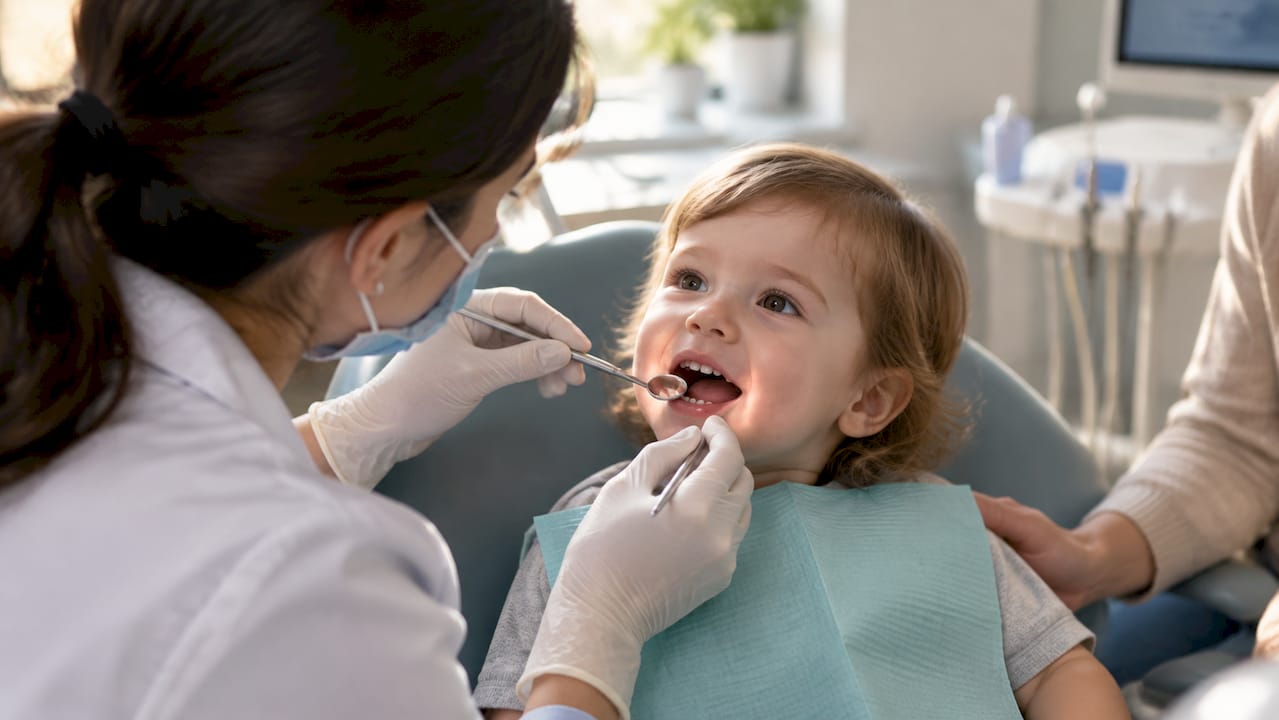
Schedule your child’s first dental visit by their first birthday, or within six months of when that first tooth breaks through the gums. The American Academy of Pediatric Dentistry and the American Dental Association both back this timeline because baby teeth can develop cavities almost as soon as they appear. Waiting until you notice a problem means you’re already behind. The next sections walk through exactly why this timing matters and what to expect once you’re in the chair.
TL;DR:
- Early dental visits help detect and address tooth decay before it becomes a major problem, potentially saving costs and preventing severe procedures.
- Fluoride varnish is typically applied every three to six months to strengthen enamel, while silver diamine fluoride is used to arrest active decay, especially on back teeth.
- Most first appointments are brief, relaxed, and involve no drilling, with a focus on assessment, hygiene education, and discussions on habits like thumb sucking.
- Waiting beyond the first year risks more invasive treatments later and increases the likelihood of cavities requiring anesthesia, especially if decay goes untreated.
- Consistent dental care from age one establishes trust, reduces anxiety, and promotes ongoing preventive habits, making early visits highly valuable.
Table of Contents
- Why Age One? The Evidence Behind the Timing
- What Happens During the First Dental Visit?
- Fluoride Varnish, SDF, and Other Early Prevention Tools
- How to Prepare for Your Child’s First Dental Visit
- Finding a Dental Home and Handling Insurance
- Meet the Team Behind Your Child’s Care
- A Dentist’s Take on Why Early Visits Matter More Than Parents Realize
- Book Your Child’s First Visit With Clayton Dental Studio
- Where This Guidance Comes From
- Sources
- FAQ
Why Age One? The Evidence Behind the Timing
The “age one” guideline isn’t a rounded-up guess. The AAPD’s Year One policy paper lays out the clinical reasoning: early exams catch decay while it’s still a small, manageable spot rather than a problem that needs drilling. The ADA and American Academy of Pediatrics echo the same recommendation for a simple reason: enamel on baby teeth is thinner than on adult teeth, so cavities can take hold within months of a tooth erupting.
The cost of waiting shows up in more than just tooth pain. Research reviewed in the AAPD policy paper links delayed first visits to more restorative procedures and higher dental bills down the road, compared with children who started preventive care early.
The numbers tell the real story here. A Michigan Medicine survey of 2,005 parents with children under five found that 1 in 6 believed the first visit should wait until age four or later. That gap between belief and recommendation is where a lot of preventable decay happens.
There’s also a bigger risk hiding behind delayed care. When cavities go untreated long enough, some toddlers need general anesthesia just to get invasive dental work done safely. An early visit is largely about avoiding that scenario altogether.
What Happens During the First Dental Visit?
A first visit is short, calm, and almost never involves a drill. Most appointments run 30 to 45 minutes, and the goal is assessment and education, not treatment.
Here’s what you can typically expect:
- A “knee-to-knee” exam, where your child sits facing you while the dentist looks in from behind, keeping them close and calm.
- A check of the gums, tongue, and soft tissues for anything unusual.
- A gentle wipe-down or light cleaning if any plaque buildup is visible.
- A conversation about feeding habits, brushing technique, and pacifier or thumb habits.
- Anticipatory guidance on what to expect as more teeth come in.
X-rays are usually skipped at this age. With only a few teeth in and no history of pain or visible damage, there’s rarely a clinical reason to expose a toddler to radiation this early. Dentists reserve imaging for cases where something specific needs a closer look, like a suspected injury or a cavity between teeth that can’t be seen directly.
Fluoride Varnish, SDF, and Other Early Prevention Tools
The first visit isn’t just a look-and-see appointment. It’s often when preventive treatment actually starts.
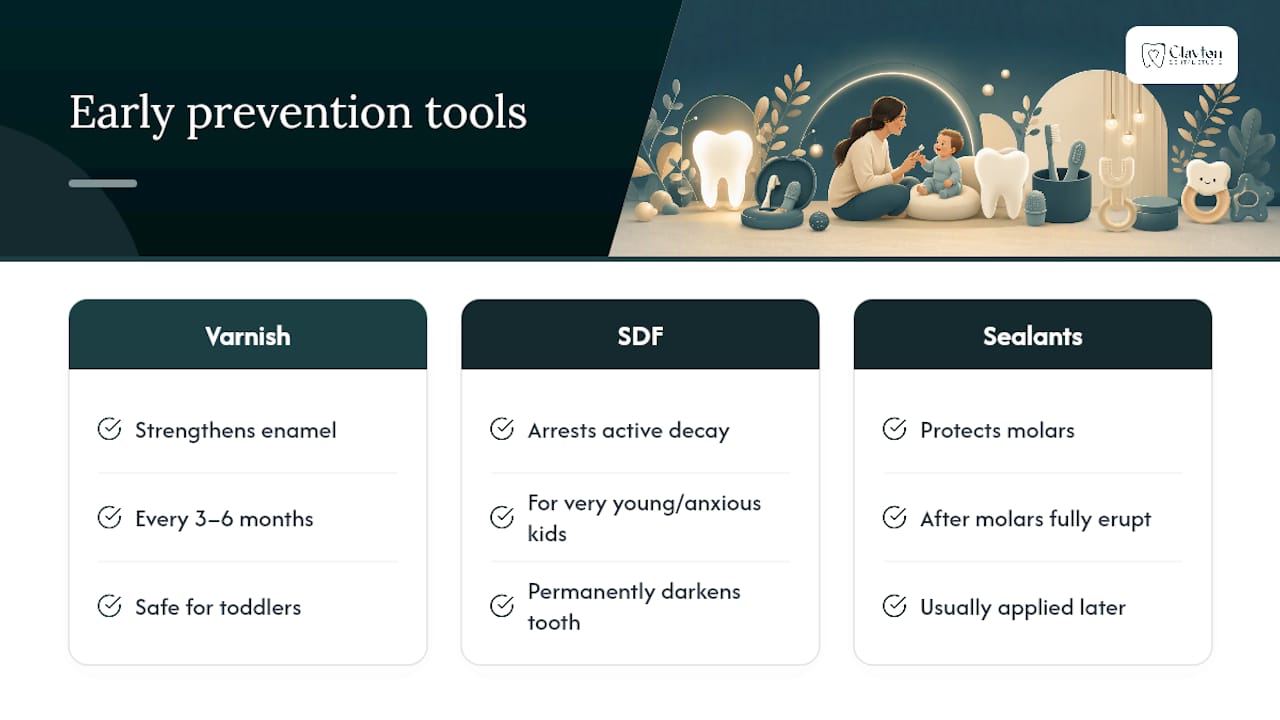
Fluoride varnish is the most common tool. It’s a sticky, quick-drying coating painted directly onto the teeth, and it strengthens enamel against early decay. Many children benefit from having it applied every three to six months, and it’s considered safe even for toddlers with just a few teeth.
Silver diamine fluoride (SDF) is a different tool for a different job. It’s used to stop active decay in its tracks, particularly useful for very young or anxious children who aren’t ready for a filling. The tradeoff: SDF permanently darkens the treated area of the tooth. Dentists reserve it for cases where arresting the decay matters more than the cosmetic effect, especially on back teeth.
Sealants, by contrast, come later. They’re typically applied once molars are fully in, which makes the age-one visit more about laying the groundwork for that pathway than about applying sealants themselves.
Pro Tip: Ask your dentist to show you exactly where fluoride varnish was applied. Seeing it helps you understand what to watch for as your child’s teeth continue to come in.
How to Prepare for Your Child’s First Dental Visit
A little preparation turns a potentially fussy appointment into a smooth one. Book a morning slot when your child is rested and less likely to be cranky. Bring insurance information and any paperwork the office requested, along with a comfort item like a favorite toy or blanket. At home, you can even role-play the visit: have your child sit in your lap while you count their teeth with a soft toothbrush, so the real exam feels familiar.
Come with questions ready. A few worth asking:
- What’s the best way to clean my child’s teeth at this stage?
- Should we be doing anything differently around feeding or bottle habits?
- Is thumb sucking or pacifier use something to address now, and does it affect dental development?
- How often should we come back for checkups?
Some signs shouldn’t wait for a scheduled visit at all. Visible white or brown spots on teeth, swelling around the gums, or any sign your child is in pain warrant an earlier evaluation, not a wait-and-see approach.
Finding a Dental Home and Handling Insurance
A “dental home” is simply one consistent practice that tracks your child’s oral health over time, rather than a different office for every visit. Continuity matters because a dentist who has seen your child before catches subtle changes faster than one meeting them for the first time.
Most children do well on a six-month recall schedule, though your dentist may recommend more frequent visits if your child has a higher cavity risk. A few practical notes on logistics:
- Enroll in dental coverage as early as possible. Many plans have waiting periods that delay when benefits kick in.
- If a pediatric dental appointment isn’t available right away, your pediatrician can often apply fluoride varnish as a stopgap.
- Ask about financing or payment plans upfront if you’re paying out of pocket for any portion of care.
Meet the Team Behind Your Child’s Care
Dr. Navneet Kamboj leads pediatric dentistry at Clayton Dental Studio, bringing nearly a decade of experience serving families across the greater Houston area. She earned her DDS from the University at Buffalo and sharpened her restorative skills through a preceptorship at UCLA.
Her approach to young patients centers on gentle, low-stress exams and conservative prevention rather than reactive treatment. That philosophy shapes how the practice handles every first visit, from the pacing of the appointment to the preventive options offered.
A Dentist’s Take on Why Early Visits Matter More Than Parents Realize
Calm, early visits build a foundation of trust that pays off for years. A toddler who has a relaxed first exam is far less likely to develop dental fear later, and far less likely to need invasive treatment for decay that went unnoticed too long. That’s the real value of getting this timing right: fewer emergencies, less anxiety, and a habit of prevention that sticks.
If you’re not sure how to schedule this first visit, or your child has specific needs that make you hesitant, reach out. We would rather help you plan for it than have you wait until there’s a problem to solve.
— Clayton Dental Studio
Book Your Child’s First Visit With Clayton Dental Studio
Families in the Humble area have access to age-one pediatric dental exams in a straightforward way, without the guesswork of piecing together advice from different sources. Pediatric visits typically include a gentle growth-and-development exam, fluoride varnish when appropriate, and guidance on feeding, brushing, and habits like thumb sucking, all in one appointment.

Dental insurance is often accepted and payment options may be available for families paying out of pocket, minimizing cost as a barrier to scheduling a first visit. If your child is approaching their first birthday, or already has a tooth or two coming in, the next step is simple: visit our kids’ dentistry page to see what a first visit includes, or call our Humble office directly to get on the schedule. The earlier you book, the calmer that first appointment tends to be.
Where This Guidance Comes From
- The Importance of the Age One Dental Visit — AAPD policy paper
- First Dental Visit for Baby — ADA MouthHealthy
- When Should I Start Taking My Child to the Dentist? — Cleveland Clinic
- When Should a Child See a Dentist for the First Time? — Michigan Medicine
- First Dental Visit Age: What Parents Need to Know — Starboard Dental
This article is general information, not a substitute for advice from a qualified doctor. Consult a qualified healthcare professional about your own circumstances before acting on anything here.
Sources
- The importance of the age one dental visit — AAPD policy paper
- First dental visit for baby — MouthHealthy (ADA)
- When should a child see a dentist for the first time? — Michigan Medicine
- A Child’s First Dental Visit Fact Sheet — Stanford Children’s Health
- When should I start taking my child to the dentist? — Cleveland Clinic
FAQ
Should a 2-year-old go to a dentist?
Yes. By age two, your child should already have had at least one dental visit, since the recommended age for a first exam is one year old or within six months of the first tooth appearing.
What is the 2-2-2 rule for teeth?
This isn’t an official dental guideline. If you’ve seen it referenced online, it’s not a standard recommended by the AAPD or ADA, so it’s best to rely on the age-one visit and six-month recall schedule instead.
What is the 3-3-3 dental rule?
Like the 2-2-2 rule, this isn’t a recognized clinical standard from major dental organizations. Stick to the established guidance: first visit by age one, then checkups roughly every six months afterward.
What is the “2-year dentist rule”?
There’s no formal “2-year rule” in pediatric dentistry guidelines. The actual recommendation from the AAPD and ADA is a first visit by the first birthday, not age two, because waiting longer increases the risk of untreated early decay.
How long does a first dental visit usually take?
Most first visits last 30 to 45 minutes and focus on a gentle exam, growth assessment, and guidance for parents rather than any invasive treatment.
Recommended
Ready to Schedule Your Appointment?
Dr. Kamboj and the Clayton Dental Studio team are here to help. Call us or book online today.