
Experience quick and effective in-office whitening for a stunning smile in just one visit. Get dentist-supervised results today!
In Office Whitening: Fast, Dentist-Supervised Results
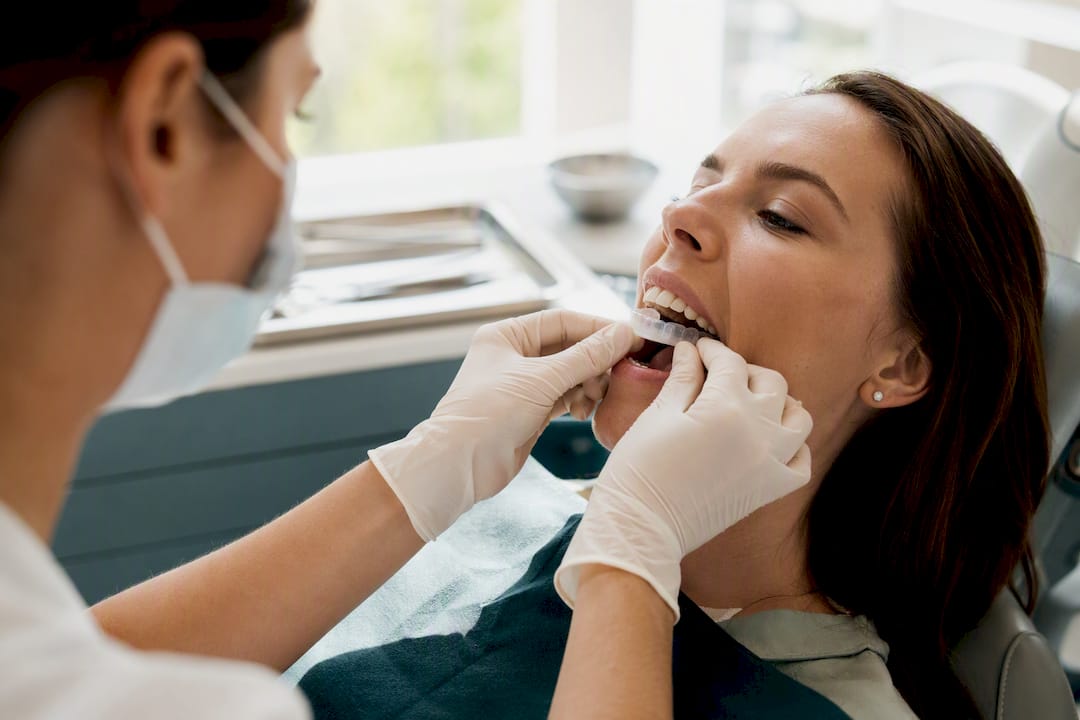
If you want the most dramatic whitening result in the least amount of time, in office whitening is the right choice, done in a single dental visit under a dentist’s direct supervision. A typical appointment runs about 45 to 90 minutes and can lift your shade by roughly 5 to 8 shades in one sitting, a pace no take-home kit or drugstore strip can match.
That speed comes with trade-offs worth knowing before you book.
- Pros: fastest results available, a dentist monitoring your gums and enamel the whole time, and a visibly brighter smile before you leave the chair.
- Cons: higher upfront cost than take-home options, and some patients feel temporary tooth sensitivity for a day or two afterward.
Key Takeaways
In-office whitening delivers a 5 to 8 shade improvement in a single 45 to 90 minute visit, making it the fastest path to a brighter smile under direct dentist supervision.
| Point | Details |
|---|---|
| Speed advantage | A single 45 to 90 minute appointment can lift your shade by 5 to 8 shades. |
| Cost expectation | In-office sessions typically run $300 to $1,000, averaging around $450 to $500. |
| Sensitivity is manageable | Temporary sensitivity and gum irritation are common but usually resolve within a day or two. |
| Restorations don’t whiten | Crowns, veneers, and fillings stay their original color regardless of treatment. |
| Maintenance extends results | Take-home trays after your visit help stretch results toward the 3-year mark. |
| Clayton Dental Studio offers supervised treatment | Appointments include pre-checks, isolation, and desensitizing steps tailored to your sensitivity history. |
Table of Contents
- What Is In Office Whitening, Exactly?
- What Happens During an In-Office Whitening Appointment?
- How Much Whiter Will Your Teeth Actually Get?
- In-Office vs. Take-Home vs. Over-the-Counter: Which Fits Your Situation?
- Is In-Office Whitening Safe? What Side Effects Should You Expect?
- Are You a Good Candidate for In-Office Whitening?
- Which Professional Whitening Systems Do Dentists Actually Use?
- How Do You Keep Your Smile White After Treatment?
- What to Expect Booking In-Office Whitening at Clayton Dental Studio
- When Does a Dentist Actually Recommend In-Office Whitening?
- Ready to Book Your In-Office Whitening Visit?
- Where to Learn More About Professional Whitening
- Frequently Asked Questions
- Sources
What Is In Office Whitening, Exactly?
In office whitening uses a high-concentration peroxide gel, applied and monitored by a dentist, to lift stains from your enamel faster than any product you can buy off a shelf or pick up from your dentist to use at home. It’s the same basic chemistry as take-home trays and over-the-counter strips, just turned up considerably. Professional in-office gels often run 35 to 40 percent hydrogen peroxide, compared with 10 to 22 percent carbamide peroxide in dentist-supplied take-home trays and under 10 percent in most OTC products. That gap in strength is why one explains the difference in timeline: minutes in the chair versus weeks of nightly trays versus months of inconsistent strip use.
A few things stay true no matter which path you choose:
- Only your natural tooth enamel actually whitens. If you have a filling, crown, or veneer on a front tooth, that restoration will not change color, and it may end up looking noticeably different from your newly brightened teeth.
- Higher concentration means faster results but also a higher chance of short-term sensitivity, which is precisely why supervision matters.
- Take-home and OTC options ask for patience and consistency; in office whitening asks for one appointment.
What Happens During an In-Office Whitening Appointment?
Plan on being in the chair for 45 to 90 minutes, start to finish, for a treatment that can measurably brighten your smile before you walk out the door.
The appointment itself follows a predictable sequence:
- A quick exam to check for cavities, existing restorations, and gum health before any gel touches your teeth.
- Isolation of your lips, cheeks, and gums with a barrier, so only enamel is exposed to the whitening gel.
- One or more applications of the peroxide gel, each left on for a set number of minutes.
- In some systems, a curing light or LED lamp to help activate the gel and speed the process along.
- A final rinse, followed by fluoride or a desensitizing treatment to calm the enamel.
Pro Tip: Bring up any history of sensitive teeth before your appointment starts. Your dentist can adjust gel contact time or concentration on the spot, rather than troubleshooting discomfort after the fact.
Most patients get multiple gel applications in one visit. It helps to have a recent exam on file and to mention any restorations on your front teeth, since those won’t lighten and may need a separate conversation about matching them later.
How Much Whiter Will Your Teeth Actually Get?
Most patients see a 5 to 8 shade improvement in a single session, though the exact number depends heavily on where you started. Someone with years of coffee or red wine staining typically sees a bigger jump than someone whose teeth are already close to their natural baseline. Philips reports its Zoom in-office system can lift teeth up to 8 shades in one visit using a 25% hydrogen peroxide gel paired with an LED lamp, though that figure reflects the manufacturer’s best-case outcome rather than a guarantee for every patient.
Whitening responds well to surface stains from food, drinks, and tobacco. It’s less predictable against deeper intrinsic discoloration, like the gray cast some people develop from certain medications, and it does nothing at all for existing crowns, veneers, or bonding.
Results commonly hold for 6 months to 3 years, according to clinical reviews of professional whitening systems, with the biggest factor being what you put in your mouth afterward. Coffee, tea, red wine, and smoking all shorten that window considerably, sometimes cutting it down to a matter of months if those habits are heavy and daily.
In-Office vs. Take-Home vs. Over-the-Counter: Which Fits Your Situation?
Speed, cost, and how much sensitivity you’re willing to tolerate should drive this decision more than anything else. Here’s how the three main paths stack up against each other.
| Factor | In-Office Whitening | Dentist Take-Home Trays | Over-the-Counter |
|---|---|---|---|
| Speed | Visible results in one visit | 1 to 3 weeks of nightly use | Several weeks, inconsistent |
| Shade improvement | Typically 5 to 8 shades | Gradual, often several shades over time | Modest, varies widely |
| Typical cost | $300 to $1,000 per session, averaging roughly $450 to $500 | $150 to $600 | $ up to 300 |
| Sensitivity risk | Higher concentration, managed by a dentist in real time | Moderate, self-monitored at home | Lower concentration, but less oversight |
| Duration of results | several months to a few years | Similar, with consistent use | Shorter, often a few months |
| Convenience | Single appointment | Requires nightly discipline | Easiest to buy, hardest to stick with |
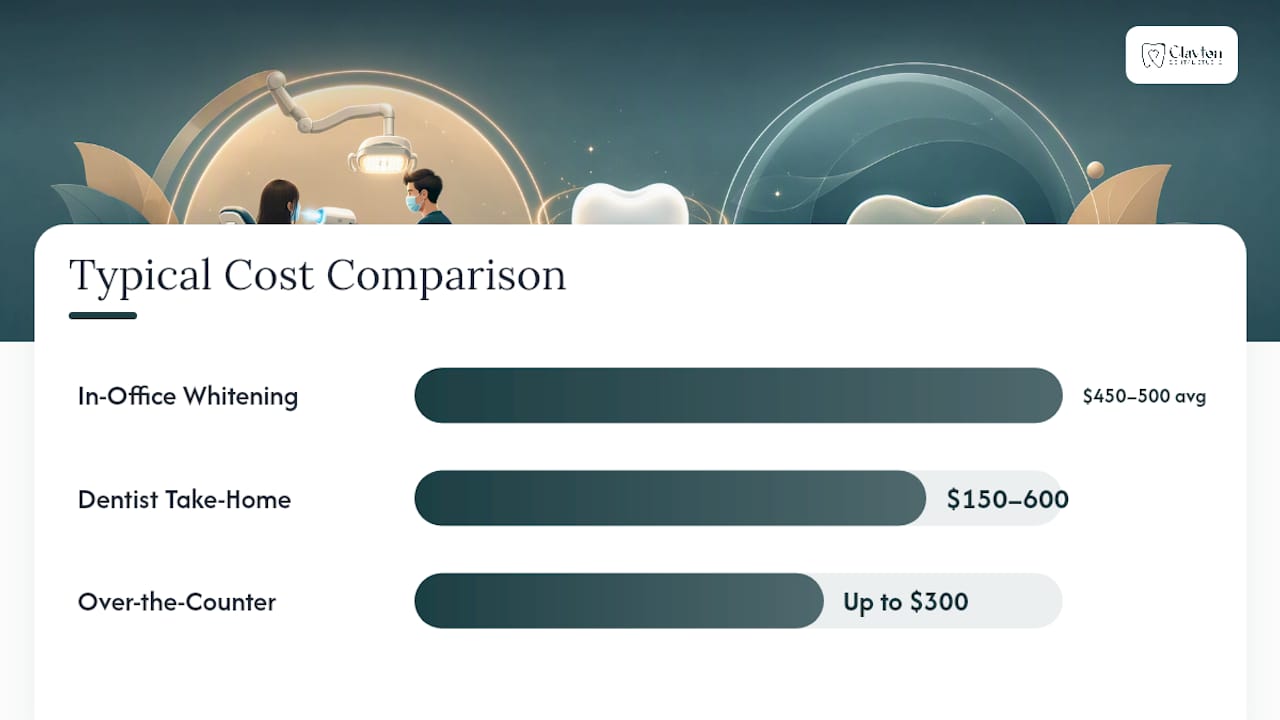
If you have a wedding, reunion, or photo shoot on a fixed date, in-office whitening is the only option that guarantees a result before that deadline. If you’re working with a tighter budget and don’t mind a slower timeline, take-home trays get you most of the way there for less money.
A lot of dentists actually recommend combining both: an in-office session for the immediate transformation, followed by custom take-home trays for touch-ups down the line. It’s a practical way to get the fast result without paying for a full in-office session every time your smile needs a refresh.
Is In-Office Whitening Safe? What Side Effects Should You Expect?
Temporary tooth sensitivity and gum irritation are the two side effects you’re most likely to notice, and both are typically short-lived. The American Dental Association identifies these as the most common adverse effects of peroxide-based whitening, whether the treatment happens in a dental chair or at home with dentist-supplied trays.
- Sensitivity usually shows up as a sharp, brief reaction to cold air or cold drinks, and it tends to fade within a day or two.
- Gum irritation happens when whitening gel makes contact with soft tissue, which is exactly why isolation barriers matter during the procedure.
- Higher peroxide concentrations tend to work faster but raise the odds of noticeable sensitivity, while lower concentrations trade some speed for a gentler experience.
That trade-off is where supervision earns its value. Systematic reviews cited by the ADA note that lower hydrogen peroxide concentrations can deliver comparable color change with less sensitivity, which means a dentist can dial in the right concentration and contact time for your specific mouth rather than applying a one-size-fits-all approach. Desensitizing gels, shorter application windows, and fluoride treatments afterward are all tools a clinic uses to keep discomfort manageable. That level of real-time adjustment is something no OTC strip or generic kit can offer, since there’s no one watching how your teeth and gums respond as the treatment happens.
Are You a Good Candidate for In-Office Whitening?
Healthy natural teeth with no active decay are the baseline requirement, and realistic expectations matter just as much as your dental health. If your front teeth have recent fillings, crowns, or veneers, those restorations won’t lighten alongside your natural enamel, which is something worth discussing before you commit to a treatment plan.
Before starting, your dentist will typically check for a few things:
- A recent exam confirming no active cavities or gum disease on the teeth being whitened.
- Whether you need a professional cleaning first, since plaque and surface buildup can interfere with even whitening.
- Your history of tooth sensitivity, so the gel concentration and contact time can be adjusted accordingly.
- Any pregnancy or medical conditions that might make it worth waiting or choosing a gentler approach.
Active decay, large restorations on visible teeth, or a history of extreme sensitivity are the main reasons a dentist might recommend a different plan, whether that’s addressing existing stained teeth with a targeted approach first or starting with lower-concentration trays instead.
Which Professional Whitening Systems Do Dentists Actually Use?
Three names come up often in consultations, and each takes a slightly different approach to the same underlying chemistry. Opalescence Pro is a chemically activated gel system, meaning it doesn’t rely on a light to work, and its manufacturer markets formulations aimed specifically at patients prone to sensitivity. Zoom! Whitening pairs a hydrogen peroxide gel with an LED lamp meant to accelerate the process within a single visit. Sinsational Smile uses a pre-loaded tray system designed for a fast, streamlined application, often marketed around quick chairside turnaround.
The peroxide gel is the active ingredient doing the actual work in every one of these systems. Lights and lamps are adjuncts that some manufacturers use to speed the reaction along, but the clinical literature is clear that the chemistry itself, not the light, drives the color change. Higher-concentration gels tend to move faster and lift more shades, while also carrying a somewhat higher chance of short-term sensitivity, which is exactly the kind of trade-off your dentist will walk you through before choosing a system for you.
How Do You Keep Your Smile White After Treatment?
Results commonly last 6 months to 3 years, but daily habits do most of the work in determining where you land in that range. Coffee, red wine, and tobacco are the three biggest culprits behind teeth darkening again faster than expected.
A realistic maintenance plan usually looks like this:
- Ask about custom take-home trays after your in-office visit. Reusable trays let you do quick refresher treatments at home instead of paying for a full session every time.
- Schedule periodic touch-ups, often once every 6 to 12 months, depending on how quickly your habits bring stains back.
- Cut back on the biggest staining culprits, or at least rinse with water after coffee, wine, or tea.
Reusable custom trays cost more upfront than a box of whitening strips, but they pay for themselves quickly if you’re refreshing your smile every few months rather than buying disposable products on repeat.
What to Expect Booking In-Office Whitening at Clayton Dental Studio
At Clayton Dental Studio, an in-office whitening appointment starts with a pre-treatment check, a cleaning if you need one, and full isolation of your gums before any gel is applied. Gel applications are timed carefully, with desensitizing steps built into the protocol for patients who mention a history of sensitivity.
Dr. Navneet Kamboj earned her DDS from the University at Buffalo and completed a restorative preceptorship at UCLA, training that shapes how she balances a fast result against your comfort during treatment.
Pro Tip: Bring a list of any recent dental work, especially crowns or veneers on your front teeth, so your dentist can set accurate expectations for how evenly your smile will brighten.
- A recent exam or cleaning on file speeds up the appointment.
- Mention any sensitivity history upfront so the protocol can be adjusted before treatment begins.
When Does a Dentist Actually Recommend In-Office Whitening?
I recommend in-office whitening when a patient wants a fast, visible change and doesn’t want to manage a multi-week routine at home. The trade-off between speed and sensitivity is real, and part of my job is adjusting gel concentration and contact time so you get a bright result without unnecessary discomfort. Safety and realistic expectations guide every recommendation I make. If your goals are better served by take-home trays or a staged plan involving restorations, I’ll say so directly, because a smile that looks natural and holds up over time matters more than chasing the fastest possible result.
Ready to Book Your In-Office Whitening Visit?
If reading through all of this has you leaning toward the chairside option, Clayton Dental Studio makes booking straightforward, without the guesswork of comparing kits or waiting weeks to see a result. You can schedule online or by phone, and most patients start with a short consultation to confirm your teeth and gums are ready for treatment.
Since whitening is a cosmetic procedure, it’s typically billed out-of-pocket rather than covered by dental insurance, so ask about financing options during your consultation if that’s helpful. Explore the full teeth whitening services page for details on what a visit at our Humble, TX office includes, or browse the complete list of services if you’re weighing whitening alongside other cosmetic work. Ready to get started? Reach out through our main site to schedule your consultation.
Where to Learn More About Professional Whitening
For deeper technical or safety details beyond this overview, a few sources are worth bookmarking. The ADA’s whitening resource covers agents, adverse effects, and the limits of what whitening can treat. Delta Dental’s cost and coverage guide explains why whitening is typically an out-of-pocket expense. RealDentalCosts’ cost breakdown compares pricing across in-office, take-home, and OTC options. Manufacturer pages like Philips Zoom and Opalescence are useful for understanding product formulations, though their marketing tends to highlight best-case results rather than average outcomes, so weigh them against clinical reviews for a fuller picture.
Frequently Asked Questions
How long does in-office whitening last? Most patients see results hold for 6 months to 3 years, with coffee, red wine, and tobacco use being the biggest factors that shorten that window.
Does in-office whitening hurt? Some temporary sensitivity to cold is common and usually resolves within a day or two. Your dentist can adjust gel concentration and contact time if you have a history of sensitive teeth.
Will in-office whitening lighten my crowns or veneers? No. Only natural tooth enamel responds to whitening gel, so any existing restorations on your front teeth will stay their current color.
How much does professional teeth whitening cost at a dentist? In-office sessions typically range from $300 to $1,000, averaging around $450 to $500, compared to $150 to $600 for dentist-supplied take-home trays.
Is in-office whitening better than take-home trays? It’s faster and produces a more immediate result, but take-home trays cost less and work well for patients without a tight deadline. Many dentists recommend combining both for the best long-term value.
This article is general information, not a substitute for advice from a qualified doctor. Consult a qualified healthcare professional about your own circumstances before acting on anything here.
Sources
- Whitening | American Dental Association
- Philips Zoom professional teeth whitening — clinical review for dental practitioners (DentalReviewed)
- Teeth whitening: cost and insurance coverage (Delta Dental)
- Philips Zoom In-Office Whitening | Philips
Recommended
Ready to Schedule Your Appointment?
Dr. Kamboj and the Clayton Dental Studio team are here to help. Call us or book online today.