
Clinician led advice on teeth whitening during pregnancy: why dentists recommend waiting, safe low risk fixes now, and a postpartum whitening plan.
Pregnant Patients: Dentist Backed Teeth Whitening Plan After Delivery
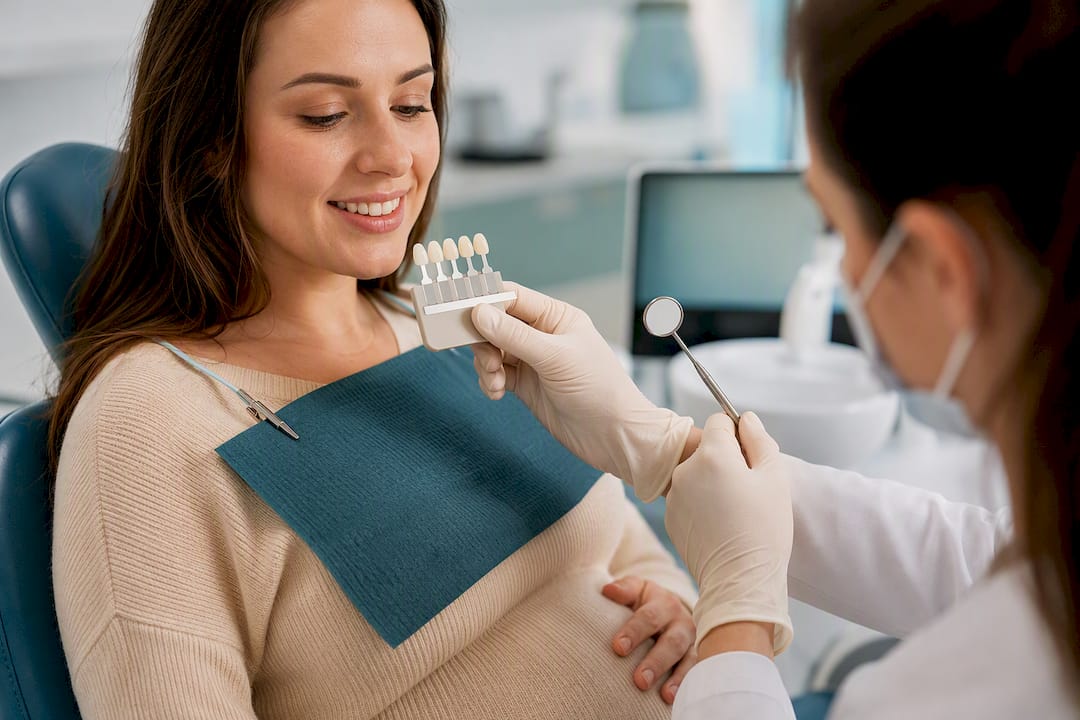
Because reliable safety data on peroxide-based whitening during pregnancy simply don’t exist, dental and obstetric authorities recommend waiting until after delivery and breastfeeding. In the meantime, a professional cleaning, an enamel-safe toothpaste, and a few smart habits can keep your smile looking its best without any guesswork.
TL;DR:
- Most whitening products rely on peroxide, which can irritate inflamed and sensitive gums during pregnancy, leading dentists to recommend delaying treatment.
- Hormonal changes and vomiting can temporarily soften enamel and increase gum reactivity, amplifying the risks associated with peroxide contact.
- Safer options include professional cleaning, using whitening toothpaste sparingly, rinsing after staining foods, and avoiding DIY abrasives like charcoal or baking soda.
- Whitening is generally advised only after pregnancy or breastfeeding when enamel and gum health have returned to normal, with timing tailored to individual recovery.
- A staged approach with a dentist’s guidance ensures safety and predictable results, delaying full whitening until postpartum when it is most appropriate.
Table of Contents
- Is Teeth Whitening Safe During Pregnancy? What the Evidence Says
- How Whitening Works and Why Pregnancy Changes the Risk Picture
- Safer Ways to Brighten Your Smile Right Now
- What Should You Tell Your Dentist Before Your Visit?
- When Can You Safely Whiten After Pregnancy or While Breastfeeding?
- What Clayton Dental Studio Recommends for Expecting Patients
- Balancing How You Want to Look With What’s Actually Safe
- How Clayton Dental Studio Supports Your Postpartum Whitening Plan
- Sources
- FAQ
Is Teeth Whitening Safe During Pregnancy? What the Evidence Says
The honest answer is that nobody knows for certain, and that uncertainty is exactly why dentists say wait. Researchers can’t ethically run controlled trials exposing pregnant patients to cosmetic bleaching chemicals just to see what happens, so the guidance you’ll hear from your dentist rests on caution rather than hard proof of harm.
Here’s how the major professional bodies frame it:
- The ADA points to limited clinical data and recommends deferring elective peroxide-based whitening during pregnancy.
- ACOG encourages routine dental care throughout pregnancy but urges extra thought before any elective cosmetic procedure.
- A 2024 literature review found no direct evidence of fetal harm from whitening, but flagged theoretical concerns about systemic absorption and gum sensitivity strong enough to recommend deferring treatment anyway.
That last point matters. Absence of proven danger isn’t the same as proof of safety, and when it comes to a developing baby, most clinicians would rather err on the side of patience.
How Whitening Works and Why Pregnancy Changes the Risk Picture
Most whitening products, from professional trays to drugstore strips, rely on hydrogen peroxide or carbamide peroxide to break down stain molecules in your enamel. These chemicals work by direct contact, which means anything that touches your gums or gets swallowed has a small chance of local or systemic exposure.
Pregnancy changes your mouth in ways that make that contact riskier:
- Rising hormone levels commonly trigger pregnancy gingivitis, leaving gums swollen and more reactive to irritants.
- Frequent vomiting from morning sickness exposes enamel to stomach acid, temporarily softening it.
- Increased tooth sensitivity is common even without any whitening product involved.
Even trace peroxide exposure can irritate gum tissue that’s already inflamed — one of the clearer findings from the pregnancy literature review cited above. That’s the practical reason dentists steer patients away from bleaching trays and strips for now, not just abstract caution about the unknown. If you’ve dealt with tender gums or zingy sensitivity even before pregnancy, read more on managing whitening sensitivity to understand why inflamed tissue reacts more strongly.
Safer Ways to Brighten Your Smile Right Now
You don’t have to accept dull teeth for nine months. Several low-risk options can noticeably improve your smile’s appearance while you wait on peroxide bleaching.
- Book a professional cleaning and polish. This removes surface stains from coffee, tea, and wine mechanically, not chemically, and it’s considered safe throughout pregnancy according to MouthHealthy.
- Use a whitening toothpaste sparingly, two to three times a week, while keeping fluoride toothpaste in your daily routine for enamel strength.
- Rinse after staining foods and drinks, and sip dark beverages like coffee or red wine through a straw to limit contact with your front teeth.
- Skip DIY abrasives like charcoal powder or baking soda scrubs, which can wear down enamel that’s already more vulnerable during pregnancy.
- Wait 30 to 60 minutes before brushing after vomiting to help manage enamel softening and reduce discomfort as explained in this safe step up plan for pregnancy heartburn relief. Stomach acid softens enamel temporarily, and brushing too soon can do more damage than the acid alone.
Pro Tip: If morning sickness has you brushing constantly out of habit, swap in a quick rinse with water or a baking-soda solution instead. It calms the acid without wearing down softened enamel, and your toothbrush will thank you postpartum.
If sensitivity creeps in during any of this, a desensitizing toothpaste can help, and it’s worth mentioning to your dentist at your next visit. Small daily habit shifts like these are covered in more depth in our guide on maintaining white teeth.
What Should You Tell Your Dentist Before Your Visit?
Your dentist can’t tailor advice around information they don’t have, so a little disclosure goes a long way at your next appointment.
- Mention that you’re pregnant and roughly how far along you are.
- List any medications you’re taking and how often nausea or vomiting has been an issue.
- Ask directly whether a cleaning or stain-polish is appropriate right now, and whether any needed restorative work should wait for the second trimester when it’s typically most comfortable to sit for longer procedures.
Certain symptoms deserve same-day attention rather than waiting for a routine cleaning. Severe gum swelling, bleeding that won’t stop, or persistent tooth pain are signs to call your dentist promptly instead of self-treating at home.
When Can You Safely Whiten After Pregnancy or While Breastfeeding?
Most clinicians recommend holding off on peroxide-based whitening not just through pregnancy but through breastfeeding too, since the data on how much (if any) peroxide transfers into breast milk is still thin. It’s a small theoretical risk, but a real one worth respecting.
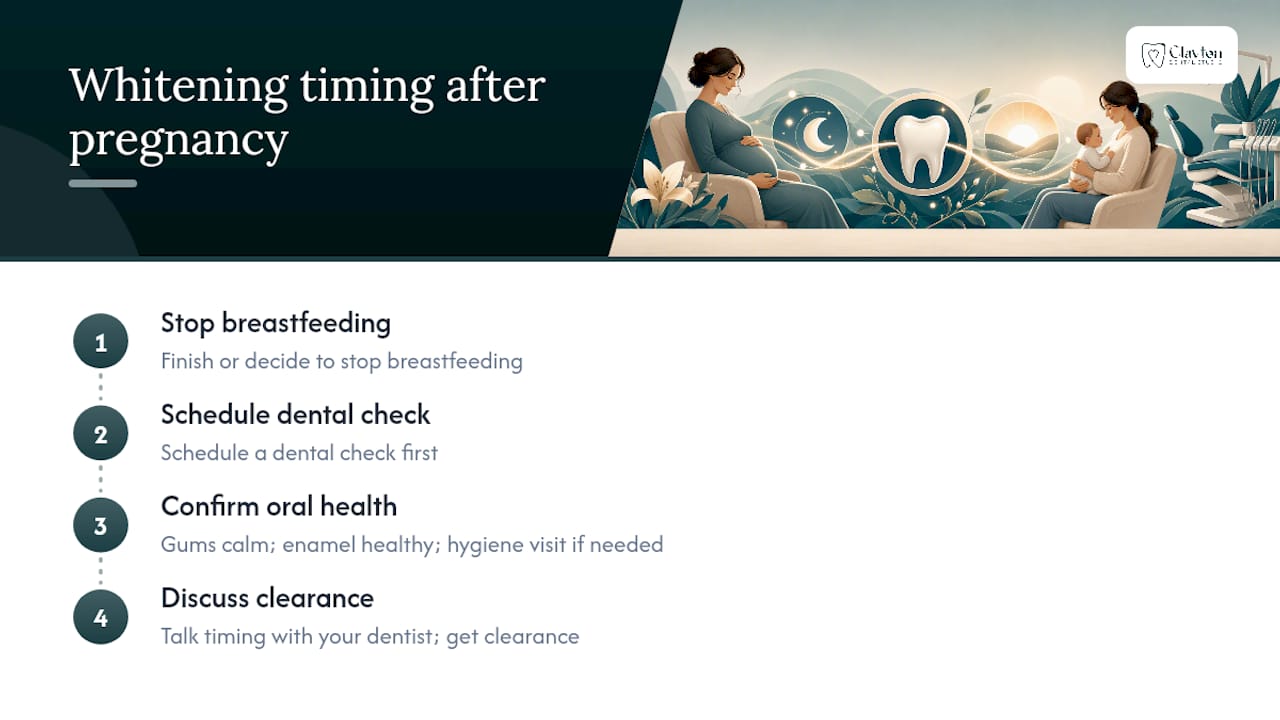
Once you’ve weaned or decided you’re ready to stop breastfeeding, schedule a dental check first. Confirming that your gums have calmed down and your enamel is healthy before bleaching helps you get better, more even results. Talk timing through with your dentist. Many clinicians clear patients for whitening once breastfeeding ends, especially after a quick hygiene visit rules out lingering pregnancy gingivitis.
What Clayton Dental Studio Recommends for Expecting Patients
I’m Dr. Navneet Kamboj, DDS, and I built my approach to pregnancy dental care around one simple idea: safety first, cosmetics second, but never ignored. At Clayton Dental Studio, that means a consultation before any whitening conversation even starts, routine cleanings and stain-polish treatments when they’re appropriate, and a personalized whitening plan we schedule for after you’ve delivered and, if you’re nursing, after you’ve weaned.
Patients tell us this staged approach takes the guesswork out of an already overwhelming season of decisions. We’d rather get your smile plan right than get it fast.
Balancing How You Want to Look With What’s Actually Safe
Wanting your smile camera-ready for a baby shower or maternity photos is completely normal, and I never want a patient to feel judged for asking about whitening while pregnant. The honest answer is that a polish and a few smart habits can genuinely improve how your smile looks in photos now, and full bleaching will still be there waiting for you later. Bring the question to your dentist. Timing it right matters more than rushing it.
— Clayton Dental Studio
How Clayton Dental Studio Supports Your Postpartum Whitening Plan
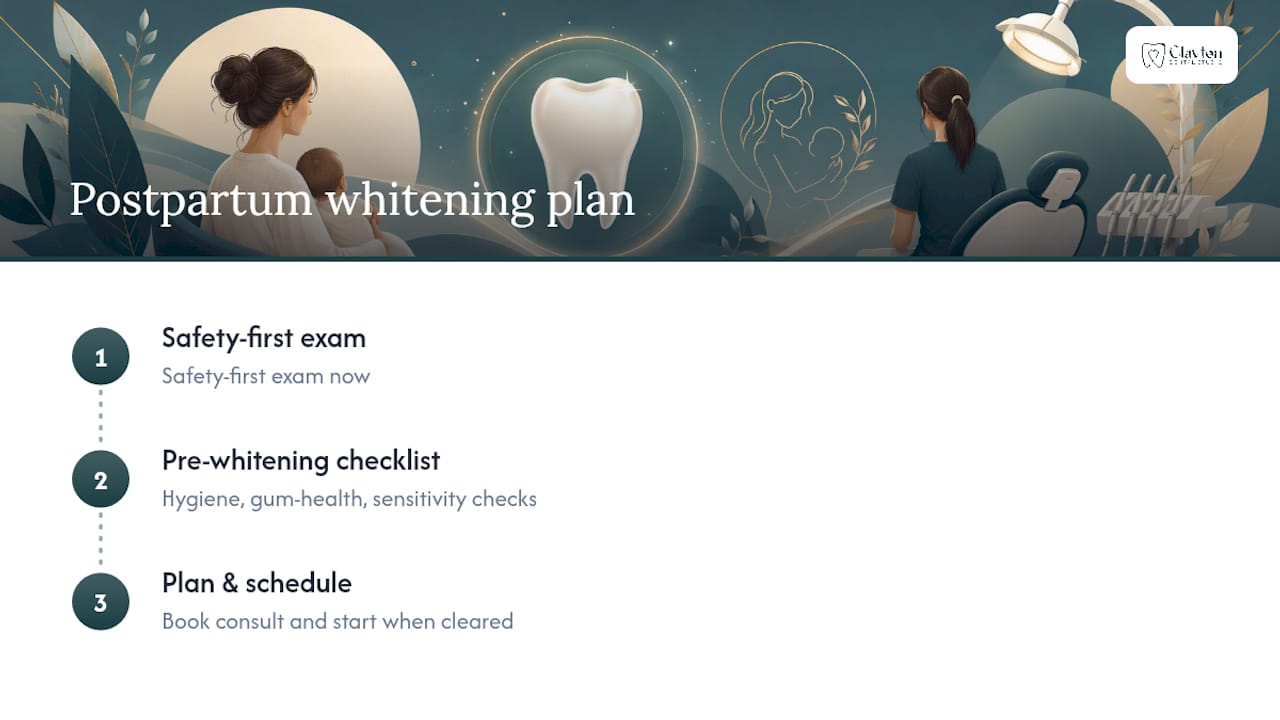
Clayton Dental Studio’s advantage for new and expecting moms isn’t just caution, it’s a clear runway: a safety-first exam now and a whitening plan already mapped out for the moment you’re cleared to start.
Rather than leaving you to guess when it’s safe to bleach, we build a simple pre-whitening checklist into your care: a hygiene exam, a gum-health check, and a sensitivity assessment, so your first postpartum whitening session goes smoothly instead of causing surprise discomfort. If pregnancy hormones softened your enamel or left your gums more reactive, we catch that before you sit in the chair for bleaching, not after.
If you’re pregnant or currently breastfeeding, book a consultation on our teeth whitening page to talk through your timeline, get your questions answered, and put a plan on the calendar for when you’re ready.
This article is general information, not a substitute for advice from a qualified doctor. Consult a qualified healthcare professional about your own circumstances before acting on anything here.
Sources
- ADA: Whitening
- Impact of teeth whitening procedures during pregnancy (literature review)
- MouthHealthy: Pregnancy dental concerns
FAQ
Is hydrogen peroxide safe for teeth during pregnancy?
There’s no proven danger, but there’s also no solid safety data, which is why the ADA recommends deferring peroxide-based whitening until after pregnancy. The bigger concern is that pregnancy gingivitis can make gums more reactive to any peroxide contact.
Can you use Crest Whitestrips while pregnant?
Most dentists advise against peroxide strips during pregnancy for the same reason they caution against professional bleaching: limited safety data and a higher chance of gum irritation from pregnancy-related inflammation. Stick to a professional polish or enamel-safe toothpaste instead until you’ve delivered.
Can I use purple toothpaste while pregnant?
Purple, or color-correcting, toothpastes typically work optically rather than chemically and don’t rely on peroxide bleaching, so they’re generally considered a lower-risk option. Even so, mention any new dental product to your dentist at your next visit just to be safe.
Is it safe to whiten my teeth while I’m trying to conceive?
Since you might already be pregnant without knowing it in the early weeks of trying to conceive, many dentists suggest applying the same precautionary approach and waiting on peroxide whitening. A professional cleaning is a safer way to brighten your smile during this window, according to MouthHealthy.
What should I do if my teeth are sensitive after pregnancy hormones changed my gums?
A desensitizing toothpaste and a gentle brushing routine usually help, but persistent sensitivity is worth discussing with your dentist before you try any whitening product. Learn more about the common causes of whitening sensitivity and how to manage it comfortably.
Recommended
Ready to Schedule Your Appointment?
Dr. Kamboj and the Clayton Dental Studio team are here to help. Call us or book online today.