
Clinic tested steps to prevent and relieve teeth whitening sensitivity, plus a five step plan dentists use to cut pain and speed recovery.
Clinic-Proven 5-Step Plan to Prevent Teeth Whitening Sensitivity
Teeth whitening sensitivity is common, usually mild, and typically temporary. Most patients notice it peaking in the first day or two after treatment, with symptoms fading within a few days. Simple steps like using a potassium nitrate toothpaste, spacing out sessions, and avoiding extreme temperatures resolve most cases. Sensitivity that lingers past a week, or comes with swelling or throbbing pain, needs a dentist’s evaluation.
TL;DR:
- Patients with a history of sensitive teeth should start using potassium nitrate toothpaste two weeks before whitening treatment to reduce discomfort.
- Most sensitivity resolves within 48 to 72 hours, but prolonged pain beyond a week may indicate underlying issues requiring dental evaluation.
- Higher peroxide concentrations and longer wear times increase sensitivity risk, especially with poorly fitted trays or pre-existing enamel issues.
- Preventive measures, such as applying remineralizing agents before treatment, significantly lower the chances of experiencing sensitivity.
- In cases of ongoing or severe pain, immediate dental consultation is necessary to rule out damage like cracked teeth, deep decay, or exposed roots.
Table of Contents
- Why Whitening Makes Teeth Sensitive
- How Long Sensitivity Lasts and What Changes the Timeline
- How to Reduce Your Risk Before and During Whitening
- Fast Relief When Sensitivity Hits
- Red Flags That Mean It’s Time to Call Your Dentist
- What Clayton Dental Studio Recommends for Sensitive Patients
- The Gap Between What Whitening Ads Promise and What Actually Happens
- Sources
Why Whitening Makes Teeth Sensitive
Whitening gels use hydrogen peroxide or carbamide peroxide to break down stain molecules trapped in enamel. To do that, the peroxide has to pass through enamel and reach the dentin underneath, and that process temporarily increases enamel permeability. Dentin is riddled with microscopic channels called dentinal tubules, and once peroxide reaches them, fluid inside those tubules shifts and triggers nerve endings in the pulp. Dental researchers call this the hydrodynamic theory of sensitivity, and it explains why the discomfort often feels sharp and short, like a jolt rather than a dull ache. That reaction is usually a mild, reversible form of pulp irritation, not a sign of damage.
Some whitening protocols and some mouths are simply more prone to this reaction than others. Risk climbs with:
- Higher peroxide concentrations, especially in-office formulas with stronger peroxide levels
- Longer wear times or overlapping sessions without recovery days
- Ill-fitting whitening trays that let gel touch gums or seep unevenly across teeth
- Pre-existing dentin hypersensitivity or thin enamel from erosion
- Gum recession that leaves root surfaces exposed
- Cracked teeth or old fillings with marginal leakage
Professional guidance consistently points to peroxide strength as one of the biggest levers here, which is part of why dentist-supervised whitening tends to produce more predictable, better-managed results than unsupervised at-home kits.
How Long Sensitivity Lasts and What Changes the Timeline
Most sensitivity follows a predictable arc: it climbs during the first 12 to 24 hours as peroxide temporarily dehydrates the tooth, then eases as saliva begins remineralizing and plugging the exposed tubules. By 48 to 72 hours, most people are back to their normal baseline.
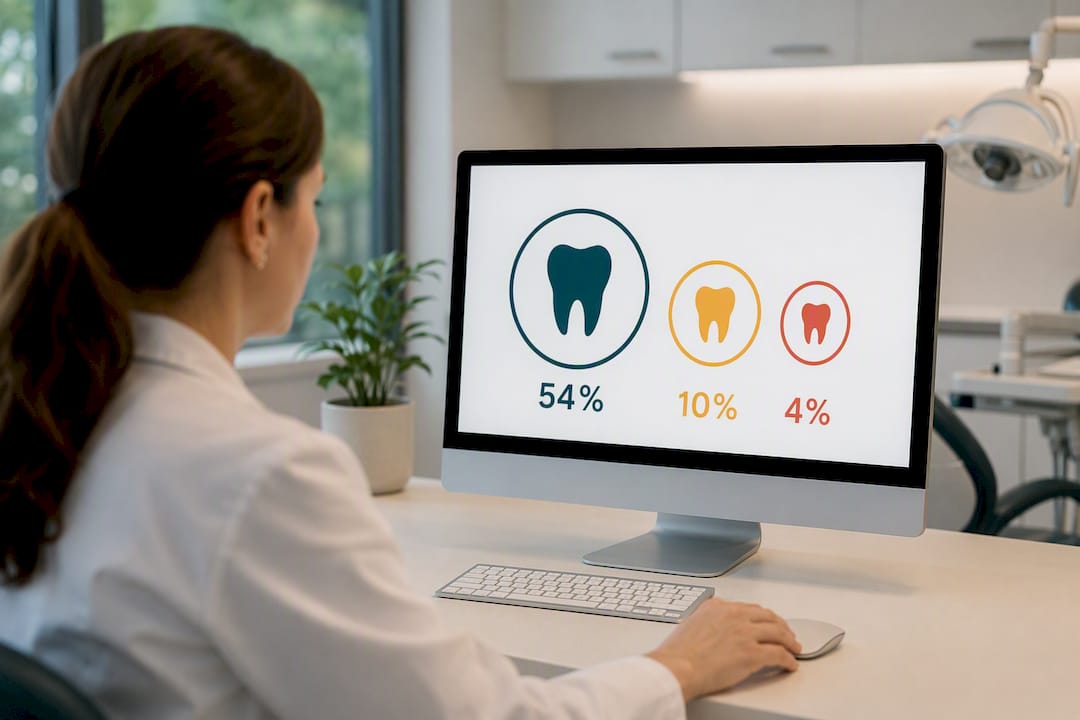
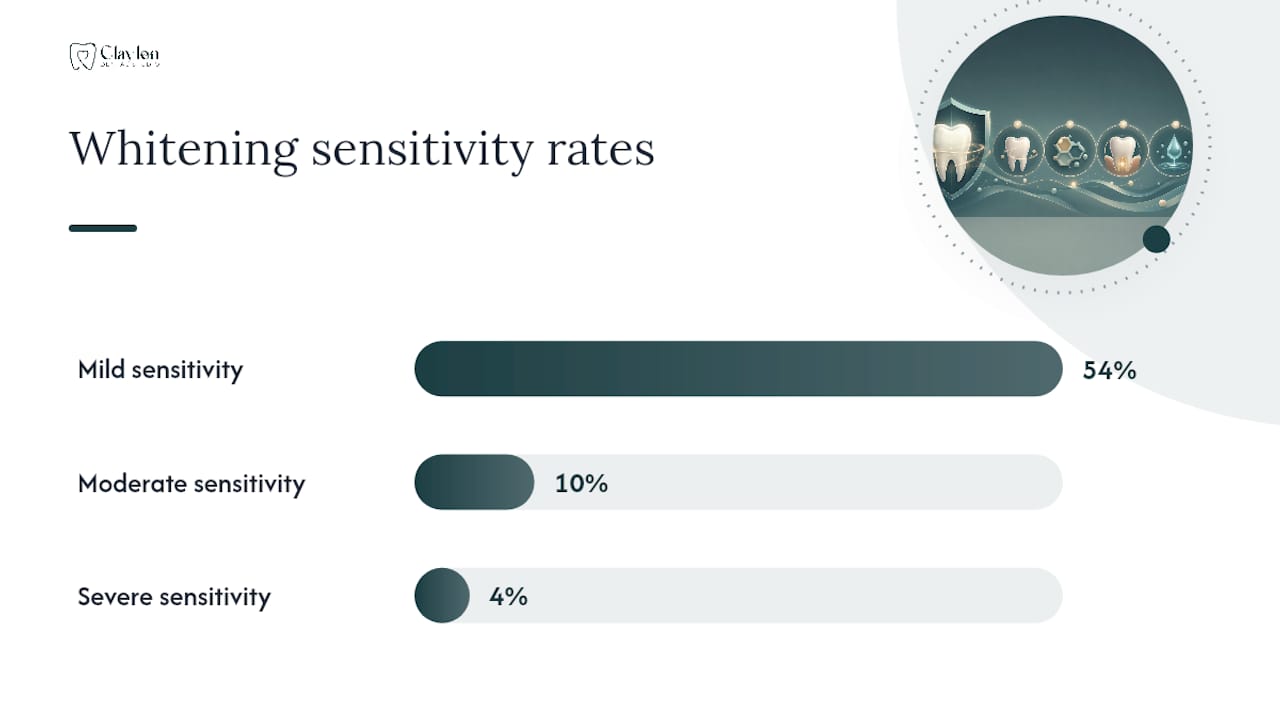
Sensitivity Rate Snapshot: A clinical study using 15% carbamide peroxide found that 54% of patients reported mild sensitivity, 10% moderate, and 4% severe. In other words, roughly two out of three whitening patients feel something, but severe reactions are the exception, not the rule.
Symptoms that stretch beyond a few days usually point to something other than a simple peroxide reaction: deep bleaching schedules stacked too close together, untreated decay, or root surfaces already exposed by gum recession. Tracking your own symptoms day by day is the easiest way to tell normal recovery from a problem. If day four looks the same as day one, that is worth a phone call to your dentist rather than another day of waiting it out.
How to Reduce Your Risk Before and During Whitening
Prevention starts before you ever put on a tray or bite tray. Follow these steps in order:
- Start a potassium nitrate toothpaste 1 to 2 weeks early. Potassium nitrate calms nerve activity inside the tooth, and using it before you begin whitening gives it time to work rather than reacting to pain after the fact.
- Ask about remineralizing pretreatment. Applying amorphous calcium phosphate (ACP) or nano-hydroxyapatite (n-HAP), or a fluoride varnish, right before in-office bleaching has been shown in a randomized clinical trial to lower sensitivity without dulling the whitening result.
- Match the concentration to your history. If you’ve had sensitive teeth before, a lower-peroxide gel or a pulsed schedule (whitening every other day instead of daily) usually gets you to the same shade with less discomfort.
- Get a dental exam first. Cavities, gum recession, and poorly fitted trays all amplify sensitivity, and fixing them beforehand changes the whole experience.
- Stick to the instructions. Extending wear time past what the product recommends does not whiten faster. It just increases the odds of a sore, zinging few days afterward.
Pro Tip: Leave a thin layer of potassium-nitrate toothpaste on your teeth overnight instead of rinsing it away completely. The extended contact time helps the mineral uptake work faster, and many patients notice a difference within two or three nights.
Fast Relief When Sensitivity Hits
If you’re already feeling the zing, a few adjustments usually bring quick relief:
- Switch to a potassium-nitrate or stannous-fluoride desensitizing toothpaste, and resist rinsing it away right after brushing.
- Skip ice water and hot coffee for a few days. Lukewarm drinks, and a straw when needed, sidestep the temperature triggers that make sensitivity worse.
- Consider an over-the-counter NSAID for a day or two if discomfort is interfering with eating or sleep.
- Ask about in-office fluoride varnish or a desensitizing gel your dentist can apply directly. These act faster than anything sold over the counter.
- If you’re mid-treatment at home, pause and switch to a pulsed, every-other-day schedule rather than pushing through consecutive sessions. Manufacturer guidance notes that sensitivity typically settles within a few days once treatment is spaced out.
Pro Tip: A brief pause doesn’t waste progress. Whitening results are cumulative, so spacing sessions by a day or two lets your teeth recover while you keep moving toward your target shade.
Red Flags That Mean It’s Time to Call Your Dentist
Most whitening discomfort is reversible and short-lived, but a few signs mean it’s no longer just “normal sensitivity”:
- Pain that gets worse instead of better after two or three days
- Swelling, fever, or a bad taste suggesting infection
- Sharp pain specifically when chewing or biting down
- Sensitivity that persists beyond 7 to 10 days without improvement
A dentist checking these symptoms will usually run a bite check, gentle percussion testing, a cold test to gauge nerve response, and sometimes an X-ray to rule out a cracked tooth, deep decay, exposed root, or a filling sitting slightly too high. Clinical guidance consistently frames short-term sensitivity as a normal and expected part of whitening or restorative work, but persistent or severe pain is the exception that deserves a proper look rather than more waiting.
What Clayton Dental Studio Recommends for Sensitive Patients
We see whitening sensitivity often enough at our Humble office to have a clear protocol for it, and it starts well before the first shade change. Patients with a history of sensitive teeth begin a potassium-nitrate toothpaste regimen roughly two weeks ahead of their appointment. During in-office whitening, we apply fluoride varnish or a remineralizing gel first, adjust trays for a snug and even fit, and stage stronger treatments across multiple visits rather than one long session when a patient’s enamel history calls for it.
Combining a nerve-calming agent like potassium nitrate with a mineral-based product like ACP or n-HAP addresses sensitivity from two directions at once: one quiets the nerve signal, the other helps physically seal the exposed tubules. That two-part approach is why patients who prepare ahead of time tend to report a noticeably smoother experience than those who whiten cold.
After treatment, we give patients specific instructions on food and drink temperatures for the first 48 hours and a direct line to reach us if anything feels off. If you’re weighing your options, our teeth whitening page walks through what a customized plan looks like, but the short version is this: sensitivity is manageable, and planning ahead is what makes the difference between a rough week and a smooth one.
The Gap Between What Whitening Ads Promise and What Actually Happens
Most whitening marketing treats sensitivity as an afterthought, a small print warning buried under before-and-after photos. That’s backwards. The research is clear that roughly half of patients feel something, and treating that as a footnote rather than a planning variable is where most at-home whitening experiences go wrong.
The conventional advice, “just use a sensitivity toothpaste if it hurts,” undersells what actually works. Reactive relief helps, but the stronger evidence points toward prevention: starting potassium nitrate before treatment, using remineralizing agents like ACP or n-HAP right before bleaching, and matching peroxide concentration to your own enamel history instead of defaulting to the strongest formula on the shelf.
If we had to prioritize one thing for readers to change, it’s this: stop treating sensitivity as a surprise to manage after the fact. Treat it as a variable to plan around before you start, the same way you’d plan around any other predictable side effect of a dental procedure.
— Clayton Dental Studio
This article is general information, not a substitute for advice from a qualified doctor. Consult a qualified healthcare professional about your own circumstances before acting on anything here.
Sources
- Clinical study reporting incidence and severity of sensitivity after carbamide peroxide bleaching
- Effectiveness of remineralization agents on the prevention of dental bleaching induced sensitivity: A randomized clinical trial
- Philips support guidance on managing tooth sensitivity after whitening
Recommended
Ready to Schedule Your Appointment?
Dr. Kamboj and the Clayton Dental Studio team are here to help. Call us or book online today.