
Discover when antibiotics for toothache are necessary and find out the real fixes, like dental procedures, for effective relief.
Antibiotics for Toothache: When You Actually Need Them
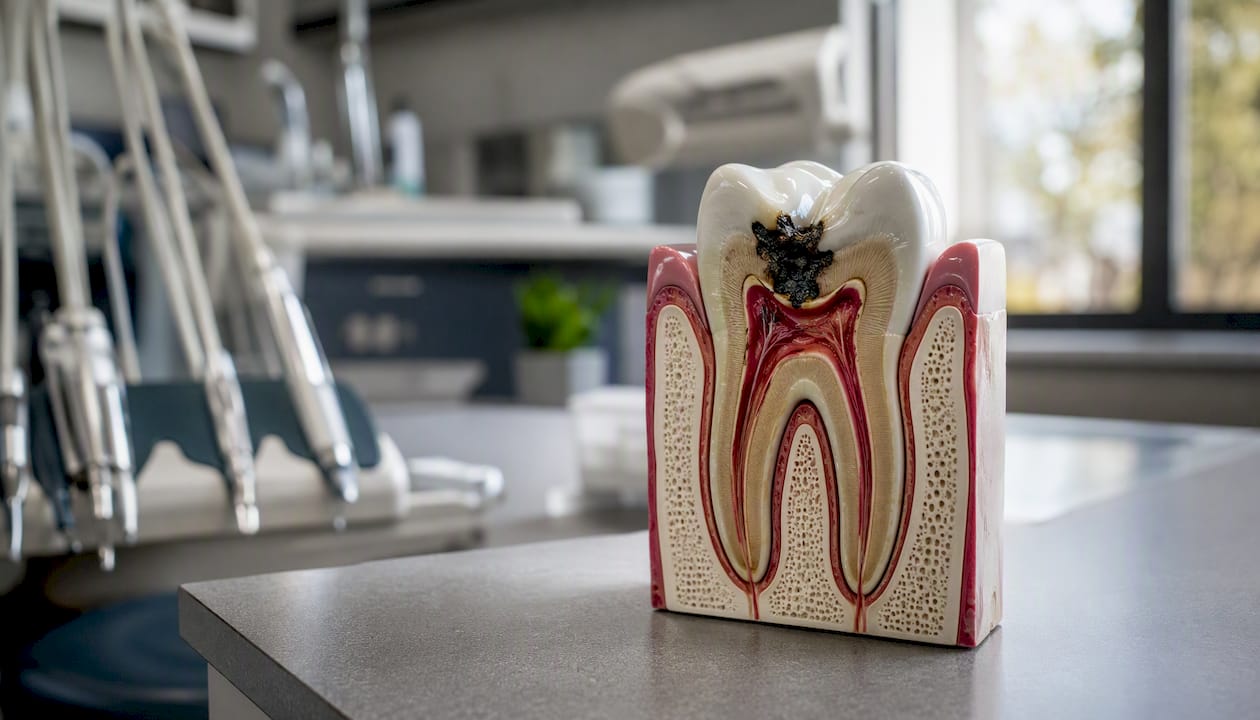
Antibiotics are not the right first step for most toothaches. If you have a simple toothache, even a painful one, the American Dental Association recommends against routine antibiotics for most pulpal and periapical conditions in otherwise healthy adults. The real fix is a dental procedure: a root canal, extraction, or drainage of the abscess. Antibiotics reduce bacterial spread, but they cannot remove infected tissue or drain pus. Only your dentist can do that.
That said, there are specific situations where antibiotics for a toothache are genuinely appropriate. Look for these signs:
- Fever (above 100.4°F) alongside your tooth pain
- Swelling spreading beyond the gum into your jaw, cheek, or neck
- Difficulty breathing or swallowing (this is a medical emergency — call 911)
- Trismus (you cannot open your mouth fully)
- Feeling generally unwell: chills, fatigue, or rapid heart rate
- Immunocompromised status (chemotherapy, diabetes, HIV, organ transplant)
If any of these apply, call your dentist immediately. If you have trouble breathing or swallowing, go to the emergency room now. For everything else, your priority is getting a dental appointment, not a prescription.
Key Takeaways
Antibiotics for a toothache are rarely the right first treatment. Definitive dental care, whether a root canal, extraction, or abscess drainage, is the treatment that actually resolves the infection.
| Point | Details |
|---|---|
| Procedures come first | Root canals, extractions, and drainage remove the infection source; antibiotics cannot do this. |
| Antibiotics have a specific role | Prescribe only with systemic signs (fever, spreading swelling) or when dental care is unavailable within 1–2 days. |
| Reassess at 48–72 hours | No improvement after starting antibiotics means contact your dentist for re-evaluation or escalation. |
| Manage pain safely while you wait | Combine 400–600 mg ibuprofen with 1,000 mg acetaminophen for effective interim relief. |
| Clayton Dental Studio offers urgent care | Same-day emergency appointments in Humble, TX for tooth pain, abscesses, and infection treatment. |
Table of Contents
- Why antibiotics often won’t fix your tooth infection
- Which antibiotics dentists prescribe for tooth infections
- How antibiotics work for dental infections and their limits for pain relief
- How to take prescribed antibiotics safely
- Benefits, risks, and the public-health case for using antibiotics carefully
- Red flags that mean you need urgent or emergency care now
- What ADA and CDC guidelines say about antibiotics and dental procedures
- Your next steps if you have a toothache right now
- A dentist’s perspective on antibiotics and toothache
- Clayton Dental Studio is here when you need urgent dental care
- Sources
Why antibiotics often won’t fix your tooth infection
To understand why antibiotics have limits here, it helps to know what is actually happening inside the tooth. When decay or trauma reaches the pulp (the soft inner tissue containing nerves and blood vessels), bacteria multiply and the pulp becomes inflamed or dies. This is called pulpitis. Left untreated, the infection spreads to the bone at the root tip, forming a periapical abscess, a pocket of pus surrounded by dead tissue.
Here is the problem: antibiotics travel through the bloodstream, but a dead or dying pulp has no blood supply. The drug cannot reach the bacteria living inside that necrotic tissue. Draining the abscess or removing the infected pulp through a root canal or extraction physically eliminates the source of infection. Antibiotics, at best, contain the spread.
A systematic review published via NCBI found only low to very low certainty evidence that antibiotics provide meaningful pain reduction for pulpal or periapical conditions without systemic signs. The evidence for prioritizing the procedure over the prescription is strong and consistent.
For interim pain control while you wait for your appointment, combining ibuprofen with acetaminophen is an evidence-based approach that many patients find more effective than either drug alone. You can read more about managing tooth pain on the Clayton Dental Studio website.

Which antibiotics dentists prescribe for tooth infections
When antibiotics are clinically appropriate, dentists follow a clear hierarchy. The ADA chairside guide outlines first-line regimens, allergy alternatives, and escalation options for treatment failure.
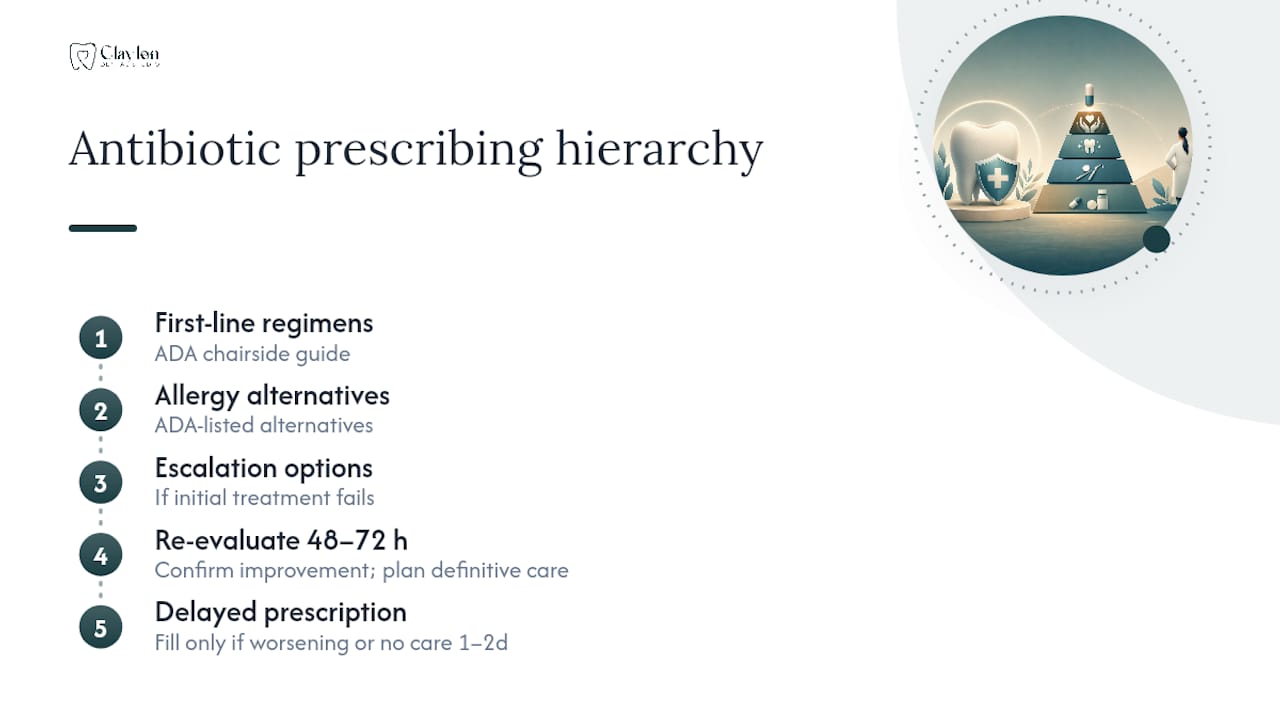
The Merck Manual corroborates these regimens and recommends re-evaluating the patient after 48–72 hours to confirm improvement and determine whether definitive dental care can proceed.
Pro Tip: If your dentist gives you a “delayed prescription,” that means you should hold off on filling it. Fill it only if your symptoms worsen (fever develops, swelling spreads) or if you cannot get definitive dental care within 1–2 days. This approach, supported by the ADA chairside guide, avoids unnecessary antibiotic exposure when a dental procedure can be done promptly.
How antibiotics work for dental infections and their limits for pain relief
Antibiotics reduce the bacterial load in surrounding tissues and help prevent the infection from spreading into the jaw, neck, or bloodstream. For patients with systemic signs (fever, swollen lymph nodes, spreading cellulitis), they can be genuinely important. But they are not painkillers, and they do not cure an abscessed tooth.
Most patients notice some reduction in swelling and systemic symptoms within a few days of starting antibiotics. If you are not improving within that timeframe, that is a signal to contact your dentist or seek urgent care, not to wait it out. The Merck Manual explicitly recommends re-evaluation at that point to assess whether escalation or a procedure is needed.
What antibiotics cannot do:
- Remove necrotic (dead) pulp tissue from inside the tooth
- Replace incision and drainage of a fluctuant abscess
- Substitute for a root canal or extraction
- Reliably eliminate pain from an untreated abscess
- Prevent recurrence if the source of infection is not addressed
A NCBI-published systematic review found that any short-term pain benefit from antibiotics for pulpal or periapical conditions was modest and inconsistent. The evidence consistently points to the procedure as the treatment, with antibiotics playing a supporting role in specific circumstances.
How to take prescribed antibiotics safely
If your dentist does prescribe antibiotics, getting the most out of them while minimizing harm comes down to a few straightforward habits.
- Space doses evenly. If you take a drug three times daily, aim for roughly every 8 hours. Consistent spacing keeps blood levels steady and the antibiotic working.
- Finish the full course. Stopping early when you feel better leaves surviving bacteria behind and raises resistance risk. Only stop early if your prescriber tells you to.
- Never share or borrow antibiotics. A prescription is matched to your specific infection and allergy profile.
- Watch for drug interactions. Some antibiotics (notably metronidazole) interact with alcohol and can cause severe nausea. Clindamycin carries a meaningful risk of Clostridioides difficile (C. diff) colitis, a serious gut infection. If you develop severe or watery diarrhea, stop the antibiotic and call your provider.
- Oral contraceptives: current evidence suggests most antibiotics do not meaningfully reduce contraceptive effectiveness, but if you have concerns, discuss backup methods with your prescriber.
- Call your dentist or prescriber right away if you notice: hives, facial swelling, difficulty breathing (signs of allergic reaction), a severe skin rash, or diarrhea that is bloody or does not resolve.
Benefits, risks, and the public-health case for using antibiotics carefully
For the right patient, antibiotics genuinely matter. They can prevent a localized abscess from becoming a spreading neck infection or, in rare cases, a life-threatening condition like Ludwig’s angina. For immunocompromised patients, pregnant patients, or those with rapidly progressing infections, the threshold to prescribe is appropriately lower, and individualized assessment with possible medical referral is standard care.

The individual risks are real, though. Serious adverse events including anaphylaxis, severe allergic reactions, and C. difficile colitis are uncommon but clinically significant, and they are a primary reason clinicians avoid prescribing antibiotics when a dental procedure can address the problem directly.
The public-health picture adds another layer. CDC guidance on antibiotic stewardship emphasizes limiting unnecessary antibiotic use to slow antimicrobial resistance, and dental prescribing is a meaningful part of that picture. The WHO frames reducing unnecessary antibiotic use across all health-care settings as a global priority for curbing antimicrobial resistance.
Stewardship note: Guideline literature notes that a substantial portion of dental antibiotic prescriptions are suboptimal or unnecessary. Dentists are actively moving away from routine prescribing for toothache, prioritizing definitive care instead. This protects individual patients from side effects and protects communities from resistance.
The practical guidance: avoid antibiotics for a toothache unless there is clinical evidence of systemic or spreading infection, or unless immediate dental care is genuinely unavailable.
Red flags that mean you need urgent or emergency care now
Some symptoms go beyond “call your dentist in the morning.” These require same-day or emergency attention.
Call your dentist today or go to urgent dental care:
- Fever above 100.4°F with tooth pain
- Swelling that has spread to your cheek, jaw, or under your chin
- Swollen, tender lymph nodes in your neck
- Pain that is rapidly worsening despite over-the-counter pain relief
- Pus draining from the gum around the tooth
Call 911 or go to the ER immediately:
- Difficulty breathing or shortness of breath
- Difficulty swallowing or a feeling that your throat is closing
- Trismus (jaw locked or severely limited opening)
- Rapidly spreading redness across your face or neck
- High fever with confusion, rapid heart rate, or feeling faint (possible sepsis)
When you arrive at the ER or call your dentist, tell them: how long the pain and swelling have been present, whether you have had any recent dental work, your full medication list, and any known drug allergies. That information helps triage staff and clinicians act faster. You can also review tooth infection signs to better understand what to watch for before your appointment.
What ADA and CDC guidelines say about antibiotics and dental procedures
The clinical rationale for procedure-first care is grounded in evidence, not just convention. The ADA’s evidence-based guidance states clearly that definitive dental care (pulpectomy, extraction, or incision and drainage) should be performed as soon as possible, and that antibiotics are an adjunct for specific circumstances, not a substitute for treatment.
The ADA chairside guide identifies two situations where antibiotics are appropriate even without immediate access to a procedure: systemic involvement (fever, malaise, spreading infection) and cases where definitive dental care cannot be performed within 1–2 days. In those situations, a delayed prescription with explicit patient instructions is a reasonable bridge.
The CDC’s antibiotic stewardship messaging reinforces this at the population level: every unnecessary prescription contributes to resistance, and dental prescribing is a recognized area for improvement. Clinicians who follow these guidelines are not being withholding. They are protecting you from side effects you do not need and protecting the broader community from resistance patterns that affect everyone.
Your next steps if you have a toothache right now
Here is a clear, practical checklist for right now:
- Control pain with ibuprofen and acetaminophen. Take 400–600 mg of ibuprofen with 1,000 mg of acetaminophen together (if you have no contraindications). This combination is more effective than either alone for dental pain.
- Call your dentist today. Even if the office is not open, check for an after-hours line or emergency contact. Most dental offices can triage urgency over the phone.
- Do not fill a delayed prescription unless criteria are met. Fill it only if your symptoms worsen (fever, spreading swelling) or if you genuinely cannot get dental care within 1–2 days.
- Monitor for red flags every few hours. Spreading swelling, fever, or difficulty swallowing means escalate to urgent care or the ER.
- If you are already on antibiotics, reassess at 48–72 hours. No improvement by then means contact your dentist for re-evaluation, not just a refill.
A dentist’s perspective on antibiotics and toothache
Here is something I see regularly in practice: patients arrive hoping a course of antibiotics will resolve their tooth pain so they can avoid a procedure. I understand that instinct completely. Procedures sound intimidating, and a prescription feels like a simpler solution. But the evidence, and years of clinical experience, point clearly in the other direction.
Antibiotics cannot reach bacteria living inside a dead tooth. They cannot drain a pocket of pus. And they cannot stop the infection from coming back if the source is still there. What they can do is buy time when systemic signs are present and a procedure cannot happen immediately. That is a specific, limited role, and it is the role they should play.
The shift in dental practice toward stewardship is genuinely good for patients. Fewer unnecessary prescriptions means fewer allergic reactions, fewer cases of C. difficile, and less resistance in the community. At Clayton Dental Studio, the approach is procedure-first: address the source of infection directly, use antibiotics only when the clinical picture calls for it, and make sure every patient understands why.
If you are in the Humble area and dealing with tooth pain, please do not wait it out hoping antibiotics will fix it. An in-person assessment is the fastest way to know exactly what is happening and what will actually help.
Clayton Dental Studio is here when you need urgent dental care
Tooth pain that is keeping you up at night or swelling that is spreading needs a real answer, not just a prescription. At Clayton Dental Studio in Humble, TX, Dr. Kamboj and the team are ready to see you for emergency dental appointments when pain cannot wait.
The clinic offers same-day CEREC crowns, root canal treatment, extractions, and pain management guidance, so you can get definitive care rather than a temporary fix. When you call or book online, bring your photo ID, a list of current medications, and any known drug allergies. That information helps the team move quickly and safely. Browse the full range of dental services to see everything available, or call the office directly to discuss your symptoms and get on the schedule today.
Sources
- Dental Infection Antibiotics Guidelines for Pain and Swelling | American Dental Association
- Overview of Dental Emergencies - Merck Manual Professional Edition
- Ncbi
- WHO — World Antimicrobial Awareness Week
Recommended
Ready to Schedule Your Appointment?
Dr. Kamboj and the Clayton Dental Studio team are here to help. Call us or book online today.