
Learn to spot urgent tooth infection signs like severe pain, swelling, or fever. Act fast with these steps and seek dental care today!
Tooth Infection Signs: Recognize Symptoms and Act Fast

If you have a severe, throbbing toothache that radiates to your jaw or ear, visible gum swelling, a foul taste in your mouth, or a fever, those symptoms together strongly suggest a tooth infection, specifically a dental abscess or irreversible pulpitis, and you need professional dental care today. This is not a wait-and-see situation.
Take these three steps right now:
- Take an over-the-counter analgesic (ibuprofen or acetaminophen at the labeled dose) and rinse gently with warm salt water to manage discomfort temporarily.
- Call your dentist immediately and ask for a same-day or urgent appointment, explaining your symptoms clearly.
- Go to the emergency department now if you have any of these red-flag signs.
Emergency red flag: Difficulty breathing or swallowing, rapidly spreading facial or neck swelling, a fever of 100.4°F or higher, drooling you cannot control, or confusion requires an immediate 911 call or ER visit. These signs indicate the infection may be spreading beyond the tooth.
Table of Contents
- What are the signs of a tooth infection?
- What causes a tooth infection or abscess?
- How do dentists confirm a tooth infection?
- What are your treatment options for a tooth infection?
- When should you go to the emergency room vs. the dentist?
- How can you reduce your risk of a tooth infection?
- Why a stopped toothache often signals a worse infection
- Key Takeaways
- The value of acting before it becomes an emergency
- Claytondentalstudio is ready when you need same-day dental care
- Useful sources for further reading
What are the signs of a tooth infection?
Tooth infection signs fall into two categories: local signs centered around the tooth and gums, and systemic signs that tell you the infection is affecting your whole body. Knowing both helps you gauge how serious things are.
Local signs to look for
- Continuous, severe, throbbing toothache that does not come and go but stays constant, often radiating to the jaw, neck, or ear
- Lingering sensitivity to hot or cold that persists for more than a few seconds after the stimulus is removed, which often signals irreversible pulp damage
- Increased pain when biting or chewing, even with light pressure
- A raised “pimple” on the gum near the painful tooth, which may ooze a salty or foul-tasting fluid; this is a draining abscess and the infection is still active even if pressure temporarily eases
- Gum redness, puffiness, or tenderness around the base of the tooth
- Facial or jaw swelling that may make one cheek look visibly larger than the other
- A loose tooth that was not loose before, caused by bone loss around the root
Systemic signs that mean the infection is spreading
- Fever, even a low-grade one
- Swollen, tender lymph nodes under your jaw or along your neck
- General fatigue or feeling unwell
- Difficulty opening your mouth fully (trismus)
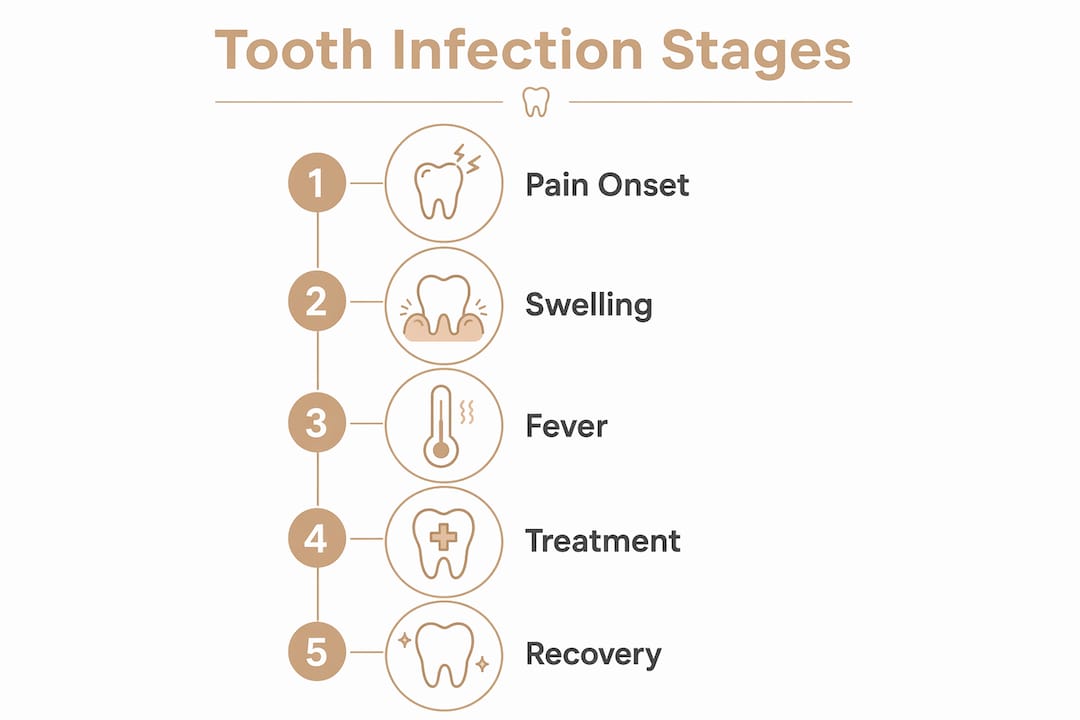
Symptoms can escalate from mild sensitivity to visible swelling within hours to a couple of days. Pain is usually the first sign, followed by swelling, and then systemic symptoms if the infection is left untreated.
Pro Tip: If you notice a small gum pimple that suddenly releases a salty or foul taste, do not assume the problem resolved. Drainage temporarily relieves pressure but does not eliminate the infection. You still need dental treatment.

A combination of constant pain, localized swelling, and fever makes a dental abscess very likely. Any one of those signs alone warrants a call to your dentist. All three together means you should be seen today.
What causes a tooth infection or abscess?
Understanding how infections start helps you connect your history to your current symptoms and take smarter steps going forward.
Primary causes
- Untreated tooth decay (dental caries): Bacteria work through the enamel and dentin until they reach the pulp, the soft inner tissue containing nerves and blood vessels. Once the pulp is infected, the condition is called pulpitis. Left alone, it progresses to pulp necrosis and then a periapical abscess forms at the root tip.
- Cracked or fractured tooth: A crack gives bacteria a direct path to the pulp, even without obvious decay.
- Failed or leaking restoration: An old filling or crown that no longer seals properly allows bacteria to re-enter.
- Deep periodontal (gum) disease: Bacteria travel down a deep gum pocket alongside the root, creating a periodontal abscess separate from the pulp.
The path from healthy pulp to abscess looks like this: bacterial invasion → pulp inflammation (pulpitis) → pulp necrosis → periapical abscess → potential spread to surrounding bone and soft tissue.
Risk factors that raise your chances
- Poor daily oral hygiene, allowing plaque and bacteria to accumulate
- A high-sugar diet that feeds the bacteria responsible for decay
- Reduced immune defenses from conditions like diabetes or immunosuppression
- Recent dental trauma, even a minor chip, that was not evaluated promptly
- Incomplete dental work or a crown or filling that has been cracked or loose for a while
A practical clue: if you had a toothache a few weeks ago that seemed to fade on its own, and now you have new swelling or a bad taste near that same tooth, the original infection likely never resolved. That pattern is worth mentioning to your dentist right away.
How do dentists confirm a tooth infection?
Knowing what to expect at your appointment can make the visit feel much less stressful. Here is the typical sequence.

| Diagnostic tool | When it is used | What it shows |
|---|---|---|
| Focused history and oral exam | Every dental visit for pain or swelling | Location, duration, and character of pain; visible swelling, redness, pus |
| Percussion and palpation testing | When a specific tooth is suspected | Pain on tapping or pressing identifies the affected tooth and surrounding bone |
| Pulp vitality test (cold/electric) | To assess nerve status | Distinguishes reversible pulpitis from necrosis |
| Intraoral periapical or bitewing X-ray | Standard for any suspected infection | Shows caries extent, periapical abscess, and bone loss |
| CT or CBCT scan | Suspected spread into facial spaces or neck | Maps deep-space infection, sinus involvement, or airway proximity |
Clinical evaluation through history and physical exam is usually enough to identify an early infection. Periapical and periodontal abscesses typically show palpable swelling at the base of the tooth, and percussion testing pinpoints the source quickly.
CT imaging is reserved for cases where facial or neck swelling suggests the infection has moved beyond the tooth into the deeper tissue spaces of the face or neck. If you arrive at an emergency department with significant swelling, the ED team will prioritize assessing your airway and neck before anything else, then coordinate with a dentist or oral surgeon for definitive care.
Pro Tip: Ask your dentist about digital X-rays during your visit. They deliver a clearer image with significantly less radiation than traditional film, and results are available instantly on-screen.
What are your treatment options for a tooth infection?
There is no single answer here because the right treatment depends on how far the infection has progressed, which tooth is involved, and your overall health. Here is a clear breakdown.
| Treatment | Purpose | When it is used | Expected relief | Follow-up |
|---|---|---|---|---|
| Incision and drainage (I&D) | Release pus and reduce pressure | Fluctuant abscess with accessible swelling | Hours to 1 day | Antibiotics often prescribed; definitive dental care still required |
| Root canal therapy | Remove infected pulp, seal the canal | Tooth is restorable; infection confined to pulp/periapex | 24–72 hours for significant improvement | Crown placement to protect the tooth |
| Tooth extraction | Remove the source entirely | Tooth is not restorable or patient preference | 24–48 hours | Bone graft or implant planning if replacement is desired |
| Antibiotics alone | Reduce bacterial load, treat systemic spread | Systemic spread, cellulitis, or when same-day dental care is unavailable | Partial, temporary | Must be followed by definitive dental treatment |
What antibiotics actually do (and do not do)
Antibiotics like penicillin or amoxicillin are appropriate when the infection has spread systemically, when there is cellulitis, or when same-day dental treatment is not available. What they cannot do is eliminate the source of the infection inside the tooth. Think of it this way: antibiotics reduce the bacterial army, but they cannot clean out the battlefield. Without drainage or pulp removal, the infection tends to return.
What to expect after treatment
Most patients feel meaningful pain relief within 24–72 hours after drainage or root canal therapy. Swelling typically begins to reduce within the first day. If your pain is worsening or swelling is spreading after 48 hours of treatment, call your dentist or go to the ED. That is not normal recovery.
When clinicians decide between extraction and root canal, the key factors are whether the tooth can be restored to function, the patient’s overall health, and the location and extent of the infection. Both are effective when chosen appropriately.
When should you go to the emergency room vs. the dentist?
This is one of the most important decisions you can make when dealing with a dental infection. Getting it right could protect your airway and your life.
Red flags that require an immediate ER visit
- Difficulty breathing or swallowing
- Rapidly spreading swelling in the face, jaw, or neck
- High fever (100.4°F or higher), especially combined with confusion or rapid heartbeat
- Drooling or inability to manage saliva
- Severe trismus (you cannot open your mouth more than a finger-width or two)
- A swollen, painful, or visually affected eye
- Signs of sepsis: confusion, extreme fatigue, or feeling very unwell beyond just tooth pain
These signs point to deep-space infection, airway compromise, or septic progression, all of which are life-threatening without hospital-level care. Rare but severe complications include Ludwig’s angina, cavernous sinus thrombosis, and sepsis, and they move fast.
The 3-3-3 guide for clarity
3 red-flag signs that mean go to the ER now:
- Difficulty breathing or swallowing
- Spreading neck or facial swelling
- Fever with confusion or rapid heartbeat
3 actions to take right now:
- Call 911 or have someone drive you to the ER (do not drive yourself if you feel confused or very unwell)
- Do not eat or drink anything in case airway intervention is needed
- Bring a list of any medications you take
3 things to expect at the ER or urgent dental clinic:
- Airway and vital sign assessment first
- CT scan if neck or deep-space spread is suspected
- IV antibiotics and coordination with an oral surgeon or dentist for definitive care
For localized pain and swelling where your airway feels clear and you have no fever, an urgent dental exam is the right first call. Knowing what to expect from a same-day emergency dental visit can help you feel more prepared and less anxious when you arrive.
How can you reduce your risk of a tooth infection?
Prevention is genuinely straightforward, and the payoff is significant. Most dental abscesses are preventable with consistent habits and timely care.
Daily habits that protect your teeth
- Brush twice daily with a fluoride toothpaste, spending at least two minutes each time
- Clean between teeth daily with floss, interdental brushes, or a water flosser
- Limit sugary snacks and drinks, especially between meals, since frequent sugar exposure feeds the bacteria that cause decay
- Avoid tobacco in any form, which impairs gum healing and increases infection risk
Routine dental care
Schedule a checkup and cleaning every six months, or more frequently if your dentist recommends it based on your cavity or gum disease history. Routine dental hygiene visits include X-rays at appropriate intervals to catch decay and bone changes before they become infections.
If a filling cracks, a crown feels loose, or you chip a tooth, call your dentist within a day or two rather than waiting for pain to develop. Bacteria do not need a large opening to find their way to the pulp.
Pro Tip: Lingering sensitivity to cold that lasts more than 10–15 seconds after the cold source is removed is an early warning sign of pulp irritation. Catching it at that stage, before it becomes irreversible pulpitis or an abscess, is much easier and less costly to treat.
Why a stopped toothache often signals a worse infection
This is one of the most important things to understand about tooth infections, and it catches a lot of people off guard.
When a severe toothache stops abruptly without any dental treatment, it frequently means the pulp has died (pulp necrosis), not that the problem resolved. Here is the physiology: as the pulp tissue dies, the nerve fibers that were generating pain signals are destroyed. The pain quiets. But the bacteria do not stop. They continue to spread through the root canal system into the surrounding bone, forming or enlarging a periapical abscess.
Patients with irreversible pulpitis experience lingering pain after temperature stimulation or spontaneous pain. As pulp necrosis develops, that pain may subside briefly while the infection progresses to abscess formation. The spontaneous pain cessation can indicate that the nerve has died while the abscess or infection persists and continues to destroy bone and surrounding tissue.
Key clinical insight: A toothache that suddenly stops without treatment is not a sign of healing. It is often a sign that the nerve has died and the infection is now spreading silently. See a dentist promptly, even if you feel better. If swelling or systemic symptoms are present, seek emergency care.
What to do if your tooth pain stopped on its own
- Schedule a dental evaluation as soon as possible, ideally within 24–48 hours
- Do not cancel or delay the appointment because the pain is gone
- Watch for new or worsening swelling, a bad taste, or any fever
- If swelling develops or you feel unwell, move to urgent or emergency care immediately
A tooth infection does not reliably heal without professional intervention such as root canal therapy or extraction. Temporary relief after spontaneous drainage or pulp necrosis indicates ongoing infection and possible bone involvement, not resolution.
Key Takeaways
A tooth infection will not resolve on its own, and recognizing the signs early, especially the deceptive “pain stopped” warning, is the fastest path to protecting your health.
| Point | Details |
|---|---|
| Core signs to recognize | Constant throbbing pain, swelling, fever, foul taste, or a gum pimple all point to active infection. |
| Pain stopping is a warning | Sudden pain relief without treatment often means pulp necrosis, not healing; see a dentist promptly. |
| ER red flags | Difficulty breathing or swallowing, spreading neck swelling, or fever with confusion requires an immediate ER visit. |
| Antibiotics alone are not enough | Antibiotics reduce systemic spread but cannot remove the infection source; definitive dental treatment is required. |
| Claytondentalstudio for urgent care | Dr. Navneet Kamboj and the team at Claytondentalstudio offer same-day emergency dental exams in Humble, TX. |
The value of acting before it becomes an emergency
I’m Dr. Kamboj, and after nearly a decade of treating patients in the Humble area, the cases that stay with me are the ones where someone waited. Not because they were careless, but because the pain eased and they assumed the worst was over. By the time they came in, what could have been a straightforward root canal had become a spreading infection requiring more complex care.
What I want you to take away from this is simple: your body’s ability to quiet a toothache is not the same as your body healing an infection. The two are very different things. If you have had a toothache, even one that seems better now, and you notice any swelling, a bad taste, or just a sense that something is off, please reach out. Effective treatment is available, and we make pain control a priority from the moment you sit down. You do not have to be in agony to deserve same-day care.
Claytondentalstudio is ready when you need same-day dental care
When a tooth infection is suspected, getting seen quickly makes a real difference in how straightforward the treatment is. At Claytondentalstudio in Humble, TX, Dr. Navneet Kamboj offers same-day emergency dental exams for patients dealing with tooth pain, swelling, or drainage. The practice is equipped with digital X-ray technology for fast, accurate diagnosis and provides a full range of treatment options including root canal therapy, extractions, and abscess drainage.

Claytondentalstudio accepts most major dental insurance plans and offers flexible payment options for patients without coverage. The team is known throughout the Humble community for warm, unhurried care that takes your anxiety seriously. If you are in pain or concerned about an infection, visit the services page to learn more, or call the office directly to book a same-day or next-available appointment. For patients in the Atascocita area, the emergency dentist page has local contact and walk-in details. Do not wait for swelling to decide for you.
Useful sources for further reading
- Tooth abscess: MedlinePlus Medical Encyclopedia — A clear, patient-friendly overview of abscess causes, symptoms, and treatment from the U.S. National Library of Medicine. Particularly useful for understanding what happens when pain stops suddenly.
- Tooth abscess: Mayo Clinic — Covers symptoms, causes, complications (including sinus involvement), and when to seek emergency care. One of the most thorough consumer-facing resources available.
- Abscessed tooth: Cleveland Clinic — Detailed breakdown of abscess types, systemic complications like sepsis and cavernous sinus thrombosis, and emergency warning signs including fever thresholds.
- Dental Emergencies: StatPearls (NCBI Bookshelf) — A clinical reference covering diagnosis, imaging choices, antibiotic indications, and triage criteria. Best for understanding how clinicians make treatment decisions.
- Toothache and Infection: Merck Manual Professional Edition — Professional-level guidance on exam findings, differential diagnosis, and how periapical versus periodontal abscesses present differently.
- Dental abscess: NHS — A concise, well-organized patient guide to symptoms, causes, and urgency levels. Useful as a quick reference for symptom checklists.
This article is for general informational purposes only and is not a substitute for professional dental or medical advice. If you are experiencing symptoms of a tooth infection, contact a licensed dentist or seek emergency care to confirm your diagnosis and get appropriate treatment.
Recommended
Ready to Schedule Your Appointment?
Dr. Kamboj and the Clayton Dental Studio team are here to help. Call us or book online today.