Discover the causes of black triangles teeth, effective fixes, and when to seek help. Learn how to restore your smile today!
Black Triangles Teeth: Causes, Fixes, and When to Act
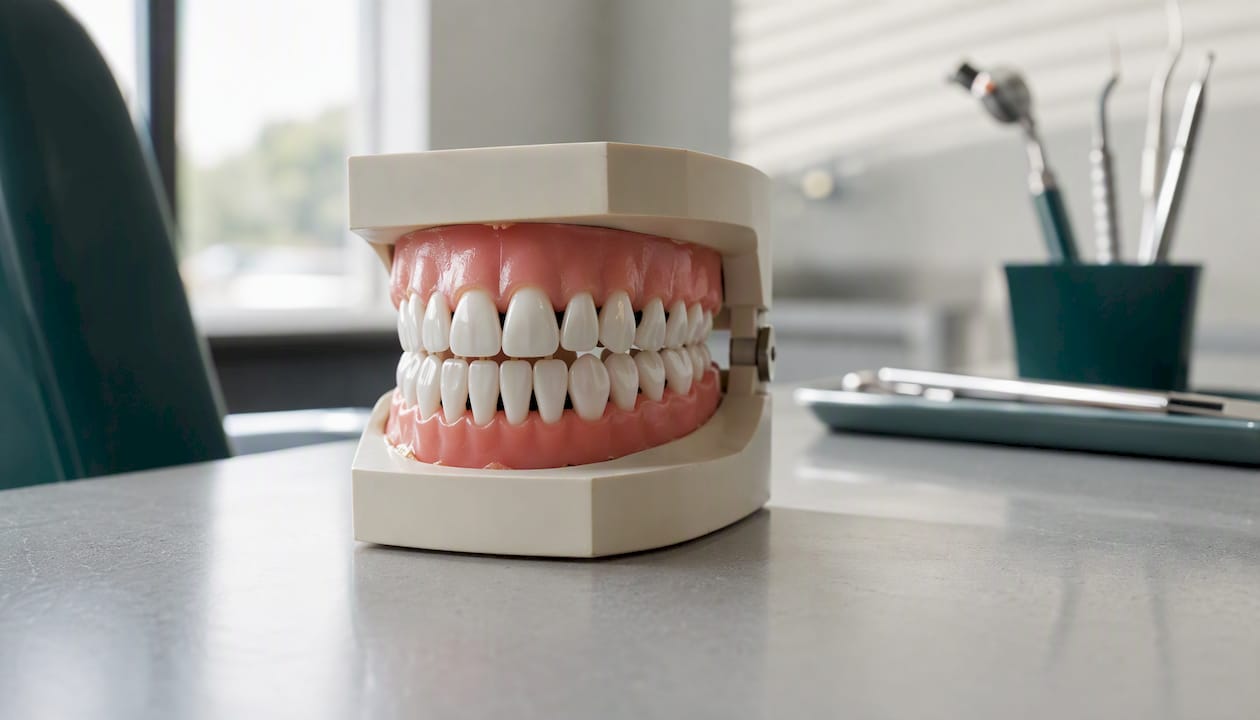
Those small dark gaps between your teeth near the gumline are called open gingival embrasures, or more commonly, black triangles. They form when the triangular wedge of gum tissue (the interdental papilla) no longer fills the space between two teeth. Studies suggest that around two-thirds of adults over age 20 have some degree of open embrasure, so you are far from alone. Many cases are purely cosmetic and very treatable. Others signal active gum disease or bone loss that needs attention before any cosmetic fix is considered.
Here is what you need to know right now:
- Black triangles = open gingival embrasures. The interdental papilla is missing or receded, leaving a triangular void that looks dark because light does not reflect out of it.
- Often fixable with conservative options like composite bonding or the Bioclear method, but the right path depends entirely on whether your gum tissue and bone are stable.
- The Tarnow 5 mm rule is a key clinical anchor: when the distance from the contact point between two teeth to the bone crest below is 5 mm or less, the papilla is likely to fill that space. Beyond 5 mm, full fill becomes increasingly unlikely without intervention.
- Book a dental exam now if your gaps are new, growing, accompanied by bleeding, or appeared after orthodontic treatment. Clayton Dental Studio offers full periodontal evaluation and treatment sequencing to help you understand exactly what you are dealing with.
Table of Contents
- What exactly are black triangles between your teeth?
- Common causes of black triangles and how to recognize each
- Do black triangles mean you have bone loss or gum disease?
- Can black triangles actually be fixed?
- Treatment options compared: what works, for whom, and at what cost
- How a dentist at Clayton Dental Studio evaluates your case
- Prevention and home-care habits that protect your papilla
- Typical U.S. costs and timelines for treating black triangles
- When should you actually see a dentist about this?
- Key Takeaways
- A clinician’s perspective on black triangles
- Ready to address your black triangles? Here is what to expect at Clayton Dental Studio
- Useful sources and further reading
What exactly are black triangles between your teeth?
Clinically, the condition is called an open gingival embrasure. Understanding the anatomy makes the treatment options much easier to follow.
Between any two adjacent teeth, there are three key structures working together:
- The contact point (or contact area): where the two teeth touch or nearly touch each other.
- The interdental papilla: the pointed triangle of gum tissue that normally fills the space below that contact point, right down to the bone.
- The alveolar bone crest: the top edge of the jawbone that supports the teeth and, indirectly, the papilla above it.
When the papilla is healthy and the bone is at the right height, it fills the embrasure completely. No gap, no shadow. When the papilla shrinks, recedes, or was never tall enough to begin with, a triangular void opens up. Because that void is a dark space with no reflective surface, it reads as a black triangle when you smile or speak.
Tooth shape matters here too. Teeth with a more triangular crown form (narrower at the gumline, wider at the biting edge) naturally create a larger embrasure space. Even with perfectly healthy gums, a very triangular tooth may show a small gap simply because the contact point sits high and the papilla has a lot of space to fill.
Common causes of black triangles and how to recognize each
The major causes include triangular tooth form, gum recession from periodontal disease, bone loss, post-orthodontic contact-point changes, and aggressive oral hygiene techniques. In practice, multiple causes often combine, which is why a proper clinical assessment matters before choosing a fix.
- Triangular crown shape: Your teeth are naturally wider at the biting edge and narrow near the gumline. Patient sign: visible triangular teeth with tight upper contacts but visible gaps near the gums.
- Gum recession from periodontal disease: Bacterial infection destroys the attachment between gum and tooth, pulling tissue down. Patient sign: bleeding when brushing, swollen gums, bad breath, or a prior diagnosis of gum disease.
- Bone loss: When the bone crest drops, the papilla follows. This is often a consequence of untreated periodontitis. Patient sign: teeth that look longer than they used to, or a history of periodontal treatment.
- Post-orthodontic changes: Braces or clear aligners can move contact points higher on the tooth, enlarging the embrasure below. Patient sign: gaps appeared or noticeably widened after orthodontic treatment.
- Aggressive home care: Scrubbing with a hard-bristle brush or using an oversized interdental brush can traumatize and recede the papilla over time. Patient sign: gum tissue looks pushed down or uneven between specific teeth.
- Aging and thin tissue phenotype: Gum tissue naturally thins with age, and some people simply have a thinner, more fragile tissue type from the start. Patient sign: gradual appearance of gaps over years with no other obvious cause.
- Missing adjacent tooth or poor restoration shape: A crown or filling that does not recreate the natural tooth contour can leave an embrasure unfilled. Patient sign: gap appeared or worsened after dental work.
Pro Tip: If you notice gaps between more than one pair of teeth, or if the gaps seem to be getting larger over time, that pattern strongly suggests a systemic cause like periodontal disease rather than a simple tooth-shape issue. Bring photos to your next appointment.
Do black triangles mean you have bone loss or gum disease?
Not always, but the question deserves a direct answer: new or widening black triangles can absolutely signal active bone loss or periodontal disease, and that possibility should be ruled out before any cosmetic treatment begins.
Black triangles are often misidentified as purely cosmetic when they can actually indicate structural issues like bone loss or tooth morphology. A dentist cannot tell the difference from a visual check alone. Proper diagnosis requires:
- Periodontal probing: Measuring pocket depths around each tooth to detect attachment loss.
- Clinical attachment level measurement: Quantifying how much the gum has detached from the tooth root.
- Periapical or bitewing radiographs: X-rays that show the bone crest level and reveal any bone loss that is not yet visible clinically.
Red flags that mean you should book an appointment promptly:
- Gaps that appeared suddenly or have grown over weeks or months
- Bleeding when you brush or floss
- Persistent bad breath that does not resolve with brushing
- Teeth that feel loose or have shifted
- Pus near the gumline
- Systemic risk factors: diabetes, smoking, or a history of periodontitis
- New gaps following orthodontic treatment
The Tarnow 5 mm rule in practice: When the distance from the contact point to the bone crest is 5 mm or less, the papilla is very likely to fill the space. For each millimeter beyond 5 mm, the probability of complete papilla fill drops significantly. This single measurement helps clinicians set realistic expectations with patients before any treatment is planned.
Many black triangles also trap plaque and food debris, raising the risk for cavities and further periodontal problems if left unaddressed. So even a gap that turns out to be purely cosmetic is worth treating.
Can black triangles actually be fixed?
Yes, most can be significantly improved, and many can be closed completely. The key is choosing the right path based on your specific anatomy and tissue health.
- Treat active periodontal disease first. If probing or X-rays reveal bone loss or active infection, scaling and root planing is the necessary first step before any cosmetic correction. Placing bonding over diseased tissue is like painting over a crack in the wall.
- Consider conservative additive options when tissue is stable. Composite bonding and the Bioclear method can close or minimize gaps without removing any tooth structure.
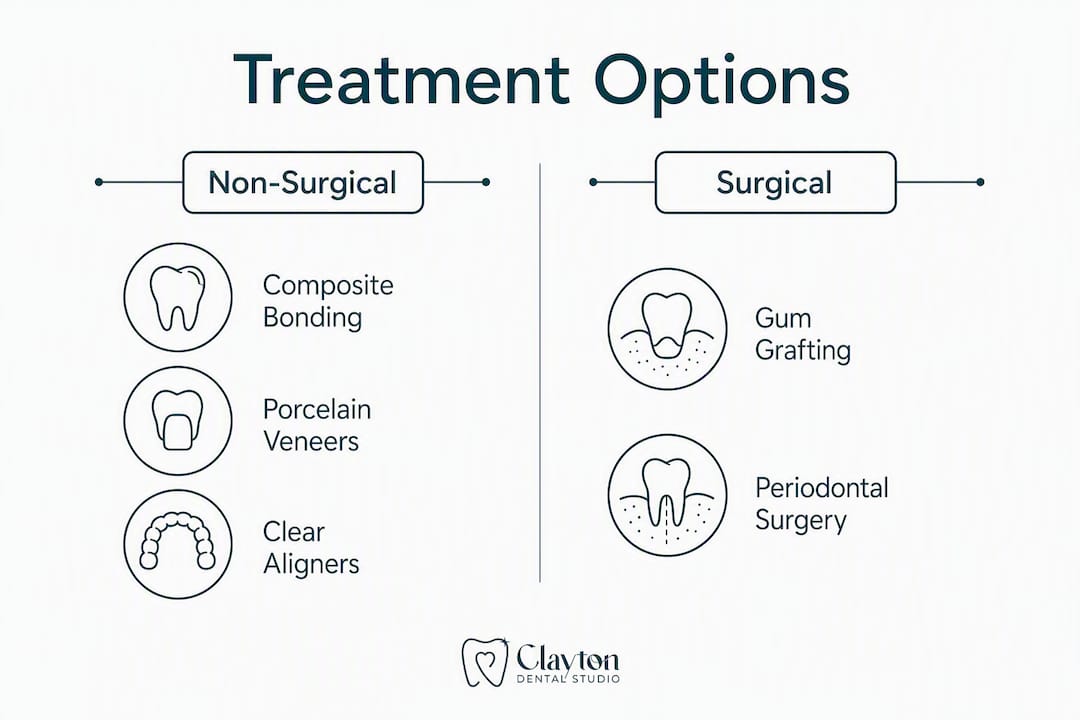
- Explore orthodontic repositioning when the contact point needs to move. Clear aligners with planned interproximal reduction (IPR) can reshape triangular crowns and shift contacts toward the gumline.
- Address bone or tissue deficits surgically when the root cause is significant bone loss or severe recession. Gum grafting or regenerative procedures rebuild the foundation.
Some papilla deficits are biologic limitations. If bone loss is advanced, no cosmetic treatment will fully restore the papilla. In those cases, a combination approach (periodontal therapy + bonding camouflage) is often the most realistic and satisfying outcome.
Treatment options compared: what works, for whom, and at what cost
Here is a side-by-side look at the main approaches, followed by deeper notes on each.
| Treatment | Best for | Invasiveness | U.S. Cost (typical range) | Visits | Durability | Tooth structure | Flossing after |
|---|---|---|---|---|---|---|---|
| Composite bonding | Mild gaps, stable tissue, triangular crowns | Conservative (additive) | Approx. $200 per tooth | 1–2 | Around 5 years | Additive only | Normal flossing; gentle technique |
| Bioclear method | Moderate gaps, anatomical contouring needed | Conservative (additive) | Approx. $300 per tooth | 1–2 | 7–12 years | Additive only | Normal flossing; slightly tighter contacts |
| Porcelain veneers | Multiple teeth, severe shape issues, discoloration | Moderately invasive | Approx. $2,500 per tooth | 2–3 | Around 20 years | Subtractive (enamel prep) | Floss threader or water flosser recommended |
| Clear aligners + IPR | Post-orthodontic gaps, triangular crowns | Conservative | — | Months of active treatment | Long-term with retention | Additive (IPR reshapes enamel slightly) | Normal flossing during and after |
| Hyaluronic acid (HA) injection | Mild papilla deficit, temporary volumizing | Minimally invasive | Approx. $200 per session | 1 (repeat every 6–12 months) | Temporary (months) | None | No change |
| Gum grafting / regenerative surgery | Significant recession, bone loss | Surgical | Approx. $600 per site | 2–4 + healing time | Long-term if stable | None to tooth | Gentle technique during healing |
| Scaling and root planing | Active periodontal disease present | Minimally invasive | Approx. $150 per quadrant | 2–4 | Ongoing maintenance | None | Improved access after treatment |
| Gingival veneer / pink restoration | Severe, irreversible papilla loss | Conservative (removable option) | Varies widely | 1–2 | Removable; indefinite | None | Removed for cleaning |
Composite bonding and the Bioclear method
Composite bonding and the Bioclear anatomical contour approach are widely used conservative restorations to close black triangles with predictable results when performed with proper matrix systems. The Bioclear method uses anatomically shaped matrices that wrap around the tooth, allowing composite resin to be placed in a single, seamless contour rather than in layers. The result is a tighter, more natural-looking contact with less risk of ledges that trap plaque.
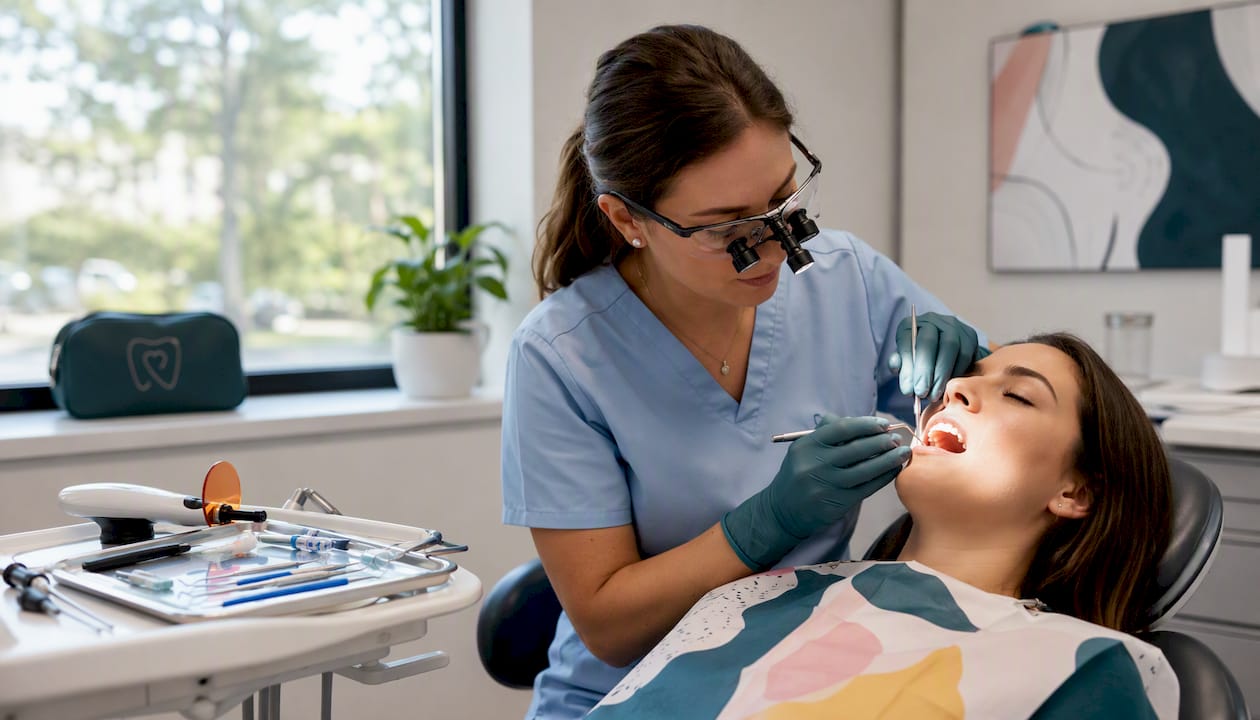
Pros: No tooth removal, reversible, completed in one or two visits, relatively affordable. Cons: Composite can stain or chip over time; requires periodic polishing or replacement.
Porcelain veneers
Veneers cover the front surface of the tooth with a thin ceramic shell. They are a strong option when multiple teeth need reshaping and you want long-lasting color stability alongside gap closure. The tradeoff is that a small amount of enamel must be removed to seat the veneer, making the process irreversible.
Pros: Durable, stain-resistant, dramatic cosmetic improvement across multiple teeth. Cons: Irreversible enamel reduction; higher cost; requires a temporary veneer between visits.
Clear aligners with IPR
Orthodontic tooth movement can reveal or worsen black triangles by moving contact points incisally; proactive use of IPR can change tooth shape to reduce embrasure space. When planned correctly, IPR gently reshapes triangular crowns toward a more rectangular form, moving the contact point closer to the gumline and reducing the gap. Clayton Dental Studio offers clear-aligner therapy that can incorporate this kind of proactive planning.
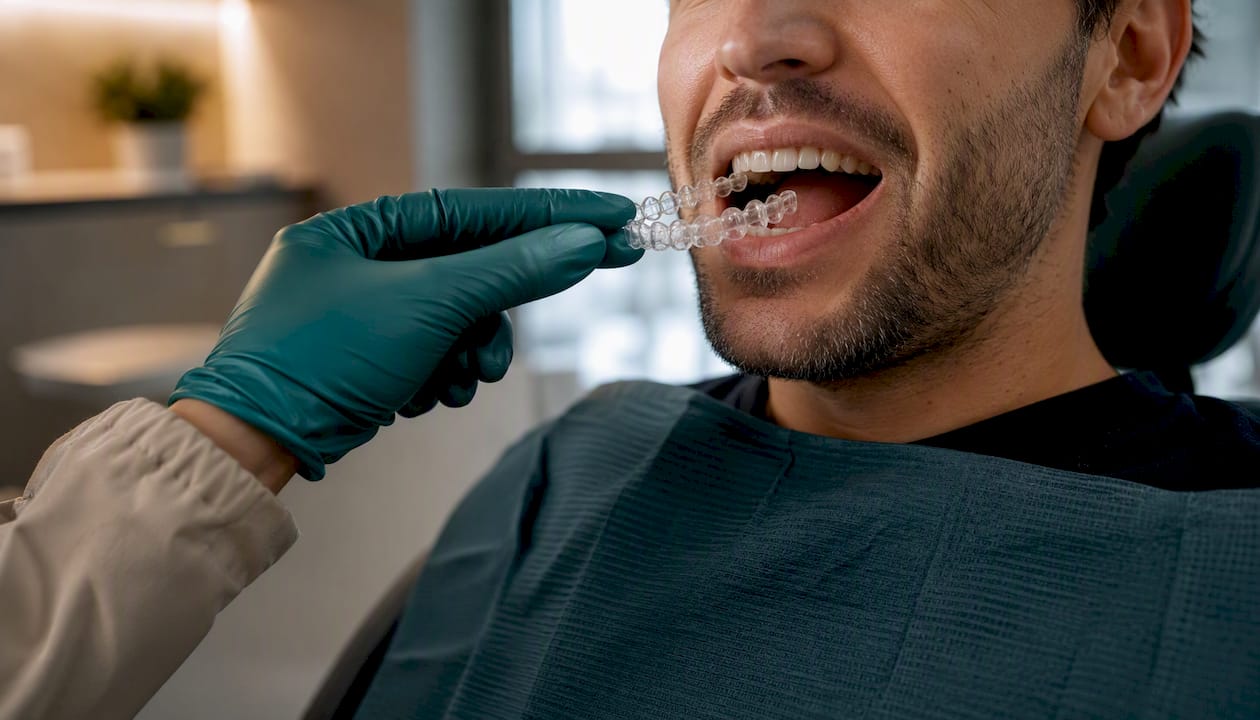
Pros: Addresses the root cause of contact-point position; no permanent material added to teeth. Cons: Requires months of treatment and lifelong retention; not suitable when tissue health is the primary issue.
Gum grafting and periodontal surgery
When recession or bone loss is the underlying cause, grafting rebuilds the tissue foundation. Connective tissue grafts taken from the palate or donor tissue can increase gum volume and, in some cases, partially restore papilla height.
Pros: Addresses the actual biologic deficit; protects roots from further exposure. Cons: Surgical recovery of several weeks; full papilla restoration is not always predictable.
Pro Tip: Combining approaches often gives the best result. For example, clear aligners to reposition contact points followed by composite bonding to fine-tune the shape can close gaps that neither treatment would fully address alone. Ask your dentist to map out a sequenced plan before committing to any single procedure.
How a dentist at Clayton Dental Studio evaluates your case
Knowing what to expect at a diagnostic visit takes a lot of the anxiety out of the process. Here is the step-by-step workflow used at Clayton Dental Studio:
- Medical and dental history review: Systemic conditions like diabetes, smoking history, and prior periodontal diagnoses all affect treatment planning.
- Periodontal charting: Probing depths and recession measurements at six points around every tooth to map attachment levels.
- Radiographs: Bitewing and periapical X-rays to assess bone crest height and detect any bone loss not yet visible clinically.
- Clinical photography: Full-smile, close-up, and retracted photos to document the current state and plan cosmetic outcomes.
- Tooth-shape assessment: Evaluating crown form (triangular vs. rectangular) and how it contributes to the embrasure size.
- Contact-point measurement: Estimating the distance from the contact point to the bone crest, using the Tarnow 5 mm rule as a guide for realistic expectations.
- Digital scans or study models: For cases involving bonding, veneers, or aligners, a digital scan allows virtual treatment planning before anything touches your teeth.
Sequencing rule: Health always comes first. If periodontal disease is active, scaling and root planing is completed and tissue is allowed to stabilize before any cosmetic or orthodontic work begins. Once the tissue is healthy and stable, restorative or surgical cosmetic options are planned.
What to bring to your first visit:
- Any recent dental records or X-rays (within the past 12 months)
- A written list of your concerns and questions
- Photos of your smile at rest and close-up, ideally in natural light
When the case involves significant bone loss or complex recession, a referral to a periodontist may be recommended. For orthodontic repositioning, coordination with an orthodontist or an aligner-trained general dentist is part of the plan. The goal is always to get you the right care in the right sequence, not to rush to a cosmetic result.
Prevention and home-care habits that protect your papilla
The good news: many of the habits that protect against gum disease also protect the papilla. Aggressive home care can contribute to recession and papilla loss, so clinicians routinely counsel patients on gentle technique and correct interdental tool sizing.
Daily habits that help:
- Use a soft-bristle toothbrush and gentle circular or Bass technique strokes. Hard brushing does not clean better; it just damages tissue.
- Floss gently using a C-shape around each tooth rather than snapping the floss into the gumline.
- Size your interdental brushes correctly. The brush should pass through the space with light resistance, not force. Using one that is too large can push the papilla down over time.
- Consider a water flosser as an adjunct, especially if traditional flossing is difficult or your dentist recommends it for a specific area.
- Quit tobacco. Smoking is one of the strongest risk factors for periodontal disease and papilla loss.
- Manage blood sugar if you have diabetes. Poorly controlled blood sugar significantly increases periodontal disease risk.
- Schedule professional cleanings every six months (or more frequently if you have a history of gum disease). Early gingivitis is reversible; advanced periodontitis is not.
For patients who want to keep their smile bright without risking gum irritation, gum-safe whitening techniques are worth discussing with your dentist before starting any at-home whitening regimen.
Pro Tip: To size an interdental brush correctly, choose the largest size that fits without forcing. If you feel pressure or the brush bends sharply, go one size smaller. When in doubt, ask your hygienist to size the brush for each space at your next cleaning, since different gaps in the same mouth often need different sizes.
Typical U.S. costs and timelines for treating black triangles
Typical U.S. cost estimates for fixing a single black triangle vary widely depending on approach, from roughly $200 to $2,500 or more per tooth. The table below gives realistic brackets for planning purposes. Clayton Dental Studio will provide a precise estimate at your consultation.
| Treatment | Typical U.S. cost range | Visits needed | Recovery / timeline |
|---|---|---|---|
| Composite bonding | Approx. $200 per tooth | 1–2 | None; same-day result |
| Bioclear method | Approx. $300 per tooth | 1–2 | None; same-day result |
| Porcelain veneers | Approx. $2,500 per tooth | 2–3 | Minimal; temporaries worn between visits |
| Clear aligners + IPR | — | Multiple check-ins over months | Active treatment months; retention ongoing |
| Hyaluronic acid injection | Approx. $200 per session | 1 (repeat every 6–12 months) | Minimal; mild swelling 24–48 hours |
| Gum grafting / surgery | Approx. $600 per site | 2–4 + follow-up | 2–6 weeks healing; full integration months |
| Scaling and root planing | Approx. $150 per quadrant | 2–4 | Mild sensitivity 1–2 days |
Insurance notes:
- Clear aligners — may receive partial coverage if there is a documented functional or occlusal issue; purely cosmetic orthodontics is typically not covered.
Regional pricing varies, and costs in the Houston area may differ from national averages. Financing options are available at Clayton Dental Studio for elective procedures.
When should you actually see a dentist about this?
Some black triangles have been there for years and are stable. Others are a signal that something is changing. Here is a practical checklist to help you decide.
Book an appointment promptly if you notice:
- Gaps that are new or have grown noticeably in the past few months
- Bleeding gums when brushing or flossing
- Persistent bad breath despite good home care
- Any tooth that feels loose or has shifted position
- Pus, swelling, or pain near the gumline
- Gaps that appeared after braces or clear-aligner treatment
- You have diabetes, smoke, or have a prior history of gum disease
Cosmetic reasons that are equally valid:
- Food consistently traps in the gap and is hard to clean
- Difficulty flossing because the space is awkward
- Self-consciousness about your smile in photos or conversation
The right first step in either case is a periodontal screening with basic radiographs. If the tissue is healthy, you move straight to discussing cosmetic options. If disease is present, you treat it first and then revisit aesthetics once things are stable. Either way, you leave with a clear plan rather than uncertainty.
Key Takeaways
Black triangles between teeth are common, often treatable, and sometimes a sign of active gum disease that requires health-first sequencing before any cosmetic correction is attempted.
| Point | Details |
|---|---|
| Definition and prevalence | Open gingival embrasures affect around two-thirds of adults over 20; they form when the interdental papilla recedes or was never tall enough to fill the space. |
| Health-first rule | New or widening gaps need a periodontal exam with probing and X-rays before any cosmetic treatment begins. |
| Tarnow 5 mm expectation | When the contact-to-bone-crest distance exceeds 5 mm, complete papilla fill is unlikely; this measurement sets realistic treatment expectations. |
| Fixability and common options | Most cases improve significantly with composite bonding, the Bioclear method, clear aligners with IPR, or a combination; surgical grafting addresses tissue deficits. |
| Clayton Dental Studio | Offers full periodontal evaluation, composite and Bioclear bonding, veneers, clear-aligner therapy, and gum grafting in Humble, TX, with treatment sequenced to health first. |
A clinician’s perspective on black triangles
Most patients who come to me about black triangles have been sitting with the concern for a while. They have Googled it, they have looked at their teeth in the mirror more times than they can count, and they have arrived at one of two conclusions: either it is just cosmetic and not worth worrying about, or it is something serious and they are afraid to find out. The truth is usually somewhere in between, and that is actually reassuring.
What I find most important to communicate is this: the cosmetic and the clinical are not separate conversations. A gap that traps food, makes flossing awkward, and affects your confidence is worth addressing on its own terms, even if your gums are perfectly healthy. You do not need a disease diagnosis to justify wanting a better smile. At the same time, I have seen patients who came in for a “quick bonding fix” and left with a referral for periodontal therapy they did not know they needed. That is not a bad outcome. That is the exam doing its job.
The Bioclear method and composite bonding have genuinely changed what is possible for patients with mild to moderate gaps. We can often close or significantly reduce a black triangle in a single visit, with no drilling, no anesthesia, and no permanent change to the underlying tooth. For patients with more complex anatomy or post-orthodontic gaps, combining aligners with bonding gives results that neither approach achieves alone. The key is sequencing it correctly, which is why the diagnostic visit matters so much.
If you are reading this and wondering whether your gaps are worth a conversation, the answer is yes.
Ready to address your black triangles? Here is what to expect at Clayton Dental Studio
Patients in the Humble, TX area dealing with black triangles between their teeth have access to the full range of diagnostic and treatment options at Clayton Dental Studio, all under one roof. Dr. Kamboj’s approach starts with a thorough periodontal evaluation, including probing, radiographs, and clinical photos, so you understand exactly what is causing your gaps before any treatment is recommended.

From there, the path forward is built around your specific anatomy and goals. That might mean composite or Bioclear bonding completed in a single comfortable visit, a clear-aligner plan with IPR to reposition contact points, porcelain veneers for a full smile refresh, or periodontal therapy to stabilize the tissue first. Covered periodontal treatments can be billed to your dental insurance, and financing is available for elective cosmetic procedures.
To book a consultation and get a personalized treatment plan with a clear cost estimate, visit Clayton Dental Studio’s services page or call the office directly. Bring your questions, bring your photos, and leave with a plan you actually feel good about.
Useful sources and further reading
These are the primary references used throughout this article. Each one is worth bookmarking if you want to go deeper on a specific aspect of black triangles.
- Etiology and management of open gingival embrasures (PMC) — A peer-reviewed clinical review covering causes, the Tarnow 5 mm rule, diagnostic criteria, and treatment sequencing. The most comprehensive single source for clinicians and informed patients.
- What Is a Dental Black Triangle? Causes and Treatments (Colgate) — Patient-facing overview with prevalence data and accessible descriptions of treatment options.
Recommended
Ready to Schedule Your Appointment?
Dr. Kamboj and the Clayton Dental Studio team are here to help. Call us or book online today.