Clinic care for jaw clenching in Humble: self care tonight, a custom night guard, PT and sleep referrals when needed. Morning relief often within 1–2 weeks.
Jaw Clenching Treatment in Humble: Morning Relief in 1–2 Weeks
For most adults with jaw clenching, the right approach starts conservative: self-care measures and a custom dental guard, with a sleep evaluation if nighttime clenching is involved. Physical therapy and stress management support those first steps. Botox and medications stay reserved for cases that don’t respond to anything else. See a dentist sooner rather than later if you notice daily pain, cracked teeth, or trouble opening your jaw fully.
TL;DR:
- Self-care strategies like cold packs for flare-ups, soft foods, and proper jaw posture can provide immediate relief but may not address underlying causes.
- Custom dental night guards are effective in protecting teeth and reducing morning soreness but do little to stop the frequency of clenching or grinding.
- Behavioral modifications, including jaw exercises, habit reversal, and stress management, offer longer-term control but require consistent effort over weeks or months.
- Medications and Botox are reserved for severe or refractory cases, with Botox’s effects lasting three to four months and limited evidence supporting regular use.
- Early professional evaluation is essential if daily pain, tooth damage, or jaw locking occurs, and coordinated care with sleep specialists may be necessary for sleep-related bruxism.
Table of Contents
- What’s the Best Immediate Relief for Jaw Clenching?
- Night Guards, Sleep Devices, and When to See a Specialist
- Do Jaw Exercises and Stress Management Really Help?
- What About Botox and Medications for Severe Cases?
- When Should You See a Dentist for Jaw Clenching?
- How Clayton Dental Studio Approaches Jaw Clenching
- What Timeline Should You Realistically Expect?
- Ready to Get Your Jaw Pain Evaluated?
- Sources
- FAQ
What’s the Best Immediate Relief for Jaw Clenching?
You don’t need a diagnosis to start easing jaw pain tonight. The right first move depends on whether the pain is sharp and new or a dull ache that’s been building for weeks.
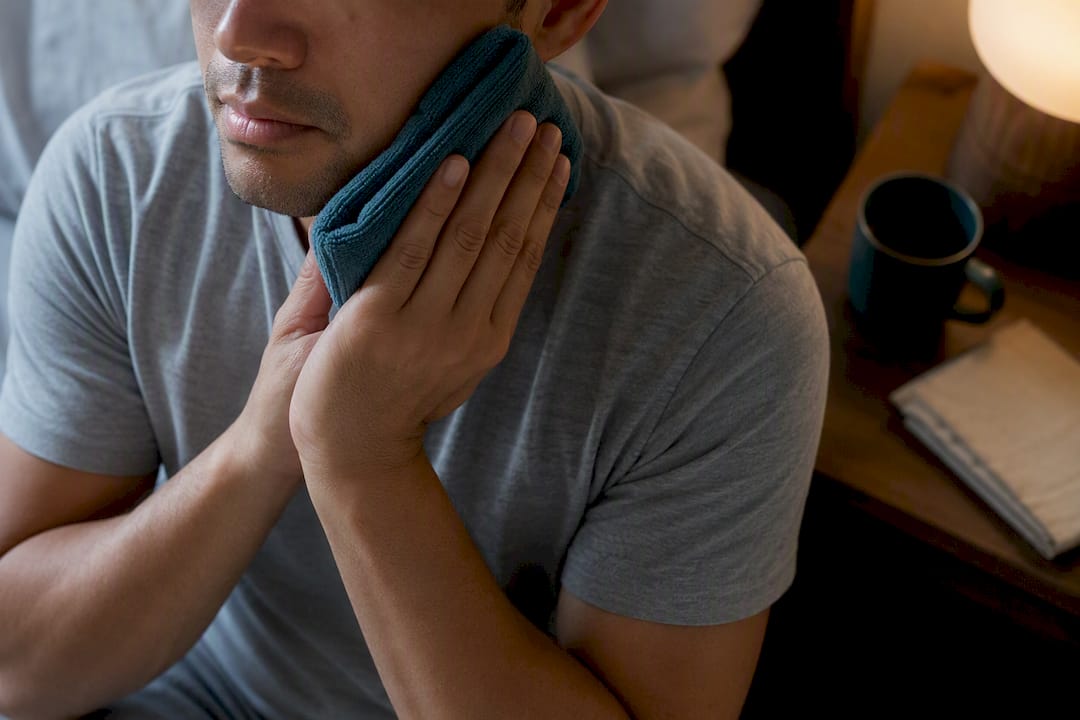
Cold works for acute flare-ups. Apply a cold pack wrapped in a thin towel to the jaw for a short duration when pain is sharp or just started. For a dull, chronic ache that’s been nagging for days, warm moist heat over the same duration tends to work better, since it relaxes the muscle rather than numbing it, according to a Mayo Clinic Q&A on jaw pain.
Over-the-counter anti-inflammatories like ibuprofen can take the edge off muscle soreness, but don’t rely on them daily. If you find yourself reaching for pain relievers every day for more than a week, that’s a signal to get evaluated rather than a habit to keep managing on your own.
Jaw posture matters more than most people realize. Your resting jaw position should have your teeth slightly apart, lips together, tongue resting gently on the roof of your mouth. Sticky notes on your monitor, a phone reminder every couple of hours, or just noticing tension when you check email can retrain that habit over a few weeks.
A few other steps help right away:
- Switch to soft foods and cut everything into small pieces to reduce chewing load.
- Skip chewing gum entirely while your jaw is sore.
- Avoid extreme jaw movements like wide yawns or biting into hard rolls.
- Support your jaw with a hand under your chin when you do yawn.
- Sleep on your back when possible to reduce pressure on one side of the jaw.
Pro Tip: Keep a small ice pack in the freezer specifically for jaw flare-ups. Reaching for it the moment pain starts, rather than waiting until it’s severe, shortens how long the flare-up lasts.
Call your dentist promptly if the pain is severe, if your jaw locks open or closed, or if you notice a tooth has chipped or cracked. Those aren’t situations to wait out with heat packs.
Night Guards, Sleep Devices, and When to See a Specialist
A custom night guard remains the backbone of professional bruxism treatment, and there’s a real difference between what a dentist fits and what you’ll find at a drugstore. Custom hard acrylic stabilization splints protect teeth from wear and reduce morning jaw discomfort more reliably than soft over-the-counter versions, according to StatPearls’ clinical review of bruxism management. They’re molded to your exact bite and can be adjusted as needed, something a boil-and-bite guard simply can’t offer.
That distinction matters because soft, ill-fitting guards can backfire. Poorly fitted store-bought devices have been shown to increase muscle activity in some patients and can gradually shift the bite, according to Cleveland Clinic. A guard that doesn’t fit precisely can create new problems: gum irritation, bite misalignment, or a jaw that feels worse, not better, after weeks of use.
Here’s what’s worth understanding about what a night guard actually does and doesn’t do:
- It protects your teeth from wear and reduces morning soreness, often within the first couple of weeks.
- It typically does not reduce how often you clench or grind, since it addresses the damage, not the cause.
- It requires periodic adjustment as your bite settles or the material wears down.
- It should always come from a dental impression, never a generic mold you soften at home.
Sleep-related bruxism complicates the picture further, and this is where the standard splint approach sometimes needs to change. Sleep bruxism frequently overlaps with obstructive sleep apnea, and when OSA is suspected, a standard occlusal splint can actually make the apnea worse by restricting airway space, per StatPearls. In those cases, a dentist may recommend a mandibular advancement device instead, an appliance that repositions the lower jaw forward to keep the airway open, and coordinate care with a sleep medicine provider for a formal sleep study.
If you snore heavily, wake up gasping, or feel exhausted despite a full night’s sleep, mention it at your dental visit. That single detail can change which appliance is right for you. One more note: occlusal adjustment, reshaping the biting surfaces of your teeth, is not considered routine first-line therapy for bruxism and is reserved for very specific bite problems, not general clenching.
Do Jaw Exercises and Stress Management Really Help?
Behavioral changes do the heavy lifting for long-term bruxism control, even though the evidence supporting them is more modest than most people expect. StatPearls’ clinical guidance notes these interventions carry limited high-quality evidence but remain first-line recommendations because they’re low-risk and address root causes rather than just symptoms.
A few approaches tend to make the most practical difference:
- Targeted jaw and neck exercises. Gentle massage of the masseter muscle, trigger-point release along the jawline, and posture work for the neck and shoulders can ease muscular tension contributing to jaw pain, according to Cleveland Clinic. A physical therapist can teach you specific stretches to do daily.
- Habit reversal for daytime clenching. Most people clench unconsciously while driving, working, or scrolling their phones. Visual cues like sticky notes, phone alarms set for random intervals, or a rubber band on your wrist can interrupt the pattern until it becomes automatic to notice and release.
- Biofeedback. This uses sensors that alert you (often with a small vibration or sound) when jaw muscle activity spikes, helping you become aware of clenching episodes you’d otherwise miss entirely.
- Stress reduction and sleep hygiene. Cognitive behavioral therapy, breathing exercises, and consistent sleep routines address the anxiety and tension that often drive clenching in the first place.
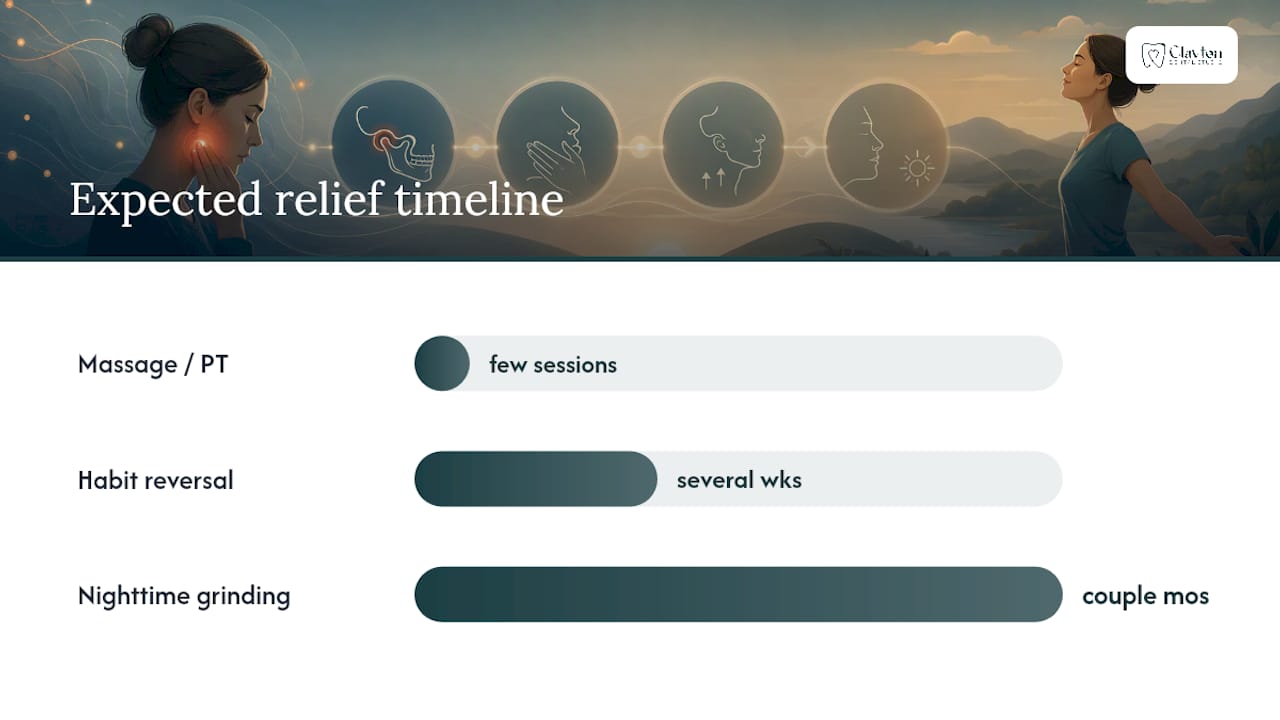
Expect a different timeline for each piece of this puzzle. Muscle soreness from massage or PT often eases within a few sessions. Habit reversal for awake clenching typically takes several weeks of consistent noticing before it becomes second nature. Stress-related nighttime grinding tends to improve more gradually, often over a couple of months, as sleep and anxiety levels shift.
What About Botox and Medications for Severe Cases?
Medications play a limited, mostly short-term role in bruxism treatment. Muscle relaxants, clonazepam, and clonidine have been used in specific cases, but the clinical evidence supporting them is thin, and they carry sedation risks that make them unsuitable for regular long-term use, per StatPearls.
Botulinum toxin injections (Botox) generate the most questions from patients, partly because the results are more nuanced than marketing suggests. Botox reduces the strength of jaw muscle contractions and can improve pain and sleep quality for some patients, but it does not reliably reduce how often clenching episodes occur, according to the same StatPearls review. Injections are typically repeated every three to four months, and side effects can include temporary weakness when chewing or an uneven smile if the toxin spreads slightly beyond the target muscle. Insurance coverage for Botox as a bruxism treatment varies widely and often isn’t covered at all.
An emerging option called contingent electrical stimulation, which delivers a mild pulse to interrupt clenching during sleep, remains investigational with limited supporting evidence. Providers generally reserve Botox and medication for refractory cases: patients who’ve tried guards, behavioral changes, and sleep treatment without relief, or who have severe tissue damage requiring more aggressive intervention.
When Should You See a Dentist for Jaw Clenching?
Certain signs mean it’s time to stop self-managing and get a professional evaluation. Watch for:
- Teeth that look progressively shorter, flatter, or more worn than they used to be.
- A cracked or fractured tooth, even a small chip.
- Jaw pain that’s present daily rather than occasional.
- Your jaw locking, catching, or limiting how wide you can open your mouth.
- Headaches, especially in the morning, that seem tied to jaw tension.
Regular dental exams catch bruxism early, often before patients notice symptoms themselves, since dentists can spot wear patterns on teeth that patients haven’t connected to clenching, according to Mayo Clinic. A typical evaluation includes checking how your teeth meet, examining wear patterns, assessing jaw muscle tenderness, and sometimes imaging if joint damage is suspected. If sleep bruxism or OSA is suspected, expect a referral to a sleep medicine provider for a formal study.
Medication review matters too. Certain antidepressants, particularly some SSRIs, have been linked to bruxism, and lifestyle factors like caffeine, alcohol, and tobacco use can worsen clenching, according to Johns Hopkins Medicine. Mention every medication you take, even if it seems unrelated.
Before your visit, jot down when the pain happens, what makes it worse, and any patterns your sleep partner has noticed, like grinding sounds at night. That kind of detail helps your dentist narrow down the cause faster than a general description of “jaw pain.”
How Clayton Dental Studio Approaches Jaw Clenching
Dr. Navneet Kamboj, DDS, earned her dental degree from the University at Buffalo and completed a restorative preceptorship at UCLA before spending nearly a decade treating patients across the greater Houston area. That combination of restorative training and hands-on experience shapes how Clayton Dental Studio approaches jaw clenching: start with a thorough evaluation, not a one-size-fits-all appliance.
The practice offers TMJ evaluation, custom night guards fitted from precise impressions, and Emface TMJ therapy for patients dealing with persistent jaw tension. When symptoms point toward sleep apnea or a condition outside dentistry’s scope, Dr. Kamboj coordinates directly with sleep medicine specialists and physical therapists rather than treating jaw pain in isolation.
— Clayton Dental Studio
What Timeline Should You Realistically Expect?
Pain relief and root-cause treatment move at different speeds, and conflating the two sets patients up for frustration. A properly fitted night guard often reduces morning soreness within one to two weeks, but it protects your teeth rather than curing the underlying clenching habit.
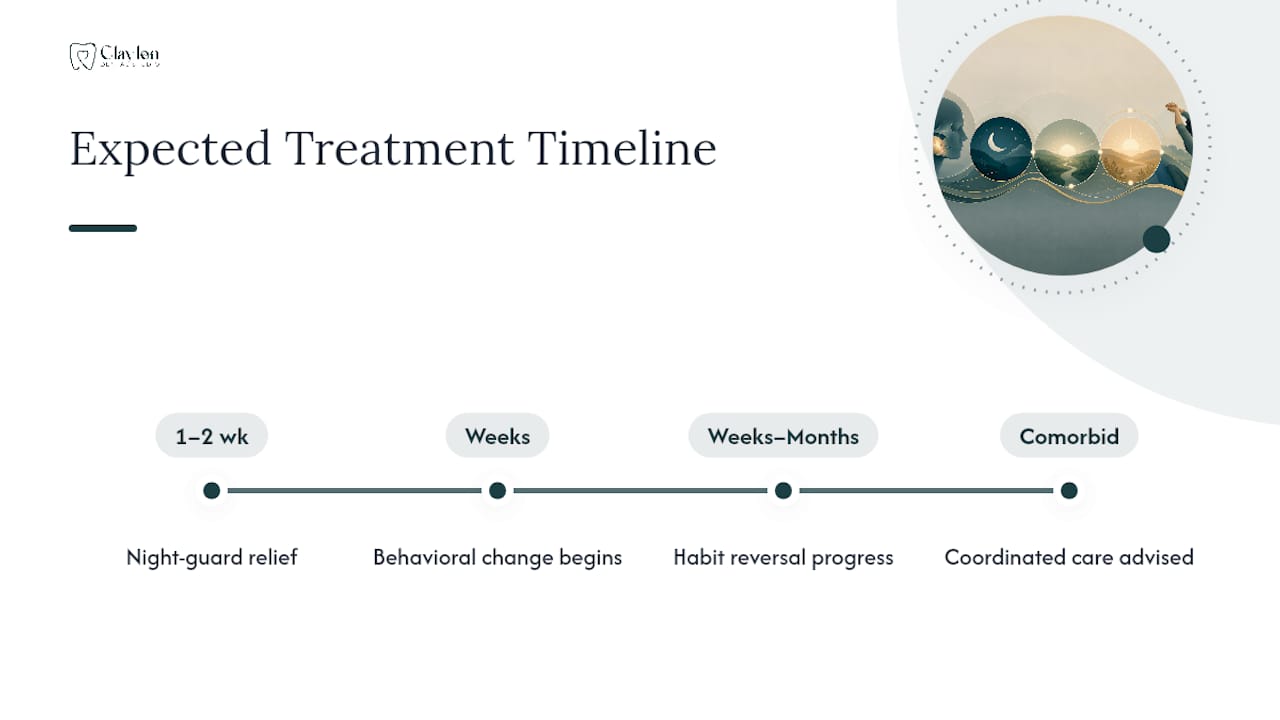
Behavioral changes, stress management, and habit reversal take longer, typically weeks to a few months, before you notice a real shift in daytime clenching frequency. The most durable results usually come from combining a guard with behavioral work rather than picking one or the other. When sleep apnea, chronic pain, or anxiety are part of the picture, coordinated care between your dentist, a sleep medicine provider, a physical therapist, and sometimes a mental health professional produces better outcomes than any single treatment alone.
Ready to Get Your Jaw Pain Evaluated?
If daily clenching has you waking up with a sore jaw or catching yourself grinding through a stressful afternoon, a proper evaluation beats guessing which remedy to try next. Clayton Dental Studio offers TMJ evaluation and custom-fitted night guards built from a precise dental impression, not a generic mold, plus Emface TMJ therapy for patients whose jaw tension needs a more targeted approach than an appliance alone.
Your first visit typically includes a full bite assessment, a check for wear patterns and muscle tenderness, and a conversation about your sleep and stress patterns, since those often drive nighttime clenching more than anything dental. If a sleep issue like obstructive sleep apnea seems likely, Dr. Kamboj will coordinate a referral for a sleep study rather than fitting an appliance that could make things worse. The practice works with dental insurance for covered evaluations and offers financing options for treatments that fall outside coverage. For readers dealing with habits that make TMJ symptoms worse day to day, this outside resource on TMJ aggravators is worth a look before your appointment.
Schedule a dental exam and TMJ evaluation with Clayton Dental Studio in Humble, TX, and get a treatment plan built around your actual bite and symptoms, not a generic guard off a shelf.
This article is general information, not a substitute for advice from a qualified doctor. Consult a qualified healthcare professional about your own circumstances before acting on anything here.
Sources
- Bruxism Management - StatPearls - NCBI Bookshelf
- Teeth grinding (bruxism) - Diagnosis and treatment - Mayo Clinic
- How To Stop Grinding Your Teeth at Night - Cleveland Clinic
- Bruxism - Johns Hopkins Medicine
FAQ
How Do I Stop Clenching My Jaw?
Start with jaw posture awareness (teeth apart, jaw relaxed) and a habit-reversal cue like a phone alarm or sticky note to interrupt daytime clenching. For nighttime clenching, a custom dental guard fitted by a dentist protects your teeth while you work on the underlying stress or sleep triggers.
What Deficiency Makes You Clench Your Jaw?
There’s no well-established nutritional deficiency proven to directly cause jaw clenching. Bruxism is more strongly linked to stress, anxiety, certain medications like SSRIs, and sleep disorders such as obstructive sleep apnea, according to Johns Hopkins Medicine.
How Do I Stop Unconsciously Clenching My Jaw?
Unconscious daytime clenching responds well to habit-reversal techniques: visual reminders, biofeedback devices that alert you to muscle tension, and stress-reduction practices like breathing exercises. Nighttime unconscious clenching usually requires a night guard, since you can’t consciously interrupt a habit while asleep.
What Is Jaw Clenching a Symptom Of?
Jaw clenching is often linked to stress and anxiety, but it can also signal obstructive sleep apnea, certain medication side effects, or, less commonly, an underlying bite or jaw joint problem. A dental evaluation helps sort out which factor is driving your specific case, especially if the clenching is new or worsening.
When Should I See a Dentist for Jaw Clenching?
See a dentist if you notice daily jaw pain, visible tooth wear or a cracked tooth, jaw locking, or headaches that seem tied to clenching. Regular dental exams often catch bruxism before you notice symptoms yourself, according to Mayo Clinic.
Recommended
Ready to Schedule Your Appointment?
Dr. Kamboj and the Clayton Dental Studio team are here to help. Call us or book online today.