
Discover effective treatments to stop and repair receding gums. Learn essential steps for maintaining healthy gum tissue.
Receding Gums Treatment: How to Stop and Repair It
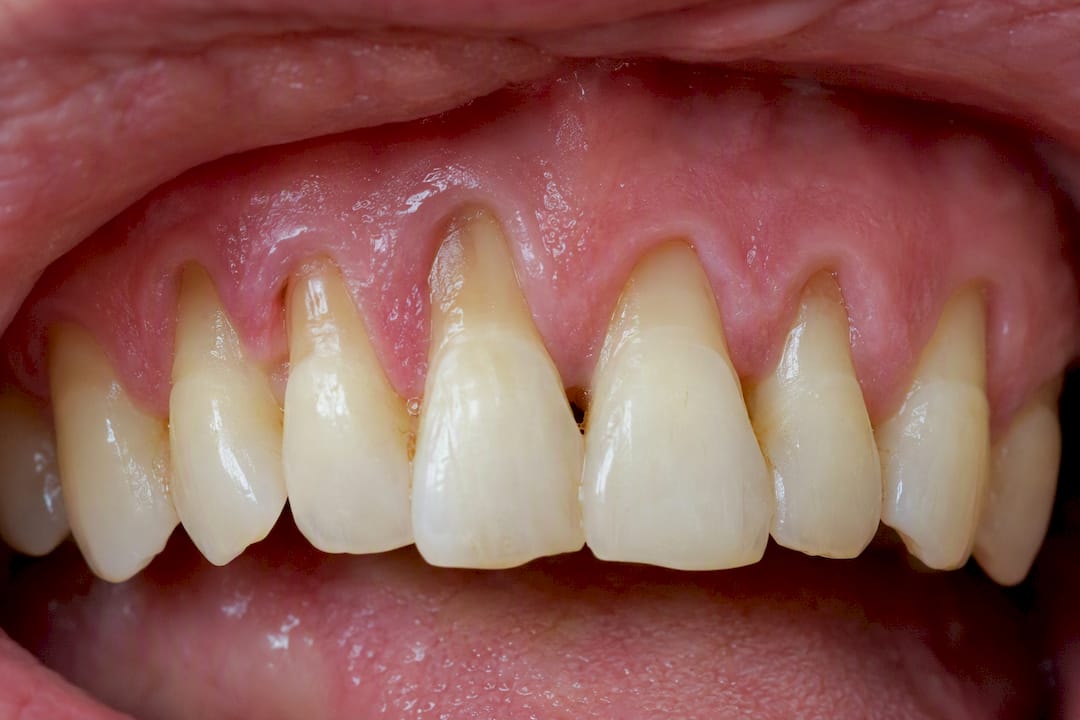
If your gums are receding, here’s the short version: treatment works in stages. First, we find and remove whatever is causing the recession. Then we stabilize the gum tissue so it stops moving. Only after that do we talk about repairing what’s already been lost. A staged approach like this, addressing the cause before attempting repair, produces far more predictable results than jumping straight to surgery.
Here’s what that looks like in practice:
- Change your home care first (softer brush, better technique, less pressure)
- Get professional scaling and root planing to calm active gum disease
- Manage grinding or tobacco use if either is driving the problem
- Consider grafting only if you need actual tissue restoration, not just stabilization
Mild recession often responds well to nonsurgical care alone. Moderate to advanced cases, where roots are visibly exposed or several teeth are affected, usually need a periodontist and a grafting procedure to get predictable coverage back. I’ll walk you through both paths so you know what to expect at each stage.
Key Takeaways
Receding gum treatment works best as a staged process: eliminate the cause, stabilize the tissue nonsurgically, then repair with grafting only when root coverage is truly needed.
| Point | Details |
|---|---|
| Fix the cause first | Address brushing habits, tobacco use, or bruxism before any repair procedure to prevent recurrence. |
| Nonsurgical care stops progression | Scaling, desensitizing toothpaste, and better technique stabilize most mild to moderate cases. |
| CTG is the most predictable graft | Connective tissue grafting offers the strongest long-term root coverage among surgical options. |
| Gums don’t regrow on their own | Lost tissue requires a surgical graft; hygiene changes only prevent further loss. |
| Clayton Dental Studio offers staged evaluation | The practice assesses cause and severity first, then recommends conservative care or periodontal referral as needed. |
Table of Contents
- What Causes Receding Gums, and What Does It Look Like?
- How We Diagnose and Stage Gum Recession
- Nonsurgical Treatments That Stop Gum Recession
- Surgical Options to Restore Gum Coverage
- When to See a Periodontist, and What It Costs
- Preventing Recession From Coming Back
- How Clayton Dental Studio Approaches Gum Recession Care
- Frequently Asked Questions
- Sources
What Causes Receding Gums, and What Does It Look Like?
Receding gums usually announce themselves quietly. You might notice a tooth that suddenly looks longer than its neighbors, a rough notch near the gumline, or a jolt of pain when cold water hits a certain spot. Some patients come in because their gums bleed lightly when they floss; others show up because a tooth has become visibly sensitive to sweets. These are all classic signs of gum recession, and none of them should be ignored.
Gum recession causes fall into two buckets, and this distinction matters because it dictates your treatment plan.
Primary causes actively damage the tissue:
- Periodontal disease driven by bacterial biofilm below the gumline
- Aggressive brushing or brushing with a hard-bristled brush
- Grinding or clenching (bruxism) that puts uneven force on teeth
- Ill-fitting partial dentures or retainers rubbing against the gum
- Direct trauma, like a lip piercing or a sports injury
Predisposing factors make you more vulnerable even without an obvious trigger:
- A naturally thin gum tissue biotype
- Teeth positioned outside the normal bone contour (dehiscence)
- Orthodontic movement done without proper planning
- Tobacco use, which restricts blood flow to gum tissue
- Age and genetics, which you can’t change but should account for
The practical takeaway: tobacco use, brushing technique, and bruxism are modifiable. Biotype and genetics are not. Your treatment plan should hit the modifiable factors hard, because surgical repair attempted without removing the underlying cause tends to fail or recur.
How We Diagnose and Stage Gum Recession
A recession exam is more precise than most patients expect. We use a periodontal probe to measure pocket depth and how many millimeters of root are exposed, then calculate clinical attachment level, which tells us how much support structure has actually been lost versus how much is just visible. We also check keratinized tissue height (the band of tougher, protective gum tissue), assess whether your biotype is thin or thick, test for tooth mobility, and review your bite for signs of trauma. X-rays, and occasionally a CBCT scan, show us the bone shape underneath when that’s in question.
| Measurement | Why it matters |
|---|---|
| Recession depth (mm) | Under 2mm often responds to nonsurgical care; larger defects usually need grafting |
| Keratinized tissue height | Thin or absent KT is a red flag for future progression |
| Clinical attachment level | Distinguishes cosmetic recession from true attachment loss |
| Probing depth | Identifies active periodontal disease versus stable recession |
We also classify the defect using recession type staging, which essentially asks: how much bone and tissue is missing between teeth, not just at the surface? That answer determines whether root coverage surgery can realistically succeed.
Before your visit, think through your brushing habits, tobacco history, and whether you grind your teeth at night. That history shapes the whole conversation.
Nonsurgical Treatments That Stop Gum Recession
For a lot of patients, this is where treatment starts and ends. Nonsurgical care won’t rebuild lost tissue, but it reliably halts progression and takes care of the sensitivity that makes eating and drinking miserable.
Here’s the typical sequence:
- Switch to a soft or extra-soft brush and learn a gentler, angled technique instead of scrubbing side to side
- Use a desensitizing toothpaste containing potassium nitrate to calm exposed root nerves
- Get professional scaling and root planing to remove bacterial buildup below the gumline
- Rinse with a chlorhexidine mouthwash short-term if active gum disease needs a stronger antimicrobial push
- Ask about localized antibiotic treatment for pockets that aren’t responding to cleaning alone
If bruxism is part of the picture, a custom nightguard or occlusal guard protects your gums and teeth from the grinding forces that wear tissue down over time. If an ill-fitting partial denture is rubbing your gums raw, it needs to be adjusted or replaced. And if tooth position is contributing to thin tissue over a prominent root, orthodontic treatment with clear aligners or braces can actually help. Research on orthodontics and gingival recession shows that carefully planned tooth movement can reposition roots within the bone and reduce recession risk, though movement without that planning can occasionally make things worse if buccal bone is already thin.
Pro Tip: An electric toothbrush with a pressure sensor is one of the simplest upgrades you can make. Most people brush harder than they realize, and the sensor gives you real-time feedback before you do damage.

Behavior change matters more than any single product. Outcomes improve significantly when patients actually quit tobacco and wear their nightguard consistently, rather than relying on procedures alone. Most patients see gum tissue stabilize within four to twelve weeks of combining better home care with professional cleaning. If recession keeps advancing despite doing everything right, that’s your signal to talk about repair.
Surgical Options to Restore Gum Coverage
Nonsurgical care stops the bleeding, so to speak. It doesn’t bring back tissue that’s already gone. For that, you need a graft, and the options vary quite a bit in predictability and recovery.
Connective tissue grafting (CTG), usually paired with a coronally advanced flap, is considered the gold standard. It offers the most predictable long-term root coverage and actually thickens the gum tissue, which helps prevent future recession in that spot. The trade-off is a small incision at the donor site, typically the roof of the mouth, which causes some short-term discomfort.
Other approaches worth knowing:
- Free gingival grafts work well for building a wider band of tough tissue but are less esthetic and less predictable for actual root coverage
- Tunneling techniques slide a graft under existing tissue through small tunnels, minimizing visible scarring
- Pinhole Surgical Technique (PST) repositions existing gum tissue through tiny pinhole access points, causing less post-op discomfort, though it adds less tissue volume than CTG in thin biotypes
- Guided tissue regeneration (GTR) uses a barrier membrane to encourage bone and tissue regrowth in select defects
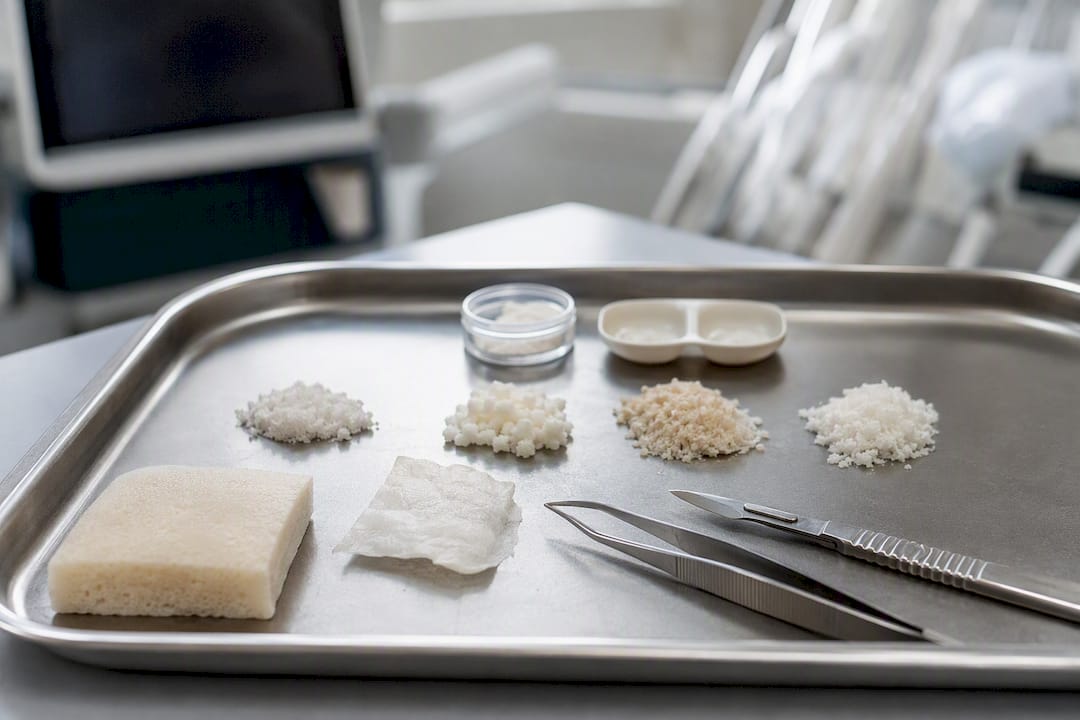
- Acellular dermal matrices and collagen matrices serve as CTG alternatives when avoiding a second surgical site is a priority, though long-term stability data is generally less robust than for CTG
Recovery follows a fairly consistent arc regardless of technique: real discomfort and swelling in the first one to two weeks, initial healing over four to six weeks, and full tissue maturation taking several months. CTG donor sites tend to be the most uncomfortable part of recovery, while PST patients often report an easier first few days.
About half of recession cases involve a non-carious cervical lesion, a notch worn into the tooth at the gumline, sitting right alongside the recession. When that’s present, we typically plan the restorative filling and the graft together rather than treating them as separate problems. Your biotype, how many teeth are involved, your esthetic goals, and any medications that affect healing (blood thinners, for instance) all factor into which technique makes sense for you.
When to See a Periodontist, and What It Costs
Some cases genuinely need a specialist, and knowing the triggers saves you time. See a periodontist if you notice:
- Recession that keeps progressing despite solid home care and professional cleaning
- Root sensitivity or decay developing at the exposed root surface
- Recession affecting multiple adjacent teeth, especially if it bothers you cosmetically
- Thin or absent keratinized tissue on an exam
- A notch or wear pattern at the gumline alongside deeper pockets or bone loss on X-rays
Costs vary widely by region, the number of teeth involved, and your insurance coverage, so treat any figure as a starting point for conversation rather than a quote. Scaling and root planing tends to be the most affordable entry point, often partially covered by dental insurance. Grafting procedures like CTG and PST cost considerably more per tooth and are frequently considered elective by insurers unless disease is documented, which means out-of-pocket costs or financing come into play more often.
Before your consult, bring recent x-rays, a list of current medications, photos of your smile if esthetics are a concern, and a clear timeline of your symptoms. Ask your periodontist directly about predictability for your specific case, what graft material they recommend and why, and what recovery will realistically look like for your schedule. The American Academy of Periodontology is a solid resource if you want to understand the scope of specialized care before you go in.
Preventing Recession From Coming Back
Whether you’ve just finished a graft or you’re managing early-stage recession, the maintenance routine looks similar.
Daily habits that protect your gums:
- Use a soft or extra-soft brush with light pressure and an angled, gentle technique
- Avoid whitening or heavily abrasive toothpastes that wear down tissue and enamel over time
- Floss daily, but gently, at the gumline
- If you use tobacco, quitting is one of the single biggest changes you can make for gum health
- Wear your nightguard every night if bruxism is part of your history
A realistic maintenance schedule:
- Professional cleanings every three to four months if you have a history of active periodontal disease
- Cleanings every six months if your risk is low and tissue has stayed stable
- Reassessment of attachment levels and, if needed, updated x-rays roughly once a year
- Extended follow-up for six to twelve months after any grafting procedure to confirm the tissue has held
Regular professional dental hygiene visits catch small problems while they’re still small, which is a much better position than catching them after a tooth looks noticeably longer.
A Clinical Perspective on Treating Gum Recession
Dr. Navneet Kamboj earned her DDS from the University at Buffalo and completed a restorative preceptorship at UCLA before building nearly a decade of clinical experience serving Humble and the greater Houston area. Her approach to gum recession stays conservative first: diagnose thoroughly, remove the cause, and only escalate to grafting or a periodontal referral when the tissue genuinely needs it, not because a procedure sounds more impressive than patience does. You can find more on Clayton Dental Studio’s approach to periodontal concerns and schedule an evaluation directly through the practice.
How Clayton Dental Studio Approaches Gum Recession Care
Clayton Dental Studio treats gum recession the same way this guide walks through it: identify the cause, stabilize the tissue, and bring in grafting or a periodontal referral only when repair is actually the right call, not the default one.

If you’ve noticed a tooth looking longer, new sensitivity to cold, or bleeding when you floss, it’s worth getting a proper measurement rather than guessing at what’s causing it. Bring a list of your current medications, any recent dental x-rays you have, photos of your smile if you have esthetic concerns, and a rundown of your symptoms and how long they’ve been going on. That information lets us map out whether you need a change in home care, a deep cleaning, or a conversation about grafting, without wasting your first visit on basic data-gathering. Explore Clayton Dental Studio’s full range of services or reach out through the practice’s main site to schedule a gum health evaluation in Humble, TX.
Frequently Asked Questions
Can receding gums grow back without treatment? No. Gum tissue doesn’t regenerate on its own. Better hygiene can stop further loss, but restoring what’s already gone requires a surgical graft.
What is the best treatment for receding gums? It depends on severity. Mild cases respond to scaling and root planing plus better home care. Moderate to severe recession with visible root exposure typically needs connective tissue grafting, which remains the most predictable surgical option for restoring coverage.
Is the Pinhole Surgical Technique as effective as a gum graft? PST causes less discomfort and avoids a donor-site incision, but it generally adds less tissue thickness than a connective tissue graft, especially in patients with thin gum biotype. Your periodontist can tell you which fits your specific case.
How long does it take to notice improvement from receding gums treatment? Nonsurgical stabilization often shows results within four to twelve weeks of improved brushing and professional cleaning. Surgical grafts need several months for full tissue maturation.
Can braces or clear aligners cause gum recession? Movement alone rarely causes it, but tooth movement without proper planning can worsen recession if the buccal bone is already thin. Well-planned orthodontic treatment can actually reduce recession risk in some cases.
This article is general information, not a substitute for advice from a qualified doctor. Consult a qualified healthcare professional about your own circumstances before acting on anything here.
Sources
- Treatment of Gingival Recession: When and How? - PMC
- Do receding gums grow back? Treatments and prevention - Medical News Today
- American Academy of Periodontology
Recommended
Ready to Schedule Your Appointment?
Dr. Kamboj and the Clayton Dental Studio team are here to help. Call us or book online today.