
Clear day by day root canal recovery plan with pain, care, and eating steps. Schedule your permanent crown in 2–4 weeks and call if pain worsens.
Crown in 2–4 Weeks: Root Canal Recovery Timeline for Humble Patients

Most root canal recovery follows a predictable pattern: mild to moderate soreness that peaks in the first 24 to 48 hours, then steadily fades over the following week. Take an anti-inflammatory before the numbness wears off, avoid chewing on the treated tooth, and protect the temporary filling until your permanent crown goes on. Schedule that crown within 2 to 4 weeks, and call us right away if pain worsens instead of improving or you notice swelling.
TL;DR:
- Most recovery occurs within the first week, with peak soreness in days 1 to 3, and pain should significantly decline afterward.
- Using ibuprofen every 6 to 8 hours with food typically manages post-treatment pain effectively, but do not exceed recommended daily doses.
- Avoid chewing or hard foods during the first 24 to 48 hours and stick to soft foods on the opposite side of the mouth to prevent dislodging the temporary filling.
- The permanent crown should be placed within 2 to 4 weeks to prevent the tooth from cracking or the temporary seal from failing.
- Contact your dentist immediately if you experience worsening pain after 3 days, spreading swelling, fever, or if the temporary filling becomes loose or falls out.
Table of Contents
- Root Canal Recovery Timeline: What Happens Hour by Hour
- How Should You Manage Pain After a Root Canal?
- How Do You Care for Your Teeth During Recovery?
- What Can You Eat After a Root Canal?
- Why the Permanent Crown Matters So Much
- When Should You Call Your Dentist After a Root Canal?
- What Our Team Wants Every Root Canal Patient to Know
- Recovery Looks Different for Everyone, But Rarely Complicated
- Getting Your Crown Placed Without the Wait
- Sources
- FAQ
Root Canal Recovery Timeline: What Happens Hour by Hour
Your mouth will feel strange before it feels sore. Local anesthesia typically keeps your lip, cheek, and tongue numb for a few hours after you leave the chair, and that numb window is actually a good time to take your first dose of an over the counter pain reliever, not wait for discomfort to start. Avoid eating anything until the numbness fully wears off. Biting your own cheek or tongue without realizing it is a common, entirely avoidable mishap.
Here’s how the rest of the healing process tends to unfold:
- Hours 1 to 4: Numbness fades gradually. Stick to lukewarm liquids and skip solid food until feeling returns fully.
- Days 1 to 3: Tenderness and mild swelling around the tooth typically peak here. Ibuprofen alternated with acetaminophen usually keeps discomfort manageable, and a cold compress against the cheek for 15 to 20 minutes at a time helps with any puffiness.
- Days 4 to 7: Soreness should be clearly declining each day. Most people are back to their normal routine within less than a week, with only faint tenderness left when biting directly on the tooth.
- Weeks 2 to 4: The bone and ligament around the root continue quiet, invisible healing well after you feel fine. This is also your window to get the permanent crown placed.
If day 5 arrives and you’re still reaching for pain relievers every few hours, that’s worth a call to our office rather than waiting it out.
How Should You Manage Pain After a Root Canal?
Over the counter medication handles the vast majority of post treatment discomfort. The standard approach is to use ibuprofen at recommended doses every 6 to 8 hours, taken with food to protect your stomach. If that alone isn’t cutting it, alternating with acetaminophen every few hours (staggering the two so you’re never doubling up within the same window) covers pain more consistently than either drug alone.
A few guardrails matter here:
- Don’t exceed 3,200 mg of ibuprofen or 3,000 mg of acetaminophen in 24 hours without medical guidance.
- Check with your doctor first if you have kidney issues, stomach ulcers, or take blood thinners.
- Taking your first dose before the local anesthetic fully wears off blunts the pain spike that many patients feel once numbness ends.
- Prescription strength pain relievers or antibiotics come into play only when there’s active infection, significant swelling, or pain that isn’t responding to standard dosing. Antibiotics aren’t routine for uncomplicated root canal aftercare, so don’t be surprised if your dentist doesn’t prescribe them.
Pro Tip: Sleep with your head slightly propped up on an extra pillow the first night. Gravity alone reduces the throbbing and puffiness that tend to feel worse when you’re lying flat.
Rest matters as much as medication. Sitting upright for the first few hours and avoiding bending over or lifting heavy objects keeps blood from pooling toward your jaw and worsening the ache.
How Do You Care for Your Teeth During Recovery?
Skipping oral hygiene because a tooth feels tender is one of the more common mistakes we see. Brush that evening as usual, just with a lighter touch around the treated area. Normal brushing and flossing continue the next day.
- Rinse with warm salt water (half a teaspoon of salt in 8 ounces of warm water) 2 to 3 times daily, starting 24 hours after treatment, to calm gum tissue and reduce bacteria.
- Skip alcohol based mouthwashes for the first few days. They can irritate healing tissue.
- Floss gently near the temporary filling. Pull the floss out sideways instead of snapping it upward, which can dislodge the temporary.
- If the temporary filling feels rough, sharp, or partially missing, call us. Don’t wait for your next scheduled visit.
What Can You Eat After a Root Canal?
Chewing is the main threat to a freshly treated tooth, not talking or brushing. For the first 24 to 48 hours, stick to soft foods and chew on the opposite side of your mouth to keep pressure off the temporary filling.
- Good options: yogurt, mashed potatoes, scrambled eggs, smoothies, and lukewarm soup.
- Avoid: nuts, popcorn, ice, hard candy, chewy bread, and anything sticky like caramel.
- Skip very hot or very cold foods for the first day or two if the tooth feels sensitive to temperature.
- Avoid strenuous exercise for 24 to 48 hours; the extra blood flow can worsen throbbing. Light walking is fine.
- Hold off on smoking and alcohol for a few days. Both slow tissue healing and can irritate the surgical site.
Why the Permanent Crown Matters So Much
That temporary filling is doing a real job: sealing off the canals so bacteria can’t work their way back in. But it was never built for a lifetime of chewing. The permanent crown is what actually completes the treatment, reinforcing a tooth that’s now more brittle since the nerve tissue is gone.
- Plan on the crown going on within a few weeks. Waiting much longer raises your risk of the tooth cracking or the temporary seal failing.
- If the temporary falls out early, call our office promptly rather than treating it as a minor inconvenience. It usually isn’t a true emergency, but a same-day fix is often possible.
- Ask about same-day crown options if scheduling a second visit is a hassle. Same-day technology lets us design and place a custom crown in a single appointment instead of sending you home with a temporary for weeks.
- Full details on what the appointment itself involves are in our guide to the crown procedure steps.
When Should You Call Your Dentist After a Root Canal?
Most recoveries go smoothly, but a few warning signs mean it’s time to pick up the phone instead of waiting it out:
- Pain that gets worse after 48 to 72 hours instead of improving.
- Swelling that’s spreading, especially toward your eye or down your neck.
- Fever, or a bad taste from persistent drainage near the tooth.
- A temporary filling that’s fallen out or feels loose when you bite.
- A bite that feels noticeably uneven or “high” on the treated tooth.
When you call, tell us when the symptom started, how severe it is on a simple scale, what medications you’ve tried, and whether you have any swelling or fever. That lets us figure out fast whether you need your bite adjusted, the temporary replaced, antibiotics, or a closer look at the tooth itself. The AAE recommends reaching out for exactly these signs rather than toughing them out.
What Our Team Wants Every Root Canal Patient to Know
Dr. Navneet Kamboj has spent nearly a decade treating patients across the Humble area, and a few small habits consistently separate an easy recovery from a frustrating one.
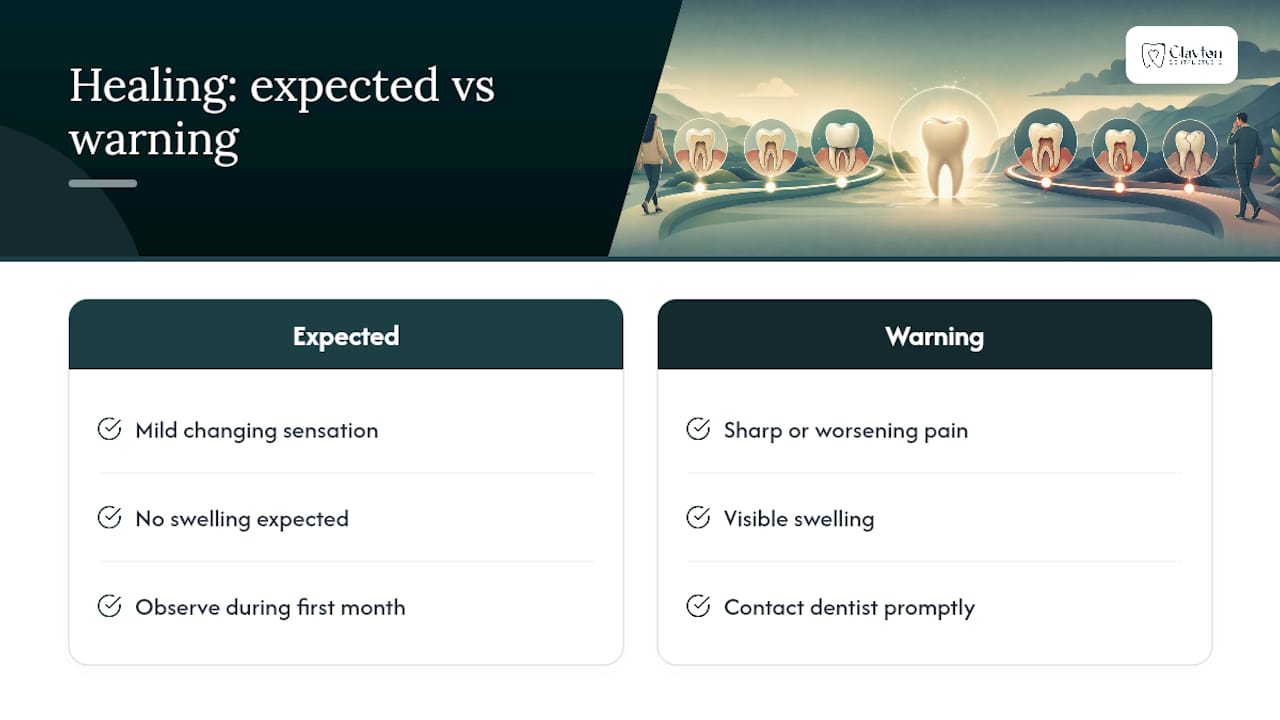
A slightly different sensation in the tooth during healing is normal and expected. Sharp, worsening pain or swelling is not, and that distinction is worth remembering the whole first month.
Recovery Looks Different for Everyone, But Rarely Complicated
Every patient asks some version of the same question after treatment: is this normal? Almost always, yes. What we see far more often than genuine complications is anxiety about ordinary healing. Trust the timeline, keep up with your pain medication schedule, and get that crown appointment on the calendar. Reach out anytime if something feels off. We would rather answer an unnecessary question than have you tough out something that needs attention.
— Clayton Dental Studio
Getting Your Crown Placed Without the Wait
If you’re past the healing window and ready for your permanent crown, or your temporary filling needs attention sooner than expected, Some dental offices offer same-day CEREC crowns instead of the usual two-appointment wait most practices require. That means no second round of numbness, no walking around for weeks on a temporary that could chip or fall out, and no gap where the tooth sits vulnerable to a crack.

Booking is simple. Call our Humble office or request an appointment through our services page, and let us know if you’re following up after a root canal or dealing with a loose temporary filling. We’ll get you seen quickly, check the bite, and walk you through same-day crown options if you’re a candidate. If anything about your recovery feels off before then, don’t wait for your scheduled visit. Reach out to Dr. Kamboj’s team directly and we’ll help you figure out the next step.
This article is general information, not a substitute for advice from a qualified doctor. Consult a qualified healthcare professional about your own circumstances before acting on anything here.
Sources
- Root Canal: Procedure & Recovery — Cleveland Clinic
- Post-treatment care — American Association of Endodontists
- Need a root canal? Here’s what to expect — Harvard Health
- Root canal recovery guide — Phan Endodontic Partners
FAQ
What Can You Not Do After a Root Canal?
Avoid chewing on the treated tooth, eating hard or sticky foods, and strenuous exercise for the first 24 to 48 hours. Skip alcohol-based mouthwash and hold off on smoking or drinking alcohol while the area heals.
Can I Floss My Tooth After a Root Canal?
Yes, but floss gently around the treated tooth and pull the floss out sideways rather than snapping it upward, since that motion can dislodge the temporary filling.
How Many Days Do You Need to Rest After a Root Canal?
Most people feel back to their normal routine within less than a week, though strenuous physical activity should wait at least 24 to 48 hours to avoid worsening swelling and throbbing.
Is It Normal to Have Pain Three Days After a Root Canal?
Mild lingering soreness at day 3 is common and typically fading by then. Pain that’s getting worse instead of better at this point is a reason to call your dentist.
Recommended
Ready to Schedule Your Appointment?
Dr. Kamboj and the Clayton Dental Studio team are here to help. Call us or book online today.