
If your temporary crown came off, don't panic. Follow these quick steps for safe retrieval and ensure proper dental care today!
Temporary Crown Came Off? What to Do Right Now
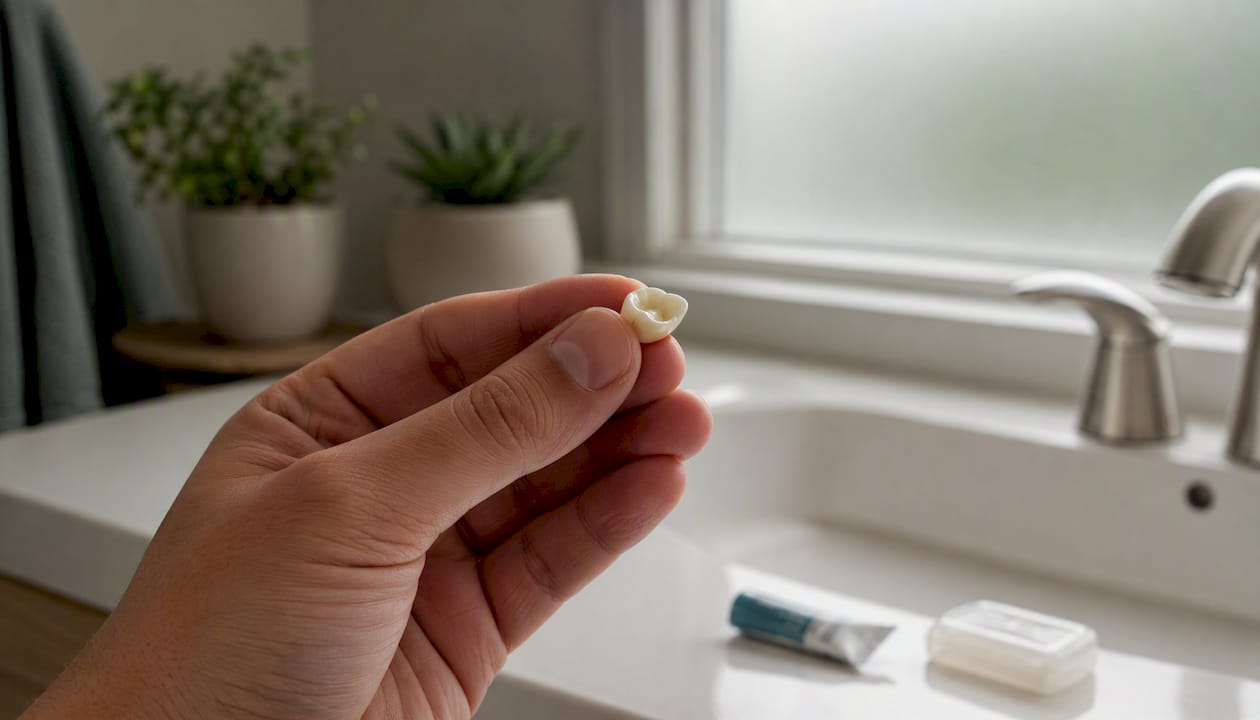
If your temporary crown came off, here’s the short version: retrieve it, rinse it gently, protect the exposed tooth, and call your dentist right away for guidance or a same-day appointment. Don’t panic. This happens far more often than most patients expect, and in the vast majority of cases, it’s an inconvenience, not a true emergency.
Here’s the order of operations we recommend to every patient who calls our office with this exact problem.
- Retrieve the crown. Find it before it ends up down the drain or in the trash.
- Rinse it with warm water. Remove any food debris or old cement without scrubbing hard.
- Inspect the tooth. Check for sharp edges, sensitivity, or visible damage.
- Store the crown safely. A small container or zip-top bag works. Don’t wrap it in a tissue you might toss.
- Call your dentist. Explain what happened and ask whether you need to come in today or can wait until the next business day.
Never try to force the crown back into place with household adhesive, and be careful not to swallow or inhale it while handling it near the back of your mouth. If it slips down your throat accidentally, that’s a reason to seek medical attention, not just dental care.
A temporary crown is designed to protect the tooth your dentist has prepared for a permanent restoration. It’s held in place with deliberately weak temporary cement so it can be removed without damaging the tooth underneath. That same weak bond is exactly why it comes loose more easily than a permanent crown ever would.
Key Takeaways
Acting within the first hour after your temporary crown comes off, by retrieving it, protecting the tooth, and calling your dentist, prevents most complications entirely.
| Point | Details |
|---|---|
| Retrieve and rinse | Save the crown, rinse off debris, and store it in a small container instead of a tissue. |
| Reattach only if comfortable | Use pharmacy temporary dental cement or denture adhesive, and never force a poor fit. |
| Protect the tooth | Eat soft foods, chew on the other side, and cover sharp edges with orthodontic wax. |
| Know the red flags | Severe pain, swelling, fever, or breathing trouble means urgent or emergency care. |
| Disclose any adhesive used | Tell your dentist immediately if you used anything other than dental-specific cement. |
| Get professional care | Clayton Dental Studio offers same-day re-cementing and CEREC crown replacement in Humble, TX. |
Table of Contents
- Is a Temporary Crown Falling Out an Emergency?
- How to Safely Reattach a Temporary Crown at Home
- What You Should Never Use to Fix a Temporary Crown
- How to Protect the Tooth Until Your Appointment
- How Long Can You Wait Before Calling the Dentist?
- Why Temporary Crowns Fall Out (and How to Stop It Happening Again)
- A Dentist’s Quick Note on Lost Temporary Crowns
- How Clayton Dental Studio Handles Emergency Crown Fixes
- Frequently Asked Questions
- Sources
Is a Temporary Crown Falling Out an Emergency?
Most of the time, no. A temp crown fell out because of weak cement, not because something catastrophic happened to your tooth. But a handful of warning signs mean you shouldn’t wait around.
Call an emergency line or head to urgent care if you notice any of the following:
- Severe, throbbing pain that over-the-counter medication doesn’t touch
- Facial or gum swelling, especially if it’s spreading
- Fever alongside tooth pain (a possible sign of infection)
- Uncontrolled bleeding from the gum or tooth area
- A visibly broken or fractured tooth underneath the crown
- Any difficulty breathing or swallowing
For everyone else, the situation is manageable. The prepared tooth is more exposed than usual, and it can be sensitive to air, temperature, and pressure, but that’s discomfort, not danger. Getting it re-cemented promptly typically prevents it from becoming anything worse.
If you’re dealing with severe pain, facial swelling, or trouble breathing, that’s not a “wait and see” situation. Go to the emergency room or call an emergency dental line immediately.
How to Safely Reattach a Temporary Crown at Home
If the crown came off in one piece and you feel comfortable handling it, a short-term reattachment can protect the tooth until your dentist can do it properly. If the crown is cracked, chipped, or you’re not confident doing this yourself, skip ahead to the protection steps below and call the office instead.
- Clean the crown. Rinse away food particles and gently brush the inside with a soft toothbrush to remove old cement residue.
- Check the inside for leftover cement. A cotton swab dipped in warm water can help lift stubborn bits without scratching the crown’s surface.
- Test the fit before adding anything. Place the crown on the tooth dry, without cement, to confirm it seats the way it did before. Forcing a crown that doesn’t sit flush can cause bite problems later.
- Dry the tooth. Use a clean tissue or gauze to remove saliva from the tooth surface.
- Apply temporary dental cement or denture adhesive. Most pharmacies carry temporary dental cement kits made specifically for this. Follow the product’s instructions exactly. Use a small amount. More is not better here.
- Seat the crown and bite down gently. A soft, even bite helps the crown settle without pushing it too far in one direction.
- Wipe away excess cement immediately, especially near the gumline.
- Do not force it. If it feels high, uneven, or like it won’t fully seat, stop and call your dentist instead of pushing through.
Pro Tip: A soft-bristled toothbrush and a bit of patience remove old cement far more safely than picking at it with a fingernail or sharp object, which can nick the inside of the crown and throw off the fit.
A crown that doesn’t seat completely flat can throw off your bite, which puts uneven pressure on the opposite teeth and your jaw joint. If it doesn’t click into place naturally, don’t push. Protect the tooth instead and let your dentist handle the reattachment.
What You Should Never Use to Fix a Temporary Crown
This is the section we wish more patients read before they open the junk drawer. Certain products seem like a reasonable emergency fix. They are not, and using them can create a bigger problem than the one you started with.
Avoid these entirely:
- Superglue or cyanoacrylate adhesives
- Household craft glue or Elmer’s glue
- Silicone caulk or sealant
- Nail glue
- Any permanent construction adhesive
Household adhesives aren’t formulated for use inside the mouth, and they can chemically damage the tooth surface underneath. Beyond the tissue risk, these products often bond so aggressively that a dentist can’t safely remove the crown without damaging the prepared tooth or the crown itself. That contamination can also trap bacteria against the tooth, setting the stage for decay or infection under a crown that looks fine from the outside.
If you already used a non-dental adhesive before reading this, don’t panic and don’t try to reverse it yourself. Tell your dentist exactly what you used. They need that information to plan a safe removal.
How to Protect the Tooth Until Your Appointment
Once the tooth is exposed, or even after a temporary reattachment, your job is to keep it from getting worse until a professional can take over. That means being deliberate about food, hygiene, and pain control for the next day or two.
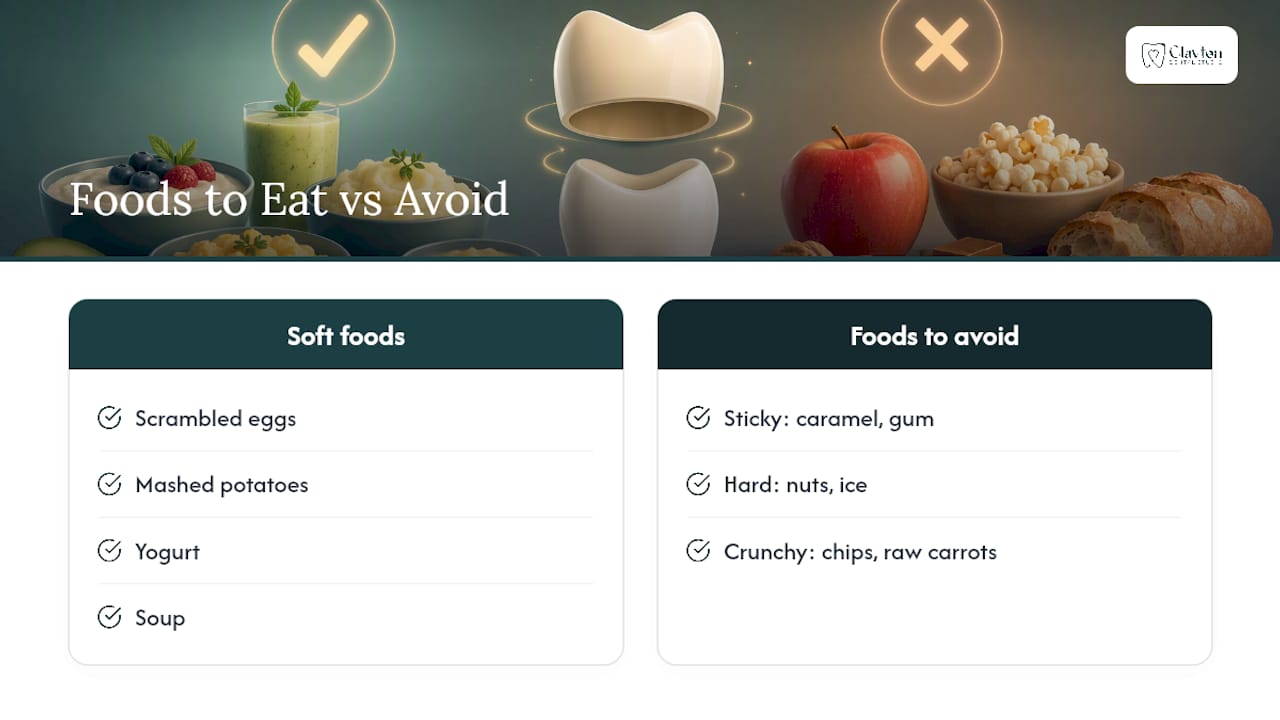
What to eat: Stick to soft foods like scrambled eggs, mashed potatoes, yogurt, soup, and pasta. Chew on the opposite side of your mouth whenever possible. Skip anything sticky (caramel, gum), hard (nuts, ice), or crunchy (chips, raw carrots), since all three can dislodge a reattached crown or irritate the bare tooth.
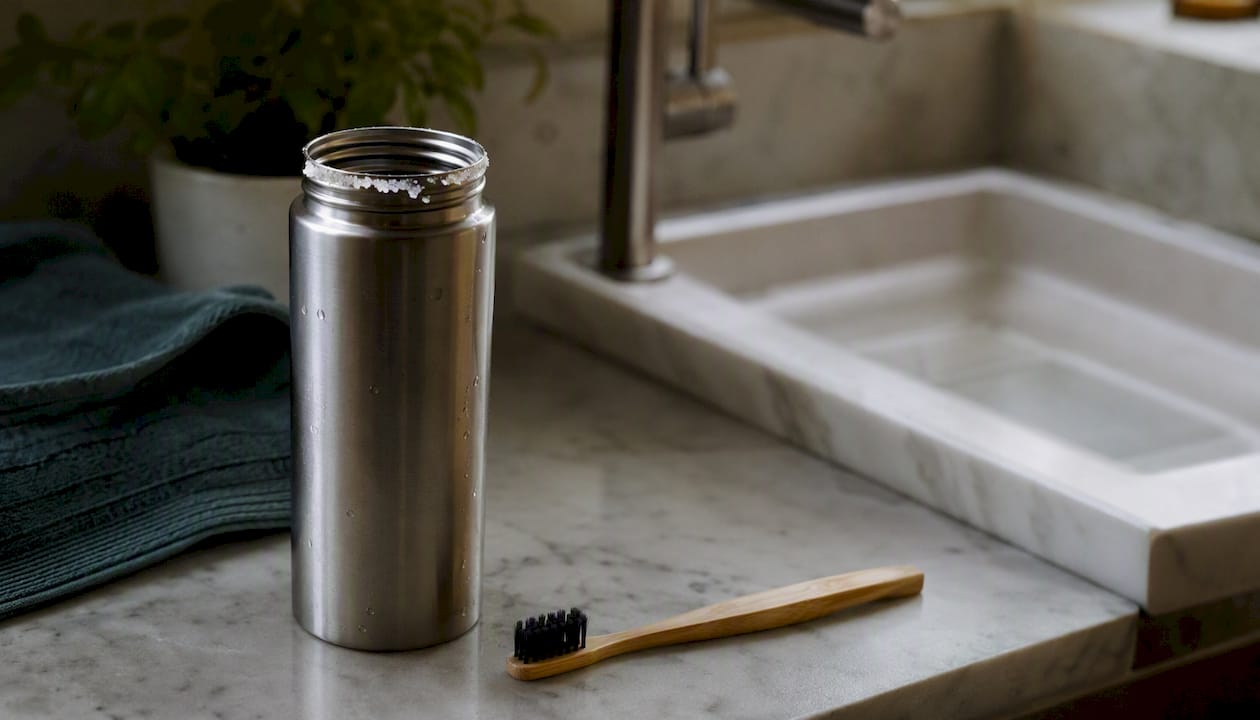
Hygiene without disturbing the area: Brush gently around the site rather than skipping it altogether. A lukewarm saltwater rinse, about half a teaspoon of salt in a cup of warm water, several times a day helps keep the area clean and can ease minor irritation. If you floss near the tooth, slide the floss out sideways instead of snapping it up and out, which can catch the crown’s edge and pull it loose again.
Mild sensitivity to temperature or pressure is common with an exposed prepared tooth. It often improves as the nerve adjusts, but persistent or worsening pain deserves a call to your dentist rather than just waiting it out.
Pro Tip: If a sharp edge is irritating your cheek or tongue, a small piece of orthodontic wax pressed over the area creates an instant, painless buffer. It’s available at any pharmacy and takes seconds to apply. For discomfort, an over-the-counter pain reliever taken according to the label is usually enough, and a cold compress against the cheek helps if there’s any swelling.
How Long Can You Wait Before Calling the Dentist?
If there’s no pain, no visible damage, and your permanent crown appointment is already scheduled within the next 48 hours, waiting until the next business day is often reasonable. Keep the tooth protected in the meantime using the steps above.
That said, certain situations move this from “manageable” to “call now”:
- Sensitivity that’s getting worse rather than better
- Any sign the underlying tooth structure is cracked, chipped, or loose
- A recent root canal on that same tooth (exposed nerve tissue needs faster attention)
- A bite that suddenly feels uneven or “off” after any reattachment attempt
- Your permanent crown appointment is more than a few days away
When you call, have this information ready so the front desk can triage you accurately:
- What symptoms you’re experiencing, if any
- Whether you attempted a temporary reattachment and with what product
- Whether you used any non-dental adhesive by mistake
- Whether you can currently chew or bite down comfortably
A well-prepared phone call usually gets you a faster, more accurate answer about whether you need to come in today.
Why Temporary Crowns Fall Out (and How to Stop It Happening Again)
Temporary cement is built to be weak on purpose. Your dentist needs to remove that crown cleanly when your permanent restoration is ready, so the bond is never meant to withstand serious force. Understanding that trade-off makes it easier to prevent a repeat.
The most common culprits behind a temporary crown falling out include sticky or hard foods, nighttime teeth grinding, flossing straight up instead of sliding it out sideways, a bite that sits slightly high, or simply not enough remaining tooth structure to hold the temporary securely.
A few habits go a long way toward keeping it in place until your final crown is ready:
- Avoid gum, caramel, taffy, and anything crunchy on that side of your mouth
- Ask about a nightguard if you know you grind or clench at night
- Floss by sliding the strand out sideways rather than pulling it up and out
- Report any looseness immediately, even minor wobbling, rather than waiting for it to fall out completely
Pro Tip: Catching a loose temporary crown early is far easier to fix than a fully detached one. A quick same-day re-cement takes minutes and protects the precise fit your final crown depends on. You can read more about how temporary crowns are made and why they fit the way they do in our guide to crown procedure steps.
A Dentist’s Quick Note on Lost Temporary Crowns
When a patient comes in after their temporary crown came off, I’m checking three things: the health of the tooth underneath, the condition of the margins where the crown meets the gumline, and how the bite feels once the crown is back in place. Each of those affects how well your final crown will fit, so a rushed or improper home fix can create more work down the road, not less.
In-office re-cementing takes only a few minutes in most cases, and it lets us confirm nothing shifted while the tooth was exposed. If you’re worried about swallowing risk or you’re unsure whether a crown fragment is fully accounted for, that’s exactly the kind of concern we want to hear about on the phone, not something to manage alone.
I earned my DDS from the University at Buffalo and completed additional restorative training through a preceptorship at UCLA, and same-day crown cases like this are part of what we handle regularly at Clayton Dental Studio. Acting early, even just a phone call the same day your crown comes off, protects the outcome you’re ultimately paying for with your final restoration.
How Clayton Dental Studio Handles Emergency Crown Fixes
Clayton Dental Studio treats a fallen temporary crown as exactly what it is: an easy fix if you get to us quickly. We offer same-day CEREC crown technology, which means if your situation calls for a full replacement rather than a simple re-cement, we can often design and place a permanent crown in a single visit instead of sending you home with another temporary.

If your temporary crown came off, call our Humble office directly through our emergency dentistry line. Bring the crown with you in a small container, along with notes on any symptoms you noticed and whether you attempted a home fix. We accept most dental insurance plans for covered restorative work, and we’ll walk you through payment options for anything outside your coverage before you commit to treatment.
You can browse our full range of restorative services to see what a same-day visit typically includes, from simple re-cementing to full crown replacement. A quick call today is the fastest way to protect the tooth and keep your final crown on schedule.
Frequently Asked Questions
Can I go to work or school with an exposed prepared tooth? Yes, in most cases. As long as you’re not in severe pain and there’s no swelling, you can go about your day. Just be mindful of chewing on the affected side and keep the tooth protected.
What if the temporary crown broke into pieces instead of coming off whole? Don’t attempt to reattach fragments. Collect the pieces if possible, protect the tooth with wax if edges feel sharp, and call your dentist. A broken crown usually means a full temporary replacement rather than a simple re-cement.
Is it normal for the tooth to feel sensitive to cold after the crown falls off? Yes. The prepared tooth has less insulation than it did with the crown in place, so temperature sensitivity is common and usually temporary. Persistent or sharp pain, rather than mild sensitivity, is the signal to call sooner.
Should I try to reattach it myself if I have a dental appointment tomorrow? If the crown is intact and you feel confident, a temporary reattachment with pharmacy cement can help. If your appointment is within a day or two anyway, protecting the tooth with wax and a soft diet is often simpler and just as effective.
Can a lost temporary crown affect how my permanent crown fits? It can, if the tooth shifts or nearby teeth drift into the open space over several days. That’s part of why acting quickly, rather than leaving the tooth exposed for an extended period, protects the accuracy of your final restoration.
This article is general information, not a substitute for advice from a qualified doctor. Consult a qualified healthcare professional about your own circumstances before acting on anything here.
Sources
- Temporary crown pain and what to do (Healthline)
- Managing sensitivity during the interim phase with a temporary crown (MD)
- Toothache emergency treatment options (24x7 Dental Suite)
Recommended
Ready to Schedule Your Appointment?
Dr. Kamboj and the Clayton Dental Studio team are here to help. Call us or book online today.