
Learn what exposes dentin, when sensitivity needs dental care, and what Clayton Dental Studio checks. Try home desensitizing care for 4–6 weeks.
When 4–6 Weeks Fail: Sensitive Teeth Causes and Clayton Dental Studio
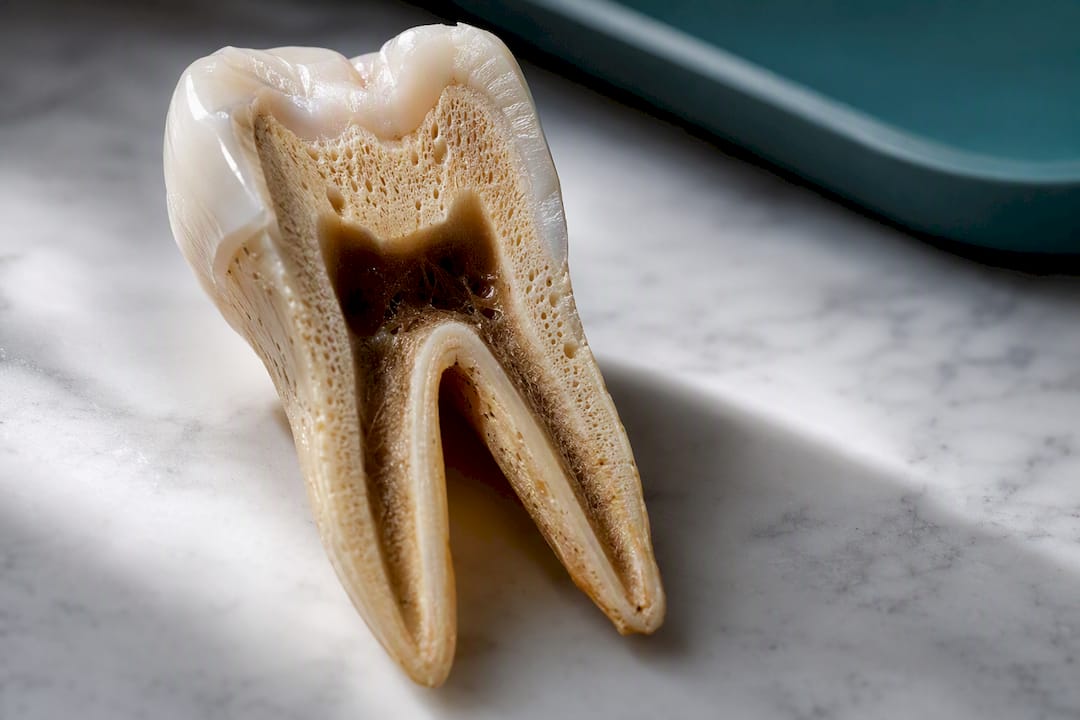
Most sensitive teeth trace back to worn enamel or receding gums exposing the dentin underneath, along with cavities, cracked teeth, or old fillings breaking down. Mild, diffuse sensitivity to cold or sweets usually responds to a desensitizing toothpaste and gentler brushing. Sharp, localized pain in one tooth, or pain that lingers after the trigger is gone, means it is time to see a dentist.
TL;DR:
- Dentin exposure from enamel erosion, gum recession, cavities, or cracked teeth is the primary cause of sensitivity; localized pain often indicates structural issues.
- Fluoride varnish, bonding, gum grafts, and desensitizing toothpaste are effective conservative treatments that require several weeks to show results.
- Sharp, lingering pain when biting or a sudden increase in sensitivity signals a need for prompt dental evaluation for conditions like cracks or infections.
- Habit changes such as using a soft brush, avoiding aggressive brushing, and limiting acid exposure can prevent further dentin exposure and sensitivity.
- Chronic sensitivity that persists over weeks or worsens should be investigated for underlying issues like gum disease, infection, or bruxism, rather than self-managed.
Table of Contents
- What Causes Sensitive Teeth? The Structural Culprits
- How Does Dentin Hypersensitivity Actually Work?
- What Triggers Sensitive Teeth Day to Day?
- When Does Tooth Sensitivity Mean Something More Serious?
- Which Treatments Actually Reduce Tooth Sensitivity?
- What Does a Dentist Actually Check for Sensitivity?
- Why Do Teeth Feel Sensitive After Dental Work?
- Is Your Tooth Sensitivity Temporary or Chronic?
- How Bad Is Your Tooth Sensitivity, Really?
- How Much Does Brushing and Flossing Affect Sensitivity?
- Can Gum Disease or Infection Cause Sensitive Teeth?
- Does Age Change How Sensitive Your Teeth Are?
- A Practitioner’s Honest Take on Sensitive Teeth
- How Clayton Dental Studio Can Help With Sensitive Teeth
- Sources
What Causes Sensitive Teeth? The Structural Culprits
Sensitive teeth almost always come down to one thing: something is exposing the dentin layer beneath your enamel. Dentin is porous, and once it loses its protective covering, hot, cold, and sweet foods can reach the nerve inside your tooth.
A few structural issues create that exposure. Enamel erosion wears away the hard outer shell of the tooth, usually from acid or years of abrasive brushing. Gum recession pulls tissue away from the tooth, uncovering the root surface, which has no enamel at all and only a thin layer of cementum for protection. Once that cementum wears through, dentin sits exposed. Cavities create a direct opening straight to the nerve, which is why a single decayed tooth often hurts far more than the others. A cracked or fractured tooth can cause sharp, unpredictable pain, especially when biting down. And worn or failing fillings lose their seal over time, letting bacteria and temperature changes reach the tooth underneath.
Major clinics list worn enamel, gum recession, cavities, cracked teeth, worn fillings, gum disease, aggressive brushing, acidic diet, whitening, and recent dental work as the most common triggers behind this kind of pain.
A few clues point to a structural cause rather than general sensitivity:
- Pain concentrated in one tooth instead of spread across your mouth
- Sharp pain specifically when you bite down
- A visible chip, crack, or dark spot on the tooth
- Sensitivity that started right after a filling or crown was placed
How Does Dentin Hypersensitivity Actually Work?
Your dentin is packed with microscopic channels called dentinal tubules, each one leading straight to the nerve at the center of your tooth. Under a healthy layer of enamel or gum tissue, those tubules stay sealed off. Once they are exposed, changes in temperature or pressure cause fluid inside them to shift. That fluid movement tugs on nerve endings, triggering the short, sharp jolt of pain you feel with a cold drink or a bite of ice cream. Dental researchers call this the hydrodynamic theory, and it is the accepted explanation for why exposed dentin reacts the way it does.
This is different from the deep, throbbing ache of pulpitis or an infected tooth, which usually lingers well after the trigger is gone and can come with swelling or a bad taste. Because dentin hypersensitivity is multifactorial and frequently overlaps with other dental pain conditions, lasting relief usually means addressing what exposed the dentin in the first place, whether that is acid, aggressive brushing, or grinding, not just numbing the nerve temporarily.
What Triggers Sensitive Teeth Day to Day?
Certain habits speed up enamel loss and keep dentin exposed. High-acid foods and drinks, like soda, citrus fruit, wine, and sports drinks, soften enamel on contact, and frequent exposure wears it down over time. Brushing too hard, or using a stiff-bristled brush, scrubs away that same enamel and can push gum tissue back from the tooth root.
Other common triggers include:
- Bruxism or clenching, which stresses enamel and can create tiny cracks over time
- Teeth whitening, which often causes temporary sensitivity as bleaching gel penetrates enamel
- Oral piercings, which can physically wear against gum tissue and cause localized root exposure
- Tobacco use and certain medications, both linked to gum recession and dry mouth
Pro Tip: Sip acidic drinks through a straw to limit contact with your teeth, then rinse with plain water afterward instead of brushing right away. Brushing immediately after acid exposure can actually rub softened enamel away faster.
When Does Tooth Sensitivity Mean Something More Serious?
Diffuse sensitivity that flares with cold drinks and fades quickly is usually manageable at home. Pain that behaves differently deserves a closer look.
See a dentist promptly if you notice:
- Severe pain concentrated in a single tooth
- Swelling, pus, or a bad taste near a specific tooth
- Fever alongside tooth pain
- Pain that does not ease up after you stop eating or drinking the trigger
- Sharp pain specifically when biting or chewing
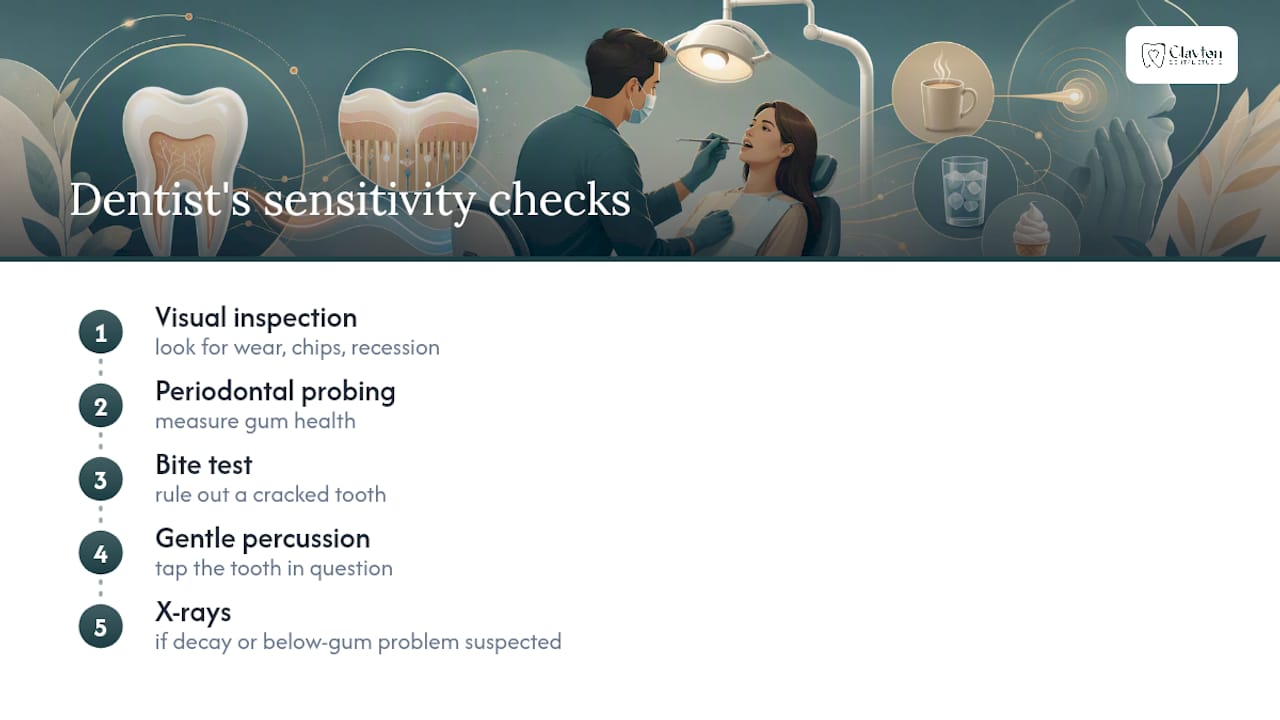
Dentists separate ordinary sensitivity from a deeper problem using a visual exam, periodontal probing to check gum health, a bite test to isolate a cracked tooth, percussion testing, and targeted X-rays when needed. If you are heading into an appointment, three questions are worth asking directly: “Could this be a crack or a cavity?” “Do I need X-rays to check under the surface?” and “What are the most conservative treatment options before anything more invasive?” That last question matters, since conservative measures come first and root canal therapy is reserved for cases that do not respond to anything else.
Which Treatments Actually Reduce Tooth Sensitivity?
Treatment almost always starts conservative and escalates only if the simpler options do not work.
At home, desensitizing toothpaste is the first line of defense. These formulas contain compounds that block signals between the dentinal tubules and the nerve, but they work gradually. The American Dental Association notes these toothpastes require consistent, repeated use over several weeks before symptoms noticeably improve. Pairing that with a soft-bristled brush and reduced acid exposure gives the toothpaste the best chance to work.
Prevalence estimates in dental literature suggest up to roughly 74% of some populations experience dentin hypersensitivity at some point, which is part of why so many toothpaste brands are built specifically around this problem.
When home care is not enough, in-office options include fluoride varnish to strengthen enamel and reduce fluid movement in the tubules, bonding or resin sealants placed directly over exposed root surfaces, and gum grafting to cover receded roots permanently. If bruxism is the driver, a nightguard reduces the clenching forces wearing down enamel. Root canal treatment is reserved for cases where sensitivity signals a compromised nerve that has not responded to anything more conservative.
A reasonable timeline: give desensitizing toothpaste and better habits about four to six weeks before expecting real improvement. If nothing has changed by then, that is your cue to have it checked rather than keep waiting.
What Does a Dentist Actually Check for Sensitivity?
When a patient with sensitive teeth comes in for an exam, the process often follows a consistent order: a visual check for wear, chips, or recession, periodontal probing to measure gum health, a bite test to rule out a cracked tooth, gentle percussion on the tooth in question, and X-rays if decay or a problem below the gumline is suspected. Most patients expect a dramatic diagnosis. More often, we find a straightforward cause, like a worn spot or early recession, that responds well to conservative care. We start with the least invasive option every time and only escalate if that does not resolve the issue.
Why Do Teeth Feel Sensitive After Dental Work?
Sensitivity after a filling, crown, cleaning, or whitening treatment is common, and in most cases it is temporary. A new filling can leave a tooth reactive to temperature for a few days to a couple of weeks while the nerve settles down from the drilling and material placement. Deep cleanings that remove tartar buildup below the gumline can also expose root surfaces that were previously covered, causing a temporary spike in cold sensitivity as your gums heal and, ideally, reattach.
Teeth whitening deserves its own mention, since sensitivity after whitening is one of the most common complaints tied to bleaching products, whether applied in-office or at home. Whitening gel temporarily opens the dentinal tubules as it works through enamel to lift stains, and that opening is what lets hot and cold sensations through more easily for a few days after treatment. It typically fades within a week without intervention.
What separates normal post-procedure sensitivity from a problem is duration and intensity. Mild, generalized sensitivity that improves week over week is expected. Pain that gets worse instead of better, or that becomes sharp and localized to one tooth, points to something else, like a bite that needs adjusting or, in rare cases, nerve irritation that requires further treatment. If sensitivity from any procedure has not eased within two to three weeks, that is worth a follow-up call rather than waiting it out.
Is Your Tooth Sensitivity Temporary or Chronic?
Temporary sensitivity has a clear trigger and a clear end point. It shows up with a specific food or drink, fades within seconds to a couple of minutes once the trigger is gone, and does not worsen from one week to the next. Whitening-related sensitivity, mild reactions after a cleaning, and occasional twinges from a cold drink on a hot day all fall into this category.
Chronic sensitivity behaves differently. It persists across weeks or months, often shows up with multiple triggers instead of just one, and tends to get worse rather than better without treatment. It may also start affecting how you eat, like avoiding cold drinks entirely or chewing only on one side of your mouth.
The distinction matters because the two call for different responses. Temporary sensitivity after a known event like whitening or a new filling usually just needs time and, if you want faster relief, a desensitizing toothpaste in the meantime. Chronic sensitivity signals that something, whether it is ongoing enamel loss, unmanaged grinding, or advancing gum recession, is actively getting worse. Treating chronic sensitivity with toothpaste alone without addressing the underlying driver is a bit like patching a leaky pipe with tape: it buys time but does not fix what’s actually wrong. If your sensitivity has been present for more than a month with no improvement, or it is intensifying rather than easing, that pattern alone is reason enough to schedule an exam.
How Bad Is Your Tooth Sensitivity, Really?
A quick way to gauge severity is to pay attention to three things: how many teeth are affected, what triggers the pain, and how long it lasts.
Mild sensitivity usually involves several teeth reacting similarly to cold air or cold drinks, with pain that fades within a few seconds. Moderate sensitivity narrows to fewer triggers, maybe cold and sweet but not heat, and might last closer to a minute. Severe sensitivity is usually confined to one tooth, gets triggered by almost anything including chewing pressure, and can linger for several minutes or longer after the stimulus is removed.
Another useful gauge is whether the pain changes your behavior. If you are still eating and drinking normally and just wincing occasionally, that is mild. If you have started avoiding entire categories of food or chewing carefully to protect one specific tooth, your nervous system is telling you this has moved past mild sensitivity. Sharp pain specifically on biting down is one of the more reliable signs of a cracked tooth rather than ordinary dentin exposure, since fractures often only hurt under direct pressure.
Rating your own sensitivity this way before an appointment gives your dentist useful information beyond “my teeth hurt.” Being able to say “cold water only, lasts about five seconds, happens with every tooth” versus “biting into anything on the lower left, lasts several minutes” points toward two very different diagnoses and treatment paths.
How Much Does Brushing and Flossing Affect Sensitivity?
Oral hygiene habits cut both ways when it comes to sensitivity. Skipping brushing and flossing lets plaque build up along the gumline, which contributes to gum disease and eventual recession, exposing root surfaces over time. But brushing too aggressively, or choosing a hard-bristled brush, does the opposite kind of damage: it wears away enamel directly and pushes gum tissue back from the teeth, exposing dentin from the other direction.
The safest approach sits in the middle. A soft-bristled brush, light pressure, and a gentle circular or short back-and-forth motion clean effectively without scrubbing away enamel or irritating gums. Brushing twice daily for two minutes, flossing once a day, and avoiding a scrubbing motion across the gumline protects both fronts at once.
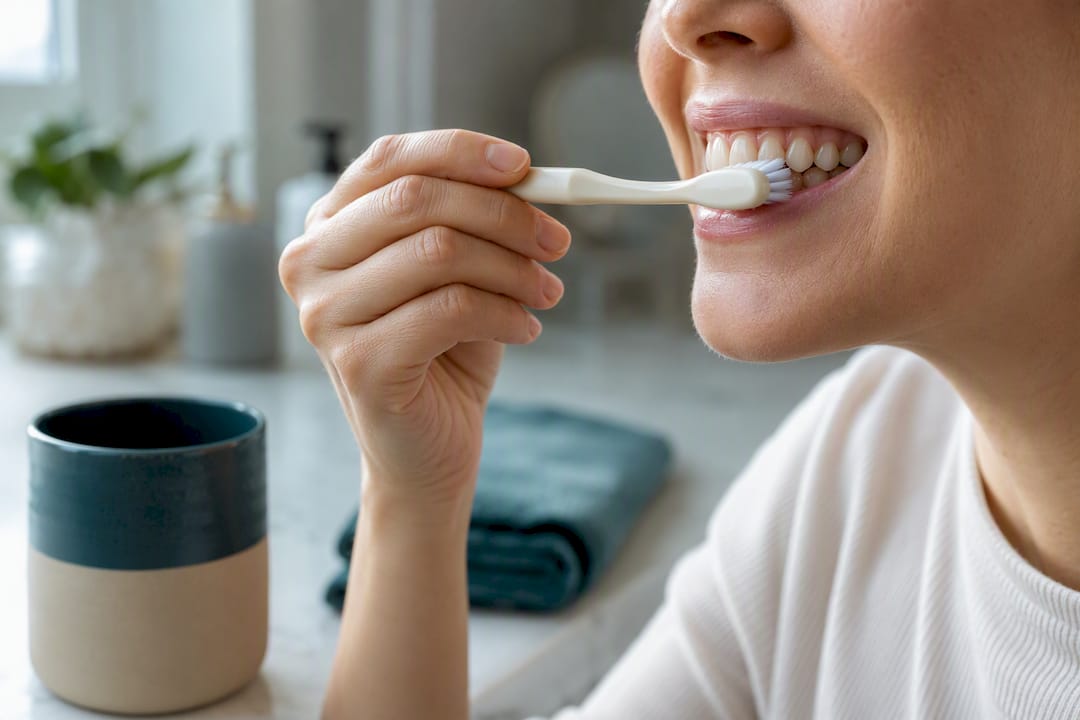
Timing matters too. Brushing immediately after an acidic meal or drink can remove enamel that acid has already softened, which is why waiting thirty minutes, or rinsing with water in the meantime, protects enamel that a straight-to-the-sink habit would otherwise wear down faster.
Can Gum Disease or Infection Cause Sensitive Teeth?
Gum disease is one of the more overlooked drivers of tooth sensitivity, largely because early stages rarely hurt on their own. As gum disease progresses, it causes the gum line to recede and, in advanced cases, breaks down the bone supporting the tooth root. Both processes expose root surfaces that were never meant to be uncovered, and that exposed root reacts to temperature and pressure the same way exposed dentin anywhere else does.
Infection works differently but can look similar to a patient without training. A tooth abscess or deep decay reaching the nerve tends to cause pain that lingers well past the trigger, sometimes throbbing on its own, and often comes with swelling or a bad taste. That pattern points away from ordinary hypersensitivity and toward something that needs treatment rather than management.
TMJ disorders and chronic clenching deserve mention here too, since the abnormal forces they place on teeth can cause microfractures in enamel over time, producing diffuse sensitivity that does not respond well to desensitizing products alone. If your sensitivity comes bundled with jaw pain, headaches, or a clicking jaw, that combination is worth mentioning at your next appointment specifically.
Does Age Change How Sensitive Your Teeth Are?
Tooth sensitivity tends to shift as you get older, though not always in the direction people expect. Enamel naturally thins with decades of chewing, brushing, and acid exposure, which means older adults often have less protective coating left even without any specific dental problem. Gum recession also becomes more common with age, whether from years of brushing habits, past gum disease, or simply gum tissue naturally receding over time.
Interestingly, some older adults report less sensitivity than younger patients with similar enamel wear, because dentin can become more mineralized and less permeable over time, partially sealing some of those dentinal tubules on its own. Younger adults, meanwhile, often see sensitivity spike around orthodontic treatment, whitening trends, or newly acquired grinding habits tied to stress. The takeaway for any age group is the same: sensitivity is not something to simply expect and accept as inevitable with age. A dental exam can usually identify exactly what is driving it and whether it is worth treating now rather than later.
A Practitioner’s Honest Take on Sensitive Teeth
Toothpaste alone rarely fixes sensitivity if diet and grinding are the real drivers behind it. Providing someone with a desensitizing formula will not help if underlying causes persist. One habit worth adopting is rinsing with water after anything acidic, and switching to a soft brush with lighter pressure. It is a small change that protects enamel every single day, not just during a flare-up.
How Clayton Dental Studio Can Help With Sensitive Teeth
Figuring out exactly which of these causes applies to you is hard to do from the mirror. An initial visit at Clayton Dental Studio starts with a straightforward evaluation: a visual exam, X-rays if we need to look below the surface, and a conversation about your symptoms before we ever discuss treatment.
 From there, we start with the most conservative option that fits your situation. That might mean fluoride varnish to strengthen weakened enamel, bonding to cover an exposed root spot, a gum graft for more advanced recession, or an occlusal guard if grinding is behind the wear. You can see the full range of restorative and preventive services we offer before your visit. If you are dealing with jaw clenching or TMJ symptoms alongside sensitivity, our TMJ therapy program addresses the forces driving that wear, not just the surface pain. When you book, bring your insurance information, a quick list of your symptoms and their triggers, and any prior dental records if you have recently switched providers. It makes for a faster, more accurate first visit.
Sources
For more on the causes and treatment of sensitive teeth, see the Cleveland Clinic, Mayo Clinic, and Johns Hopkins Medicine.
This article is general information, not a substitute for advice from a qualified doctor. Consult a qualified healthcare professional about your own circumstances before acting on anything here.
- Sensitive Teeth: Causes, Treatment & Prevention — Cleveland Clinic
- Narrative review — dentin hypersensitivity (Journal of the American Dental Association) — PMC
- Sensitive teeth: Why they hurt and how to stop the pain — Johns Hopkins Medicine
- Dentin hypersensitivity etiology (faculty handout)
Recommended
Ready to Schedule Your Appointment?
Dr. Kamboj and the Clayton Dental Studio team are here to help. Call us or book online today.