Learn why toothache often worsens when you lie down and follow six clinic steps to calm pain tonight, spot emergency signs, and get same day care in...
Stop Toothache at Night Tonight: 6 Clinic Steps for Humble Patients
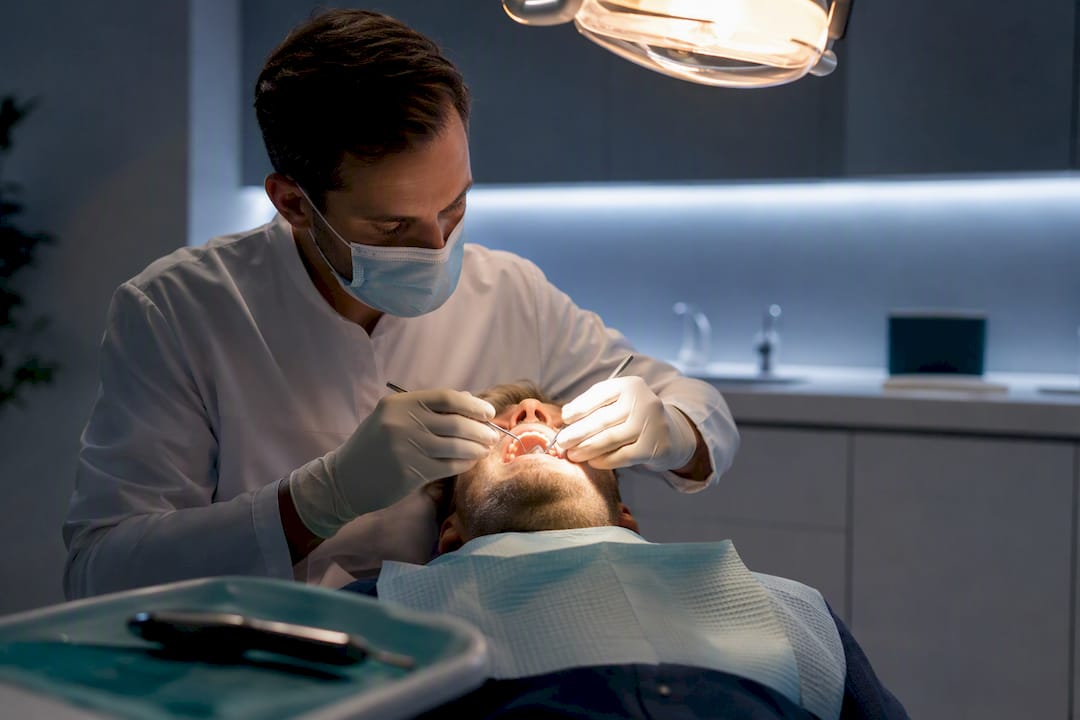
If your tooth hurts more once you lie down, it’s usually because lying flat increases blood flow and pressure inside an already inflamed tooth. Try an NSAID, a cold compress, and an extra pillow tonight, but call a dentist promptly if you notice swelling, fever, or throbbing that won’t let up.
TL;DR:
- Nighttime tooth pain often results from increased blood flow and pressure due to lying flat, especially with existing inflammation or infection.
- Common causes include cavities progressing to pulpitis, dental abscesses, cracked teeth, bruxism, TMJ tension, or sinus pressure, each requiring different urgent treatments.
- Effective home relief involves NSAIDs, cold compresses, saltwater rinses, head elevation, and avoiding pressure on the affected side, but they do not replace professional care.
- Symptoms like continuous throbbing, facial swelling, fever, or trauma demand same-day dental evaluation, with treatment options including drainage, root canals, or extractions.
- Relying solely on home remedies can be misleading because relief often indicates nerve death rather than problem resolution, necessitating prompt dental diagnosis.
Table of Contents
- Why Toothache at Night Feels Worse Than During the Day
- What’s Actually Causing Your Nighttime Tooth Pain
- Nighttime Toothache Relief: What Works and What to Avoid
- When Nighttime Tooth Pain Means You Need Same-Day Care
- How Clayton Dental Studio Handles Nighttime Dental Emergencies
- What I Want Every Patient to Understand About Night Pain
- Get Your Tooth Checked Before It Gets Worse
- Sources
- FAQ
Why Toothache at Night Feels Worse Than During the Day
Gravity works in your favor all day. The moment you lie down, that advantage disappears, and blood pools toward your head at a higher rate than when you’re upright. In a tooth that’s already inflamed from decay or infection, that extra blood flow raises pressure inside the pulp chamber and surrounding tissue, and pressure is exactly what makes a toothache throb. That’s the core reason tooth pain gets worse at night.
Physiology is only part of the story. A few behavioral factors stack on top of it:
- Saliva production drops while you sleep, and saliva normally helps buffer bacteria and soothe irritated tissue.
- Daytime distractions (work, conversation, screens) quiet down at night, so your brain has nothing to compete with the pain signal.
- Whatever over-the-counter pain reliever you took after dinner has usually worn off by 2 a.m., leaving a gap before your next dose.
- Nighttime teeth grinding, known as bruxism, can add mechanical pressure to a tooth that’s already sensitive, and many people only notice it because they wake up with a sore jaw.
None of this means the pain is “just in your head” or exaggerated. It means an existing problem, whether that’s a cavity, a cracked tooth, or an infection, becomes harder to ignore once your body’s natural distractions and defenses go offline.
What’s Actually Causing Your Nighttime Tooth Pain
Nighttime tooth pain almost always traces back to one of a handful of dental problems, though a couple of common culprits have nothing to do with your teeth at all. Most toothaches originate from cavities or their complications, including pulpitis and abscess, so knowing which pattern you’re dealing with helps you gauge how urgent the situation is.
- Cavity progressing to pulpitis. A cavity that’s reached the dentin causes sharp pain with sweets or cold that fades quickly, a sign of reversible pulpitis. If the pain lingers for minutes after the trigger is gone, or starts without any trigger at all, that points to irreversible pulpitis, and the nerve tissue is breaking down.
- Dental abscess. Persistent, deep throbbing, gum swelling, a bad taste in your mouth, and fever suggest an infection has pooled at the root tip. This is one of the more urgent causes on this list.
- Cracked tooth or lost filling. Exposed dentin from a crack or a filling that’s fallen out reacts to temperature and pressure, and pain often spikes when you bite down or when cold air hits it.
- Bruxism and TMJ tension. Grinding overnight often shows up as a dull, generalized ache across several teeth or the jaw itself, rather than pain from one specific tooth. Clenching also strains the jaw joint, which can radiate pain that feels dental but originates from the joint. Dr. Kamboj’s team addresses this through Emface TMJ therapy when jaw tension is the underlying driver.
- Sinus pressure. Sinus infections frequently produce pain that mimics upper tooth pain, especially in the upper back teeth, and it usually comes with congestion or facial pressure rather than sensitivity to hot or cold.
If you’re unsure which category fits, our guide to tooth infection signs walks through the distinguishing details in more depth.
Nighttime Toothache Relief: What Works and What to Avoid
You don’t have to just wait until morning. A few well-supported steps can take the edge off tonight, and knowing what not to do matters just as much.
- Take an NSAID first, if you can. Ibuprofen is generally more effective for dental pain than acetaminophen, though acetaminophen is a reasonable substitute if you have a stomach condition, kidney issue, or another reason to avoid NSAIDs. Follow the label dosing and don’t combine multiple NSAIDs.
- Rinse with warm salt water. A rinse of warm water and salt is a safe, short-term antibacterial measure that can reduce inflammation and clear out food debris irritating the area.
- Apply a cold compress to the outside of your cheek. Fifteen to twenty minutes on, then off, helps numb the area and calm swelling.
- Prop yourself up with an extra pillow. Elevating your head reduces the blood pooling that’s driving the pressure in the first place, and it’s one of the simplest fixes on this list.
- Avoid lying on the painful side. Extra pressure on that side tends to make throbbing worse.
- Use topical numbing gel sparingly, if at all. Benzocaine products offer short-term relief but carry real label warnings, including a risk in young children, so read the packaging carefully. Never place aspirin directly against the gum. It doesn’t numb anything and can burn the tissue.
Pro Tip: Keep your NSAID dose on a schedule rather than waiting for pain to spike again. Dosing gaps are one of the biggest reasons people wake up in worse pain than they fell asleep in.
Antibiotics have a place here, but only a narrow one. They’re appropriate when there are clear signs of spreading infection and same-day dental care isn’t available, but they won’t resolve irreversible pulpitis or a cracked tooth. Our page on antibiotics for toothache explains why they’re a bridge, not a fix. Skip heat on a possibly infected area, since it can encourage swelling, and never attempt to drill, extract, or otherwise treat a tooth yourself.
When Nighttime Tooth Pain Means You Need Same-Day Care
Some symptoms mean home care is a stopgap, not a plan. Get evaluated the same day if you notice:
- Severe, continuous throbbing that wakes you repeatedly or won’t settle with medication
- Facial swelling, especially if it’s spreading toward your eye or down your neck
- Fever, or any difficulty breathing or swallowing
- Redness that’s expanding rather than staying contained
- Trauma to the tooth, or a tooth that’s been knocked out
At the visit, a clinical exam, sensitivity testing, and dental X-rays help pinpoint the source. Depending on the diagnosis, treatment might include drainage of an abscess, a temporary pulpal dressing, antibiotics if infection has spread, or scheduling for further dental procedures. One detail catches people off guard: spontaneous throbbing that wakes you is a classic sign of irreversible pulpitis or abscess, and a tooth that suddenly stops hurting isn’t necessarily good news. It can mean the nerve has died, and the infection is still very much active. Contact your insurance provider for exact coverage details on emergency visits, as coverage can vary.
How Clayton Dental Studio Handles Nighttime Dental Emergencies
I’m Dr. Navneet Kamboj, and I’ve spent nearly a decade treating patients across the Humble community who show up describing exactly this: pain that got unbearable the moment they tried to sleep. I earned my DDS from the University at Buffalo and sharpened my restorative training through a preceptorship at UCLA, and that background shapes how we triage tooth pain at Clayton Dental Studio.
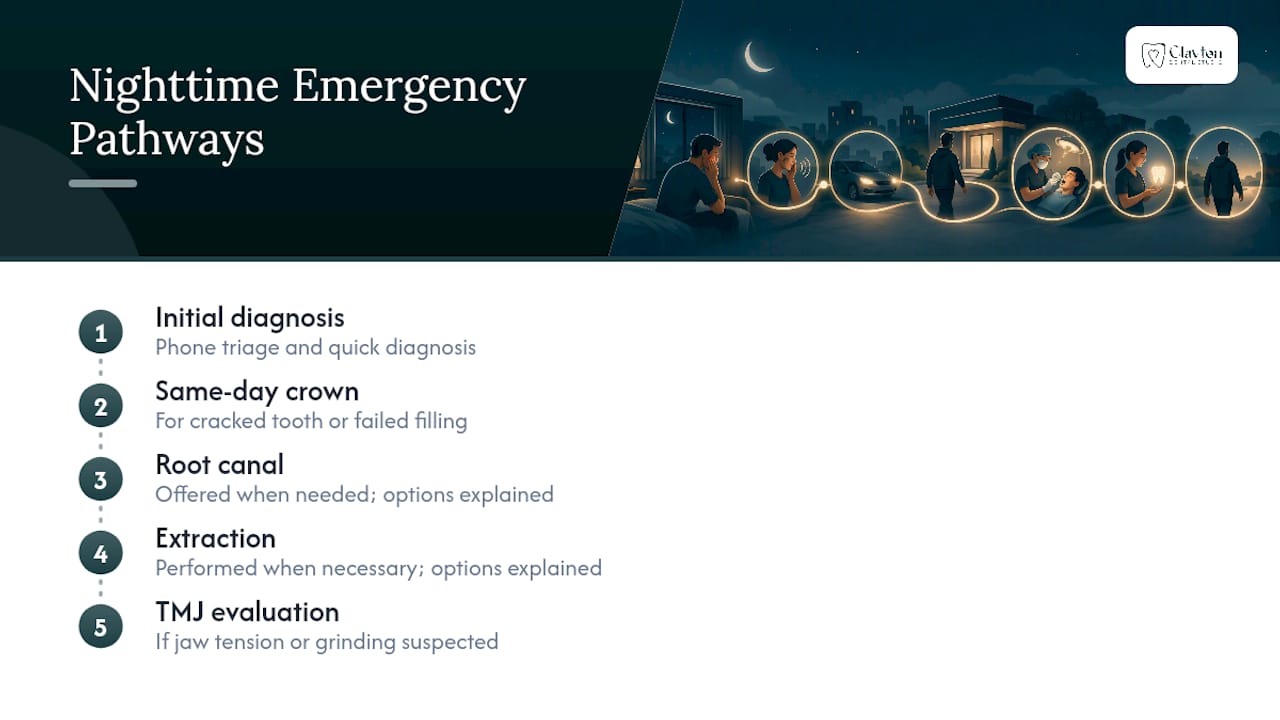
When a patient calls in with nighttime pain, a quick diagnosis is important. Same-day crowns may restore a cracked tooth or failed filling in one visit, and when a root canal or extraction is needed, patients are guided through the options. Evaluation for TMJ involvement may also be conducted if jaw tension or grinding is suspected.
What I Want Every Patient to Understand About Night Pain
The advice floating around online treats nighttime toothache like a sleep hygiene problem: elevate your head, take some ibuprofen, and you’re set until morning. That’s incomplete, and honestly, a little misleading. Positioning and medication buy you time. They don’t treat the cavity, the crack, or the infection sitting underneath the pain.
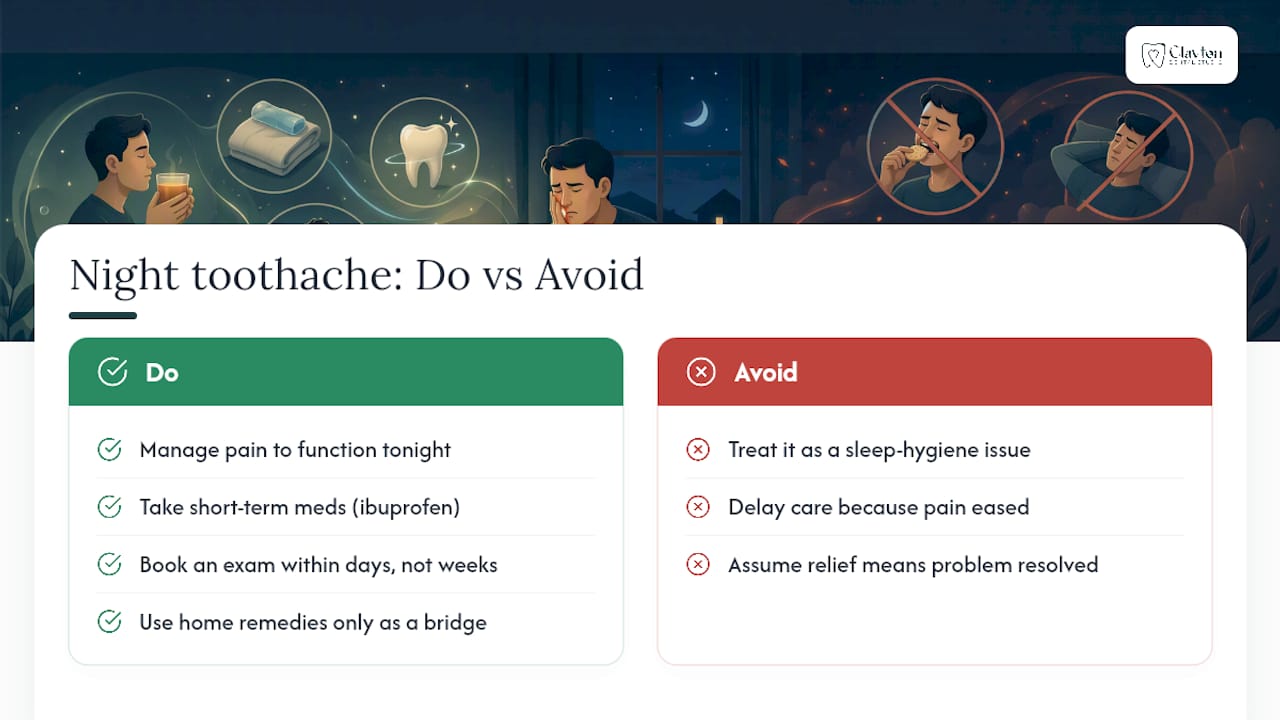
What gets underestimated most is how deceptive relief can feel. A tooth that suddenly quiets down after days of throbbing often means the nerve has died, not that the problem resolved. I’ve seen patients delay care because the pain “got better,” only to come in with an abscess that had been building the entire time.
My honest priority order: manage tonight’s pain enough to function, but book an exam within days, not weeks, especially if the pain woke you up more than once. Home remedies are a bridge. They were never meant to be the destination.
— Clayton Dental Studio
Get Your Tooth Checked Before It Gets Worse
Ice packs and ibuprofen can quiet a toothache for a few hours, but they can’t tell you whether you’re dealing with a cavity, a crack, or an abscess that’s about to get worse. Clayton Dental Studio offers an emergency dental exam in Humble, TX built specifically for patients dealing with exactly this kind of pain, with same-day CEREC crowns available when a cracked tooth or failed filling turns out to be the culprit.

When you call, mention if your pain worsens at night or is accompanied by swelling, fever, or persistent throbbing. This information may help the team prioritize your care. Home measures buy you a few hours of comfort. A proper diagnosis is what actually solves the problem. Browse our full range of dental services or reach out today to get on the schedule.
This article is general information, not a substitute for advice from a qualified doctor. Consult a qualified healthcare professional about your own circumstances before acting on anything here.
Sources
- Toothache — Merck Manual consumer version
- How to get rid of toothache at night, causes, and FAQ — Medical News Today
- Why Does Tooth Pain Get Worse at Night? | Mid-Florida Endodontics Blog
FAQ
How Can I Stop a Toothache at Night?
Take an NSAID like ibuprofen, rinse with warm salt water, apply a cold compress to your cheek, and sleep with your head elevated on an extra pillow to reduce blood flow to the area.
What Is the 3-3-3 Rule for Toothache?
This isn’t a recognized clinical guideline, and definitions of it vary widely online, so don’t rely on it to judge how serious your pain is. If your toothache lasts more than a day or two, or wakes you repeatedly, treat that as your cue to call a dentist rather than following an informal rule.
How Long Will a Tooth Hurt Before the Nerve Dies?
There’s no fixed timeline, since it depends on the extent of decay or infection, but pain that has shifted from sharp and triggered to constant, spontaneous throbbing suggests the nerve is already dying or dead, which calls for prompt evaluation.
How Do I Make My Tooth Nerve Stop Hurting?
An NSAID, a cold compress, and head elevation can quiet nerve pain temporarily, but a dying or infected nerve typically needs a root canal, drainage, or extraction to resolve for good rather than home care alone.
Recommended
Ready to Schedule Your Appointment?
Dr. Kamboj and the Clayton Dental Studio team are here to help. Call us or book online today.