
Clinician backed roadmap for crown sensitivity: clear recovery checkpoints, when to get same day care, and why a bite check often ends pain.
Relieve Crown Sensitivity in 2 Weeks With One Clinician Bite Check
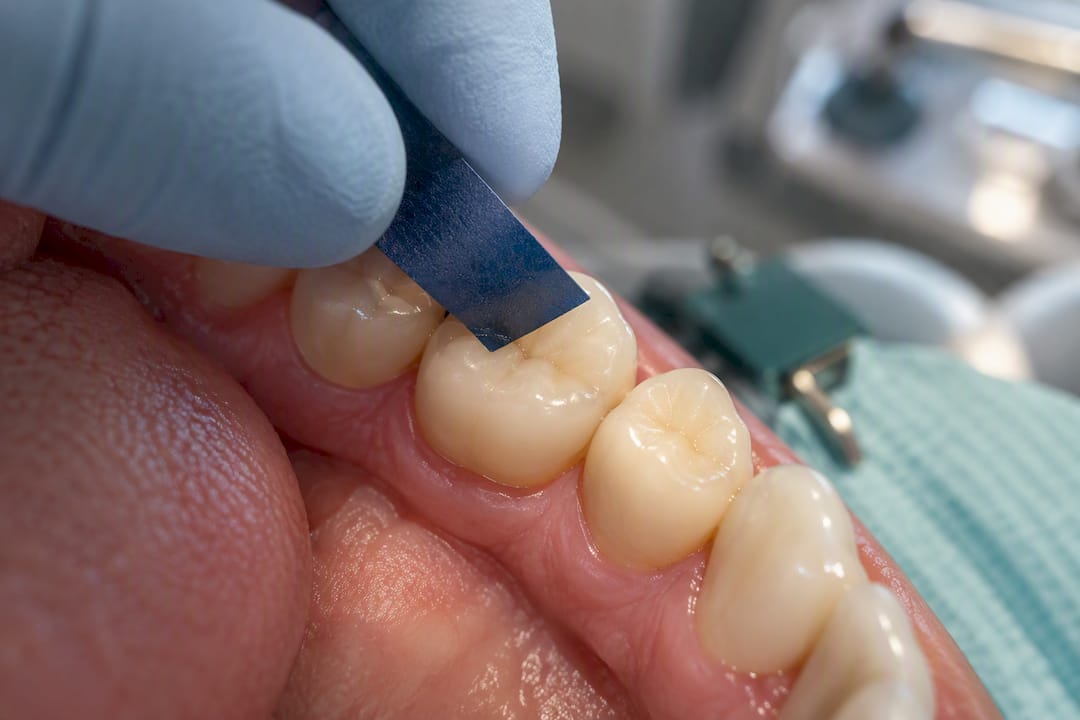
Mild to moderate crown sensitivity is common after a new crown and usually improves within a few days to several weeks. A high bite is the most frequent fixable cause and often resolves after a quick adjustment. If you feel throbbing, worsening pain, swelling, or fever, that’s not routine crown sensitivity. Contact your dentist promptly.
TL;DR:
- Most crown-related sensitivity affects 15 to 30 percent of patients and typically improves within a few weeks without intervention.
- A high bite is the most common mechanical cause and can be corrected quickly with a simple polishing appointment, often relieving pain within days.
- Persistent or worsening pain, swelling, fever, or a loose crown signal possible nerve or infection issues that require prompt dental evaluation.
- Using desensitizing toothpaste, avoiding extreme temperatures, and scheduling a bite adjustment can significantly reduce discomfort during recovery.
- Sensitivity appearing years after placement may indicate cement wear or cracks, warranting an immediate dental exam rather than waiting.
Table of Contents
- What Causes Sensitivity After a Crown
- What to Expect Day by Day and Week by Week
- Normal Symptoms vs. Red Flags That Need Same-Day Care
- Homecare Steps That Actually Reduce Sensitivity
- Why a High Bite Causes Pain (and Why It’s an Easy Fix)
- Temporary Crowns vs. Same-Day Crowns: Why Sensitivity Differs
- Behind This Guidance: Clayton Dental Studio’s Approach
- The Fix Everyone Overlooks First
- Ready for a Same-Day Evaluation?
- Sources
- FAQ
What Causes Sensitivity After a Crown
Your tooth has to be reshaped to make room for a crown, and that process almost always irritates the tissue underneath, at least for a little while. Once the outer enamel layer is trimmed, the dentin underneath gets exposed. Dentin is riddled with microscopic channels called dentinal tubules that run straight to the nerve, so hot coffee or cold water can suddenly feel sharp in a way it never did before.
The nerve itself can also react to the preparation process with a temporary inflammation called reversible pulpitis. Think of it as the nerve being bruised, not broken. It calms down as the tooth heals.
A few other culprits show up regularly:
- Cement irritation. The bonding material used to seat the crown can irritate the gum or, rarely, trigger a mild allergic response.
- Gum margin problems. Inflammation, a cement overhang, or gum recession can expose root surfaces that are especially sensitive to touch and temperature.
- Ill-fitting crown or high bite. Even a fraction of a millimeter of extra height concentrates biting force on one tooth.
One clinical review found that postoperative sensitivity affects roughly 15 to 30 percent of crown patients, with most cases clearing up within a few weeks. If you’re feeling twinges right now, you’re in good company, not an outlier.
What to Expect Day by Day and Week by Week
Recovery timelines vary by person, but most patients follow a fairly predictable pattern.
- Hours 1 to 72: Numbness from the local anesthetic wears off, and the tooth may feel generally tender, especially when you bite. This is fresh-tissue soreness, not a warning sign.
- First week: Thermal sensitivity, that jolt from cold drinks or ice cream, often peaks now, then starts to fade for most patients.
- Weeks 2 to 4: Routine sensitivity typically settles during this window. Verywell Health notes that most crown-related discomfort resolves within days to a few weeks, though a slower case can stretch closer to six.
- Beyond 4 weeks: If sensitivity hasn’t improved, it’s time for an evaluation rather than more waiting.
One caveat worth flagging early: if you’re still wearing a temporary crown, ongoing sensitivity is more common and doesn’t necessarily follow this same curve until the permanent restoration is cemented.
Normal Symptoms vs. Red Flags That Need Same-Day Care
Most post-crown discomfort is predictable and mild. Brief cold twinges, general soreness when chewing, and gum tenderness that gets a little better each day all fall into the expected range.
Certain symptoms don’t belong in that category. Watch for:
- Throbbing pain that wakes you up at night
- Pain that’s getting worse over several days instead of better
- Facial or gum swelling
- Fever
- A crown that feels loose or shifts when you bite
- Bite pain that hasn’t budged after more than a few days
Spontaneous throbbing combined with lingering heat or cold sensitivity can point to irreversible pulpitis, a nerve inflammation that typically needs root canal treatment rather than time.
Pro Tip: Before you call, jot down when the pain started, what triggers it (biting, cold, nothing at all), and how it rates on a scale of 1 to 10. That five-minute note helps your dentist zero in on the cause faster during the call or the visit.
Homecare Steps That Actually Reduce Sensitivity
While mild sensitivity runs its course, a few habits make a real difference in how uncomfortable those weeks feel.
- Switch to a desensitizing toothpaste. Sensodyne’s guidance on managing sensitive teeth points to potassium nitrate and stannou fluoride as the active ingredients that calm nerve response, but they work cumulatively. Use one exclusively for several days before judging whether it’s helping.
- Skip the temperature extremes. Ice water and hot soup are the two biggest triggers right now. Room-temperature foods give the tooth a break.
- Chew on the other side. Give the crowned tooth a lighter workload while it settles.
- Try an OTC anti-inflammatory. Ibuprofen tends to work better than acetaminophen for this kind of inflammatory discomfort, but check with your physician if you have any contraindications.
- Rinse with warm salt water. This soothes sore gum tissue around the crown margin.
- Use a soft-bristled brush. An electric toothbrush like the Oral-B Vitality Pro with a soft head cleans effectively without aggravating a tender gumline.
If you grind your teeth at night, mention it at your next visit. A night guard protects both the new crown and the tooth beneath it from unnecessary pressure.
Why a High Bite Causes Pain (and Why It’s an Easy Fix)
If biting down feels like the crown “hits first,” that’s usually exactly what’s happening. Even a slightly high crown concentrates force on the tooth and the ligament holding it in the socket, and that pressure reads as pain, sometimes sharp, sometimes a dull ache that lingers after you stop chewing.
The fix is refreshingly quick. Your dentist uses thin colored paper called articulating paper to mark where your bite contacts first, then polishes down that high spot in a matter of minutes. Many patients feel relief within a day or two of the adjustment.
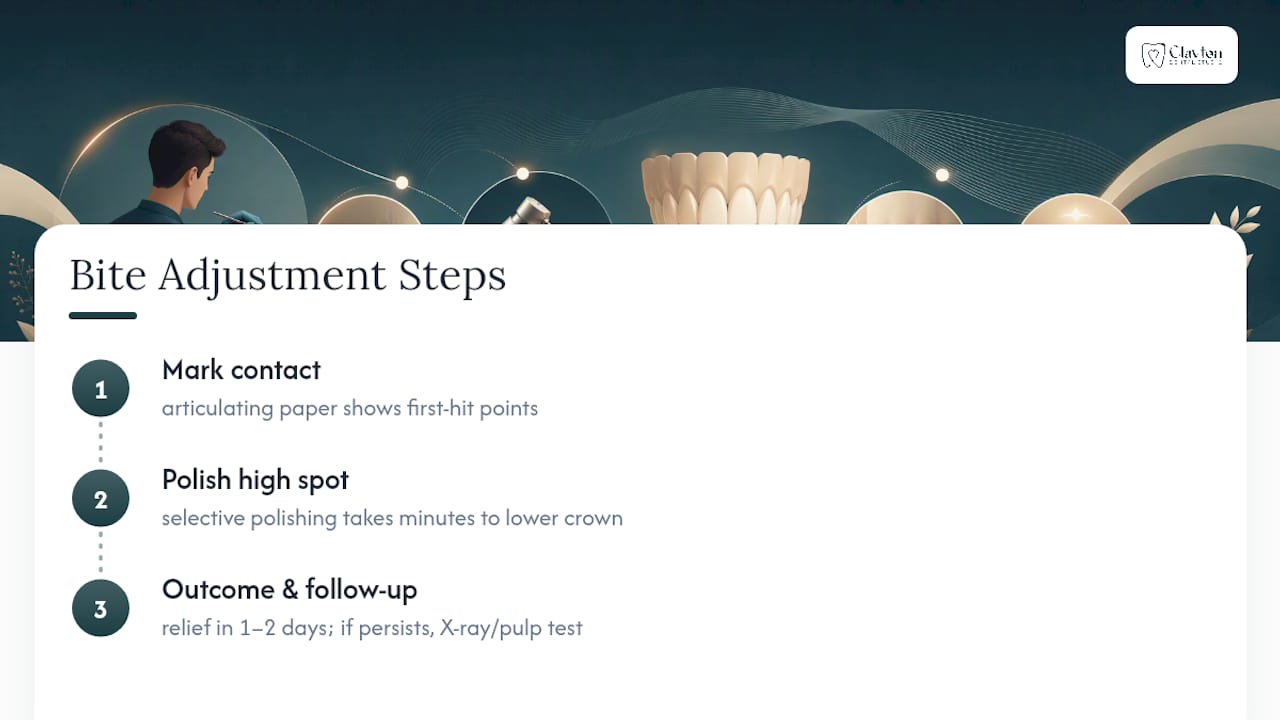
If pain continues after the bite has been corrected, that points toward something else, possibly nerve involvement, and your dentist will likely follow up with an X-ray or a pulp vitality test to check.
Temporary Crowns vs. Same-Day Crowns: Why Sensitivity Differs
Not all crowns behave the same way while your mouth adjusts, and the type of crown you’re wearing changes what to expect.
- Temporary crowns use weaker cement by design, which means they’re more prone to microleakage, tiny gaps that let temperature and bacteria reach the tooth underneath. Sensitivity tends to be more noticeable during this phase.
- Lab-made permanent crowns seal the tooth more precisely, and sensitivity generally drops once that final crown is cemented.
- Same-day crowns, milled and placed in a single appointment, shorten the window your tooth spends covered only by a temporary. Less time exposed generally means a shorter overall recovery.
If your temporary crown ever comes loose or falls off entirely, don’t wait out the discomfort. Read our guidance on a temporary crown coming off for the right next step.
Behind This Guidance: Clayton Dental Studio’s Approach
I’m Dr. Navneet Kamboj, DDS from the University at Buffalo with a restorative preceptorship at UCLA, and I’ve spent nearly a decade treating crown patients throughout the Humble area. When someone calls about crown sensitivity, our crown procedure evaluation starts conservative: a quick bite check, targeted X-rays if warranted, and vitality testing before anything more invasive is considered. Bring notes on when your symptoms started and what triggers them. It genuinely speeds up finding the answer.
The Fix Everyone Overlooks First
Most crown sensitivity advice jumps straight to toothpaste and painkillers, and while those help, they treat the symptom, not the cause. In our experience, the single most overlooked fix is the bite check. Patients wait weeks hoping a high crown will “settle in,” when a five-minute adjustment often solves it outright.
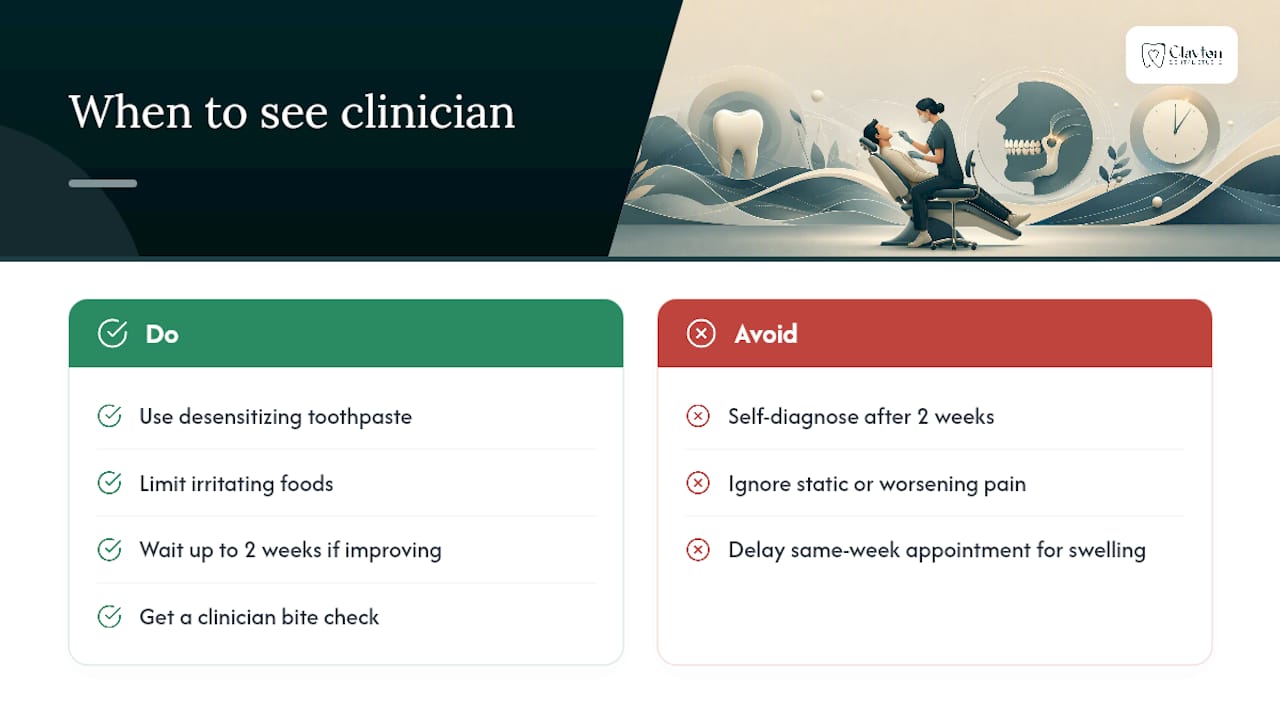
The conventional wisdom to “give it time” is half right. Time resolves genuine nerve irritation and gum healing. It does nothing for a crown that’s mechanically too tall, and waiting on that just prolongs unnecessary pain.
If there’s one priority to take from this: don’t self-diagnose past the two-week mark. Mild, improving discomfort is worth riding out with desensitizing toothpaste and dietary caution. Anything static, worsening, or paired with swelling deserves a same-week appointment. Same-day crown technology has made that evaluation less disruptive than it used to be, since a fix can sometimes happen in the same visit as the diagnosis.
— Clayton Dental Studio
Ready for a Same-Day Evaluation?
If your crown still hurts two weeks in, or biting down just feels off, waiting rarely helps and a quick office visit almost always does. Clayton Dental Studio offers something most first-time crown patients don’t expect: a same-day path from diagnosis to fix, whether that means an occlusal adjustment in the same appointment or a same-day CEREC crown that skips the temporary-crown discomfort altogether.
At your visit, expect a straightforward process: a bite check with articulating paper, an X-ray if your symptoms suggest nerve involvement, and a plan you understand before you leave the chair. For anything beyond routine sensitivity, our general and emergency dentistry team can see you quickly rather than making you wait out uncertainty. Book an evaluation and get a clear answer instead of a guess.
Sources
- Dental crowns - Cleveland Clinic
- Tooth Sensitivity After a Crown — Verywell Health
- Tooth sensitive after crown — Sensodyne
This article is general information, not a substitute for advice from a qualified doctor. Consult a qualified healthcare professional about your own circumstances before acting on anything here.
FAQ
How Do I Get My Crown to Stop Hurting?
Start with a desensitizing toothpaste, avoid hot and cold extremes, and take an anti-inflammatory like ibuprofen if you don’t have contraindications. If pain persists past two to four weeks or worsens, your dentist likely needs to check for a high bite or nerve irritation.
How Long Does Jaw Pain Last After a Crown?
Jaw or bite-related soreness after crown placement usually eases within a few days to two weeks as the mouth adjusts. If jaw pain continues beyond that or intensifies, a bite adjustment or Emface TMJ therapy evaluation may be needed.
Is It Normal for a Tooth to Hurt After a Crown?
Yes. Mild soreness and temperature sensitivity are expected for days to a few weeks after placement. Throbbing, night pain, or swelling are not normal and call for prompt evaluation.
Why Does My New Crown Feel Weird When I Bite Down?
That “weird” feeling is usually a high bite, where the crown sits fractionally taller than your surrounding teeth and takes on extra force. A short in-office adjustment, marking the high spot and polishing it down, typically resolves it within a day or two.
Can an Old Crown Suddenly Become Sensitive Years Later?
Yes. Crowns last an average of 10 to 15 years, and sensitivity showing up later often points to worn cement or a small crack letting temperature and bacteria reach the tooth. That’s a reason to schedule an exam rather than wait it out.
Recommended
Ready to Schedule Your Appointment?
Dr. Kamboj and the Clayton Dental Studio team are here to help. Call us or book online today.