Planning a dental implant consultation in Humble, TX? See what happens at the visit, the health and bone requirements, and how to prepare so you leave with a plan.
Dental Implant Consultation: What to Expect and Who Qualifies
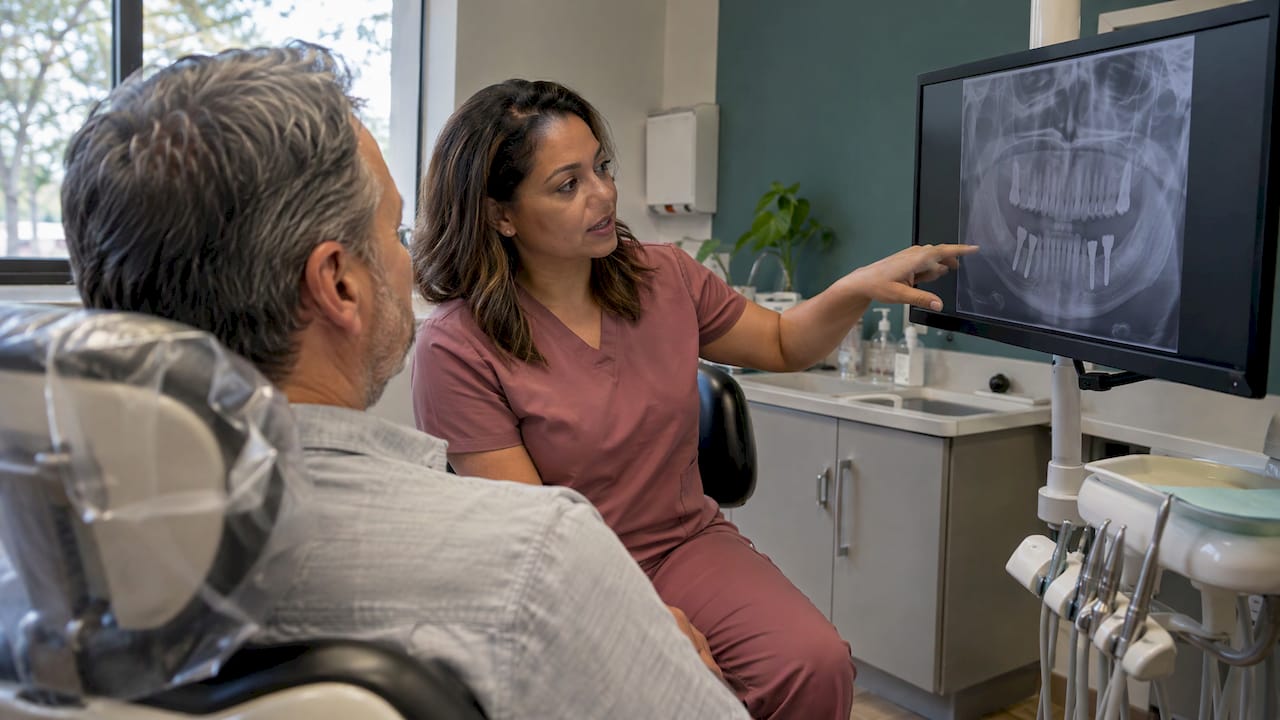
A dental implant consultation is the visit where we find out whether implants are right for you, and if they are, exactly how to place them. It is a conversation, an exam and a set of scans, not a commitment to surgery. At Clayton Dental Studio in Humble, TX, you leave knowing your options for replacing a missing tooth, what your mouth needs first, and what the path looks like for you. Below, we walk through the visit step by step, the requirements that decide candidacy, and how to arrive prepared.
TL;DR
- A consultation covers your history, a focused exam of your mouth and gums, imaging, and a discussion of every option for your missing tooth or teeth.
- Good candidates generally have good overall health, healthy gums and enough jawbone. Bone that is low can often be rebuilt with a graft.
- Smoking, uncontrolled diabetes and active gum disease are the most common things to address before implants. Most can be managed.
- Bring your medication list, any recent X-rays, your dental insurance details and your questions. We encourage every question.
- There is no age limit for implants. The jaw simply needs to be finished growing, typically from age 18.
Table of Contents
- What an implant actually is
- What happens at a dental implant consultation
- Who can get dental implants
- How to prepare for your visit
- Why careful planning is the whole point
- What about cost?
- Our perspective
- Book your implant consultation in Humble
- FAQ
- Sources
What an implant actually is
A dental implant is a small post that sits in the jawbone and holds a replacement tooth. The American College of Prosthodontists describes it as an FDA-approved medical device that can support a single missing tooth, several teeth or all of the teeth in the mouth. Think of it as a new root. Because it is anchored in bone, it behaves differently from a bridge or a denture, and that is why the planning visit matters so much.
If you are still comparing options, our guide to implants, bridges and dentures lays them side by side. Many patients come to the consultation with that question and leave with a clear answer.
What happens at a dental implant consultation
The visit follows a logical order. According to the oral surgeons’ student guide to implant dentistry, the clinician assesses your chief complaint, your understanding of restorative options and your expectations, along with your medical and dental history. Then comes an implant-focused exam, a decision about which imaging is needed, and an explanation of the treatment options.
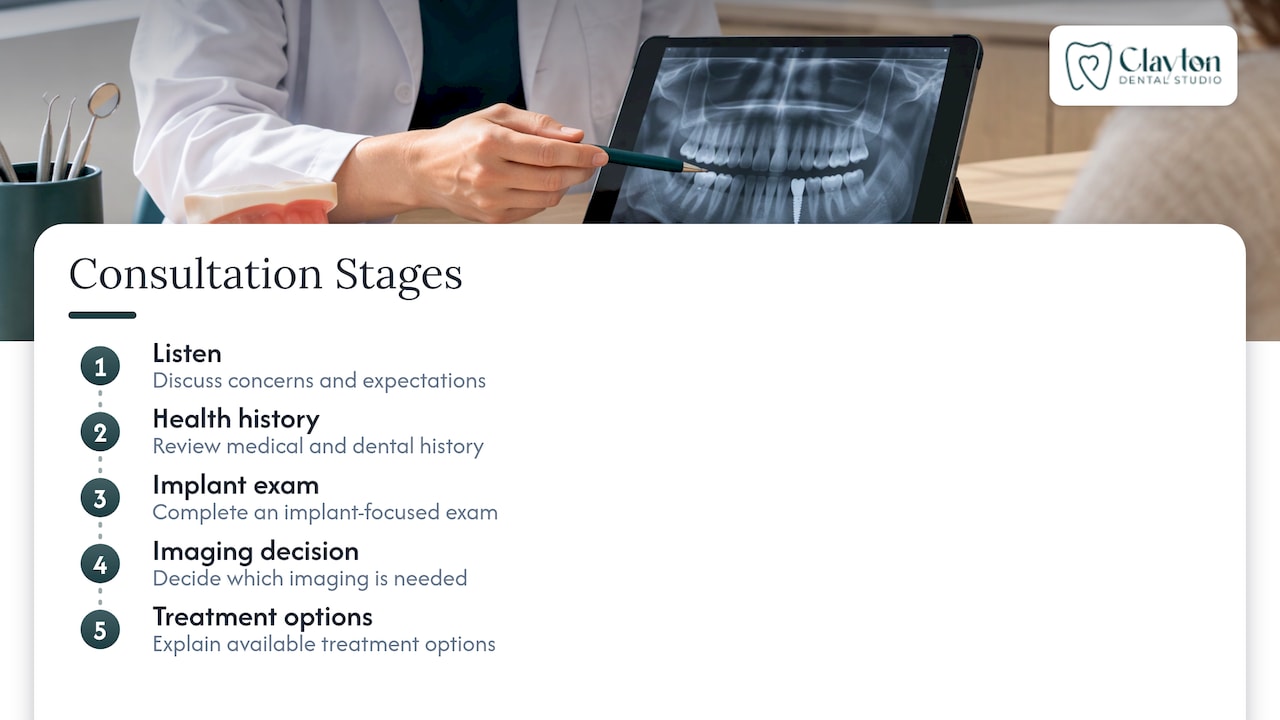
Here is how that looks in our office.
1. We listen first
We start by asking what brought you in. Is it a tooth that broke, a gap you are tired of hiding, or a denture that no longer feels secure? The same guide notes that expectations should be reasonable and should fit your timeline and finances, and that when doctor and patient do not understand each other’s expectations, satisfaction suffers. So we talk about what you want, whether that is comfortable chewing, a natural look, or both, and how soon you would like it.
This is also the place to tell us if dental visits make you nervous. Our approach is to keep the environment calm and spa-like, and to explain each step before it happens so nothing is a surprise.
2. We review your medical and dental history
Your health history shapes the plan. We ask about conditions, medications and past dental work. Your dental history counts too. The student guide explains that a patient with complex needs but a consistent record of dental care is at below-average risk of implant failure, while someone with little follow-through on past treatment may be steered toward a simpler plan that depends less on home care. Regular cleanings and checkups are a real advantage here.
3. We examine your mouth with implants in mind
This exam looks at more than the empty space. The guide lists periodontal (gum) status, how your teeth bite together, jaw relationships, the space between upper and lower teeth, how wide you can open, oral hygiene, and the shape of the ridge where the tooth is missing. It also asks us to look for clenching and grinding habits, which matter because they put extra force on an implant.
If you clench or grind, or wake with jaw tension or headaches, tell us. It does not rule out implants, but we plan for it.
4. We take the right images
A flat X-ray does not show everything an implant needs. A joint clinical recommendation from the American Dental Association and the American Academy of Oral and Maxillofacial Radiology says a panoramic X-ray may be used at the initial consultation, but that cone-beam CT (CBCT), a 3D scan, is recommended for planning and placing implants. The oral surgeons’ guide explains why: the images need to show the nerve canal in the lower jaw, the sinus above the upper teeth, the height of the bone and any problem areas.
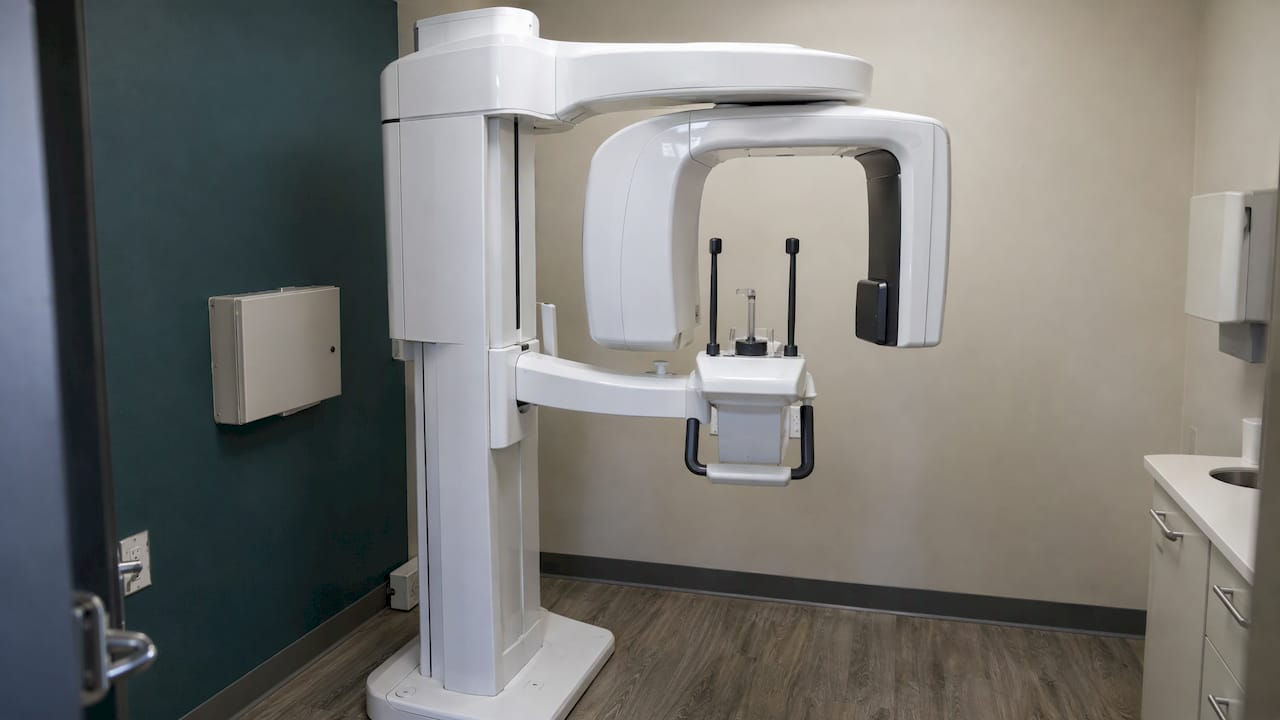
Our practice uses digital scanning technology, including Trios 5 scanning, and you can read about our CBCT imaging in Humble. A digital scan is a quick, comfortable alternative to the gooey impression trays many people remember.
5. We walk through your options
Once we have the full picture, we explain what is possible. That could be a single-tooth implant, several implants supporting a bridge, or implants that secure a denture. We also cover alternatives, because the best plan is the one that fits your mouth, your health and your life. You should leave with a clear sequence of steps, and our overview of the dental implant timeline shows how the months usually unfold.
Who can get dental implants
Most healthy adults can. The American Academy of Periodontology describes an ideal candidate as someone in good general and oral health, with enough jawbone and healthy gums free of periodontal disease. The Academy points out that implants are closely tied to the gums and the bone beneath them, which is why those two things carry so much weight in the decision.
The requirements, in plain language:
| Requirement | What it means for you |
|---|---|
| Finished jaw growth | Implants are typically for adults 18 and older. Cleveland Clinic notes there is no upper age limit. |
| Enough bone, or a graft | Mayo Clinic lists enough bone to hold the implant, or the ability to have a bone graft. |
| Healthy gums | Active gum disease is treated first, then implants follow. |
| Health that supports healing | Conditions that affect bone healing need to be well managed. |
| Time | Plan on a process of several months. |
| Tobacco-free | Smoking is a documented risk to long-term implant stability. |
Bone: the question most people ask
If you have been missing a tooth for a while, the bone in that spot may have thinned. That is common, and it does not automatically close the door. A bone graft can rebuild the area before the implant goes in. We explain the process in our article on bone grafting for dental implants. If low bone density is a wider concern for you, reading about PEMF therapy costs for bone health can help you understand the ways people support their bones alongside dental care.
Gums
Healthy gums hold an implant the way they hold a natural tooth. If we find gum disease, we treat it first. That step protects the investment you are about to make.
Smoking and vaping
The oral surgeons’ guide calls tobacco smoking a significant, documented risk factor for decreased long-term stability of implants. Cleveland Clinic lists smoking and vaping among the factors that can complicate candidacy. If you use tobacco, we will talk about it openly and without judgment. Our article on smoking and dental implants explains what to expect and how to give your implant its best chance.
Diabetes and other health conditions
Well-controlled diabetes is very different from unmanaged diabetes, and our guide to implants and diabetes covers the blood sugar targets that matter. Cleveland Clinic also notes that a recent study found similar implant success rates for people with and without autoimmune disease, though some of these conditions and their medicines can affect healing, so we review your history carefully.
The oral surgeons’ guide separates conditions into two groups. Absolute contraindications, meaning implants should not be placed, include acute illness, uncontrollable systemic disease and certain diseases or damage at the implant site. Relative contraindications, meaning we plan more carefully, include osteoporosis, immune-compromising disorders, bisphosphonate medicines, chemotherapy and radiation to the head and neck. Please tell us about every medication, including ones for bone health. Your physician and our team can coordinate when needed.
Clenching and grinding
The same guide says habits like bruxism (grinding) and clenching must be examined as possible risks. In practice, this means we look at how you bite, and we can build protection into the plan. We also offer Emface TMJ therapy for jaw pain and tension, which some patients with clenching find relevant.
How to prepare for your visit
A little preparation makes the appointment more useful.
- Make a list of medicines and supplements. Mayo Clinic says preparation typically includes a review of medical history and medicines. For certain heart conditions or bone or joint implants, a healthcare professional may prescribe antibiotics before surgery, so mention any of these.
- Bring previous X-rays or records, if you have them from another office.
- Bring your insurance information. We bill insurance for covered dental treatment, and we will go over what applies to your plan.
- Write down your questions. Cost, timing, comfort, healing and what the finished tooth will look like are all fair game.
- Tell us about anxiety. If you want to talk about comfort options, this is the time.
- Think about your goals. Chewing steak again? A smile you feel good about? Both are valid.
Mayo Clinic adds that you can expect a full dental exam with X-rays and 3D images, possibly models of your teeth and jaw, and an individualized treatment plan.
Why careful planning is the whole point
Implants succeed because of diagnosis, not just surgery. The American College of Prosthodontists warns that placing implants without careful diagnosis and treatment planning should be avoided. An implant in the wrong position or angle, or without enough room for the final tooth, can compromise how it works, how long it lasts and how it looks, and may even need to be removed.
That is exactly what the consultation prevents. By scanning, measuring and mapping first, we can place each implant where the final tooth, your bite and your bone all agree. If you want to know what lasts, see our article on how long dental implants last, and for the long term, how to care for dental implants.
What about cost?
Cost depends on how many teeth you are replacing, whether you need a graft or gum treatment first, and the type of restoration on top. Because it varies so much, we give you a plan with the steps involved so you can see the whole picture. We bill dental insurance for covered treatment, and we offer flexible financing options for procedures that insurance does not cover. We do not publish a fixed price online, since an honest figure comes from your exam and scans.
Our perspective
Dental implants are one of the most rewarding things we do, and the consultation is where that result is decided. We would rather spend an unhurried hour understanding your health, your bite and your goals than rush to a plan that does not fit you.
We believe in prevention and proactive care, and that shapes how we approach implants. Healthy gums, a stable bite and a patient who feels informed come first. Our digital scanning, including Trios 5, makes the process comfortable and precise, and our approach to every visit is calm and spa-like, because we know many people arrive nervous.
We care for the whole family in one place, so your implant, your cleanings and your children’s checkups can all happen with a team that knows you. If you grind your teeth, we can look at that too, including with Emface TMJ therapy.
Bring your questions. Every one of them is welcome.
Clayton Dental Studio
Book your implant consultation in Humble
If you are missing a tooth, or wearing a denture that bothers you, we would be glad to see you. Our dental implant services page explains how we restore teeth, and our team will build a plan around your health and your goals.
If a tooth is broken or painful right now, our general and emergency dentistry team can see you and talk about replacement options once you are comfortable.
FAQ
How long does a dental implant consultation take?
It depends on the imaging and how many questions you have, but you should plan for an unhurried visit rather than a quick look. We review your history, examine your mouth, take scans and discuss options. We would rather you leave with everything clear than rush through it.
Do I need a bone graft to get implants?
Not always. Your scan shows how much bone you have. If it is not enough, a graft can often rebuild the area first, and Mayo Clinic lists the ability to have a graft as part of candidacy. Our article on bone grafting explains what to expect.
Am I too old for dental implants?
No. Cleveland Clinic states that the typical minimum age is 18, when the jaw has finished growing, and that there is no upper age limit. Your overall health and the condition of your gums and bone matter far more than your birthday.
Can I get implants if I smoke or have diabetes?
You may be able to, with preparation. Smoking raises the risk of implant problems, so we talk through ways to reduce it before treatment. Diabetes that is well controlled is very different from unmanaged diabetes, and we review your numbers and your physician’s guidance as part of your plan.
Will insurance cover my implant consultation?
Coverage varies by plan. We bill insurance for covered dental treatment, so bring your insurance details and we will go over what applies. For elective or uncovered care, we offer flexible financing options.
Sources
- Introduction to Implant Dentistry: A Student Guide (AAOMS)
- Position Statement: Dental Implants (American College of Prosthodontists)
- Dental Implant Procedures (American Academy of Periodontology)
- Dental implant surgery (Mayo Clinic)
- Dental Implants: Types, Purpose & Benefits (Cleveland Clinic)
- ADA and AAOMR clinical recommendations on imaging for dental implants
Recommended
Ready to Schedule Your Appointment?
Dr. Kamboj and the Clayton Dental Studio team are here to help. Call us or book online today.