
Explore effective options for cracked tooth repair. Learn how timely treatment by a dentist can save your tooth and enhance your smile.
Cracked Tooth Repair: What Fixes Actually Work
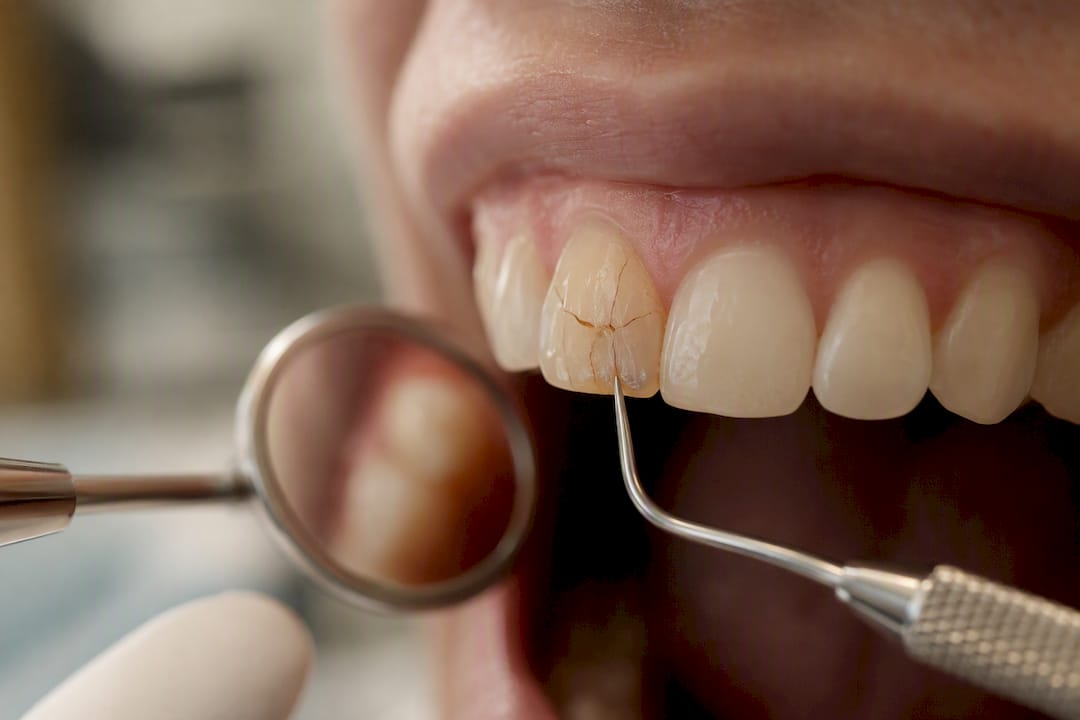
Most cracked teeth can be saved. The right fix, whether that’s simple bonding, a crown, root canal therapy, or in rare cases extraction, depends almost entirely on how deep the crack runs and whether it has reached the nerve. What matters right now is timing: the sooner Clayton Dental Studio or your own dentist examines the tooth, the more options you’ll have.
TL;DR:
- Immediate examination is crucial because early diagnosis allows for less invasive options and prevents cracks from reaching the pulp.
- Crowns are the most common treatment for molars, addressing both mechanical stabilization and bacterial sealing in about 61% of cases.
- A crack that causes pain on biting, especially on release, or persistent cold sensitivity indicates the crack may require root canal therapy or crown placement.
- Vertical root fractures and cracks extending below the gumline usually cannot be repaired and often require tooth extraction.
- Conservative repairs like bonding are viable only for shallow, symptom-free cracks, while deeper or pulp-involving cracks often need crowns or root canals.
Table of Contents
- What Is a Cracked Tooth, and What Types Exist?
- What Does a Cracked Tooth Feel Like, and What Causes It?
- How Do Dentists Diagnose a Cracked Tooth?
- Which Cracked Tooth Repair Fits Your Situation?
- How Long Does Repair Take, and What Does It Cost?
- When Can a Cracked Tooth Not Be Saved?
- What Should You Do Right Now if You Suspect a Cracked Tooth?
- How Do You Prevent Future Cracks?
- Why Trust This Cracked Tooth Repair Guidance?
- The Real Lesson Behind Cracked Tooth Treatment
- Get Your Cracked Tooth Evaluated at Clayton Dental Studio
- Sources
What Is a Cracked Tooth, and What Types Exist?
A cracked tooth isn’t one condition. It’s a spectrum, and where your tooth falls on it determines everything about treatment. A hairline crack (sometimes called a craze line) sits in the enamel only and often needs nothing more than watching over time. A cracked cusp breaks off part of a chewing surface, usually around an existing filling. A split tooth has separated into distinct segments, typically beyond saving as one unit. A vertical root fracture starts at the root and travels upward, often silently until infection sets in.
Front teeth crack differently than back teeth. Molars absorb far more chewing force, so cracked molar treatment tends to involve crowns more often than the bonding typically used on incisors.
What Does a Cracked Tooth Feel Like, and What Causes It?
The signature symptom is sharp pain when you bite down, followed by an equally sharp pain when you release. That release pain is a specific tell. It usually means the crack is deep enough to let the tooth’s segments flex independently, irritating the pulp beneath. Cold sensitivity that lingers, rather than fading in a few seconds, points the same direction.
- Pain on biting or chewing, especially on release
- Sharp sensitivity to cold drinks or air
- Intermittent, hard-to-pinpoint pain that comes and goes
- Discomfort localized to one specific tooth rather than a general ache
National Dental Practice-Based Research Network data found that 46% of cracked teeth in the study caused some form of pain, and biting pain specifically made dentists far more likely to recommend restorative treatment. Grinding your teeth at night, biting hard foods like ice or popcorn kernels, old fillings that weaken remaining structure, and simple age-related wear are the usual culprits behind why the crack formed in the first place.
How Do Dentists Diagnose a Cracked Tooth?
Cracks hide well, which is part of what makes this frustrating for patients who know something’s wrong but can’t point to it. Clayton Dental Studio starts with a bite test, having you close down on a small stick or cotton roll to reproduce that telltale release pain. Transillumination, shining a bright light through the tooth, often reveals a crack line that’s invisible to the naked eye by interrupting how light passes through the enamel.
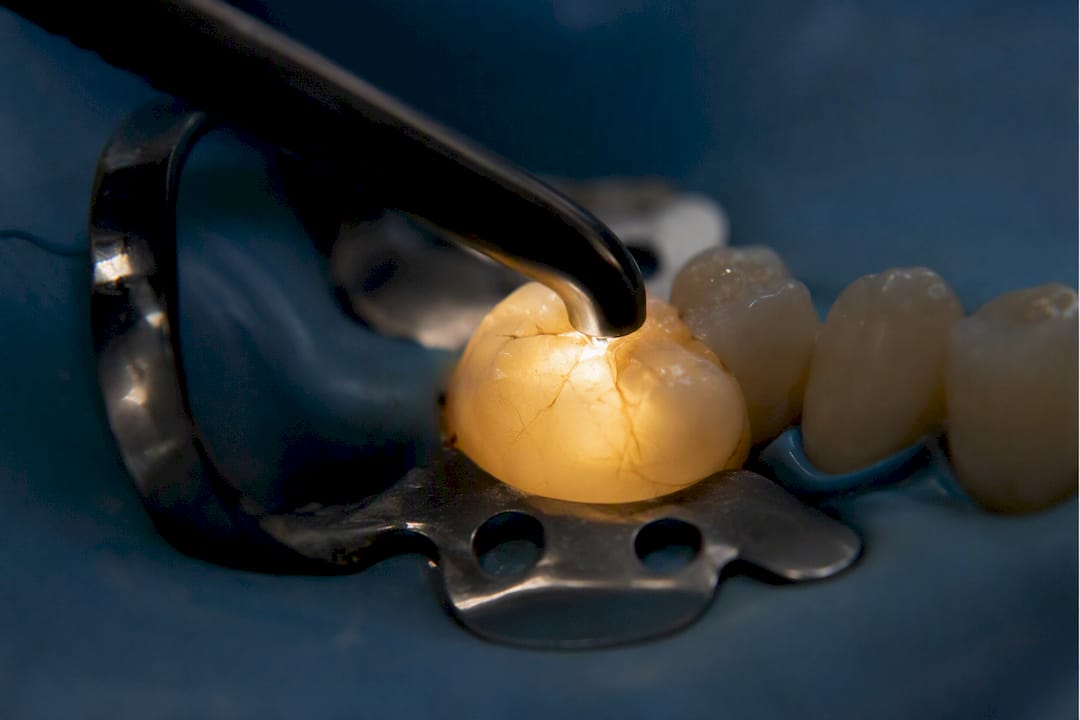
A visual exam with magnification and an explorer probe checks for catches along the tooth surface. Standard X-rays catch some fractures but miss others, particularly ones running vertically along the root. When a picture from a regular radiograph isn’t conclusive, a CBCT scan gives a three-dimensional view that can reveal fractures standard imaging misses entirely. Complex or ambiguous cases sometimes warrant a referral to an endodontist, a specialist in the tooth’s internal anatomy, for a more detailed evaluation.
Which Cracked Tooth Repair Fits Your Situation?
Treatment mapping isn’t guesswork. It follows a fairly predictable logic once your dentist knows the crack’s depth, location, and whether it involves the pulp.
- Monitoring. A shallow, symptom-free craze line often just needs regular checkups to confirm it isn’t progressing.
- Bonded composite filling. For minor cracks affecting a small area of enamel, tooth-colored resin seals the crack and restores the surface in a single visit.
- Onlay or crown. This is the workhorse repair for cracked molar treatment. A full-coverage crown acts as an external splint, physically holding the cracked segments together while sealing out bacteria. Practice-based research found crowns were the restoration of choice in about 61% of cracked teeth that received treatment, and for good reason: they address both the mechanical and biological sides of the problem at once.
- Root canal plus crown. When the crack has reached the pulp, causing lingering pain or spontaneous throbbing, root canal therapy removes the compromised nerve tissue before a crown restores the tooth’s strength and function. Our partner resource on root canal treatment walks through what that procedure typically involves.
- Extraction. Reserved for teeth where the crack has split the structure beyond repair or extends too far below the gum line to restore.
Conservative options come first whenever the pulp isn’t involved. A temporary orthodontic band or bonded splint can stabilize a cracked cusp while your dentist finalizes a long-term plan, buying time without committing to irreversible treatment.
Pro Tip: If your dentist recommends a crown right away instead of “just watching it,” ask specifically whether the crack reproduces pain on your bite test. That single finding is one of the strongest predictors of needing restoration rather than monitoring.
Crown preparation isn’t without trade-offs. Removing enamel to shape the tooth for a crown stabilizes and seals the crack, but it’s also a more invasive step that carries some risk of eventually needing root canal therapy if the pulp was already under stress. If you’re deciding between an onlay and a full crown, our onlay versus crown comparison breaks down when the more conservative option still gets the job done.
How Long Does Repair Take, and What Does It Cost?
Bonding is usually a single same-day appointment. A CEREC same-day crown can also be completed in one visit at Clayton Dental Studio, while a lab-fabricated crown typically takes one to three weeks between the prep appointment and the final placement. Root canal therapy adds a visit or two before the crown goes on. If extraction becomes necessary, replacing the tooth with an implant can stretch into several months once healing time is factored in.
Cost swings widely based on procedure complexity, whether a lab fee applies, and your insurance coverage. Ask for a written estimate before treatment begins, and confirm what your plan covers for major restorative work versus preventive care.
When Can a Cracked Tooth Not Be Saved?
Some findings point clearly toward extraction rather than repair. A crack that extends below the gumline is difficult or impossible to seal predictably. A tooth that has physically split into two separate segments, rather than merely fractured, has lost its structural continuity. A vertical root fracture almost always carries a poor prognosis because it compromises the root itself, not just the visible crown. Clefting at the floor of the pulp chamber is another sign the internal structure is too compromised to restore. In these cases, extraction followed by a bridge or implant becomes the realistic path forward, and your dentist should walk you through both options.
What Should You Do Right Now if You Suspect a Cracked Tooth?
- Rinse gently with warm water and apply a cold compress to reduce swelling.
- Avoid chewing on the affected side, and stick to soft foods.
- If a fragment broke off, save it in milk or saline and bring it to your appointment.
- Take an over-the-counter pain reliever as directed on the label.
- Seek urgent care for swelling, fever, or severe pain that won’t ease. These can be signs of infection that need same-day attention.
Before your visit, jot down when the pain started, what triggers it, and whether the tooth has an existing filling or crown. That detail speeds up diagnosis considerably.
How Do You Prevent Future Cracks?
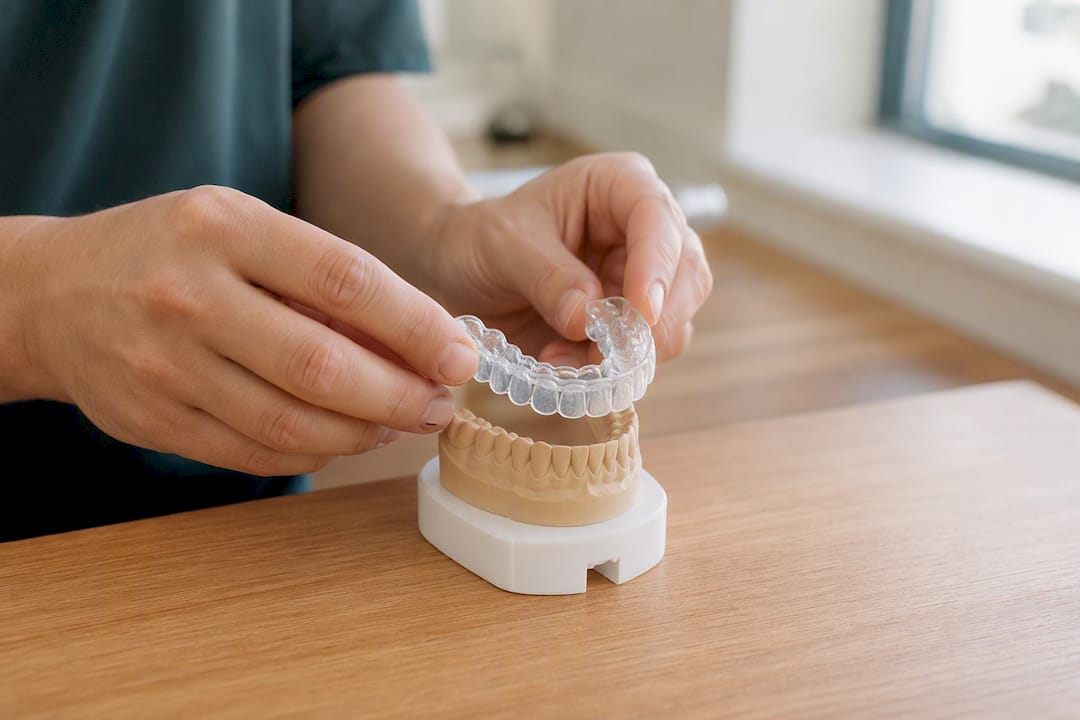
If you grind your teeth at night, a custom nightguard is one of the most effective ways to reduce new cracks from forming. Skip chewing ice, hard candy, and popcorn kernels, and keep up with routine checkups so a weakening filling gets replaced before it turns into a stress point on the tooth. After any repair, watch for new pain, a bite that suddenly feels different, or swelling, and call your dentist if any of those show up. Good home hygiene around a crown or filling protects the seal that’s keeping bacteria out.
Why Trust This Cracked Tooth Repair Guidance?
This guidance reflects the clinical judgment Dr. Navneet Kamboj, DDS, brings to Clayton Dental Studio after nearly a decade treating patients in the Humble, TX area, with restorative training sharpened through a preceptorship at UCLA. Same-day CEREC crowns, bonded restorations, and coordination with endodontists for root canal cases are part of the practice’s regular restorative work. A cracked tooth repair guide is useful background, but nothing replaces an in-person exam to see exactly what your tooth needs.
The Real Lesson Behind Cracked Tooth Treatment
The biggest misconception about cracked teeth is that patients think there’s a single “right” fix waiting to be found online. There isn’t. The research bears this out: crowns dominate restorative decisions not because dentists default to the most expensive option, but because a crown solves two problems at once, sealing the crack against bacteria and mechanically holding the segments together under bite force. That dual purpose is why conservative bonding works beautifully on shallow cracks and fails quickly on deeper ones.
Where conventional advice falls short is in telling people to “wait and see” indiscriminately. Waiting is reasonable for a painless craze line. It’s a gamble for a tooth that already hurts on biting, because pulp involvement tends to worsen, not resolve, on its own. If there’s one thing to prioritize, it’s getting a bite test and X-ray early, while bonding or a crown is still on the table instead of root canal therapy or extraction.
— Clayton Dental Studio
Get Your Cracked Tooth Evaluated at Clayton Dental Studio
Clayton Dental Studio gives you a faster path to an answer than waiting out uncertain symptoms at home. Dr. Kamboj’s team can perform a bite test, transillumination exam, and same-day imaging in one visit, then move straight into treatment with in-house CEREC crowns instead of sending you out for a lab-made one and a second appointment weeks later.

If a crack has reached the pulp, we coordinate directly with trusted endodontists so root canal therapy and your final crown stay on one coordinated timeline. Bring your symptom history, the timing of your pain, and any fragment you’ve saved in milk or saline. From there, explore our full restorative and general dentistry services and schedule an exam before a manageable crack turns into a more complicated repair.
This article is general information, not a substitute for advice from a qualified doctor. Consult a qualified healthcare professional about your own circumstances before acting on anything here.
Sources
- Recommended treatment of cracked teeth: Results from the National Dental Practice-Based Research Network
- Cracked Tooth Syndrome - StatPearls - NCBI Bookshelf
- Cracked Tooth (Fractured Tooth) — Cleveland Clinic
Recommended
Ready to Schedule Your Appointment?
Dr. Kamboj and the Clayton Dental Studio team are here to help. Call us or book online today.