
Clinic backed checklist for dental bonding aftercare. Start with the first 48 hours, avoid stains and hard bites, and follow simple upkeep to extend...
First 48 Hours to Protect Dental Bonding: Clinic Backed Aftercare
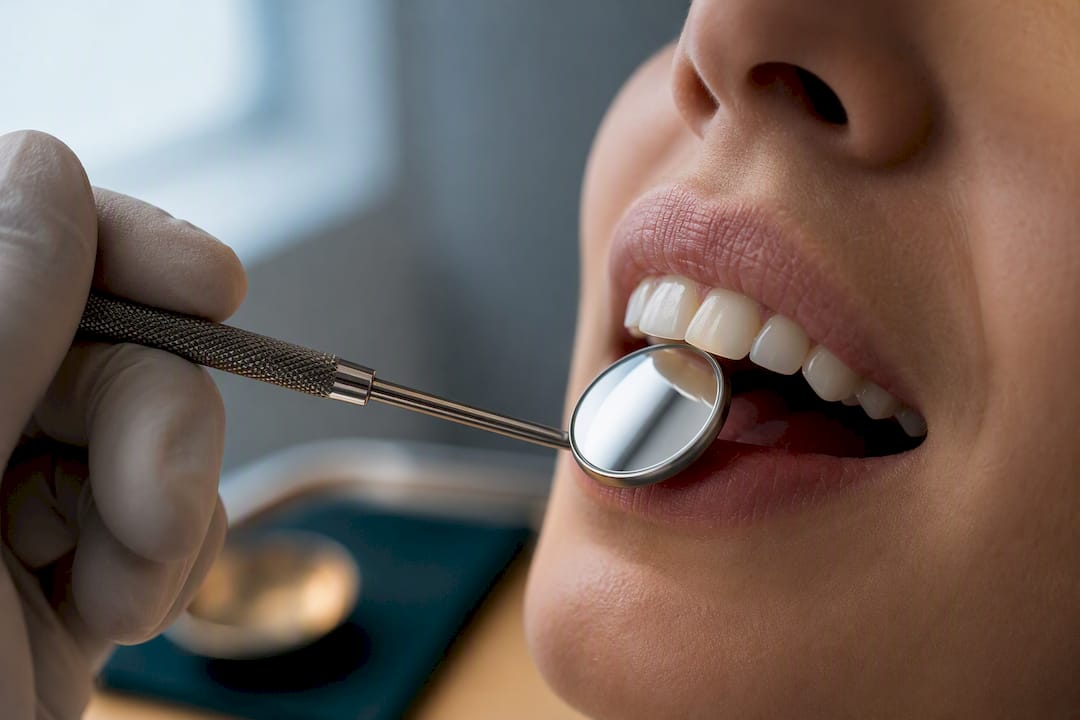
Protecting new dental bonding starts with three simple moves: wait the time your dentist recommends before eating (usually 30 minutes to 2 hours), skip coffee, tea, red wine, and other pigmented foods for the first 24 to 48 hours, and brush gently with a soft-bristled brush while avoiding hard bites on the treated tooth. Get these right, and you set the stage for bonding that looks great for years.
TL;DR:
- Avoid pigmented foods, drinks, and habits like smoking during the first 24 to 48 hours to prevent staining of the porous bonding surface.
- Use a soft-bristled toothbrush, nonabrasive fluoride toothpaste, and gentle flossing to maintain bonded teeth without causing wear or discoloration.
- Steer clear of hard, sticky foods, chewing on pens, biting nails, and vaping to reduce the risk of chips, fractures, and staining over time.
- Expect bonding to last between 3 and 10 years, with longevity dependent on habits such as clenching, grinding, and oral hygiene practices.
- If bonding feels jagged, loose, or causes sensitivity, seek prompt dental care for smoothing, repairs, or occlusion adjustments to avoid bigger issues.
Table of Contents
- Dental Bonding Aftercare: What to Do in the First 48 Hours
- Daily Oral Hygiene for Bonded Teeth
- Foods and Habits That Chip or Stain Dental Bonding
- How Long Does Dental Bonding Really Last?
- Signs Your Bonding Needs Repair, Not Just a Rinse
- Can You Whiten Bonded Teeth, and How Do You Prevent Stains?
- How Often Should You See the Dentist After Bonding?
- What Dentists Wish Patients Knew About Bonding Care
- A Clinic’s Honest Take on Bonding Outcomes
- How Clayton Dental Studio Supports Your Bonding Long-Term
- Sources
- FAQ
Dental Bonding Aftercare: What to Do in the First 48 Hours
The first two days after bonding matter more than any other stretch of your recovery. Composite resin needs time to reach full hardness, and the surface stays slightly porous while it cures, which means it grabs onto pigment more easily than it will later. Many practices recommend waiting at least 30 minutes and up to two hours before eating or drinking anything, giving the material time to set properly.
Once you’re cleared to eat, stick to soft foods. Think scrambled eggs, yogurt, mashed potatoes, or soup. Skip anything that requires hard biting or tearing, and steer clear of extreme temperatures if the tooth feels sensitive.
A few things to keep in mind during this window:
- Rinse your mouth with plain water right away if you accidentally sip coffee or wine
- Avoid smoking, since heat and tar stain new bonding fast
- Call your dentist if you notice a rough edge or your bite feels uneven
- Don’t chew ice, pens, or fingernails, even out of habit
If something feels off, like the bonded tooth doesn’t quite meet your other teeth the way it used to, that’s worth a quick call rather than waiting it out.
Daily Oral Hygiene for Bonded Teeth
Your regular brushing and flossing routine needs a small adjustment once you have bonding. Post-op guidance consistently points to gentle brushing with a soft-bristled toothbrush and a nonabrasive fluoride toothpaste. Whitening toothpastes are a problem here. Their abrasive particles can dull the composite surface and, ironically, make it grab stains faster instead of preventing them.

Flossing still matters just as much as it did before your procedure. Glide the floss gently at the gumline rather than snapping it down against the bonded margin. If regular floss feels awkward around a bonded tooth, an interdental brush or a water flosser works just as well and puts less stress on the edges.
An alcohol-free fluoride mouthwash rounds out a solid daily routine, especially after dark beverages when a quick rinse helps limit pigment contact.
- Soft-bristled brush, twice daily
- Nonabrasive fluoride toothpaste, never a whitening formula
- Gentle interdental cleaning at the bonding margin
- Alcohol-free fluoride rinse after coffee or tea
Pro Tip: Keep a travel-size water bottle handy after dark drinks. A quick swish and swallow does more to prevent staining than any toothpaste ever will.
Foods and Habits That Chip or Stain Dental Bonding
Composite resin is durable, but it isn’t enamel, and it reacts to certain foods and habits in predictable ways.
- Pigmented drinks and foods. Coffee, red wine, tea, berries, and tomato-based sauces pose the highest risk, especially during the first 24 to 48 hours when the surface is more porous.
- Hard or sticky foods. Ice, hard candy, caramel, and nuts put direct stress on bonded edges and can chip the material.
- Everyday bad habits. Chewing on pens, biting nails, or using your teeth to open packages causes the kind of repeated micro-stress that leads to fractures and color changes over time.
- Smoking and vaping. Tar and heat stain composite noticeably faster than they stain natural enamel, and the effect compounds over months.
How Long Does Dental Bonding Really Last?
Dental bonding typically lasts 3 to 10 years before it needs touch-up or replacement, and where you land in that range depends almost entirely on habits you control.
Location in the mouth plays a role. Bonding on a front tooth used for biting into food wears differently than bonding tucked between molars. Bite force matters too. If you clench or grind, that pressure shortens bonding lifespan regardless of how carefully you brush.
Consistent, nonabrasive oral hygiene and routine professional polishing push bonding toward the upper end of that range. Minor chips and rough spots are usually repairable with a quick smoothing or a small composite patch. Bonding that has widespread staining, structural cracking, or has separated from the tooth typically calls for full replacement instead.
Signs Your Bonding Needs Repair, Not Just a Rinse
Some issues wait until your next cleaning. Others need a same-week call. Sharp or jagged edges, a chip you can feel with your tongue, a loose or shifting feeling, persistent sensitivity to hot or cold, and a bite that suddenly feels off are all reasons to reach out sooner rather than later.
Most repairs are more straightforward than patients expect:
- Smoothing and polishing handle minor roughness in a single short visit
- A small composite patch fixes chips without touching the rest of the tooth
- Occlusion adjustment corrects a bite that feels high or uneven
- Full replacement comes into play only when damage is extensive or the bond has failed at the tooth surface
When you call, mention the date of your original bonding procedure and describe exactly what you’re feeling. That detail helps your dental team figure out whether you need a same-day fix or a scheduled appointment.
Can You Whiten Bonded Teeth, and How Do You Prevent Stains?
Here’s something a lot of patients don’t find out until it’s too late: composite resin doesn’t respond to whitening gels the way natural enamel does. Bleach lightens the teeth around your bonding, not the bonding itself, which can leave a visible mismatch if the sequence gets flipped.
That’s why whitening before bonding is the standard approach. Your dentist waits until your natural shade settles, typically a couple of weeks after bleaching, then matches the composite to that final color.
Day-to-day stain control comes down to a few habits:
- Use a straw for coffee, tea, and dark sodas when practical
- Rinse with water after pigmented drinks instead of sipping all day
- Skip abrasive whitening toothpastes on bonded areas permanently, not just early on
- Keep up with professional polishing to lift surface stains before they set in
Pro Tip: If you’re planning both whitening and bonding, always whiten first. Bonding done before whitening almost guarantees a shade mismatch down the road.
How Often Should You See the Dentist After Bonding?
A checkup every 6 to 12 months remains the standard for most patients, though your dentist may recommend a shorter interval if you’re prone to staining or you grind your teeth at night. Routine visits let your dentist catch small issues before they turn into bigger repairs.
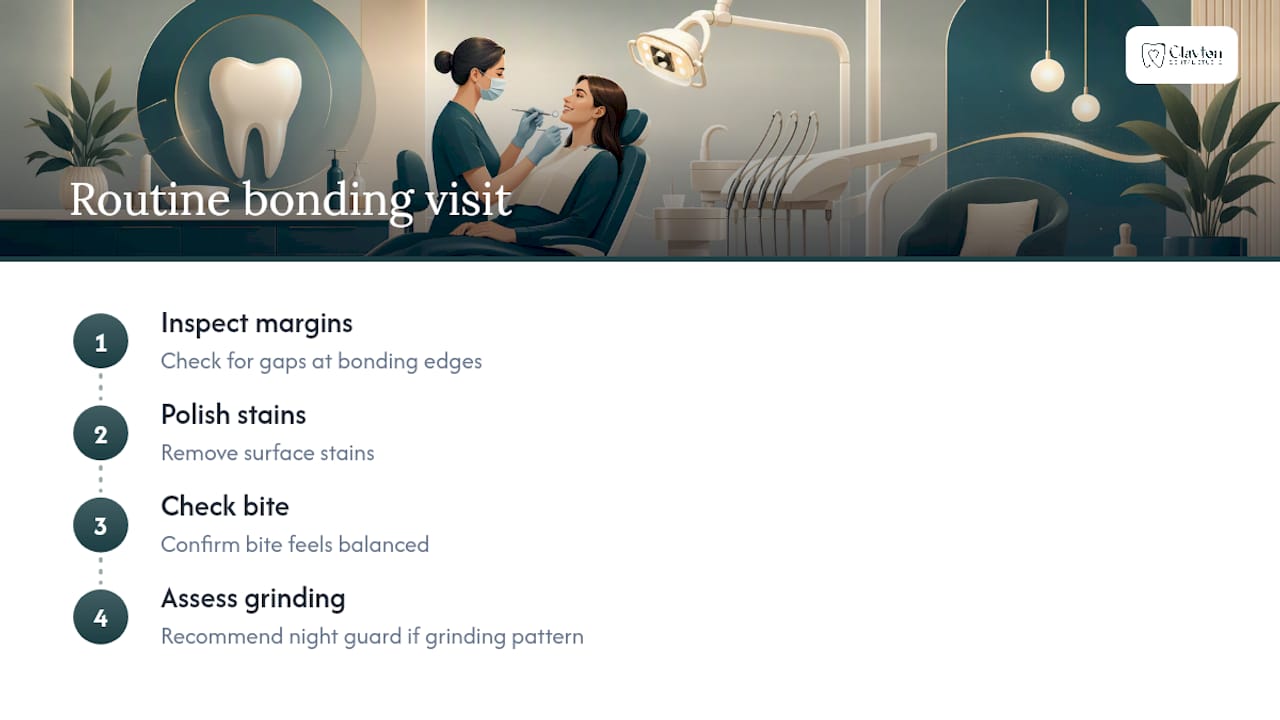
During a typical visit, your dentist checks the bonding margins for gaps, polishes away surface stains, and confirms your bite still feels balanced. If grinding shows up as a pattern, a night guard may be recommended to protect bonding from repeated pressure that leads to premature chipping. Regular checkup and polish visits are advised.
What Dentists Wish Patients Knew About Bonding Care
Shade planning is where a lot of the long-term satisfaction with bonding gets decided, and it happens before the composite ever touches your tooth. Whitening first, then bonding to match, avoids the mismatch problem entirely.
A quick water rinse right after coffee, paired with a polishing visit every few months, does more for keeping bonding bright than any special toothpaste on the market. And if you’re waking up with a sore jaw or noticing new chips with no obvious cause, that’s usually grinding, not bad luck, and it’s worth asking about a night guard before it wears down the bonding further.
A Clinic’s Honest Take on Bonding Outcomes
Most patients get years of solid performance from bonding when they stick to the basics. Small chips and rough spots are common and usually fixed in one visit, not a crisis. If something feels off, a loose edge, new sensitivity, don’t wait for your next scheduled cleaning. A quick look now almost always beats a bigger repair later.
— Clayton Dental Studio
How Clayton Dental Studio Supports Your Bonding Long-Term
Patients have access to a direct line to the same dentist who understands their bonding history, rather than starting over with a new provider every time something needs attention. If a chip shows up or your bite feels slightly off, the dentist can smooth, patch, or adjust the bonding in one visit, and evaluate whether a night guard would protect the bonding if grinding is part of the picture.
Booking is simple: call the office or request an appointment online, and mention the date of your original bonding along with a brief note about what you’re noticing. Insurance coverage varies by plan, and the clinic works with patients on financing for treatments not covered. If it’s been a while since your last polish, or something about your bonding just doesn’t feel right, schedule a visit and let’s take a look before a small issue becomes a bigger one.
Sources
This guide draws on post-op guidance from Cleveland Clinic and Colgate, along with clinical aftercare instructions and Clayton Dental Studio’s cosmetic dentistry page for readers ready to book care.
This article is general information, not a substitute for advice from a qualified doctor. Consult a qualified healthcare professional about your own circumstances before acting on anything here.
- Dental Bonding — Cleveland Clinic
- Tooth bonding: Before, during and after — Colgate
- Dental Bonding Aftercare | AGD Frisco
- Post-Op Instructions for Dental Bonding — Vibe Dental
FAQ
How many years does tooth bonding last?
Dental bonding typically lasts 3 to 10 years, depending on placement, bite force, and how consistently you follow a nonabrasive hygiene routine.
What ruins composite bonding?
Abrasive whitening toothpaste, chewing ice or hard candy, nail-biting, and heavy exposure to coffee, tea, or red wine all shorten bonding lifespan and increase staining.
What are the downsides of tooth bonding?
Composite resin is less stain-resistant and less durable than natural enamel, it can chip under hard biting, and it doesn’t lighten with whitening treatments the way real teeth do.
How soon after teeth bonding can I eat?
Most practices recommend waiting 30 minutes to 2 hours before eating, then sticking to soft foods and avoiding stain-prone items for the next 24 to 48 hours.
Recommended
Ready to Schedule Your Appointment?
Dr. Kamboj and the Clayton Dental Studio team are here to help. Call us or book online today.