
Find tooth sensitivity relief that fits the cause: what to try at home, what a dentist can do, and what to expect when a tooth hurts after a filling.
Tooth Sensitivity Relief: What Works, and When to See a Dentist

I’m Dr. Kamboj, and I hear this almost every day: “It’s just a zing when I drink something cold, but I’m tired of it.” The good news is that sensitivity is common and usually treatable. The key is matching the relief to the cause. A desensitizing toothpaste can calm exposed root surfaces, but a worn filling, a cracked tooth or a cavity needs a dentist to fix the source. This guide helps you tell the difference and shows you what to do next, whether you live in Humble or you’re just passing through.
TL;DR
- A short, sharp zing from hot, cold, sweet or sour is the classic sign of sensitivity, and it often eases with a soft brush, fluoride and a desensitizing toothpaste used consistently.
- Pain that lingers, wakes you up, hurts when you bite or comes with swelling is not routine sensitivity and needs a dental exam.
- After a filling, mild sensitivity can be normal for a few weeks. If it persists or worsens, have the tooth checked.
- A dentist can treat the cause itself: fluoride varnish, bonding, a new filling, a crown, a gum graft or, rarely, a root canal.
- Fever, facial swelling or trouble breathing or swallowing means urgent care.
Table of Contents
- What is actually happening inside a sensitive tooth
- Is it sensitivity or something more serious?
- Sensitivity relief you can start today
- When a tooth hurts after a filling
- Professional treatment for sensitive teeth
- Home remedies: what to keep in perspective
- Prevent sensitivity from coming back
- When to get care right away
- Getting relief in Humble
- Our perspective
- FAQ
- Sources
What is actually happening inside a sensitive tooth
Under the hard white enamel lies dentin, a softer layer filled with microscopic channels. When enamel wears thin or gums pull back from the root, those channels are exposed. The American Dental Association explains in JADA that these channels connect to the nerve in the center of the tooth, so cold air, a hot drink or a sweet bite can set off pain.
Think of it like a window with the curtain pulled away. The light was always there, but now you feel it.
The common causes, according to the same ADA article, include:
- Tooth decay (cavities)
- Cracked or fractured teeth
- Worn fillings or worn enamel
- Grinding or clenching
- Gums that have receded from gum disease or hard brushing
Mayo Clinic also lists teeth-whitening products among the triggers. If that sounds like you, our article on sensitivity after whitening explains what to expect.
Acidic food and drink can wear enamel too. We cover that in how acid erosion affects teeth.
Is it sensitivity or something more serious?
This is the most important question, because the answer decides whether home care is enough. The American Association of Endodontists (AAE) describes how different tooth pain patterns point to different problems:
| What you feel | What it may mean |
|---|---|
| Brief hot or cold zing that fades quickly | Minor decay, a loose filling or slight gum recession |
| Sharp pain when you bite | Decay, a loose filling, a crack or pulp damage |
| Pain that lingers more than 30 seconds after hot or cold | Pulp (the nerve tissue) that may be irreversibly damaged |
| Constant severe pain with gum swelling | Possible abscess |
The Merck Manual makes the same point: pain in a healthy tooth stops almost immediately, while pain that lasts more than a few seconds suggests pulp damage. A 2020 review in BMC Oral Health adds that true dentin hypersensitivity is usually diagnosed by ruling out cavities, cracks, defective fillings, pulp inflammation and gum disease. That is why an exam matters: the symptom looks the same, but the fix does not.
A dull ache in the upper teeth and jaw can also come from grinding or a sinus headache, according to the AAE. If you wake with a sore jaw or tension headaches, tell us. Clenching is a common hidden cause of sensitive teeth.
A quick self-check
- Does the pain stop within a few seconds of the trigger leaving? That fits sensitivity.
- Does it linger, throb or wake you at night? Book an exam soon.
- Does it hurt only on one tooth when you bite down? Suspect a crack or a high or worn filling.
- Is there swelling, a bad taste or pus? Treat it as urgent.
Sensitivity relief you can start today
Most dental organizations agree on a gentle, consistent routine. Mayo Clinic recommends:
- A desensitizing toothpaste (and mouthwash), most of which are sold without a prescription
- Brushing gently twice a day with a soft-bristled brush and fluoride toothpaste
- Flossing daily
- Avoiding abrasive toothpaste
- Using a straw for acidic drinks and drinking water afterward
- Asking your dentist about a mouth guard if you grind your teeth
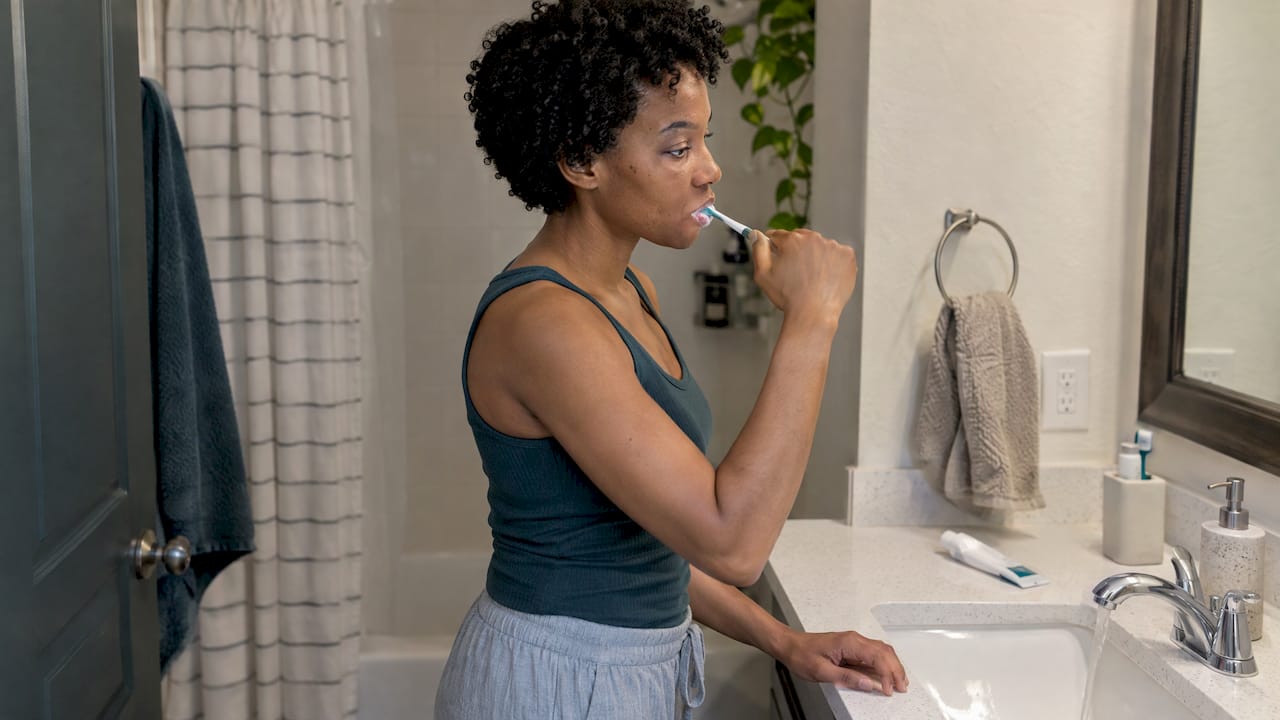
ADA News adds a few details: brush at a 45-degree angle in short, soft strokes, and look for toothpaste with potassium nitrate, which helps block signals through those exposed channels. It also suggests avoiding over-the-counter whitening products while your teeth are sensitive.
Give it time. The ADA notes that desensitizing toothpaste usually takes several uses before you feel a difference, and that some mouthrinses with higher acid can make sensitivity worse. If you’re unsure which paste to pick, see our guide to toothpaste for sensitive teeth.
Easing a flare-up
When a tooth is actively aching, Veterans Affairs dental pain guidance suggests avoiding very hot and cold foods and drinks and placing a cold pack on the outside of the jaw. It also says to ask a doctor about over-the-counter pain medicine, and that people with chronic liver or kidney disease, or a history of stomach ulcers or GI bleeding, should talk with a doctor before taking acetaminophen or ibuprofen.
NewYork-Presbyterian recommends a cold pack rather than heat. It also notes the FDA warns that some numbing products can be dangerous for children under 2, so please don’t use them on toddlers.
These steps are for comfort while you arrange care. Persistent pain is a reason to book a visit, not a reason to keep managing it.
When a tooth hurts after a filling
This is one of the most common worries I hear, and I want to reassure you: some sensitivity after a filling is expected. Drilling and placing a restoration can irritate the pulp. The AAE says recent dental work may inflame the pulp and cause temporary sensitivity, and recommends waiting two to four weeks. If the pain persists or worsens, have a dentist check for a more serious problem.
The 2020 BMC Oral Health review lists the reasons a filling may stay sensitive. With tooth-colored composite fillings these include leakage, imperfect bonding, strain on the tooth’s cusps or a fractured restoration. With silver amalgam fillings they include a lack of insulation over the dentin, hairline cracks, a bite that hits too early or galvanic stimulation. Heat, cutting pressure and drying of the dentin during preparation can also contribute.
In plain terms, many of these are fixable. A filling that sits slightly high can be adjusted in minutes. Call us if:
- Biting down hurts, or the tooth feels “taller” than its neighbors
- Sensitivity gets worse after the first couple of weeks instead of better
- Pain lingers after hot or cold
- A filling feels rough, loose or has come out (see what to do about a lost filling)
Crowns can behave the same way. Our post on crown sensitivity covers it. And if you’re not sure whether a tooth needs a filling in the first place, read how to know if you need a filling.
Professional treatment for sensitive teeth
The real advantage of seeing a dentist is that treatment targets the cause. The ADA says a dentist can identify the problem and may recommend:
- Desensitizing agents or fluoride varnish or gel to strengthen enamel and reduce the transmission of sensation
- Bonding, an inlay, a filling or a crown to repair damaged areas or cover exposed ones
- A gum graft when a receded gum has exposed the root
- Root canal treatment for severe sensitivity that doesn’t respond to other care
Here is how the cause usually guides the choice:
| Likely cause | Typical approach |
|---|---|
| Thin enamel or exposed root | Fluoride, desensitizing agents, bonding |
| Worn or leaking filling | Replace or adjust the filling |
| Cracked or heavily damaged tooth | Crown, inlay or other restoration |
| Gum recession | Gum graft in significant cases |
| Grinding or clenching | Night guard, plus addressing the clench |
| Inflamed or dying pulp | Root canal treatment |
If a tooth is cracked or badly worn, a same-day CEREC crown can be a comfortable way to protect it. CEREC uses a digital scan and an in-office milling unit, like a small custom workshop inside the dental office, so you can often skip the temporary crown and the second visit. Details are on our same-day crowns page.
Sensitivity driven by clenching is something we take seriously too. If you also get jaw tension or headaches, ask us about Emface TMJ therapy, which we offer for jaw pain and tension.
Home remedies: what to keep in perspective
Salt water rinses and cold compresses are popular because they’re gentle and easy. A cold pack on the cheek is backed by the guidance above. For anything else, such as hydrogen peroxide or numbing gels, keep the use short and sensible, and don’t let a remedy delay an exam when the pain lingers. Benzocaine gel is described by NewYork-Presbyterian as a short-term option for adults only.
Prevent sensitivity from coming back
Prevention is built on the same habits that protect against cavities and gum recession. The ADA recommends:
- Replacing your toothbrush every three to four months, or sooner if it’s frayed
- Flossing or using an interdental cleaner daily
- Seeing the dentist regularly for cleanings and exams
Regular exams catch small problems, like early decay or a worn filling, before they turn into sensitivity. For more on protecting enamel, our guide on preventing tooth decay naturally offers practical steps. If you want a deeper look at triggers, see what causes sensitivity to cold and our overview of sensitive teeth causes.
When to get care right away
Some symptoms are not about sensitivity at all. Veterans Affairs says to get medical care right away if your face is swollen or red, pain worsens or spreads to the neck, your fever reaches 100.4°F (38°C) or higher, or pus drains from the tooth. Call 911 for abnormal drowsiness or confusion, headache with a stiff neck, weakness or fainting, trouble swallowing or breathing, or vision problems.
For a toothache without those emergency signs, we handle urgent dental pain at our office, and the sooner a damaged tooth is treated, the better its chances. NewYork-Presbyterian notes that seeing a dentist can keep the tooth from dying.
Getting relief in Humble
If you’ve tried a sensitive toothpaste for a few weeks and the zing is still there, or if your pain falls on the “see someone soon” side of the table above, we’d love to help. Clayton Dental Studio offers general dentistry, emergency dentistry, cosmetic care and same-day crowns all in one Humble, TX office, and our approach is a calm, spa-like visit with a plan built around you. We bill dental insurance for covered treatment and offer flexible financing.
Book an exam through our general and emergency dentistry page, and we’ll find out what’s behind your sensitivity.

Families are welcome too: kids through grandparents can all be seen at the same practice, which makes follow-up care simple.
Our perspective
Sensitivity is your tooth telling you something. Sometimes the message is small, like a bit of worn enamel that a gentler brush and the right toothpaste can settle. Sometimes it’s bigger, like a hairline crack or a filling that no longer seals.
We believe in finding out which one it is before treating it. With digital scanning and a careful exam, we can see what’s going on and explain it in plain language, so you aren’t guessing.
Our approach is prevention first, then comfortable, precise repair when it’s needed. That might mean a fluoride treatment today, a same-day crown for a weakened tooth, or help with the clenching that’s quietly wearing your teeth down. Whatever it is, you’ll hear the plan before we start, and you are always welcome to ask questions.
Clayton Dental Studio
FAQ
How long does it take for sensitive toothpaste to work?
The ADA notes that desensitizing toothpaste needs several uses before sensitivity is reduced. Brush gently twice a day and give it consistent time. If nothing changes, a dentist can look for a cause the toothpaste can’t reach.
Is it normal for a tooth to hurt after a filling?
Mild sensitivity can be normal as the tooth settles. The AAE suggests waiting two to four weeks. If pain persists, worsens, or you feel pain when biting, have the filling checked, since a small adjustment often solves it.
Why are my teeth suddenly sensitive?
Common reasons include worn enamel, receding gums, a cavity, a cracked tooth, a worn filling, grinding or whitening products. A sudden change in one tooth deserves an exam to rule out decay or a crack.
Does sensitivity mean I need a root canal?
Not usually. Root canal treatment is generally reserved for severe sensitivity that doesn’t respond to other care, or pain that lingers and signals pulp damage. An exam and a few simple tests tell us which path fits.
Can I use a cold pack for a toothache?
Yes, a cold pack on the outside of the cheek is recommended, rather than heat. Use it for comfort while you arrange a dental visit.
Sources
- Tooth Pain, American Association of Endodontists
- Sensitive teeth: What treatments are available? Mayo Clinic
- Preventing and treating tooth sensitivity, JADA
- Pathogenesis, diagnosis and management of dentin hypersensitivity, BMC Oral Health
- Toothache and Infection, Merck Manual
- Toothache And Gum Problems, NewYork-Presbyterian
- Dental Pain, Veterans Affairs
- Tips to reduce tooth pain caused by sensitivity, ADA News
Recommended
Ready to Schedule Your Appointment?
Dr. Kamboj and the Clayton Dental Studio team are here to help. Call us or book online today.